




Why Choose an Inverter Duty AC Motor for Automation?
Choosing an inverter duty AC motor for automation systems directly addresses the core challenges faced by modern industrial operations: maintaining consistent torque output, preventing thermal damage from variable frequency drives, and ensuring reliable performance across diverse speed ranges. These motors feature specialized insulation systems and robust cooling architectures specifically engineered to withstand the demanding electrical conditions created by VFDs, delivering the precise control and longevity that standard motors simply cannot match in automated environments.

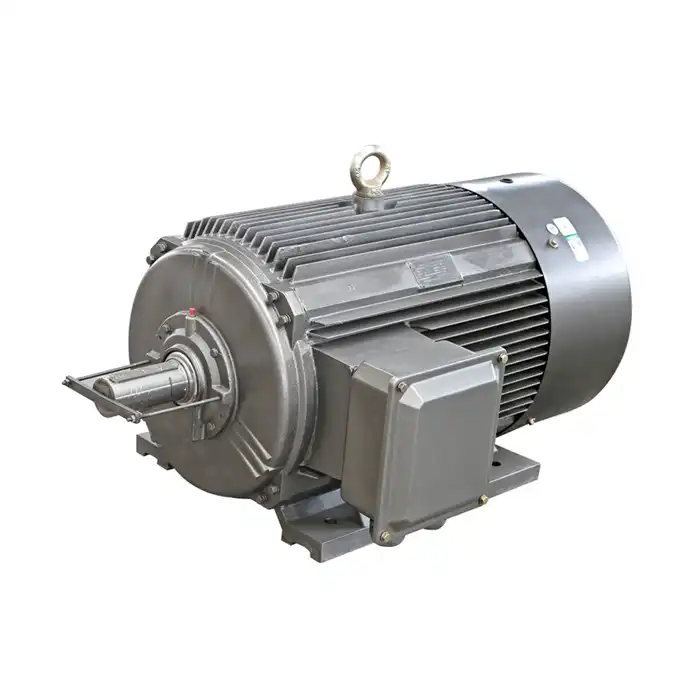
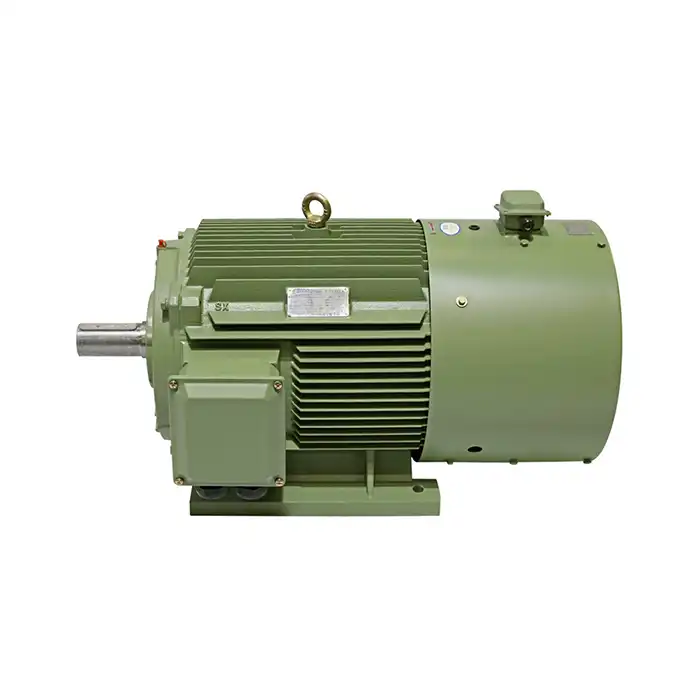
Series:YVFE3
Frequency conversion range:30hz~50hz,5hz~70hz,5hz~100hz
Power range:0.75-1000kW
Protection level:IP55
Application:are suitable for driving various mechanical equipment that require continuous and frequent forward and reverse rotation, such as steel rolling, lifting, transportation, machine tools, printing and dyeing, papermaking, chemicals, textiles, pharmaceuticals, etc., and can be used with various domestic and foreign variable frequency power supplies.
Advantage:high efficiency, wide speed range, high precision, stable operation, and easy operation and maintenance.
Certificate:installation dimensions comply with International Electrotechnical Commission (IEC) standards.
Others: SKF, NSK, FAG bearings can be replaced according to customer requirements.
Introduction
Manufacturing plants all over North America are under more and more pressure to cut their energy costs while also making more things. Plant managers and buying specialists know that the choice of tools has a direct effect on both how well operations run and how much it costs to maintain. Variable frequency drives have changed industrial automation by making it possible to control speeds very precisely. However, they create electrical problems that regular motors weren't made to solve. Low-frequency operation can damage regular equipment with harmonic distortions, voltage spikes, and thermal stress, which can cause sudden breakdowns during important production runs.
Through thoughtful design, an inverter duty ac motor can address these issues. Better insulation systems keep the windings safe from voltage spikes caused by frequency drives, and separate cooling systems keep the machine running at its best temperature no matter how fast the shaft is turning. These improvements in engineering have clear, measurable benefits: longer service life, fewer upkeep tasks, and consistent performance even when the load changes. Knowing how these motors work and why their design is important helps technical teams make decisions about what to buy that meet both short-term operational needs and long-term strategic goals.
Understanding Inverter Duty AC Motors: What Sets Them Apart?
Core Design Principles
Line voltage at set rates, usually 60Hz in North America, is what standard motors depend on. When you connect a regular motor to a VFD, the drive quickly turns the power on and off to make it seem like there are different rates. Voltage transients can reach several times the nominal voltage rating because of this switching. To handle these electrical pressures, an inverter duty ac motor has insulating layers that are larger and have a higher dielectric strength. The design of the winding has more space between the conductors and uses materials that are resistant to corona, which keep the insulation from breaking down over time.
Cooling System Architecture
Fans on the shaft of traditional motors slow down in proportion to the speed of the motor. At low frequencies, the flow of cool air drops by a lot, but electrical losses stay high, which makes the temperature dangerous. XCMOTOR's YVFE3 line of inverter duty ac motor uses a forced cooling device that is separate from the IC416. This fan is driven from the outside and keeps running at the same speed no matter how fast the motor shaft turns. This makes sure that enough heat is removed even when the speed stays low for a long time. This design feature proves critical for applications requiring frequent starts, stops, and speed changes throughout production cycles.
Bearing and Mechanical Considerations
Using a VFD creates shaft currents that can damage bearing surfaces by pitting and corroding them, causing them to fail early. This is taken care of by good makers using insulated bearings or shaft grounding methods. The YVFE3 line has bearings from SKF, NSK, and FAG. All of them are made to handle rotation in two directions and the special electrical environment that frequency drives cause. Precision dynamic balancing at several speed points reduces vibrations to a minimum across the entire working range. This keeps the motor and the equipment it drives from being overworked.
Comparing Inverter Duty AC Motors with Other Motor Types
Inverter Duty Versus Standard AC Motors
When you look at thermal performance data, the difference becomes clear. Standard motors that are controlled by a VFD at 30Hz make about the same amount of heat as full-speed motors but get only half as much airflow to cool them down. This mismatch speeds up the ageing process of the insulation and usually cuts its service life by 60–70% compared to what was recommended. There are no changes in the thermal reserves of an inverter duty ac motor when it changes frequencies between 5Hz and 100Hz. The improved insulation system comes with a Class F rating, which gives it thermal headroom and makes it last longer, even in harsh environments.
VFD-Ready Motors Versus True Inverter Duty
Some companies sell "VFD-ready" motors that have simple improvements like better isolation. These are in the middle, but they don't have the full tech that you'd find in a true inverter duty ac motor. In the YVFE3 line, all the important features are built in: separate cooling, better insulation with longer creepage distances, and bearing systems that can stop electrical discharge machining (EDM) current. This complete method guarantees reliable operation from 5Hz to 100Hz, without any downsizing or restrictions on how it can be used.
Servo Motors and Specialty Alternatives
Servo systems are very good at controlling position and responding to changes, but they are much more complicated and cost a lot more to set up. Inverter duty induction motors are the best choice for many industrial applications that need to control speed rather than precise positioning. They let you change the speed without having to buy servo amplifiers, feedback devices, or special software. VFD-controlled induction motors are a good way for automation tasks like fan drives, pump controls, and conveyor systems to get done. They also have simple maintenance steps that plant electricians are familiar with.
Key Benefits of Using Inverter Duty AC Motors in Industrial Automation
Energy Efficiency Gains
VFDs change both voltage and frequency to control motor speed. This lets motors use only the power they need for the current load. The biggest savings can be seen in pump and fan applications, where power use changes with the cube of speed. Cutting the fan speed by 20% saves about 50% of the power it uses. An inverter duty ac motor makes the most of this relationship because it can change speeds easily and is designed to be very efficient. The YVFE3 series meets IE3 efficiency standards, which means that even when the speed is changed, there aren't many losses. Most facilities can recoup the cost of their equipment within 18 to 24 months just by lowering their energy bills.
Torque Characteristics and Process Control
Process optimisation is not possible with equipment that runs at a set speed without precise speed control, which is why the inverter duty ac motor is essential. Upstream and downstream production rates are matched by material handling systems, which gets rid of bottlenecks and lowers buffer stock. Pump applications keep exact flow rates even if the system pressure changes. This makes the product more consistent and stops waste. These control methods work because the torque output stays the same from 0 to highest speed. This lets process engineers fine-tune operations for the best results. It's especially helpful to have this feature in batch production settings where recipe needs change often.
Reduced Mechanical Stress and Maintenance
Motors and driven equipment can be damaged by current surges of up to 800% of their full load amperage when they are started directly online. This electrical and mechanical shock puts a lot of stress on the drives, bearings, joints, and windings. Starting over and over again does damage that shows up as early fails. With VFD-controlled soft starts, these transients are taken care of by gradually increasing the current to normal amounts over time periods that can be programmed. When an inverter duty ac motor is paired with the right drive programming, mechanical wear is significantly reduced. This results in extended service intervals and a reduction in the need for spare parts.
How to Select the Right Inverter Duty AC Motor for Your Automation Needs
Power Rating and Load Analysis
Start the design process by looking at the features of the driven load. Loads with constant torque, like positive displacement pumps and conveyors, need the full maximum torque at all speeds. In applications with variable torque, like centrifugal fans and pumps, the torque needs go down as the speed goes up. The YVFE3 series has power levels from 0.75kW to 1000kW, so it can power everything from small systems for moving materials to big machines used in factories. Matching the motor's capacity to its real load needs stops it from being too big, which loses energy and raises the cost of capital, and too small, which causes it to overheat and break down sooner.
Frequency Range Requirements
There are different speed levels needed for different tasks. For example, a 4:1 speed ratio could be used for moving things from 15Hz to 60Hz. For a 20:1 turndown, machine tool wheels might need 5Hz to 100Hz. The YVFE3 line has three standard frequency conversion ranges: 30Hz to 50Hz for applications with small changes in speed, 5Hz to 70Hz for general commercial use, and 5Hz to 100Hz for demanding applications that need to control speeds across a wide range. By choosing the right range, you can be sure that the motor will stay within its thermal and mechanical design limits during the duty cycle of your application.
Environmental and Mounting Considerations
When it comes to industrial settings, the IP55 standard on YVFE3 inverter duty ac motor is good enough. It keeps dust out and water out from all directions. Facilities that need to be cleaned often or that are in corrosive environments may need extra seals or special treatments. Mounting dimensions are in line with IEC standards, so existing equipment can be replaced directly without having to change the foundations or mechanical connections. Standardisation makes updates easier and cuts down on installation costs when adding modern VFD control to older automation systems.
Customization and Special Features
For production reasons, features that aren't in the catalogue are sometimes needed. XCMOTOR can change the dimensions of an engine by adjusting the length of the shaft, making unique mounting setups, and moving the connection boxes. By checking the temperatures of the windings in real time, optional temperature monitors make predictive repair plans possible. When uses need a tighter speed range than what VFD sensorless control can offer, encoder input can help with closed-loop speed regulation. Brake options make vertical lift applications and needs for quick stops easier to meet. Talking about your unique needs with experienced application engineers will make sure that the final specification meets all operating needs without adding too much complexity.
Maintenance, Troubleshooting, and Long-Term Care for Inverter Duty AC Motors
Preventive Maintenance Schedules
Motors that are well taken care of will last for decades, but equipment that isn't taken care of will break down early, no matter how good it was at first. Set up how often you will inspect based on the hours you are open and the weather. Visual checks should be done once a month to look for strange noises, vibrations, or temperatures. As part of the quarterly processes, the cooling tubes are cleaned, the torque on the mounting bolts is checked, and the connection tightness is confirmed. As recommended by the manufacturer, annual maintenance includes testing the insulation resistance, lubricating the bearings, and looking at the trends in vibration analysis. These preventative steps find problems before they stop production, so repairs can be planned for planned downtime instead of having to be done quickly when something goes wrong.
Common Issues and Solutions
Bearing noise usually means that the bearings aren't well oiled or that shaft currents are causing electrical damage. These risks aren't as big with modern inverter duty ac motor designs, but the VFD parameter settings are still important. Make sure that the carrier frequency of the drive doesn't cause resonances that make electrical stresses stronger. If there is too much heat and not enough air flow, it could be because of a voltage mismatch, bad VFD setting, or mechanical overload. Check that the output values of the drive match the data on the motor's nameplate by measuring the voltage on all three stages. Unexpected trips could be caused by wrong overload settings, ground faults, or wire problems instead of motor problems. Systematic fixing keeps you from having to replace equipment that isn't broken and quickly finds the real cause.
Performance Optimization
Programming the VFD has a big effect on how well and how long the motor lasts. The rates of acceleration and deceleration should match the needs of the process without putting too much stress on the machinery or drawing too much current. Setting the carrier frequency finds a balance between switching losses, harmonic content, and noise that can be heard. Many facilities use the default drive settings without optimising them, which means that speed gains are not realised. Your automation system will work at its best if you work with suppliers who know both how motors work and how to program drives. The engineering team at XCMOTOR helps you get the most out of your equipment investment from the time you specify it until it is fully operational and is always being improved.
Conclusion
Success in automation depends on equipment that works the same way for years even after a lot of use. An inverter duty ac motor provides the foundation for reliable VFD-controlled systems, addressing thermal management challenges and electrical stresses that standard motors cannot withstand. The YVFE3 series from XCMOTOR uses tried-and-true engineering methods and high-quality parts from reputable suppliers. It has the wide speed ranges, strong construction, and thermal capabilities that modern automation needs. When choosing motors for new setups or upgrades to existing systems, make sure they are purpose-built for inverter service. This will make sure that your automation investment meets its productivity and efficiency goals. The comprehensive support infrastructure backing XCMOTOR products—from application engineering through warranty service—protects your operational continuity and maximizes equipment value throughout its service life.
FAQ
1. Can I use a standard motor with a VFD?
Standard motors can sometimes work with VFD control, but they will have shorter service lives and be limited in what they can do. Because there isn't enough cooling, low-speed steady running is especially hard. For applications that need to change speeds often or run continuously below 30Hz, inverter duty ac motors are needed to keep the warranty valid and prevent premature failure.
2. What delivery time should I expect for custom motors?
XCMOTOR's standard catalogue items usually ship within a few weeks, but special combinations take longer to make. Because it has a wide range of power and frequency choices, the YVFE3 series can be used in a lot of different situations without any special work being needed. Talking about your schedule during the specification phase lets you plan the procurement process in a way that keeps the project on track. Our streamlined logistics include free delivery services all over North America, which makes it easier for you to receive your packages.
3. How do I choose between single-phase and three-phase motors?
Three-phase motors are the most common type of industrial automation motor because they are more efficient, produce better power, and are easier to set up with a VFD. Single-phase choices are good for homes and places that don't have three-phase power connections. The YVFE3 line is mostly made up of three-phase designs that work well with business and industrial automation systems that normally use three-phase power.
Partner with XCMOTOR for Your Inverter Duty AC Motor Needs
Partners in automation projects should know both the technical needs and the business realities. Shaanxi Qihe Xicheng Electromechanical Equipment Co., Ltd. brings over two decades of experience serving industrial customers across various fields. Because we work with top manufacturers, you can be sure that the parts you buy are original and come with full technical documentation and warranty support. The YVFE3 series shows that we are dedicated to offering dependable inverter duty ac motor options that meet North American industry standards and provide excellent value.
Whether you need a replacement motor for a single item or whole systems for new installations, our engineering team can help you with the right inverter duty ac motor solution that fits your needs. We keep a lot of inventory on hand so that orders can be filled quickly, and our 30-day open purchase policy gives you peace of mind about your purchase choice. On-call technical support is available seven days a week, so questions can get quick answers whenever they come up. You can email us at xcmotors@163.com to talk to experienced professionals about your automation needs. We'll help you select the right equipment, provide reasonable prices as your trusted inverter duty ac motor supplier, and support your success throughout the equipment lifecycle.
References
1. Bonnett, Austin H. and Soukup, George C. "NEMA Motor-Generator Standards for Three-Phase Induction Motors." IEEE Transactions on Industry Applications, Volume 29, Number 5, 1993.
2. Nailen, Richard L. "Managing Motor Bearing Currents in PWM Inverter Drives." IEEE Industry Applications Magazine, September/October 2004.
3. Andreas, John C. "Energy-Efficient Electric Motors: Selection and Application." Marcel Dekker Inc., Second Edition, 1992.
4. Toliyat, Hamid A. and Kliman, Gerald B. "Handbook of Electric Motors." CRC Press, Second Edition, 2004.
5. Beaty, H. Wayne and Fink, Donald G. "Standard Handbook for Electrical Engineers." McGraw-Hill, Sixteenth Edition, 2012.
6. Stone, Greg C., Boulter, Edward A., Culbert, Ian, and Dhirani, Hussein. "Electrical Insulation for Rotating Machines: Design, Evaluation, Aging, Testing, and Repair." IEEE Press Series on Power Engineering, Second Edition, 2014.
YOU MAY LIKE
 VIEW MOREY2 series high voltage three-phase asynchronous motor
 VIEW MOREYBX3 series low voltage explosion-proof motor
 VIEW MORE72 inch butterfly valve
 VIEW MORE3 phase induction motor slip ring
 VIEW MOREinverter duty motor
 VIEW MOREye3 160m 4
 VIEW MOREunbalance vibration motor
 VIEW MOREYBX4 explosion-proof motor