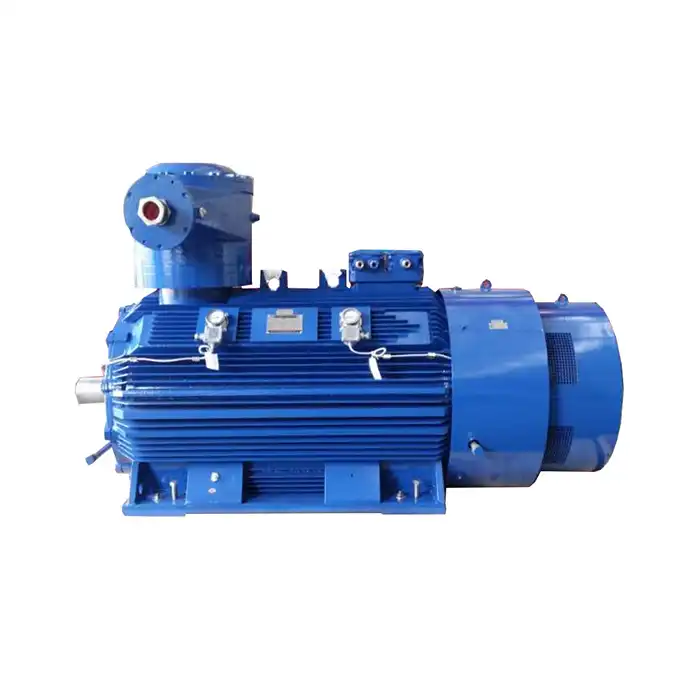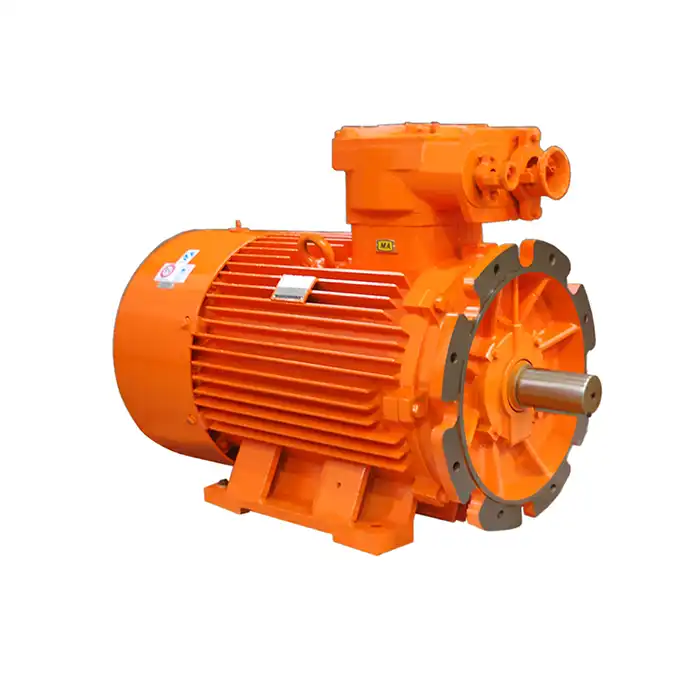




The Complete Guide To Vertical Water Pump Motors
Knowing how the vertical water pump motor works is important when you need reliable pumping solutions in a business setting. These special motors can work in vertical positions, which makes them ideal for places with limited floor space or that need to pull from deep wells, sumps, or small spaces. While horizontal setups take up more space, vertical designs save space and work well in harsh settings like water treatment plants, factories, and HVAC systems. This guide tells buying managers and experts everything they need to know to choose, use, and take care of these important parts.
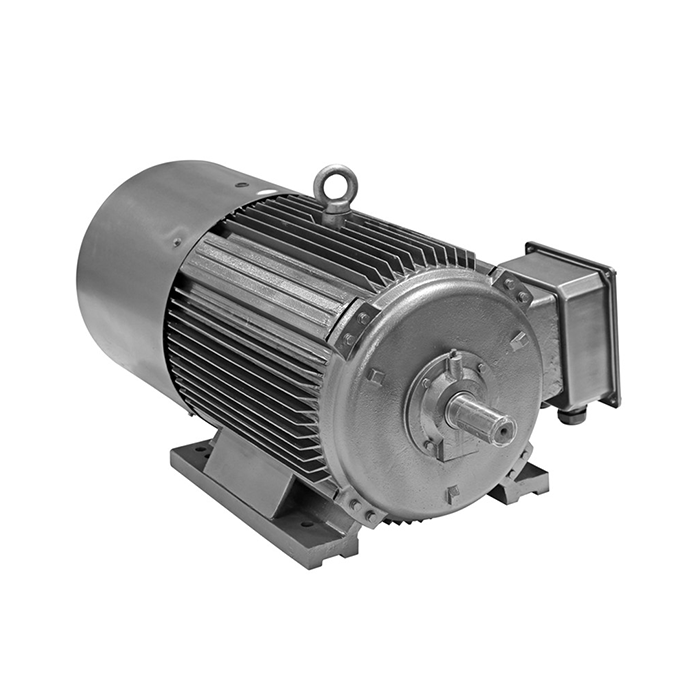
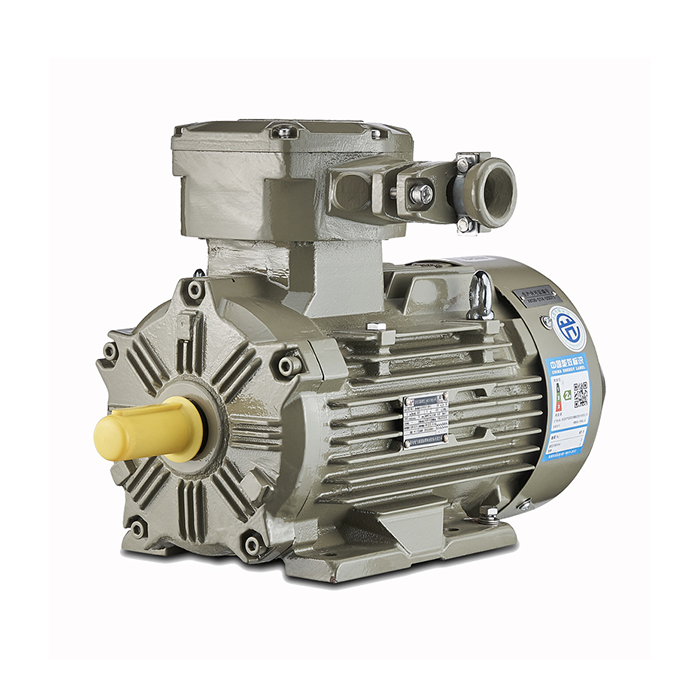
Series:YVFE2
Frequency conversion range:30hz~50hz,5hz~70hz,5hz~100hz
Power range:0.75-355kW
Protection level:IP55
Application:are suitable for driving various mechanical equipment that require continuous and frequent forward and reverse rotation, such as steel rolling, lifting, transportation, machine tools, printing and dyeing, papermaking, chemicals, textiles, pharmaceuticals, etc., and can be used with various domestic and foreign variable frequency power supplies.
Advantage:high efficiency, wide speed range, high precision, stable operation, and easy operation and maintenance.
Certificate:installation dimensions comply with International Electrotechnical Commission (IEC) standards.
Others: SKF, NSK, FAG bearings can be replaced according to customer requirements.
Understanding Vertical Water Pump Motors – Working Principles and Components
How Vertical Pump Motors Operate
The way the shaft is mounted and oriented on a vertical water pump motor is very different from a horizontal type. The motor is on top of the pump unit, and the tube goes down into the room where the pump works. This design lets the unit draw fluid from right below it, which works really well for things like pumping from deep wells or tanks with few entry points. The motor turns electricity into mechanical movement, which powers the propeller and moves water through the system.
Common Issues and Practical Solutions
Noise problems are usually caused by worn bearings, being out of line, or bubbles forming inside the pump chamber. Checking the state of bearings on a regular basis can help find damage early. Too much shaking is often a sign of an unbalanced rotor or a problem with the base, which needs to be fixed right away to stop failures from spreading. Drops in efficiency could mean that the impellers are worn out, the power source is changing, or there is dirt in the pump case. Setting up a routine for preventive maintenance that includes tests for electricity problems, thermal imaging, and vibrations helps find problems before they cause expensive downtime.
Performance and Efficiency Insights
Energy Performance and Operational Cost Reduction
When compared to older models, modern vertical water pump motors use a lot less energy. The frequency range of our YVFE2 line is from 5Hz to 100Hz, which lets you precisely control speed with variable frequency drives. Because it can be changed in a lot of ways, the motor runs at the best speed for the current demand instead of turning on and off at full power. Industrial sites that use these motors in cooling towers say they use 20 to 30 percent less energy than fixed-speed options. The edge in speed comes from a number of design choices. Precision manufacturing cuts down on mechanical roughness, and high-grade copper windings lower resistance losses. The IP55 security level keeps dust and water out of internal parts, so they stay working well for longer amounts of time. As these motors are in the S1 constant duty group, they can handle full load for an infinite amount of time without derating. This is very important for uses that need to run 24 hours a day, seven days a week.
Maintenance Checklist for Lifecycle Extension
An organized method to repair extends the life of machinery and keeps it running efficiently. Visual checks should be done once a month to look for leaks, strange noises, or changes in sound. Electrical checking every three months makes sure that the power balance and current draw are correct. Using manufacturer-specified greases to lubricate bearings every six months keeps them from breaking down too soon. Thermal imaging is done once a year to find hot spots that are growing in windings or links. When parts are taken apart every two years to be cleaned and inspected, wear patterns are found before they lead to failures.
Making the Right Choice – Comparison and Application Insights
Vertical Versus Horizontal Pump Motor Configurations
The choice between vertical and horizontal positions relies on the needs of the application. When floor space is limited, pumping from depth is needed, or the installation site floods from time to time, vertical water pump motors are the best choice. Horizontal designs may be better in situations where couplings need to be accessed often or where there isn't much room above. It is normal for vertical designs to handle axial thrust better, while horizontal designs tend to make alignment easier. Our product line has power levels that range from 0.75kW to 355kW, so it can handle everything from small circulation pumps to big public water systems. In the middle to high power ranges, the vertical layout works best because horizontal units would need a lot of base work and a lot of floor space.
Total Cost Considerations Beyond Purchase Price
When motors are only judged by their original cost, important factors related to ownership are missed. During a normal 10-15-year working life, energy use often exceeds the buying price by many times. A motor that is 2% more efficient costs more up front, but at commercial rates, it saves thousands of dollars a year in power costs. Accessibility for maintenance affects labor costs; designs that need less removal for regular service lower hourly costs. Reliability affects the ability to keep making things; unplanned downtime in important processes costs a lot more than buying designs that have already been proven to work. The real cost is also affected by things like warranty coverage and the availability of professional help. When problems happen, suppliers who offer quick remedial help and keep parts in stock reduce the amount of time that systems are down.
Procurement Guide for Vertical Water Pump Motors
Evaluation Factors for Supplier Selection
To choose the right provider, you have to look at more than just the product specs. Manufacturing quality standards, such as ISO 9001:2015, show that quality control is done in a planned way. CE marking shows that the product meets European safety and environmental standards, and GOST approval shows that the product is accepted in the right places. Check to see how open the provider is about their production method. Companies that are ready to explain how they assemble the vertical water pump motor, wind, and check for quality usually provide more regular goods. Being able to provide technical help is very important. Can the seller help me figure out what size motor I need? Are they able to help with application engineering? How quickly do they answer questions about technology? These service parts are useful for the whole span of the tools.
After-Sales Support and Service Networks
Post-purchase help available has a big effect on how well operations go. Does the seller keep expert help staff who know how to use their products? Can they get you new parts in a fair amount of time? Do they offer field service or help with setup for systems that are more complicated? These features lower the chance of long periods of downtime when problems happen. At XCMOTOR, we focus on providing full help throughout the entire ownership cycle. We keep a specialized expert team on hand to help with installation, improving operations, and fixing problems. Our promise includes responding quickly to questions and keeping parts for the goods we sell in stock so that your business can keep running smoothly.
Installation and Troubleshooting Best Practices
Proper Installation Procedures
When a vertical water pump motor is installed correctly, it sets the stage for efficient function. First, make sure that the base gives enough support and blocks out vibrations. The surface for fixing must be level within the range specified by the maker, which is usually 0.2 mm per meter. This level of accuracy keeps the frame from getting mechanical stress that could damage the bearings. Use gear markers to carefully line up the motor shaft with the pump shaft. When things aren't lined up right, they create rotational loads that wear down bearings faster and cause vibrations. For most uses, alignment needs to be within 0.05 mm of shift and 0.1 mm of angle deviation. The choice of coupling should take into account the projected heat expansion as well as any remaining imbalance while still transferring force consistently. When connecting electrical devices, they must follow area rules and the manufacturer's instructions. Make sure that the source voltage fits the motor's brand values. Usually, there should be no more than a 5% difference. To keep warmth from being uneven, phase balance should stay within 2%. Good grounding keeps people and things safe, and thermal overload switches that are the right size keep windings from getting damaged by too much power.
Operational Challenge Resolution
When effectiveness drops below the starting point, you should check a number of factors on a regular basis. Compare the real flow and pressure to the plan models to see if performance is getting worse. Check the impellers for damage like wear, erosion, or growth of garbage. Make sure the source voltage stays fixed when the load is applied. Low voltage lowers power and economy. Check to see if any pipes are partially blocked, which would raise the system's resistance. Unusual noise needs to be looked into right away. Bearing noise sounds like grinding or rolling, and it gets worse as the bearing wears out. When the local pressure goes below the gas pressure, cavitation happens and sounds like cracking or popping. Electrical noise could mean that connections are loose, insulation is breaking, or there are problems with the rotor bars. Each sound type points to a different problem that needs a different solution. The times between preventive repairs should match the conditions of operation. Continuous-duty applications in clean environments might need less frequent inspections, while occasional operations in dirty environments need more frequent attention. Record standard measures like shaking amplitude, bearing temperature, and current draw during setup so that you can use them as a guide for future checks.
Conclusion
Finding the right pumping motors means finding a balance between technical needs, operating economy, and the total cost of ownership. There are many industry uses for vertical water pump motors that don't take up much room, from water treatment plants to factories. Understanding how things work, comparing setup choices, and following the right steps for installation and care will increase efficiency and lower costs. This guide gives buying workers and engineers the information they need to make choices that are in line with practical goals. If you choose the right motor and get good help from your provider, it will last for years and years in important pumping uses.
FAQ
1. What distinguishes vertical from horizontal water pump motors?
What makes vertical water pump motors different from horizontal ones? The main change is how the shaft is oriented. Vertical motors are mounted above the pump, and the shaft extends downward. They save room on the floor and work well for use in deep wells or sump pumps. The shaft of a horizontal motor is aligned to the floor, which makes alignment easier but takes up more space during installation. It is normal for vertical designs to handle axial thrust better, while horizontal designs usually make it easier to connect the couplings.
2. How often should maintenance occur?
Visual reviews should be done once a month, electrical checks should be done every three months, and bearings should be oiled every six months. Every year, thermal images and every two years, full checks help find problems early. The operating conditions have a big effect on these times. For example, ongoing duty in tough settings needs more frequent attention than occasional duty in clean areas. Always start with what the maker says and make changes based on how the equipment is actually working.
3. What warranty coverage should buyers expect?
Standard guarantees in the industry usually last between 12 and 24 months and cover flaws in the products or the way they were made. Coverage should include fixing or replacing parts that are broken. Find out if the guarantee covers work and shipping costs and what kind of proof is needed to file a claim. Options for longer warranties can sometimes offer extra security for important applications that can't be shut down for long periods of time, because it costs a lot.
Partner With XCMOTOR for Reliable Vertical Water Pump Motor Solutions
As Shaanxi Qihe Xicheng Electromechanical Equipment Co., Ltd., XCMOTOR sells power equipment options backed by professional know-how and full support. Our selection of vertical water pump motors ranges from 0.75kW to 355kW and can change frequencies from 5Hz to 100Hz. This means that they can be used for a wide range of applications in industrial automation, HVAC, water treatment, and process control. We only buy parts from reputable companies and stick to strict quality standards throughout the whole production process.
Procurement teams like that we offer personal support seven days a week, fast shipping on normal setups, and open 30-day return policies that lower the risk of buying. If you need a new motor for a single item or a lot of them for a big job, our team can help you figure out the right size, give you competitive quotes, and provide support after the sale to keep your business going smoothly. You can talk to skilled application experts about your needs by emailing xcmotors@163.com. As a dedicated vertical water pump motor provider, we help you find options that are both reliable and don't cost a lot of money.
References
1. Karassik, Igor J., et al. "Pump Handbook: Fourth Edition." McGraw-Hill Professional, 2008.
2. Hydraulic Institute. "Pump Standards for Vertical Pumps." ANSI/HI Standards, 2019.
3. Driscoll, Fletcher G. "Groundwater and Wells: Third Edition." Johnson Screens Publishing, 2007.
4. Electric Motor Education and Research Foundation. "Best Practice Motor Maintenance Manual." EMERF Technical Publications, 2015.
5. American Water Works Association. "Water Transmission and Distribution: Fifth Edition." AWWA Publishing, 2017.
6. National Electrical Manufacturers Association. "Motors and Generators Standards Publication." NEMA MG-1 Standards, 2021.