




How to Prevent Partial Discharge in High Voltage AC Motors
To stop partial discharge in high voltage AC Motors, you should first choose tools with advanced insulation systems. These are usually made of Class F or H materials that have been treated with vacuum pressure impregnation (VPI). By choosing motors that meet IEEE and IEC standards, you can be sure that the insulation can handle voltage loads of more than 30kV. Regular diagnostic testing, both online and offline, along with weather controls like managing humidity and having the right cooling systems in place, is what makes partial discharge prevention work. Partnering with reputable sources that use strict quality control throughout the manufacturing process is another way to make sure that motors will work well and last a long time.
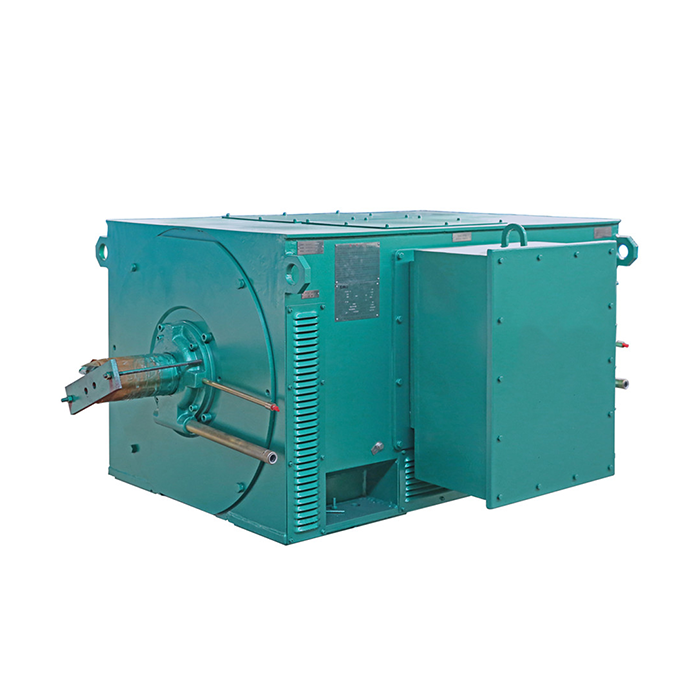
Series:Y-HV
Protection level:IP23
Voltage range:3000V±5%,3300V±5%,6000V±5%,6600V±5%,10000V±5%,11000V±5%
Power range:200-6300 kW
Application:fans, water pumps, compressors, crushers, cutting machine tools, transportation machinery, etc.
Advantage:light weight, low noise, small vibration, long service life, easy installation and maintenance.
Standard: This series of products complies withJB/T 12728 and JB/T 10446 standards.
Others: SKF, NSK, FAG bearings can be replaced according to customer requirements.
Introduction
One of the most sneaky threats to industrial processes is partial discharge in high-voltage AC Motors. Catastrophic failures make a lot of noise, but partial discharge wears away insulation slowly over months or years, which can cause breaks that are out of the blue and cost a lot of money. We've seen procurement teams deal with the results: replacements needed right away, longer breaks, and tense relationships with plant managers who want answers.
Not only is it important to know how to stop partial discharge, but it's also a strategic imperative that has a direct effect on your business image and bottom line. This book explains real ways to stop problems. It's written for buying managers, repair engineers, and distributors who want useful information instead of theoretical talks. If you're looking for motors for a petroleum plant, a power plant, or a mining operation, the tips in this article will help you make smart choices that will protect your investment and keep the service going.
The stakes are high: insulating motors that work at 3.3kV to 11kV are not easy. Voltage pressures, contaminated environments, and changes in temperature can all lead to partial discharge that can start and spread. By figuring out why things break down and using tried-and-true ways to keep them from happening, you can make motors last much longer, from the usual 15 years to 25 years or even longer, which will greatly lower the total cost of ownership.
Understanding Partial Discharge in High Voltage AC Motors
When electrical shielding breaks down in one place without making a full path between wires, this is called partial discharge. Imagine tiny lightning hits happening inside the High Voltage AC Motor winding insulation. Each one releases energy that slowly wears away the barrier that protects the copper windings. Most of the time, these shocks are measured in picocoulombs, but over thousands of hours of use, they do damage.
Types of Partial Discharge
The most usual places for release to happen in high voltage AC Motors are inside insulation materials, where there are empty spaces. When the product is being made, air holes can get stuck in the layers of epoxy glue or mica tape. When electricity is applied, these empty spaces become charged and cause repeated explosions. Corona discharge happens at sharp edges or where two conductors meet, where the electric field strength is higher than the breaking strength of the air or insulation around them. Surface tracking happens when contamination makes electrical paths along insulation surfaces. This can happen in damp places or when chemicals are exposed and break down protective layers.
Impact on Motor Performance
Every release event makes heat, ozone, and nitric acid, which attack the insulator around it chemically. Over time, this makes carbon tracking, which are lasting electrical paths that speed up decay. When we looked at motors that were taken out of service too soon, we always found that partial discharge caused problems long before mechanical wear became a big problem. Over time, the insulation loses its electrical strength, which can cause phase-to-ground or phase-to-phase faults that damage the windings and mean the motor has to be rewound or replaced.
When evaluating suppliers, procurement workers can ask the right questions if they understand these processes. Does the company that makes the insulation system say how much open space it has? How do you make sure that the glue is completely saturated? These features set high-end motors apart from mass-produced ones.
Analyzing Root Causes of Partial Discharge
Insulation Material Quality
Choosing the right shielding material is the first step in preventing partial release. Class F insulation can handle temperatures up to 155°C, and Class H insulation can handle temperatures up to 180°C. But the temperature number doesn't ensure that there won't be any partial discharge. How many voids there are and how strong the bonds are depend on the quality of the mica tape, polyester film, and epoxy glue. When you use low-quality materials or the wrong curing methods, tiny holes appear where the release starts.
For high voltage AC Motors with ratings between 3000V and 11000V, you need protection systems that are made to handle high voltage pressures. When voltage differences are high, generic materials that work well in low-voltage situations quickly break down. For long-term reliability, suppliers who use high-quality silicon steel laminations and copper wires must also use high-quality shielding.
Environmental and Operational Stresses
The operating factors either speed up or slow down the growth of a partial discharge. Lightning hits or voltage spikes from switching processes can cause transient overvoltages that are high enough to break down insulation. Industrial power systems often have voltage changes of ±10%. These changes add up to stress that wears down insulation faster than steady-state function.
Copper wires and steel cores grow and shrink at different rates than insulation materials when the temperature changes. This mechanical stress makes tiny cracks and delaminations that act as starting points for discharge. Motors that work in places where temperatures change more than 30°C every cycle wear out faster.
Moisture intrusion is one of the worst things that can happen to the environment for high voltage AC Motors. Water lowers the resistance of insulation and raises electrical losses, which causes working temperatures to rise. When wetness is combined with voltage stress, it speeds up chemical breakdown and makes it easier for surfaces to track. Chemical pollution from oils, solvents, or corrosive gases also breaks down insulator surfaces and lowers the voltage at the start of a discharge.
Effective Principles and Methods to Prevent Partial Discharge
Advanced Insulation System Selection
The first line of protection is to only buy motors with tried-and-true insulation methods. Look for companies that explain how their insulation is made. Usually, it's made of several layers of mica tape, glass fabric, and polyester film that are glued together with heat-resistant epoxy resin. Cross-sectional research should show that the vacuum pressure impregnation process penetrated the resin.
Manufacturers who use insulation systems that meet IEEE 1434 and IEC 60034-27 standards show that they care about protecting against partial discharge. These guidelines spell out how to test things, such as measuring the partial discharge at 1.5 times the rated voltage for long periods of time. Motors that meet these requirements have discharge levels below 100 picocoulombs, which means they have very few empty spaces and great shielding.
The motors we sell come with Class F insulation as normal, and Class H insulation is offered for use in high-temperature situations. Our vacuum pressure impregnation method uses temperature-controlled curing cycles that last 12 to 16 hours, which is a lot longer than the typical 6 to 8-hour cycles used in the business. This longer drying time lets the glue fully polymerize and get rid of all the air bubbles.
Optimized Motor Design Features
The shape of the motor affects how the electric field is spread in insulation systems. Field concentrations that cause discharge are lowered by rounded wire edges, graded insulation thickness, and controlled slot shape. High-end High Voltage AC Motors with a high voltage use stress-grading materials at the ends of the windings, which is where the field strength is strongest. These paints and tapes that are partially conductive smooth out voltage differences and stop corona formation.
Controlling working temperatures through the design of the cooling system affects how long the insulation lasts. Our ICW37 water-cooled motors keep wound temperatures 15–20°C lower than air-cooled counterparts, which directly slows down the rate of thermal aging. Lower temperatures lower the size and frequency of the flow, which makes the insulation last longer. This temperature control works well for motors with ratings between 220kW and 6300kW, especially in continuous-duty situations.
The choice of bearing affects the amount of shaking, which can speed up the breakdown of insulation. We offer SKF, NSK, and FAG bearings as options to standard parts. This lets customers choose bearing types that have been tested and proven to work in their specific environments. Less shaking means less mechanical stress on insulator systems, which keeps them from delaminating.
Preventive Maintenance Strategies
Even motors that are well-designed need to be watched over all the time to find early signs of partial discharge before they break. Online partial discharge tracking systems keep an eye on discharge activity while motors are running and look for trends in the data to find out how things are breaking down. Offline tests during planned maintenance give specific diagnostic information, such as the location and size of the release.
Here are the most important parts of a good preventive repair plan:
- Partial Discharge Testing. The timing of partial discharge tests should match the criticality of the motor and the setting in which it will be used. For critical motors that work in hard conditions, offline testing should be done every three months.
- Vibration Analysis finds worn bearings, an unbalanced rotor, and mechanical looseness that put stress on shielding systems. Setting up standard vibration patterns during launching lets you do trending analysis, which shows how the vibrations are getting worse over time.
- Thermographic Inspection: Thermal imaging shows hot spots that could mean insulation is breaking down, links aren't working right, or there are problems with the cooling system. Infrared cameras with enough precision to pick up temperature differences of two to three degrees Celsius can find problems before they cause partial discharge.
- Insulation Resistance Testing with megohmmeters finds the insulation resistance between the stages and the ground. By plotting these measures against time over months and years, you can see how much wetness, dirt, or old insulation has been added.
All of these repair tasks work together to give you a full picture of your motor health. Discharge readings, vibration spectra, thermal images, and resistance trends are just some of the sources of data that can be used to get a full picture of a motor's state and remaining useful life.
Case Studies and Real-World Applications
A place that processes minerals uses 2500kW motors to run SAG mills all the time. After 8 to 10 years, the first motors had partial discharge failures that meant they had to be rewound, which cost a lot of money and caused output to stop. The facility made a number of changes with the help of our tech team. As replacements, they asked for motors with Class H shielding and better vacuum pressure impregnation. Online tracking of partial discharges was part of the installation, and alert levels were set at 500 picocoulombs.
After three years of use, the tracking system found that one motor had high discharge levels. Offline tests showed that the discharge was limited to certain groups of coils, and a close look revealed that water had gotten in through a broken cable entry seal. Discharge levels dropped below 100 picocoulombs after the broken seal was replaced and the motor was dried out completely. Even now, six years later, the motor is still working fine. The other motors have stable discharge levels below 200 picocoulombs, which shows that the better insulation system stops discharges from starting even when the working conditions are harsh.
A power plant uses high voltage AC Motors with a rating of 6600V to power boiler feed pumps. These motors start and stop a lot, which puts stress on the electrical and cooling systems. In the past, motors usually lasted 12 years before their covering broke and they had to be replaced. The facility changed the procurement requirements so that during plant acceptance testing, partial discharge testing had to be done at 1.5 times the rated voltage, with a 50 picocoulomb maximum discharge allowed.
These cases show what can be measured when you combine high-quality motors with proactive tracking. Better insulation systems and tracking tools usually cost 15-20% more than regular motors, but they pay for themselves many times over in longer service life and lower downtime costs.
Summary of Key Points and Strategic Recommendations for Procurement
Stopping partial discharge in high voltage AC Motors needs a complete plan that includes the planning, production, installation, and upkeep stages. The basis is set by the purchases that are made; choosing sources with insulation knowledge, manufacturing discipline, and strict testing standards separates good installations from problematic ones.
To evaluate possible providers, you need to talk about more than just standard datasheets in depth. Ask for details on how the insulation system is put together, the vacuum pressure impregnation settings, and the testing procedures that are used in the plant. Ask for partial discharge test results that include measurements as well as a "pass" or "fail" comment. When suppliers are sure of their goods, they give clear scientific information and let customers check out their factories.
The real value is shown by comparing the original buy price to the total cost over the product's life. If a motor costs 20% more than its competitors but lasts 50% longer, it is a better deal. To get a full picture of the financial effects of early fails, figure out how much it would cost to replace the item, taking into account emergency shipping, installation labor, lost production, and extra parts inventory. This study always favors high-end motors that have been shown to have good partial discharge resistance.
Long-term success depends on building ties with suppliers who offer full technical help. Our team helps with installation, starting, and fixing problems for as long as the motor lasts. We keep thorough records of how the motors are set up, the test results, and how they are used so that we can figure out what went wrong if it happens. This partnership-based method helps customers get the most out of their motors and get the best return on their investment.
For important uses, documentation and tracking are important. Make sure that the motors you buy have serialized nameplates, thorough records of how they were made, and test results that can be used in the future. This information is very helpful when trying to figure out what's wrong or when ordering new units years after the original buy. When suppliers can't or won't provide this paperwork, it makes you wonder about the quality of the making and the organization's skills.
Conclusion
Preventing partial discharge in high voltage AC Motors depends on buying them carefully, installing them correctly, and keeping them in good shape. A solid base is created by choosing motors with advanced protection systems, strict production quality, and thorough testing. Environmental controls and plans for planned upkeep will keep this investment safe for as long as it works. The method described in this guide comes from many years of working in the motor business and installing thousands of motors in a wide range of situations. By using these methods, procurement professionals can be sure that the motors they choose will last for decades, have little unexpected downtime, and have the lowest total cost of ownership. To be successful, you need providers who know what they're doing and customers who care more about long-term performance than short-term cost savings.
FAQ
1. How often do we need to test high-voltage AC motors for partial discharge?
How often you test depends on how important the motor is and where it will be used. Critical motors that power important processes in harsh environments can benefit from both quarterly offline testing and constant online tracking. Motors that are used in controlled settings and aren't as important can go through yearly offline testing. During launch, baseline testing sets reference values that can be used for comparison during later checks. When motors show high discharge levels, they need to be tested more often until the trend levels off or corrective steps fix the problems at their roots.
2. Can partial discharge be completely eliminated in high-voltage AC motors?
Due to the facts of manufacturing and running stresses, complete elimination is not possible. We can, however, keep the discharge to amounts that don't damage the insulation too much over the projected life of the motor. Premium motors have starting discharge levels below 50 picocoulombs and keep them below 200 picocoulombs for 20 years or more. This managed release doesn't hurt the insulation or shorten the life of the motor. The goal is not to get to zero discharge, but to keep it at a level that is appropriate.
3. Which insulation systems provide the best partial discharge resistance?
Mica-based insulation methods that use vacuum pressure to fill with heat-resistant epoxy glue work better than others. Insulation materials in Classes F and H can handle the heat and electricity stresses that come with high-voltage AC Motors and high-voltage uses. More than choosing the right raw materials, the quality of the production processes—especially the length of vacuum pressure impregnation and the curing temperature profiles—affects the end void content and discharge resistance. Motors that meet the standards set by IEEE 1434 and IEC 60034-27 consistently provide the partial discharge resistance needed for long service life.
Protect Your Operations with Premium High Voltage AC Motor Solutions from XCMOTOR
To get reliable motors that don't suffer from partial discharge, you need to work with a high voltage AC Motor provider that cares about quality and customer satisfaction. At XCMOTOR, we focus on motors with voltage ratings from 3000V to 11000V and power ranges from 160kW to 6300kW. All of our motors are made with advanced protection systems and strict production standards in mind. Our Class F and Class H insulation goes through long rounds of vacuum pressure impregnation, which makes sure that the void content is less than 0.5% and the discharge levels are less than 50 picocoulombs. Each motor comes with a full test record that includes measures of insulation resistance, partial discharge, and performance verification. Get in touch with our technical team at xcmotors@163.com to talk about your unique needs and find out how our water-cooled and air-cooled motor options can meet your needs for reliability.
References
1. Stone, G.C., Culbert, I., Boulter, E.A., and Dhirani, H. (2014). Electrical Insulation for Rotating Machines: Design, Evaluation, Aging, Testing, and Repair. IEEE Press Series on Power Engineering.
2. Kuffel, E., Zaengl, W.S., and Kuffel, J. (2000). High Voltage Engineering Fundamentals. Butterworth-Heinemann Publishers.
3. IEEE Standard 1434-2014. IEEE Guide for the Measurement of Partial Discharges in AC Electric Machinery.
4. IEC 60034-27-1:2017. Rotating Electrical Machines - Part 27-1: Off-line Partial Discharge Measurements on the Stator Winding Insulation of Rotating Electrical Machines.
5. Braunovic, M., Myshkin, N.K., and Konchits, V.V. (2017). Electrical Contacts: Fundamentals, Applications and Technology. CRC Press.
6. Tavner, P., Ran, L., Penman, J., and Sedding, H. (2008). Condition Monitoring of Rotating Electrical Machines. Institution of Engineering and Technology.
YOU MAY LIKE
 VIEW MORE3.3 kv motor
 VIEW MOREYXKK series high voltage and high efficiency motor
 VIEW MOREYPKK series high voltage frequency asynchronous motor
 VIEW MOREYR(IP23) series high voltage wound rotor three-phase asynchronous motor
 VIEW MORE12 swing check valve
 VIEW MOREie4 induction motor
 VIEW MOREye3 112m 2
 VIEW MOREYAKK high voltage increased safety motor