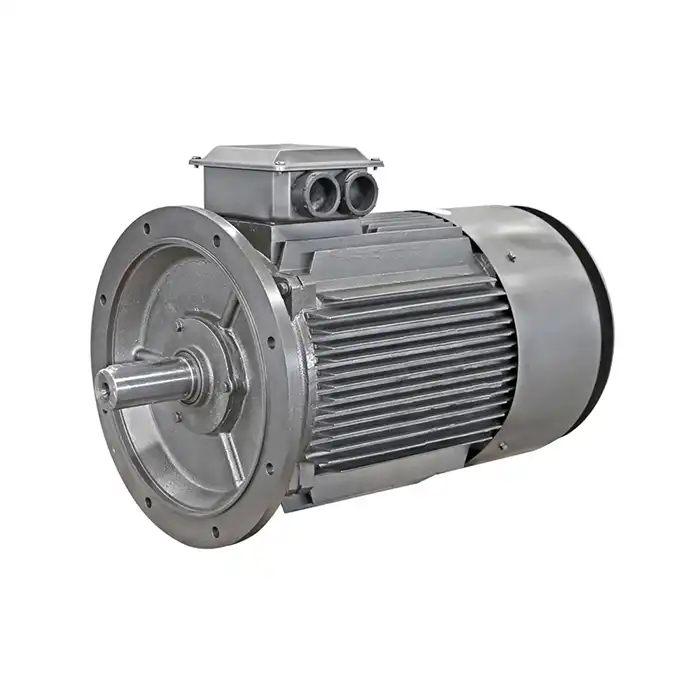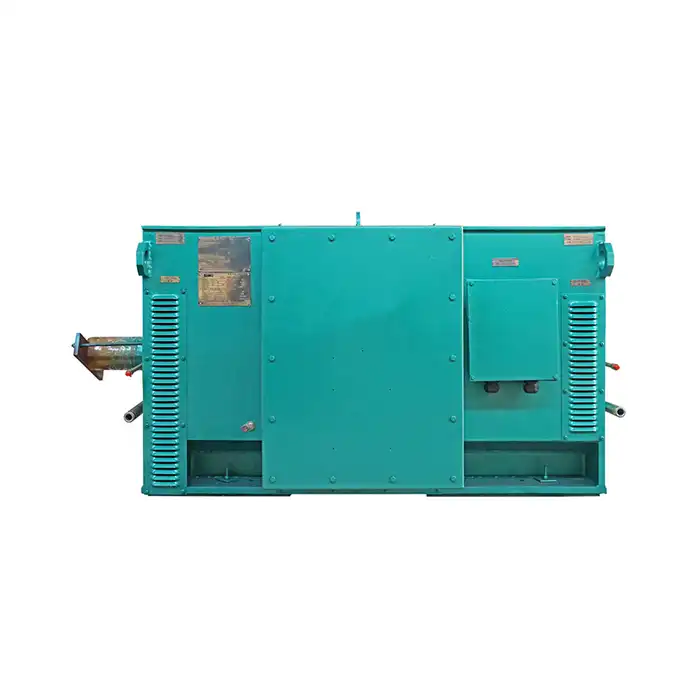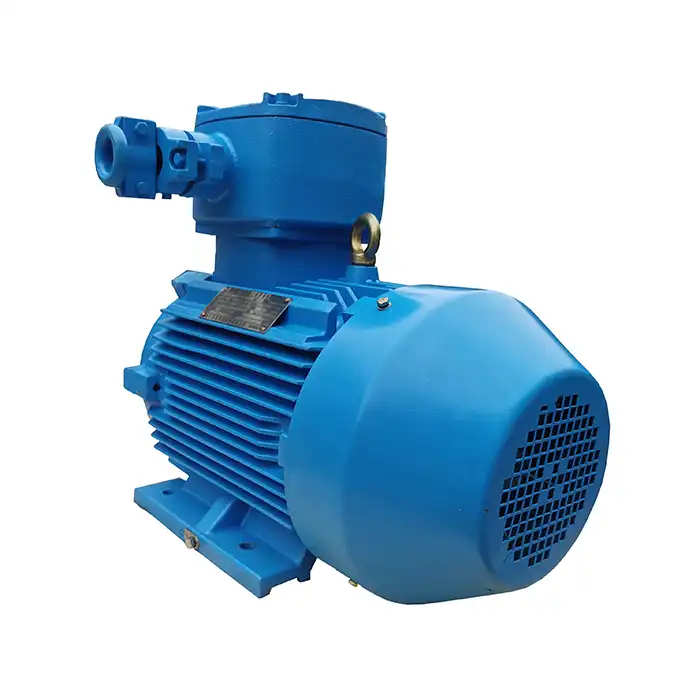




How Does a Slip Ring Rotor Induction Motor Work?
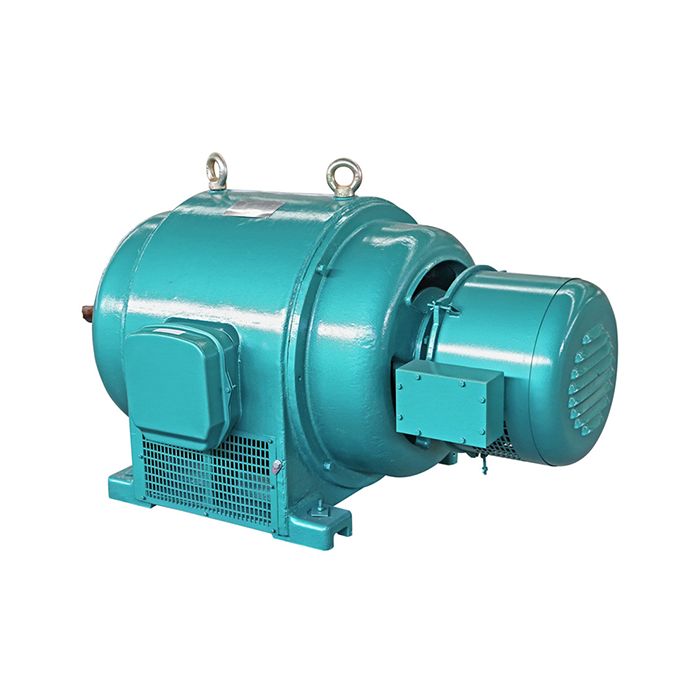
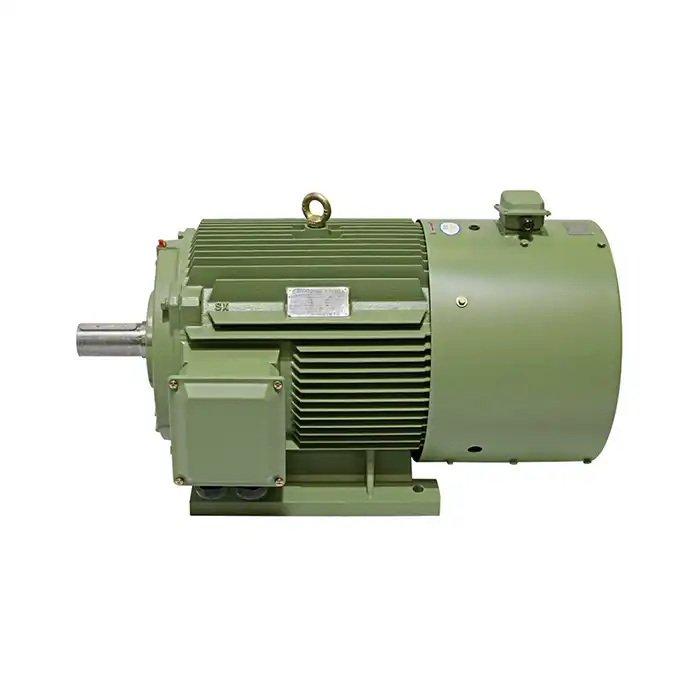
A slip ring rotor induction motor operates through electromagnetic induction, where alternating current flows through the stator windings and generates a rotating magnetic field. This field induces a current in the rotor windings, producing torque that drives the shaft. Unlike squirrel cage designs, a slip ring rotor induction motor connects the rotor windings to external resistance through slip rings and carbon brushes. This connection allows engineers to control starting current and adjust torque during startup, making the motor well-suited for heavy-load machinery that demands smooth, controlled acceleration from a standstill.
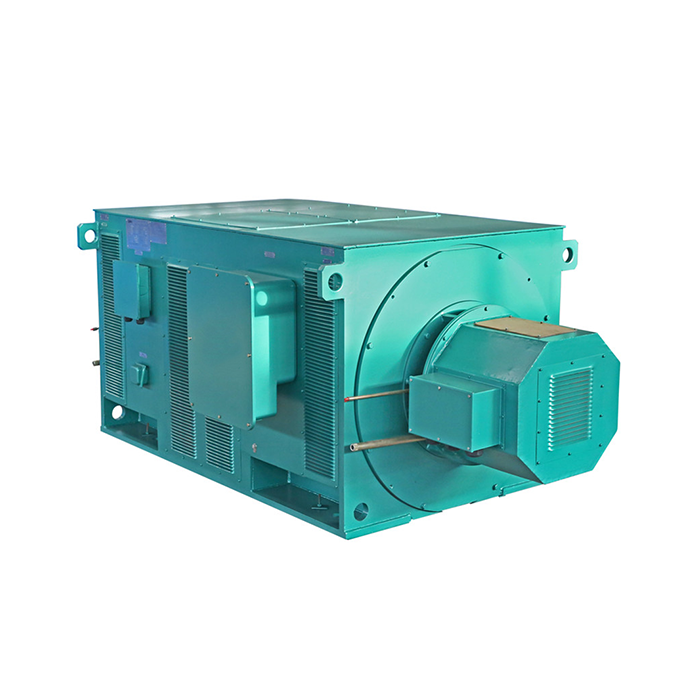
Series:YR
Protection level:IP23
Voltage range:3000V±5%,3300V±5%,6000V±5%,6600V±5%,10000V±5%,11000V±5%
Power range:200-5600 kW
Application:hoist, rolling mill, wire drawing machine.
Advantage:low noise, small vibration, reliable performance, easy installation and maintenance.
Standard: This series of products complies with JB/T10314.1-2002 and JB/T7594 standards.
Others: SKF, NSK, FAG bearings can be replaced according to customer requirements.
Understanding the Slip Ring Rotor Induction Motor
The main thing that makes a wound-rotor motor different is how its rotor is built. The rotor has three-phase copper windings that end at slip rings on the shaft instead of short-circuited copper bars. Carbon brushes that stay in place press against these rings, making an electrical path to resistors outside the circuit.
How Slip Rings Transfer Power
A slip ring in a slip ring rotor induction motor is made up of a metal ring that is conductive (usually brass or silver-plated) and brushes that stay in place and make constant contact. This part moves electricity from the rotating rotor circuit to the external resistance bank without tripping wires or stopping the flow of current. The external resistance goes down gradually as the motor speeds up. This lets the rotor current rise naturally and the power stay at its rated running levels.
The Role of External Resistance in Starting Control
When the motor starts up, it limits the inrush current to just 2–3 times the rated value by adding a lot of resistance to the rotor circuit. When first turned on, a standard squirrel cage motor draws 5–7 times its rated current. This puts stress on both the motor and the power grid. With external resistance control, the wound-rotor design can get starting torques of 1.8 to 2.5 times rated torque at the same time. This is enough to move heavy conveyors, ball mills, and crushers from a stop without any mechanical shock.
Advantages and Applications of Wound-Rotor Motors
Heavy industrial settings put a lot of stress on motors, and general-purpose designs don't always work well in those conditions. These needs can be met by a wound-rotor motor, which has both controlled starting behavior and strong overload capacity. Here are the main pro's of using this type of motor:
- Controlled inrush current: The starting current stays at two to three times the maximum current. This keeps the grid stable and keeps the stator windings from getting too hot during repeated starts.
- High starting torque on demand: Starting torque can reach 1.8 to 2.5 times maximum torque, which makes it possible for big machines like crushers, rolling mills, and large conveyors to start up reliably at full load.
- Short-duration overload tolerance: Slip ring rotor induction motor can handle 3–4 times its maximum torque for 15–30 seconds, which lets it handle sudden impact loads that are typical in heavy production and mining.
- Accessible maintenance: Slip rings and brushes are mounted on the outside, so they don't need to be completely taken apart for regular inspections like looking for wear on the brushes and cleaning carbon deposits off of the rings. Compared to squirrel cage motors, this method makes servicing more efficient by more than 40%.
In a wide range of challenging situations, these benefits directly lead to less downtime and lower repair costs. The YRQ series slip ring rotor induction motor from XCMOTOR has an IP23 rating and can handle 45–710 kW of power at 380V±5%. It can be used in coal mines, power plants, factories that make machinery, and other industrial settings. You can choose from SKF, NSK, and FAG bearings, depending on the operating conditions and your personal preference.
Typical deployment environments include crushing and grinding circuits in mines, fan and pump drives in power plants, rolling mill drives in steel plants, ship propulsion support systems, and cutting machine tool drives in factories.
Slip Ring Rotor Induction Motor vs. Other Motor Types
A lot of the time, procurement teams compare wound-rotor motors to synchronous, variable frequency, and squirrel cage motors. Before making a buy, you should think about the pros and cons of each choice.
Where the Wound-Rotor Design Holds Its Ground
Although squirrel cage motors are cheaper to buy and don't need much upkeep, they have a high inrush current and can't change the torque much when they first start up. Synchronous motors let you precisely control the speed, but they need more complex systems to get them going. When you pair variable frequency drives with squirrel cage motors, you can control a wide range of speeds. However, the drive gear is more expensive and could break down in dusty or noisy places, unlike a slip ring rotor induction motor which offers better starting torque and lower inrush current for demanding applications.
The wound-rotor motor is in the middle, which is good for most situations. It has a simple external resistance circuit that works physically well to give it a strong starting force and low inrush current. It doesn't need complex power electronics. This trait alone makes picking worthwhile in places where the electricity infrastructure is old or where the grid capacity is limited. When heavy loads need to be started up a lot, like with ball mills, hoists, and big compressors, the wound-rotor design keeps the motor from wearing out as quickly and for longer than direct-on-line squirrel cage options.
Procurement Considerations for Wound-Rotor Motors
It's not enough to just match the nameplate voltage and power when choosing the right motor. Before making an order, procurement managers and repair supervisors need to check a number of factors.
Key Specifications to Confirm Before Ordering
The first thing that needs to be checked is that the nameplates match. The frame size, mounting configuration, shaft diameter, and connection measurements must all match the current base so that expensive upgrades don't have to be made. The installation environment must be right for the voltage tolerance, insulation class, and protection rating. The YRQ series comes with IP23 protection, which makes it suitable for use in indoor and partially covered industrial settings.
Supplier Reliability and Lead Time
When a burned motor stops production, delivery speed is very important. XCMOTOR, a high quality slip ring motor supplier, offers faster wait times and works with more than 30 well-known motor makers to make sure they can get reliable parts. Technical help, extra parts (like brushes and slip ring assemblies), and a 30-day return policy are all part of the after-sales service. The YRQ series' yearly upkeep costs are about 6% to 9% of the purchase price. This is a measured number that helps with figuring out the total cost of ownership when evaluating a procurement.
It's just as important to check certifications. The YRQ series is certified by CCC and CE, meets ISO 9001:2000 quality management standards, and has CRCC railroad approval. This gives global buying teams peace of mind when they have to deal with different compliance requirements.
Conclusion
One problem that comes up a lot in heavy industry is how to start big mechanical loads smoothly without overloading the power supply or breaking things. A slip ring rotor induction motor solves this problem. The wound-rotor design does this with a simple system that lets users directly control the starting force and current: slip rings apply resistance from the outside. The YRQ line, which ranges from 45 to 710 kW at 380V, can do this in places like steel mills, coal mines, power plants, and factories. With brushes and rings that can be reached from the outside, maintenance is still easy to do, and standard parts make replacement costs predictable. As a high quality slip ring motor supplier, we ensure reliable performance and consistent quality across all configurations.
FAQ
1. How does starting current in a wound-rotor motor compare to a squirrel cage motor?
By adding resistance to the rotor circuit, a wound-rotor motor reduces the starting current to two to three times the stated value. When it first starts up, a squirrel cage motor usually draws 5–7 times its rated current. This lower inrush saves the stability of the grid and lowers the thermal stress that happens during multiple starts.
2. What routine maintenance does a slip ring rotor induction motor require?
As part of maintenance, the carbon brush wear is checked, and the slip ring contact surfaces are cleaned to get rid of carbon buildup. Technicians can do these checks without taking apart the motor body because the slip rings and brushes are on the outside. This keeps the planned repair intervals short.
3. Can the motor specifications be customized for specific equipment?
Yes, XCMOTOR can change frame sizes, shaft configurations, bearing brands (such as SKF, NSK, or FAG), and other details to fit existing equipment footprints. This means that foundations or coupling arrangements don't need to be changed.
Get a Direct Quote from XCMOTOR for Your Wound-Rotor Motor Needs
For more than 20 years, XCMOTOR has sold reliable wound-rotor motors to businesses in mining, power generation, and heavy manufacturing. Because we are a high quality slip ring motor supplier, we match nameplate parameters exactly, offer fast delivery, and offer a 30-day return policy on all of our products. To get a quote, email xcmotors@163.com with your motor specs or go to motorxc.com. When equipment breaks down, speed is important, so our technical team gets to you quickly.
References
1. Chapman, S. J. Electric Machinery Fundamentals. McGraw-Hill Education, 2011.
2. Wildi, T. Electrical Machines, Drives, and Power Systems. Pearson Prentice Hall, 2006.
3. Boldea, I., & Nasar, S. A. The Induction Machine Handbook. CRC Press, 2002.
4. Mohan, N., Undeland, T. M., & Robbins, W. P. Power Electronics: Converters, Applications, and Design. John Wiley & Sons, 2003.
5. IEEE Standard 112. IEEE Standard Test Procedure for Polyphase Induction Motors and Generators. IEEE, 2017.
6. Veinott, C. G., & Martin, J. E. Fractional and Subfractional Horsepower Electric Motors. McGraw-Hill, 1986.