



How an Inverter Duty Motor Handles VFD Voltage Spikes
When a variable frequency drive switches power at high speed, it creates voltage spikes that can silently destroy a standard motor from the inside out. An inverter duty motor is built specifically to survive this electrical environment. Through reinforced winding insulation, independent forced cooling, and bearing protection designed to block shaft current, these motors keep running where standard motors fail. This article explains the mechanics behind VFD-induced voltage spikes, how an inverter duty motor resists them, and what to look for when sourcing one for crane, hoist, elevator, or stage machinery applications.
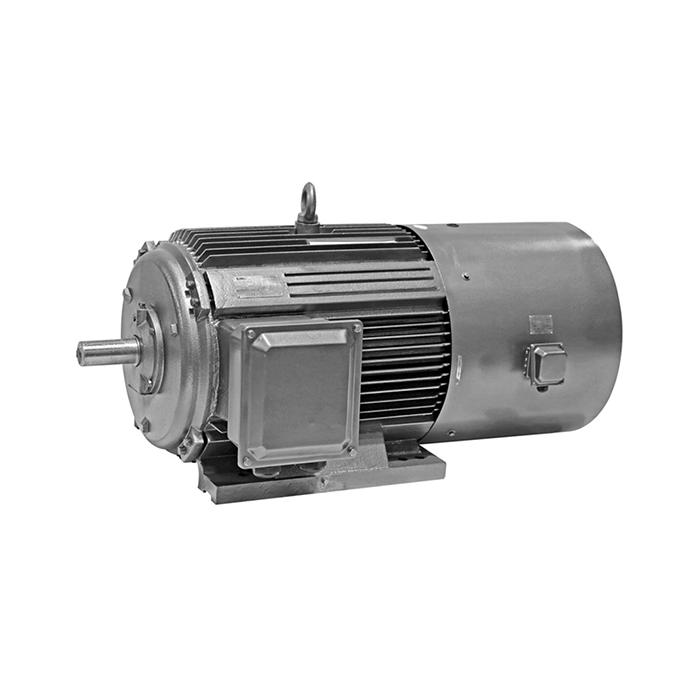
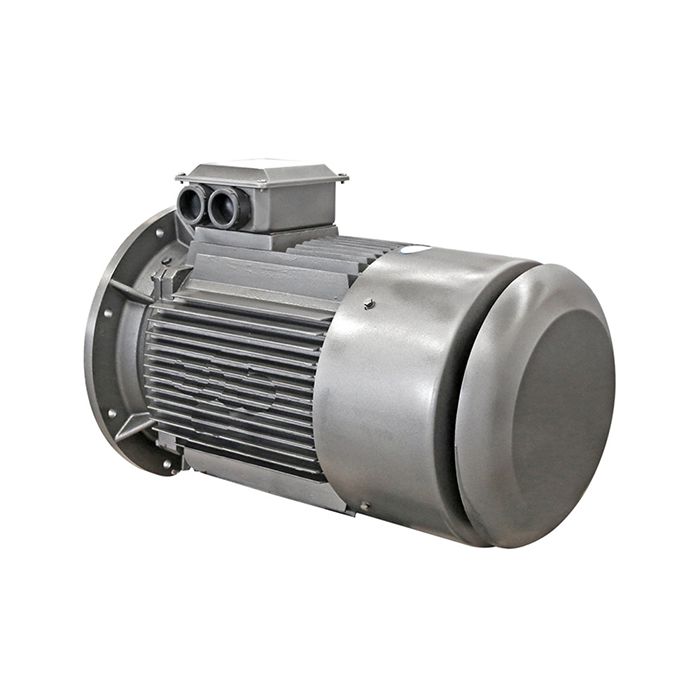
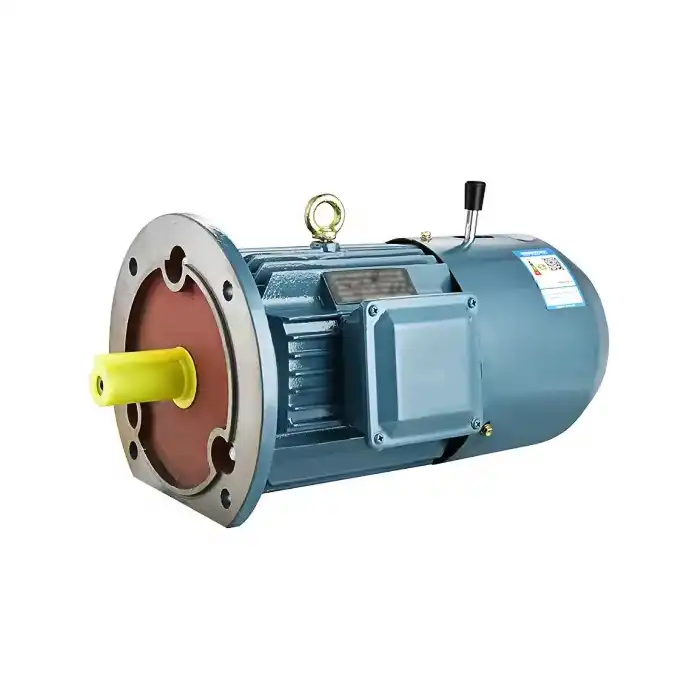
Series:YVFE2
Frequency conversion range:30hz~50hz,5hz~70hz,5hz~100hz
Power range:0.75-355kW
Protection level:IP55
Application:are suitable for driving various mechanical equipment that require continuous and frequent forward and reverse rotation, such as steel rolling, lifting, transportation, machine tools, printing and dyeing, papermaking, chemicals, textiles, pharmaceuticals, etc., and can be used with various domestic and foreign variable frequency power supplies.
Advantage:high efficiency, wide speed range, high precision, stable operation, and easy operation and maintenance.
Certificate:installation dimensions comply with International Electrotechnical Commission (IEC) standards.
Others: SKF, NSK, FAG bearings can be replaced according to customer requirements.
Understanding VFD Voltage Spikes and Their Impact on Motors
Every VFD makes its output with PWM, which stands for pulse-width modulation. A lot of times a second, the drive turns transistors on and off. This creates a bunch of voltage pulses instead of a smooth sine wave. These pulses move down the motor line. Depending on how long the cable is and how different its impedances are, the pulses may pass back and forth. There may be a voltage spike up to three times the normal bus voltage at the motor connections. This event may only last a short time.
Why Long Cable Runs Make Spikes Worse
Cable is a way to send data. Once the cable is longer than 50 feet, you can see the effects of the reflected waves. This means that in a standard 460 V system, final jumps above 1,200 V are possible. Because of this, NEMA MG 1 Part 31 sets a peak limit of 1,600 V for inverter duty motors on 460 V circuits.
How Standard Motors React to Spikes
In a general-purpose motor, insulation that can handle a pure sine wave environment is used. A process called partial discharge breaks down the insulation over time when transient spikes happen over and over again. This happens when there is a lot of electric field stress and small holes in the insulation of the winding ionize. It breaks after a few months of use because the holes turn into cracks. Bearing fluting from shaft current is another common reason why normal motors that are run by a VFD break down.
The Contrast with VFD-Rated Motors
NEMA MG 1 Part 31 and IEC TS 60034-25 say that a "inverter duty motor" can handle more voltage for a longer time. Both rules say that the motor must be able to handle certain high voltages and rise times without the shielding breaking. Before giving a seller the go-ahead, buying experts should make sure that this dual compliance meets the most basic technology requirements.
Core Features of Inverter Duty Motors That Mitigate Voltage Spikes
The engineering differences between a standard motor and a genuine inverter duty motor are not cosmetic. They show up in the winding room, the bearing housing, and the cooling system.
Reinforced Winding Insulation
The YVFE2 series from XCMOTOR uses Class F insulation rated at 155°C. The turn-to-turn insulation layer of a vfd rated motor is thicker and manufactured from materials with higher partial discharge resistance. This directly limits the erosion caused by PWM waveforms at switching frequencies between 2 kHz and 16 kHz.
Bearing Protection Against Shaft Current
VFDs induce common-mode voltages that drive circulating currents through the motor shaft and into the bearings. Over time, these currents pit the bearing races in a pattern called fluting. The YVFE2 motor accepts optional insulated end shields and is compatible with SKF, NSK, or FAG bearing upgrades, giving engineers a direct path to eliminate this failure mode.
IC416 Independent Forced Cooling
At low speeds, a self-cooling motor loses airflow proportionally. The YVFE2 uses IC416 independent forced cooling, where a separately powered axial fan runs at constant speed regardless of motor shaft speed. This keeps winding temperature stable from 5 Hz all the way to 100 Hz, which is essential for crane and hoist duty cycles that spend long periods at low speed under full load.
These three design choices together explain why a properly specified inverter duty motor lasts significantly longer in VFD service than a standard motor operating under the same electrical conditions.
How Inverter Duty Motors Work with VFDs to Handle Voltage Spikes
Part of the picture is being able to figure out how each part fits together. The other part is seeing how the motor and drive really work together.
Accommodating Fast Voltage Rise Times
The NEMA MG 1 Part 31 says that an inverter duty motor needs to be able to handle voltage rise times of up to 0.1 microseconds. Statistics show that most failures happen in the first few turns, which is why the form of the YVFE2 winding is made to spread transient voltage evenly across them. This even spread keeps stress from building up in one spot, which would have caused insulation to fail too soon.
Four-Quadrant Operation for Crane and Hoist OEMs
When used with a crane or lift, the motor needs to be able to move and stop the load. The motor can send regenerative energy back to the DC bus as it slows down when it works in four-quadrant mode. This keeps the energy from being used up in a resistor. This mode can use the YVFE2's full speed range, from 5 Hz to 100 Hz, and can set the speed to a ratio of up to 1:20. In many cases with more than one speed, this means that a mechanical clutch is not needed.
Practical Maintenance Steps to Catch Problems Early
Because I work in the field, I know that most VFD motors give off warning signs before they break down completely. A thermal monitor can be used to check the temperature of the windings every three months. You should also look at the shaking patterns of the bearings every three months and make sure the VFD output filters are still in good shape. With the YVFE2, temperature monitors and encoder feedback can be built in right away. In other words, predictive repair programs can work without any changes being made from the outside.
Comparing Inverter Duty Motors with Other Motor Types Regarding Spike Resistance
It is worth being direct about what differentiates an inverter duty motor from the alternatives a procurement team might consider.
General-Purpose Motors Under VFD Control
A general-purpose motor can run on a VFD at reduced speed range, but its insulation system is not designed for the peak voltages or the thermal cycling that variable speed operation produces. For applications where the motor runs continuously at variable speed, general-purpose motors carry a meaningfully higher risk of early failure.
NEMA vs. IEC Standard Compliance
NEMA MG 1 Part 31 is the primary U.S. reference for inverter duty motors, specifying peak voltage tolerance and rise time requirements. IEC TS 60034-25 covers similar ground for international markets. The YVFE2 series meets IEC installation dimension standards and carries CCC and CE certification, which allows it to be specified on projects requiring either compliance framework. Procurement engineers working on U.S. projects should confirm that the supplier can document both standard references in the technical data sheet.
Total Cost of Ownership
An inverter duty motor with inverter typically costs more upfront than a general-purpose equivalent. However, a single unplanned motor failure on a bridge crane or stage lift can cost far more in lost production or safety incidents than the price difference between motor types. When lifecycle cost includes avoided downtime and reduced maintenance labor, the economics favor the purpose-built design clearly.
Procurement Insights: Buying Inverter Duty Motors for VFD Applications
Technical specification is only the first step. Sourcing execution determines whether the motor that arrives on the assembly floor matches what the data sheet describes.
Verifying Supplier Credentials
XCMOTOR supplies the YVFE2 series with CCC, CE, and ISO 9001 certification documentation. The production process follows 100% performance testing before shipment, with a final inspection against IEC standards. Procurement teams should request these test records as part of the delivery package rather than accepting a certificate copy alone.
Customization for OEM Applications
Crane and elevator OEMs frequently need motors configured for specific shaft dimensions, brake mounting interfaces, and encoder connections. The YVFE2 accepts dimensional adjustments, integrated brake systems, encoder mounting, and thermal sensor wiring as factory-configured options. This eliminates field modification work that can void warranty coverage or introduce assembly errors.
Lead Times and Supply Chain Reliability
XCMOTOR maintains partnerships with over 30 motor manufacturers and manages production through an SAP system. Standard YVFE2 configurations ship with free delivery. For OEMs operating on a 6-to-10-week procurement cycle from technical specification to pilot production, confirmed lead times and a 30-day return policy reduce the scheduling risk of the trial build phase.
Conclusion
Voltage spikes from a VFD can damage motor shielding, and a normal motor isn't built to handle them all their lives. With a inverter duty motor, this can be fixed. These motors have better insulation, protect against shaft current, and cool down on their own at any speed. With three frequency ranges, IP55 protection, Class F insulation, and a range of 0.75 kW to 355 kW, the YVFE2 series has it all. This makes it a good choice for companies that make cranes, hoists, lifts, and stage equipment. It is still very important to make sure that the product meets both NEMA MG 1 Part 31 and IEC TS 60034-25 before you buy it.
FAQ
1.Can a standard motor run on a VFD if the speed range is limited?
Yes, but there are some rules. In a certain speed range, a normal motor can work on a VFD that has a sine filter to lessen the power of voltage spikes. But insulation wears out faster even when PWM stress is low, and there is still a chance that bearing shaft current will happen. An inverter duty motor is the best choice for variable speed duty that runs all the time.
2.What maintenance practices extend the life of a VFD-rated motor?
Check the insulation resistance of the windings once a year with a megohmmeter set to 500 V DC. Check for vibrations in the bearings every three to six months. Check to see if the VFD output filter is still working well and that the cables are tightly connected. Motors that have built-in thermal monitors can keep track of temperature without having to check it by hand.
3.How do I confirm that a motor meets NEMA MG 1 Part 31?
Ask the seller for the test report that lists the equipment's maximum voltage tolerance (1,600 V for 460 V systems) and its minimum voltage rise time tolerance (0.1 µs). The data sheet isn't enough by itself. A real inverter duty motor seller will give you test records if you ask for them.
4.What encoder and brake options are available for the YVFE2?
The YVFE2 can have an encoder built in for position input and closed-loop speed control. The plant can add built-in stop devices for pulling jobs that need to be done safely. When the order is made, the wiring for the thermal monitors can also be changed.
Get the Right Inverter Duty Motor for Your Application — Contact XCMOTOR
XCMOTOR sells the YVFE2 line of inverter duty motors. They come in power ranges from 0.75 kW to 355 kW, and you can get them with encoders, brakes, and heat sensors already built in. Every one of our inverter duty motors comes with free shipping, expert help seven days a week, and paperwork from CCC, CE, and ISO 9001. We are a well-known company that makes these motors. If you want to see the full catalog of products and get a custom quote, you can email xcmotors@163.com with your needs.
References
1. National Electrical Manufacturers Association. NEMA MG 1: Motors and Generators, Part 31 – Definite-Purpose Inverter-Fed Polyphase Motors. NEMA, 2021.
2. International Electrotechnical Commission. IEC TS 60034-25: Rotating Electrical Machines – Guidance for the Design and Performance of AC Motors Specifically Designed for Use with Variable Frequency Drives. IEC, 2014.
3. Bonnett, A. H., and Soukup, G. C. "Cause and Analysis of Stator and Rotor Failures in Three-Phase Squirrel-Cage Induction Motors." IEEE Transactions on Industry Applications, 1992.
4. Erdman, J. M., Kerkman, R. J., Schlegel, D. W., and Skibinski, G. L. "Effect of PWM Inverters on AC Motor Bearing Currents and Shaft Voltages." IEEE Transactions on Industry Applications, 1996.
5. Melfi, M., Umans, S., and Lipo, T. "Winding Insulation Capability and Endurance of Definite-Purpose Inverter-Fed Motors." IEEE Transactions on Industry Applications, 2010.
6. Skibinski, G. L., Kerkman, R. J., and Schlegel, D. W. "EMI Emissions of Modern PWM AC Drives." IEEE Industry Applications Magazine, 1999.