



How Long Is Motor Lifespan? Heat, Load, Duty Factors
Most industrial AC motors carry a rated motor lifespan of 15 to 20 years under continuous full-load service. In practice, actual service life varies widely. A well-maintained motor running at 75% load in a clean, temperature-controlled environment can exceed 30 years. One that runs overloaded, overheated, or through frequent starts and stops may fail in under five years. Understanding what drives that gap — heat accumulation, mechanical load, and duty cycle — is the difference between a procurement decision that pays off and one that adds unplanned cost every few years.
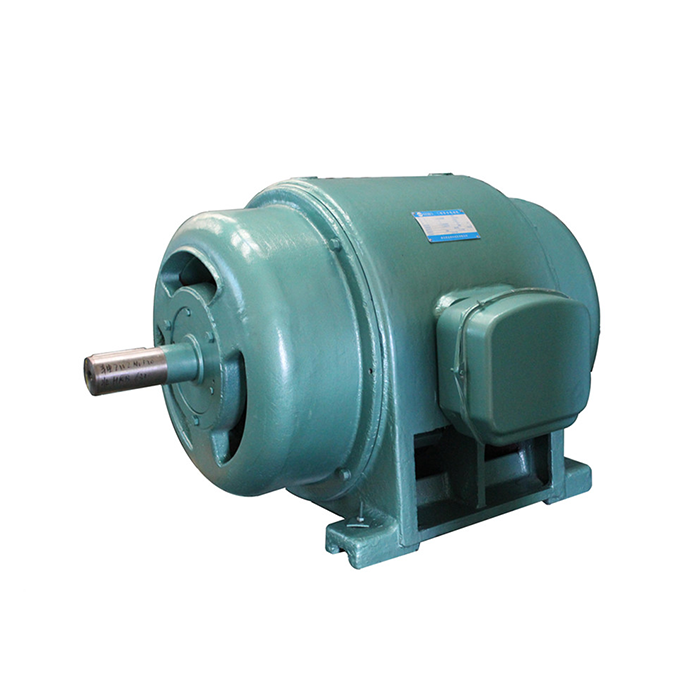
Voltage range:380V±5%
Power range:45-800kW
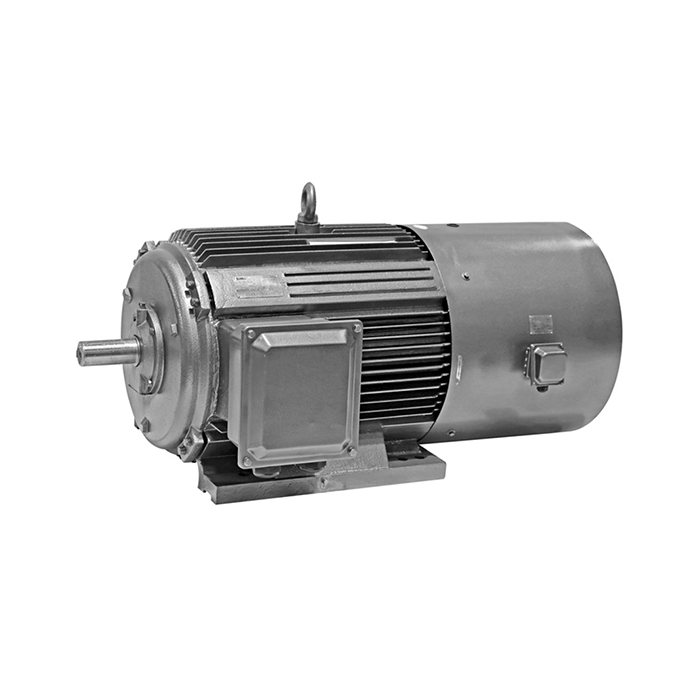
Application:YRQ(JR) series medium-sized motors can drive a variety of different machinery, such as fans, compressors, water pumps, crushers, ball mills, cutting machine tools, transportation machinery and other equipment, and can be used in coal mines, machinery industries, power plants and various industrial and mining enterprises. Used as prime mover.
Advantage: The JR series medium-sized motors have very powerful driving capabilities and can not only drive conventional mechanical equipment, but also some complex mechanical equipment. For example, it can drive heavy machinery such as ships, cranes, and wind turbines, as well as small household appliances, purifiers, compressors, etc.
Others: SKF, NSK, FAG bearings can be replaced according to customer requirements.
Understanding Motor Lifespan: Basics and Key Influences
What "Motor Lifespan" Actually Means
Motor lifespan is the total amount of time a motor can run before its parts stop working right. Rule 101 from IEEE says that thermal age and insulation life are directly related. When the temperature of the winding goes up by 10 °C, the insulation lasts about half as long. Why does controlling heat come up first when people talk about ways to make motors last longer? Because of that one link.
The Three Forces That Shorten Motor Life
A motor's life is cut short by heat, load, and duty cycle. Insulation breaks down faster when there is too much heat. When they are overloaded, bearings and shaft seals get broken. When cranes and compressors are used, they start and stop a lot. This causes current jumps that wear out windings much faster than steady current. They all work together, so there is no one thing that works by itself.
Early Warning Signs You Should Not Ignore
The motor is losing its usable life when it starts to vibrate in unusual ways, create noise from the bearings, get too hot around the windings, or its insulating resistance drops below 1 M©. If the maintenance personnel look for these early warning indicators, by frequently testing for noise, insulation resistance and temperature changes, you can prevent a forced shutdown from occurring.
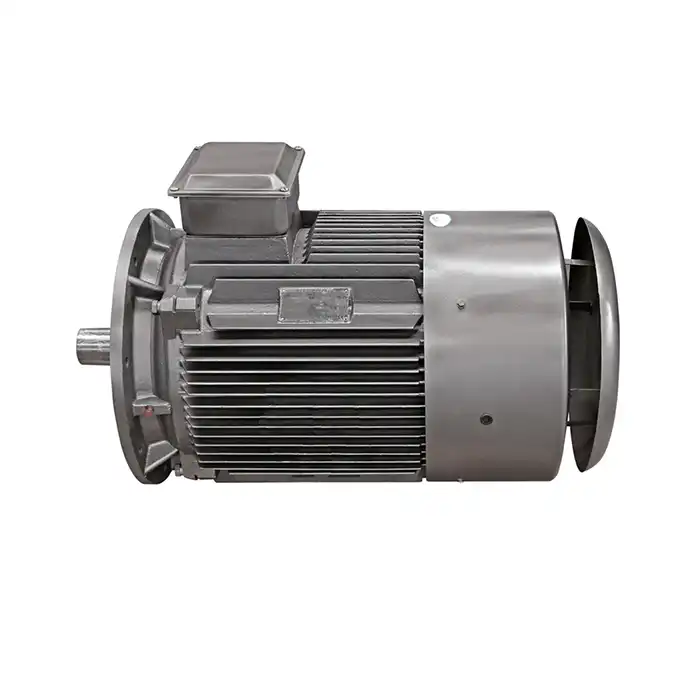
If you require an AC induction motor for a fan / pump / compressor in a business context, you better choose one of these over brushes. The two basic ways that an electric motor breaks down ( in the absence of wear of the brush-to-commutator contact ) are bearing stress and winding insulation age . If you have a correctly sized IE3 rated AC motor, running at its thermal class, you should be able to obtain 15 to 25 years before you have to replace or rewind it.
Extending Motor Lifespan: Maintenance, Testing, and Best Practices
Routine Maintenance That Pays Off
Checking the connection torque, cleaning the windings and re-oiling the bearings should be part of routine motor maintenance for extend motor lifespan. All XCMOTOR motors are equipped with SKF, NSK and FAG bearings. There are written instructions on how to re-grease these bearings according to speed and load. If you follow those breaks you won't get too fatigued too soon. Cleaning the airways and ensuring the fans can spin freely costs nearly nothing, rather than needing to do an emergency fix on the whole thing.
Diagnostic Techniques Worth Implementing
Here are three proven ways to test your motor’s health and discover early signs of trouble:
- Vibration analysis is used for ongoing evaluation of bearing and rotor condition. Bearing problem frequencies often show an increase in vibration amplitude for weeks before an audible breakdown, enabling time for planned replacement instead of a hasty shutdown.
- Thermal imaging can identify hot spots in windings, connectors and bearings during regular operation without the need to stop down. Immediately investigate a temperature rise of 20 °C over the temperature of the nearby winding sections.
- Dielectric state of stator windings is determined by insulation resistance (IR) testing with a megohmmeter. IR levels trending over time indicate moisture infiltration and insulation ageing prior to a turn-to-turn fault developing.
Insulation resistance (IR) is measured by a megohmmeter and provides an indication of the quality of the insulation of the stator windings. If you have time varying IR values you know when water ingress and insulation failure happen before a turn to turn fault can occur.
Load Management and Cooling Optimisation
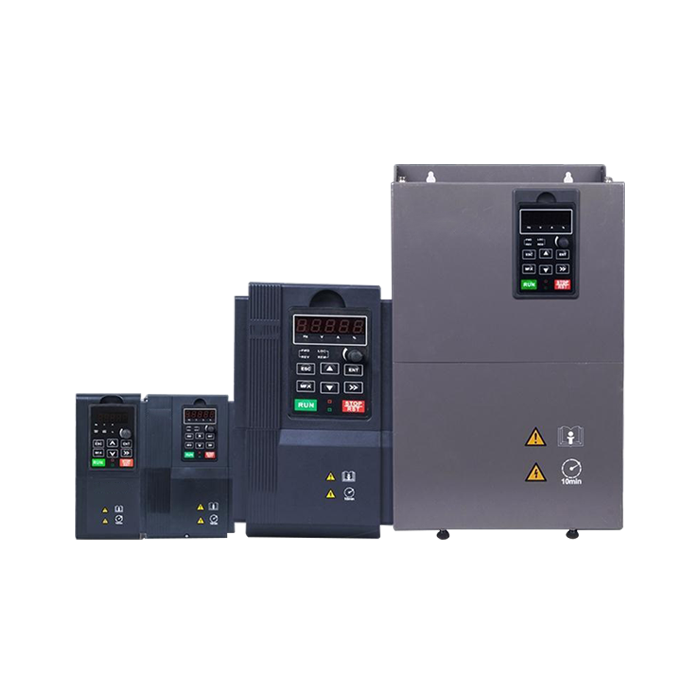
Most of the time the motor will live longer if utilised at only 70% to 80% of the rated load. It doesn’t make much difference to the energy it requires. Bigger motors generate more heat per useful kilowatt than right-size motors, as far as heat is concerned. At low speed, the winding temperature is kept constant as long as the motor is fitted with a variable frequency drive (VFD) and an auxiliary forced-cooling fan. This is useful for cases where the speed needs to be altered. This avoids the overheating of the motors in throttled-fan or throttled-pump service, which decreases their life.
Procurement Considerations: Buying Motors with Longevity in Mind
Features That Signal Long Service Life
Many people use motors in OEM applications. To make sure they last a long time, the best features include an efficiency class of IE3 or higher (lower losses mean lower operating temperature), insulation of Class F or Class H, sealing of IP55 or higher, premium bearings from certified suppliers, and vacuum pressure impregnation (VPI) of the stator winding. Every single one of these features fixes a known problem right away.
What OEM Procurement Teams Should Ask
If a plant test record is needed to prove how the motors performed in terms of insulation loss, thermal rise, vibration, and high voltage, it is the person responsible for purchasing items who has to get the motors for a pump, fan, compressor, or crane. With these papers you can be assured that each unit supplied fits the standards, and you can also use them to check on units that are already out in the field. If you have to build hundreds of units per year under a framework contract, it is equally critical that the quality of each unit is the same as it was in the last unit, ensuring a consistent motor lifespan.
After-Sales Support Is Part of the Lifespan Equation
What does happen to a motor after it is shipped is not as important as how it was made. A fleet of cars will last longer if it has technical help seven days a week, written repair instructions in more than one language, and a supply chain that can quickly get MRO spare parts. In datasheets, these things don't show up very often, but in real life, they do make a motor last longer.
Calculating and Predicting Motor Lifetime: Formulas and Industry Standards
The Arrhenius Model and the 10-Degree Rule
The IEEE Standard 101 and IEC 60034-18 describe the Arrhenius thermal aging model, which is used to figure out how temperature changes the life of insulation. The "10-degree rule" says that for every 10 °C drop in the normal winding temperature, the insulation should last twice as long. It is better for the Class F winding to work at 130 °C than at 155 °C. This is because it has a big thermal margin and will last longer than a motor that is run at its stated thermal limit.
Duty Cycle Multipliers
The duty cycles from S1 (continuous) to S9 (non-periodic) are defined by IEC and NEMA. A motor designed for S1 duty run may not be able to manage the steady current and temperature spikes of an S4 (intermittent periodic) application. At the design stage, the correct task class for the job avoids early wear and tear that cannot be remedied with maintenance.
Warranty vs. Actual Lifespan
Warranty terms are typically 12 to 24 months after delivery, and demonstrate how certain the manufacturer is that the device will perform well in the first few months, not how long it will survive in total. B2B buyers typically confuse the two and fail to budget adequately for planned rounds of repairs. A good IE3 motor that is in continuous operation in an industrial application should have its bearings replaced every five years, its motor can be restarted every ten to fifteen years and should be fully replaced every twenty to twenty-five years.
Conclusion
The motor lifespan is not fixed when they are created, it is varying from day to day dependent upon working temperature, load level, job pattern and maintenance level. IE3-rated motors with Class F insulation, IP55 coverings and excellent bearings are better due to their construction. “By controlling heat, getting the right size and checking diagnostics every quarter, the edge is still the same after more than 20 years.” Buying teams spend millions of dollars on motors every year. That price differential between a 10 year motor and a 25 year motor is not a minor thing. It is a budget line item that is floating around each cycle.
FAQ
1.How long does a typical industrial AC motor last?
If you service the IE3 AC induction motor at full load and fix it often, it should last between 15 and 25 years. When motors are running at 70–80% of their rated load in clean areas, they often go over that range. No matter what the number on the plate says, the real service life can be less than 10 years if it is used too much, under harsh conditions, or without being oiled.
2.What kills a motor faster than anything else?
Motors often break down before they should because they get too hot for too long. When the temperature goes up, insulation in windings breaks down very quickly. If you run your machine 20 °C above the rated class limit, the insulation will only last a few thousand hours instead of 20,000. The next most common reasons are that the bearings aren't well oiled enough and there are voltage differences of more than 2%.
3.How often should bearings be replaced?
When bearings need to be changed depends on how much weight they are carrying, how fast they are moving, and how good the grease is. When used in a normal industrial setting with good bearings and the right amount of grease, maintenance should be done every 4 to 6 years. Less often needs to be checked on motors that are used a lot or that are in dusty or wet places.
4.Does efficiency class affect how long a motor lasts?
Yes. A motor that is less efficient has more internal losses than a motor that is more efficient. In other words, it works better when it's cooler. IEC 60034-18 uses the Arrhenius thermal aging model to show that insulation lasts longer when it is cooler.
5.What information should I request before buying a motor for long-service OEM duty?
Ask the factory for test records that show how the product did in terms of high-voltage resistance, vibration analysis, insulation resistance, and thermal rise. Check the duty class, insulation class, protection grade, and bearing specification to make sure they fit your needs before you place the order.
Get Long-Life AC Motors from XCMOTOR — Request a Quote Today
XCMOTOR has AC motors with an IE3 rating in all LV and HV power ranges. These motors come with SKF, NSK, and FAG bearing packages, Class F insulation, and IP55 protection out of the box. These all have a direct effect on how long the motor lasts. We have been a reliable motor lifespan supplier for more than 20 years. We back up every unit with test records from the factory and technical support seven days a week. If you are in charge of buying multiple SKUs every year as an OEM, you can send an RFQ to xcmotors@163.com or visit motorxc.com for more information and prices.
References
1. IEEE Standard 101 — Guide for the Statistical Analysis of Electrical Insulation Breakdown Data, Institute of Electrical and Electronics Engineers, 1987.
2. IEC 60034-18 — Rotating Electrical Machines: Functional Evaluation of Insulation Systems, International Electrotechnical Commission, 2010.
3. IEC 60034-30-1 — Rotating Electrical Machines: Efficiency Classes of Line Operated AC Motors, International Electrotechnical Commission, 2014.
4. Bonnett, A. H., & Soukup, G. C. — "Cause and Analysis of Stator and Rotor Failures in Three-Phase Squirrel-Cage Induction Motors," IEEE Transactions on Industry Applications, 1992.
5. NEMA MG 1 — Motors and Generators, National Electrical Manufacturers Association, 2021.
6. Tavner, P. J., Ran, L., Penman, J., & Sedding, H. — Condition Monitoring of Rotating Electrical Machines, The Institution of Engineering and Technology, 2008.