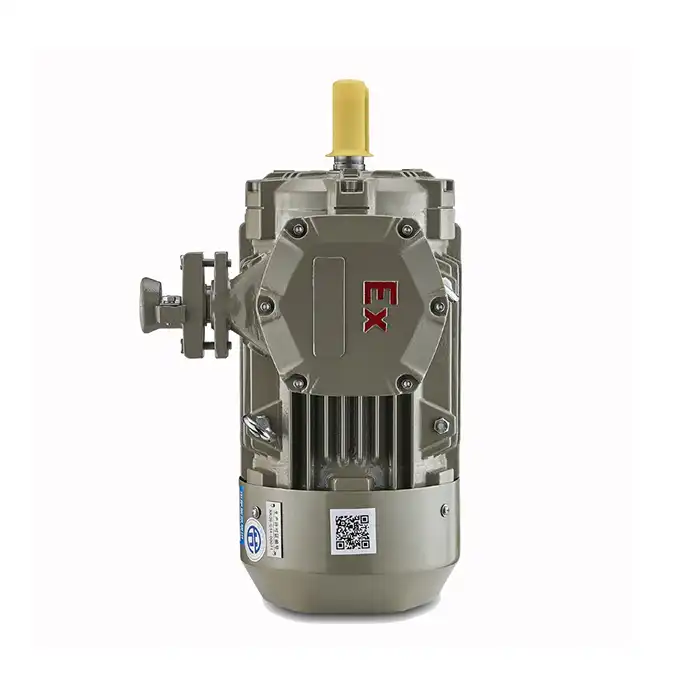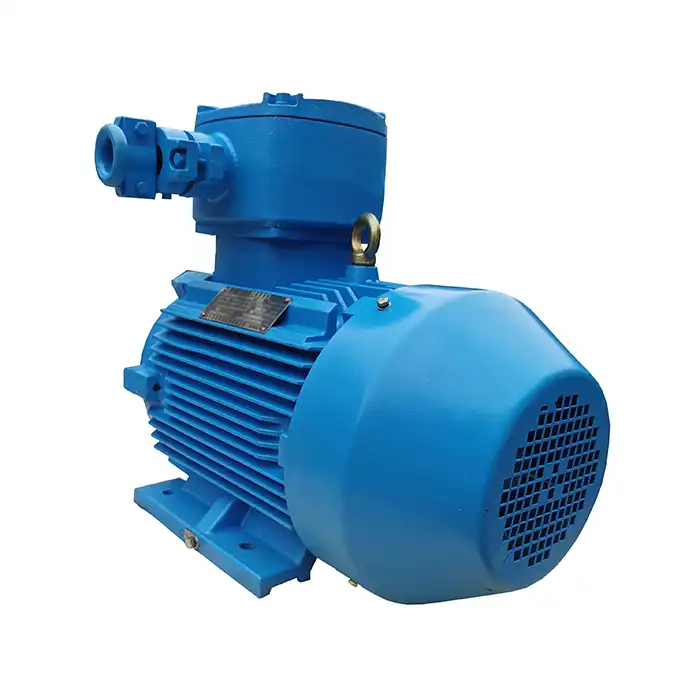




YE3 160M 4 Motor: Cooling Method and Fan Design
The ye3 160m 4 has a design called IEC code IC411 that is completely enclosed and cooled by fans. The back shaft has a fan that moves air over the ribbed cast iron frame. The frame moves heat away from the windings, rotor, and bearings. The motor stays sealed to IP55 while it runs thanks to this simple path. This guide explains how the cooling method works, what the fan does, and how the temperature rises in different situations. I also talk about choosing, installing, maintaining, and the paperwork that OEM buyers should ask for before they place an order.

Series:YE3
Frame number: 80-450
Power range:0.75-1000kW
Protection level:IP55
Energy efficiency class: IE3
Voltage range: 380V,400V,415V,660V, etc.
Application:can be used in various fields of the national economy, such as machine tools,water pumps,fans,compressors,and can also be used in transportation, mixing, printing, agricultural machinery, food and other occasions that do not contain flammable, explosive or corrosive gases.
Certificate: international standard IEC60034-30 "Efficiency Classification of Single-speed Three-Phase Squirrel Cage Induction Motors".
Advantage:The high quality of the electric motor guarantees high operational reliability.
Others: SKF, NSK, FAG bearings can be replaced according to customer requirements.
Understanding the YE3 160M 4 Motor and Its Cooling Basics
What Is the YE3 160M 4 Motor?
The ye3 160m 4 is an IE3 class squirrel cage induction motor with three phases and four poles. It is defined by IEC 60034-30. The name tells you something useful. We have "YE3" for the efficiency class, "160M" for the IEC frame size, and "4" for the pole count. This gives us a rated speed of 1460 rpm at 50 Hz. Usually, the 160M frame can hold 11 kW. Frames from 80 to 450 and 0.75 to 1000 kW are in the wider XCMOTOR YE3 range, so one supplier can meet the needs of a number of different drive sizes. Water pumps, fans, compressors, conveyor belts, and machine tools are all common uses. Make sure you know the power, voltage, frequency, mounting type, shaft size, and position of the terminal box before you buy.
How the YE3 160M 4 Cooling System Works
IC411 cooling is usually used for these kinds of motors. That code from IEC 60034-6 talks about a machine that has a fan on the rotor shaft moving air over the frame's surface. The stator winding, rotor, and core all give off heat that moves into the frame and end shields. The frame ribs then send that heat into the fan's air flow. The windings never get air from outside because the enclosure stays closed. On a ye3 160m 4, this closed path works well for steady duty at a low speed. The method only works if the air flow stays open and the ribs stay clean. The temperature of the winding can rise if it is overloaded, starts often, is hot outside, or there isn't much room for installation. Check the datasheet for the cooling code.
Product Features That Shape Heat Flow
Several of the ye3 160m 4's features affect how heat leaves the motor. It is strong because of the cast iron frame and end shields, which also move heat to the ribs. The motor is protected by IP55, which keeps dust and water jets out. It is safe to work with insulation class F at 155 °C, and the resistance method in IEC 60034-1 says that the temperature rise for this class can't be more than 105 K at 40 °C. The power factor is between 0.84 and 0.86, the starting current ratio is between 6.5 and 7.0, and the starting torque ratio is between 2.2 and 2.4. The duty cycle is just as important as the nameplate rating because it shows how often the motor is started.
Fan Design and the Factors That Change Cooling Performance
YE3 160M 4 Fan Design: Structure and Function
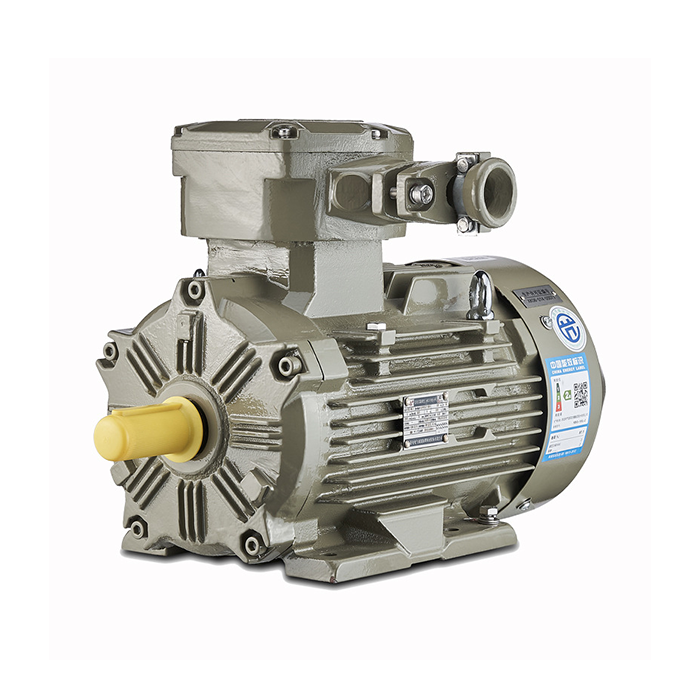
To cool down a ye3 160m 4, there is an external fan on a shaft, a fan cover, and a ribbed frame. The fan is at the end that doesn't have the drive. Along with the rotor, it turns. Air is pulled through the cover's holes and sent along the frame's ribs to the drive end. The size, shape, speed, and material of the fan blades determine the flow of air, noise, vibration, and service life. The fan turns with the shaft, so the speed of the motor affects the flow of air. Balance is also important. When a fan is out of balance, it causes more vibration and puts more stress on the bearings. The fan material and cover information are different for each build, so look them up on the datasheet.
Factors That Affect Cooling Performance
The efficiency class does not determine the temperature rise by itself. There are many things that affect this, such as the load level, electrical losses, ambient temperature, altitude, dust, moisture, and installation clearance. IEC 60034-1 sets standards for temperatures up to 40 °C and heights up to 1000 m. Because thinner air doesn't carry as much heat, sites above those limits may need to be derated. Heat transfer is slowed down even at full load if the cover is blocked or the ribs are dirty. Cabinets that are closed off can send hot exhaust air back into the fan intake. When you ask for a quote on a ye3 160m 4, please include all of the conditions under which it will be used so that we can compare them to the datasheet.
Cooling Method Compared with Alternative Designs
Self-cooled TEFCs are usually used in machines that run at a constant speed because they have few parts and don't need much service. Separate forced ventilation uses a separate fan that keeps the airflow steady at low speeds. However, it comes with a motor, wiring, and maintenance. Designs that are cooled by water work best in high-power or small systems, but they require more piping and installation work. Material for housing is also important. Cast iron makes things stiffer and more resistant to mechanical stress, which is why our ye3 160m 4 has a cast iron frame. There is more than just power to look at when comparing 160M and 160L frames. You should also look at mounting, electrical, and thermal data.
Selecting and Installing the Right Configuration
How to Select the Right Cooling Configuration
The machine is driven and performs the following functions. What kind of motor does it have? Does it drive a pump, fan, compressor, conveyor, machine tool, Is it running all the time with brief cycles at a constant pace or on a drive? Then verify that the motor is rated for the temperature, starting torque, overload requirement, mounting style, shaft size and free air flow. A fan on a shaft may be made to conduct continuous work at regular speed. For low speed or extremely hot duty forced ventilation or derating may be necessary. Also evaluate the entire costs which should include such items as energy consumption, replacement parts, maintenance, downtime, warranty, assistance from provider. If these tests are OK a ye3 160m 4 fits a number of pump and fan packages.
Installation Guide for the Cooling System
Proper installation maintains the appropriate airflow. Once you have it, check for damage to the nameplate, fan cover, ribs, shaft and terminal box. Set the motor on a firm level foundation and line it up with the driven machine. Otherwise, the bearings would be highly stressed. Make sure to leave room around the fan cover so the hot air from the exhaust doesn't get sucked back in. See the nameplate and wiring diagram for connection, grounding, phase sequence and rotation. When setting up the machine record the current, vibration, noise and temperature under load. These baseline measurements make it easier to compare later for any ye3 160m 4 on your line.
Variable-Speed and 60 Hz Considerations
VFDs and 60 Hz supplies are used in many US facilities. Verify both as soon as possible. The fan on the shaft is spinning slower as speed decreases and the self-ventilated cage motor loses cooling according to IEC 60034-17. High torque at low speed and long runs might cause the winding to be overly hot. You may restrict the speed, decrease the rating or employ separate forced-air ventilation. If you are asking for a ye3 160m 4. Please do tell us your supply voltage and frequency, do you require 60 Hz or not. That way we can verify the winding and the datasheet. Standard list: 380 V, 400 V, 415 V and 660 V at 50 Hz.
Maintenance and Troubleshooting for Fan and Cooling Parts
Fan and Cooling Maintenance
High thermal performance is guarantyd by routine maintenance. Periodically clean the fan cover, vent apertures and frame ribs of dust, fibers, oil and other debris at times convenient for the location. Check fan for cracks, bent blades, loose fit or damage to hub. Here’s all you need to know about how to make your home a safe haven for your furry friend. If it produces a weird noise it might be an imbalance in the fan, old bearings, misalignment, or a loose guard. Write down the operating temperature for each check, balance of phase current, tightness of terminals, condition of insulation, and lubrication. Keep these data for critical equipment, since patterns will reveal danger before a shutdown. A clean, thoroughly checked ye3 160m 4 maintains the airflow it was designed to have.
Troubleshooting a Motor That Runs Hot
A motor may grow heated under a typical load if the ventilation is restricted, the temperature outside is excessive, the voltage is off, the bearings are grinding together, the wiring is improper or there is a concealed overload. Check the lid and ribs before you measure the three phase currents and voltages. If your fan is rattling or creating noise, check for damaged blades, unbalance, loose covers, or misalignment. If a portion is not safe, it must be halted immediately. If the shaft fan doesn’t flow enough air at low drive speeds, the heat may only show up at low drive speeds. If your ye3 160m 4 is still not obvious what is wrong with it please email us the readings and the load profile.
Bearings and Spare Parts
Bearings support the rotor and worn ones make it hotter. Our ye3 160m 4 may substitute the bearing brand when customers want. This is useful for OEM's that utilize just one supply for bearings. When replacing a fan, fan cover or bearing, ensure the new parts fit together and confirm the size and direction of rotation before ordering. Keep a few additional fans around for queues that won’t quit. Look at the name plate or manual for the grease to be used and the re-greasing intervals. If you change any parts, run the motor under load and compare the vibration and temperature to your starting point.
Documentation, Consistency, and Supplier Selection
Technical Data and Documents Buyers Should Request
There's more to a full purchase package than just model and power. Ask for a datasheet that lists the rated speed, voltage, frequency, current, efficiency, power factor, starting data, insulation class, duty, protection rating, and cooling code. Ask for a drawing with measurements that shows the height, keyway, foot-hole spacing, shaft extension, and terminal box position. Ask for records of routine and efficiency tests for your batches, as well as material certificates if your quality plan needs them. We have IEC 60034-30 efficiency classification, CE, ISO 9001:2015, and GOST certificates for our ye3 160m 4 listing. Send us your list of documents and where you want them sent, and we'll let you know what's available.
Dimension Consistency and Y/Y2 Interchangeability
Repeatable mounting is important for OEM lines. The shape and mounting dimensions of YE3 motors are the same as those of the traditional Y and Y2 series. This means that older motors can be replaced without having to change the base. Still, make sure you know the truth. Ask for a frame-number comparison sheet and use it to check your own B3 fixtures' foot-hole spacing, shaft diameter, and shaft length. If the shaft tolerance changes between batches on a production line, assembly can be stopped. That's why you should ask for inspection records for every shipment. Your assembly team can test the fit with a small order of ye3 160m 4 motors before placing a large order.
Why Work with a Qualified Manufacturer
A skilled maker looks over the whole application before suggesting a ye3 160m 4. The review should talk about power, speed, voltage, mounting, cooling, load profile, drive use, environment, and the interface between the driven machine and the drive. Make sure that the windings, rotors, bearings, fans, housings, and sizes are always under tight control, and that regular tests back this up. As important as price is for export orders, so are lead time, packaging, labeling, documents, and being able to track repeat orders. Shaanxi Qihe Xicheng Electromechanical Equipment Co.,Ltd. runs XCMOTOR. They offer original products, free shipping, returns for 30 days, and support on Saturday and Sunday. One supplier for frames 80 to 450 can also cut down on the number of vendors you need.
Conclusion
The ye3 160m 4 has a simple way of cooling: a fan on a shaft moves air over a ribbed cast iron frame while the IP55 enclosure stays shut. The load, the temperature outside, the height, the clearance, the cleanliness, and the drive speed all affect the temperature rise, not just the motor class. Balanced fans, clean ribs, and proper alignment keep the airflow going. Low-speed drive duty may need downsizing or forced ventilation. Buyers should compare datasheets, dimension drawings, and test records, and the job and site should be the first things they look at. While a mounting match with Y and Y2 frames cuts down on retrofit work, each batch should still meet the tolerances you set. Readings that are written down and checked regularly find problems early.
FAQ
1. What cooling does the ye3 160m 4 use?
IC411 totally enclosed fan cooling is usually used, with a fan on a shaft blowing air over the ribbed frame. Make sure the code on the datasheet is correct.
2. Can it run on a variable frequency drive?
Most of the time, yes, but at low speeds, shaft fans lose airflow. If the duty lasts for a long time at a low speed and high torque, it might need derating, a speed limit, or its own forced ventilation. We'd like to look over your load profile.
3. How often should I clean the fan cover and ribs?
It depends on the site what the interval is. Areas that are dusty, rough, or oily need to be checked often. Start with once a month and make changes based on the temperature readings you keep track of.
4. What should I send for a quotation?
Send information about the power, speed, voltage, frequency, mounting type, cooling and protection needs, use, environment, quantity, where it's going, and when it needs to be delivered.
Request a YE3 160M 4 Specification Review from XCMOTOR
Your operating conditions should be sent to xcmotors@163.com, and our team will look over your ye3 160m 4 needs, including the cooling code, shaft fit, documents, and lead time. As a ye3 160m 4 supplier, we offer original products, free shipping, returns for 30 days, and support on the weekends. For the full YE3 range, go to motorxc.com and let them know your power, voltage, frequency, quantity, and where you want the goods to go. They will then give you a quote.
References
1. IEC 60034-6: Rotating Electrical Machines – Methods of Cooling (IC Code), 1991
2. IEC 60034-30-1: Rotating Electrical Machines – Efficiency Classes of Line Operated AC Motors (IE Code), 2014
3. IEC 60034-5: Rotating Electrical Machines – Degrees of Protection Provided by the Integral Design of Rotating Electrical Machines (IP Code), 2000
4. IEC 60034-17: Rotating Electrical Machines – Cage Induction Motors When Fed from Converters – Application Guide, 2006
5. U.S. Department of Energy, Improving Motor and Drive System Performance: A Sourcebook for Industry, 2014
6. NEMA MG 1: Motors and Generators, 2021