




Excessive Noise? Troubleshooting a YE3 112M 2 Motor
If a YE3 112M 2 motor is very noisy, it might mean it is vibrating more than it should while running. Unusual noises might be due to worn bearings, shaft misalignment, loose mounting nuts, voltage imbalance, or faulty VFD settings. Early identification of the cause helps industrial operators avoid additional mechanical damage, unplanned downtime and expensive repair. Thus you may systematically restrict the problem down to the motor, the power supply or the equipment attached to the motor. This manual will assist you to diagnose typical noise issues, analyze your repair alternatives, and pick the correct replacement motor if required.
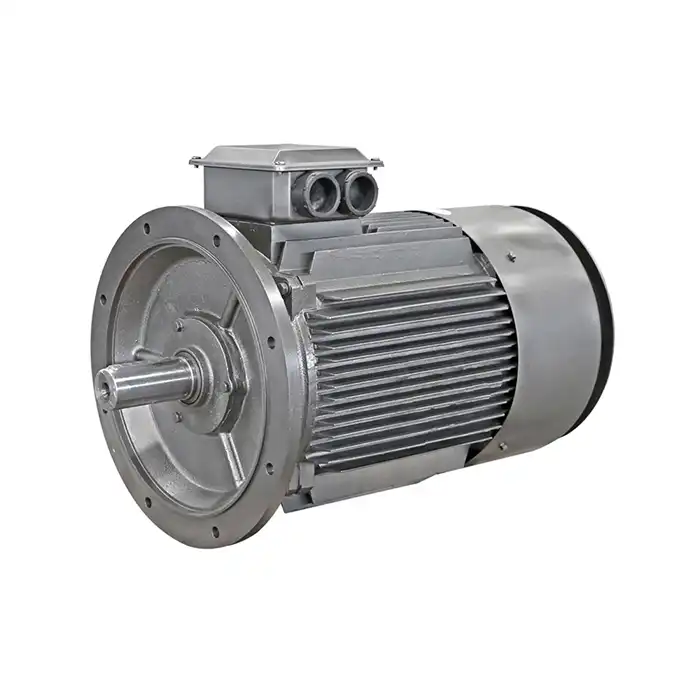
Series:YE3
Frame number: 80-450
Power range:
Protection level:IP55
Energy efficiency class: IE3
Voltage range: 380V,400V,415V,660V, etc.
Application:can be used in various fields of the national economy, such as machine tools,water pumps,fans,compressors,and can also be used in transportation, mixing, printing, agricultural machinery, food and other occasions that do not contain flammable, explosive or corrosive gases.
Certificate: international standard IEC60034-30 "Efficiency Classification of Single-speed Three-Phase Squirrel Cage Induction Motors".
Advantage:The high quality of the electric motor guarantees high operational reliability.
Others: SKF, NSK, FAG bearings can be replaced according to customer requirements.
Step 1: Why Is Your YE3 112M 2 Motor Making Excessive Noise?
The four most typical reasons for excessive noise in YE3 112M 2 motors are worn bearings, misalignment or loose installation, unbalanced voltage or drive settings, or a fault with the pump, fan or compressor it powers. Switch off the motor if you hear grinding, smell burning or observe the temperature rising fast. Then compare the data of strain, temperature, three-phase current and line voltage to the nameplate. This tutorial leads you through each check to help you work out what went wrong, decide whether to repair or replace, and make sure it doesn’t happen again.
What the YE3 112M 2 Looks Like on Paper
It comes in frame sizes from 80 to 450 mm, and its rated power is between 0.75 kW and 1000 kW. It also has two, four, six, eight, or more poles. The final rating for a YE3 112M 2 is based on its nameplate and datasheet. This unit is typically a 4 kW, two-pole unit that runs at about 2,900 rpm and 50 Hz. The series can handle temperatures from -15°C to +40°C and has an efficiency rating of IE3. It is protected by IP55, has Class F insulation, S1 continuous duty, and an IP55 rating. The frame is made of cast iron that is wrapped in copper and then paired with silicon steel. If you don't want 380V at 50 Hz, you can get 400V, 415V, 660V, or a voltage that you choose.
Normal Sound Versus Warning Sound
Every two-pole motor makes a different sound. It goes around at about 3,000 rpm on 50 Hz and 3,600 rpm on 60 Hz. This means that the steady electromagnetic hum and the airflow from the fan are usually louder than on motors that are moving more slowly. It's fine to have these steady sounds. What the warning sounds do changes based on time or load. They can sound like a grinding, squealing, or knocking beat. Electrical machines that spin must not make more noise than IEC 60034-9, and machines with a shaft height of 56 mm or more must not make more vibration than IEC 60034-14. The frame's shaft height is 112 mm. That paper and your OEM's acceptance criteria can help you.
Record a Baseline Before You Touch Anything
Write down what you see before you change anything. First, measure the sound at one meter with and without something on it. For each phase, write down the current, temperature, line voltage, speed, load percentage, vibration at the drive end and non-drive end bearings, and line voltage. In general, ISO 20816-1 tells you how to measure machine vibration. However, the best way to see how one machine compares to another is to look at the records of when it was first put into service. If the ye3 112m 2 doesn't have any commissioning data, read something on a sister unit that is healthy. You can use numbers instead of guesses when you talk to a supplier or look over a warranty claim when you have a baseline.
Step 2: Check the Most Common Mechanical Causes of Excessive Noise
Bearings and Lubrication
At least 3,000 rpm, a two-pole rotor puts stress on the bearings, making them squeal and grind most of the time. On a YE3 112M 2, turn the shaft by hand to check for roughness after turning the power off. Look for cracks, changes in color, and grease leaks. Do not change the grease or the times that are written on the lubrication plate or in the manual. The machine can be hurt by both too little and too much grease. This company can give a customer a well-known brand new bearing when they need one. It's important to match the bearing code to each end of the shaft because drive-end and non-drive-end bearings aren't always the same.
Couplings, Belts, and the Cooling Fan
Misalignment is the next thing to check for on any YE3 112M 2 installation. It is possible to check the coupling with either a dial indicator or a laser tool. Make sure the belt is tight enough if you use pulleys. Bears get stressed out and make noise when there is too much tension. Then take off the fan cover and check the fan for cracks, missing parts, or being too loose. Clean the path of the airflow of any dirt or dust. When a fan isn't balanced, it makes vibrations that happen once when the shaft turns. Turn the rotor by hand and wait for the fan to rub the cover. It doesn't cost much to fix them. Most of the time, they get rid of all the noise.
Mounting, Foundation, and Soft Foot
A motor that is quiet will become loud if the mounting isn't tight or even. Make sure the bolts on your YE3 112M 2 are the correct type and size. Check to see how stiff the base is. A thin or flexible plate can resonate at speeds close to the speed of sound. If you keep an eye on a dial and loosen one foot bolt at a time, you can tell if the foot is soft. It needs to be shimmied if that foot moves more than 0.002 inch (0.05 mm). First, fix the base, and then look at the motor.
Step 3: Investigate Electrical and Drive-Related Noise
Voltage and Current Balance
Check all three phase-to-phase voltages and currents if you hear a heavy hum and feel extra heat. If you lose a phase, have a loose terminal, a bad connection, or the supply voltage is too low, you may see more current and humming. The motor guidance from the U.S. They say that a small difference in voltage causes a big difference in current, which warms up the winding. If the rated current doesn't match the star or delta connection on the diagram of the terminal box, tighten the screws that hold the terminals together. Also, make sure the overload relay works. There is a difference between your U.S. plant and ours in terms of voltage (60 Hz). This is due to the fact that the voltage rating can be changed.
VFD Settings and Switching Noise
An adjustable frequency drive can make the motor whine even if the motor works fine. When a YE3 112M 2 is used on a drive, PWM switching generates harmonics, and the pitch changes as the carrier frequency changes. The V/f curve, the acceleration time, the minimum and maximum speeds, and the carrier frequency should all be looked at. Make sure you know how much current the motor and drive can handle. There should be no loose ends on the cable, and it should be the right length. Check to see if an output filter is needed as well. Run the motor for a short time on line power if you can. Once the whine stops, it's not the bearings or rotor that are to blame; it's the way the drive is set up.
Insulation, Grounding, and Bearing Currents
People who are qualified, locked out, and the power off should be the only ones who do insulation resistance tests. IEEE 43 talks about how to make something spin. Along with the reading, write down how hot or cold the winding is. There is less resistance when there is more heat and moisture. Look for burn marks, water, and loose lugs in the terminal box and ground connection. Bad dust and water jets can't get through IP55 protection unless the seals and cable glands are put on correctly. Indicating bearing currents, which make a chattering or grinding sound, are the frosted or fluted tracks on the bearing races of a drive-fed YE3 112M 2.
Step 4: Match the Noise to the Driven Application and Follow a Practical YE3 112M 2 Troubleshooting Procedure
Pumps, Fans, and Compressors
The motor might not even be the issue. Check for cavitation, a clogged suction line, pipe strain, and the wrong way to turn the pump. That sound you hear is a lot like gravel moving through a case. Fans should have clean blades, belts that aren't worn out, duct resonance, and turbulence in the damper. Check the compressor's starting load, lubrication, pulsation, and discharge pressure. A YE3 112M 2 is frequently used to power these loads, as well as machine tools, conveyors, mixers, printing equipment, farm machinery, and food equipment. Keep it away from gasses that are flammable, explosive, or corrosive to keep it safe. Don't forget that every load that is driven makes its own noise.
Separate the Motor From the Load
The solution is an isolation test. To evaluate vibration and sound, disconnect the YE3 112M 2 from the shaft, lock it, and let it run alone. Then reconnect it and measure it this time on both PCs. When you hook up the motor, if it is silent on its own but noisy when you hook it up, examine the base, the gears or the alignment. If it still makes noise then the motor or its power supply is broken. See whether the noise changes as the process grows quicker or heavier or smoother. The pieces are moving . When the parts generate a sound that follows flow or speed .
A Staged Troubleshooting Checklist
Write down as you work what you do and keep others safe. First, apply lockout/tagout and check for dirt or symptoms of overheating on the fan cover, mounting bolts, terminal box, and coupling. 2. Check that the voltage, current, insulation, vibration, temperature and alignment data are accurate. After you have these numbers compare them to the nameplate. Third, if you see smoke, hear grinding, smell burning, or observe that the temperature is rising rapidly, shut the engine off at once. Fourth : Have a skilled expert address any issues they find with the bearings, rotor, stator, drive, that haven't been solved yet. When there is a written record and the inspections are done in the same manner at all locations, it is quicker to receive aid.
Step 5: Select the Correct YE3 112M 2 Replacement Motor and Prevent Repeat Noise
When to Repair the Existing Motor or Choose a Replacement
Not all loud YE3 112M 2 motors should be replaced. If the problem is worn bearings, a broken cooling fan, loose mounting bolts or minor alignment problems, targeted repairs may return the machine to normal performance. It’s also practicable to replace the bearing if the windings and rotor are in excellent condition. But recurrent bearing failures, heavy winding damage, rotor wear or frequent overheating may mean replacement is more cost effective than continuing repairs. XCMOTOR supplies genuine parts from reliable companies. Upon client request, bearings from SKF, NSK and FAG may be supplied. Customers can handle typical mechanical faults without incurring needless replacement expenses.
Match the Technical Specifications Before Ordering
Replacing the YE3 112M 2 is not just a matter of matching the rated power. The installation crew should check frame size, number of poles, rated voltage, frequency, mounting dimensions, shaft extension and operating speed. The motor’s protection degree, insulation class and duty type should be suitable for the working environment. The YE3 motor family of XCMOTOR spans frame sizes from 80 to 450M, rated power from 0.75 to 1000 kW and several voltage choices including 380V, 400V, 415V and 660V. These motors offer a solid solution for industrial applications with IE3 efficiency, IP55 protection, Class F insulation and S1 continuous duty. We may also negotiate custom voltage needs prior to placing your purchase.
Prevent Excessive Noise Through Regular Maintenance
The noise will come back unless you maintain it regularly (not wait for it to break again). Regular inspection of bearing conditions, lubrication, coupling alignment, mounting bolts, cooling fans and ventilation passageways by operators. Monitoring three-phase voltage, current, temperature and vibration also helps to discover growing issues before they hinder production. For equipment with continuous operation, maintenance intervals should be set according to actual working hours, load circumstances and operating situations. The YE3 112M 2 has a cast iron frame, copper windings and high-grade silicon steel laminations for a strong and steady functioning. The production process involves precise die-casting, automated winding and extensive testing to assure consistent quality and operational dependability.
Why Choose XCMOTOR for YE3 112M 2 Motor Replacement?
The same applies when replacing a loud unit, you need to choose a reliable motor source. Shaanxi Qihe Xicheng Electromechanical Equipment Co., Ltd. (XCMOTOR) is dedicated to providing power equipment solutions, which are energy-saving, stable in performance and backed by technical assistance. Its YE3 motor products meet the IEC 60034-30 efficiency classification standard and come with CE, ISO 9001: 2015 and GOST certificates. Customers can benefit from unique goods from renowned companies, free shipping and a 30 day return policy. XCMOTOR’s support staff is ready to help you with product selection, technical issues and after-sales needs 7 days a week, including Saturday and Sunday.
Conclusion
The causes of excessive noise from a YE3 112M 2 motor are more quickly identified through a measured, staged check than through guesswork. The sound, vibration, temperature, current, and voltage of a two-pole hum that is normal are not the same as warning signs. The fan, the bearings, and the mounting are some of the mechanical parts that are checked. The voltage balance, the drive settings, the insulation, and the grounding are some of the electrical checks that are done. After that, an uncoupled run will show whether the pump, fan, or compressor is the real source. It's not enough to just match the power when you replace a motor. You also need to match the nameplate, mounting, shaft, and certification details. When baselines are recorded and checked on a regular basis, the same noise is less likely to come back.
FAQ
1. Is some noise normal for a two-pole motor?
Yes. A steady flow of air and a light electromagnetic hum should be present at about 2,900 rpm on 50 Hz. If you hear sounds that start quickly, don't stay the same, or pulse, they're not metal. Check the bearings and measure the vibration.
2. Why does my motor hum and draw high current?
It's possible that the load has stopped moving, a phase has been lost, or a terminal is loose. Just before you start it up again, you should check this out.
3. How do I tell motor noise from pump noise?
Remove the motor, put the shaft key in place, and let it run on its own. If it sounds quiet, check the base, alignment, and pump.
4. What should I send for a quote?
Picture of the nameplate, a noise recording, the voltage, the frequency, the type of mounting, the use, the amount, and the address of where the signal is going should be sent.
Get Your YE3 112M 2 Noise Problem Checked by XCMOTOR
To xcmotors@163.com, send a picture of your license plate and a recording of noise. Our team will then check your ye3 112m 2 against the match. As a supplier for the ye3 112m 2, we can get you original parts from well-known brands. We ship everything for free, let you return items for 30 days, and are here to help you on Saturdays and Sundays. To find out more, go to motorxc.com.
References
1. International Electrotechnical Commission, IEC 60034-9: Rotating Electrical Machines – Part 9: Noise Limits, 2021
2. International Electrotechnical Commission, IEC 60034-14: Rotating Electrical Machines – Part 14: Mechanical Vibration of Certain Machines with Shaft Heights 56 mm and Higher, 2018
3. International Organization for Standardization, ISO 20816-1: Mechanical Vibration – Measurement and Evaluation of Machine Vibration – Part 1: General Guidelines, 2016
4. International Electrotechnical Commission, IEC 60034-30-1: Rotating Electrical Machines – Part 30-1: Efficiency Classes of Line Operated AC Motors, 2014
5. U.S. Department of Energy, Improving Motor and Drive System Performance: A Sourcebook for Industry, 2014
6. IEEE, IEEE Std 43: Recommended Practice for Testing Insulation Resistance of Electric Machinery, 2013
YOU MAY LIKE
 VIEW MOREYB2 series high voltage explosion-proof motor
 VIEW MOREYPKK series high voltage frequency asynchronous motor
 VIEW MOREglobe valve for steam line
 VIEW MORE1440 rpm motor
 VIEW MOREYBX4 explosion-proof motor
 VIEW MORE5 hp explosion proof motor
 VIEW MOREhigh efficiency motor ie3
 VIEW MOREelectrical frequency converter