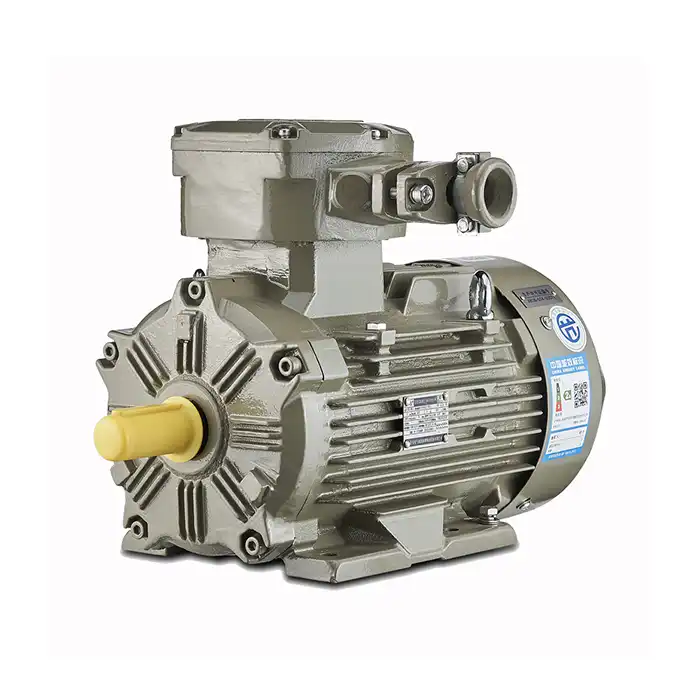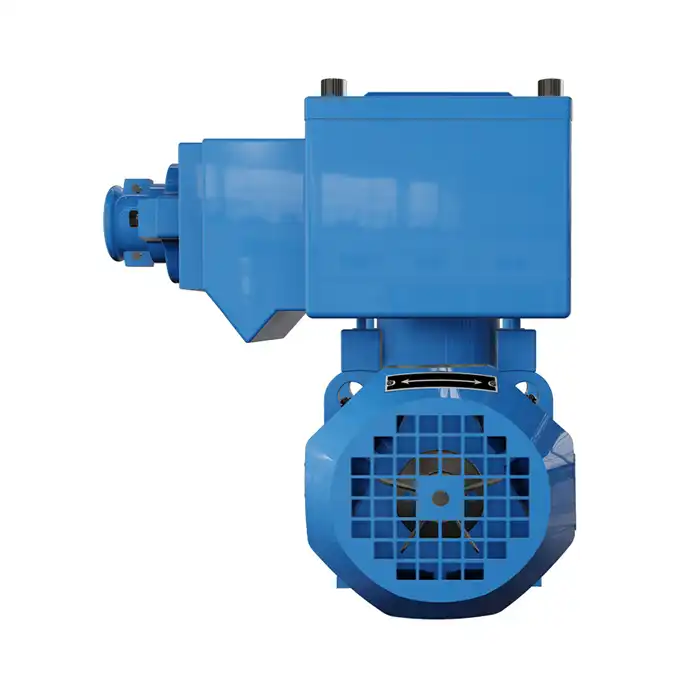




What is the harmonic problem in high voltage AC motors?
Harmonics in a high voltage AC Motor are changes in the shape of the electrical wave that are not the ideal linear shape. When nonlinear loads, variable frequency drives, or problems with the power source add frequencies that are whole-number multiples of the basic frequency, these distortions happen. When these unwanted frequencies build up in motor windings and circuits, they cause too much heat, make losses worse, and damage the insulation. It is important to understand harmonics because they have a direct effect on the reliability of tools, the amount of energy used, and the general performance of the system in harsh industrial settings.
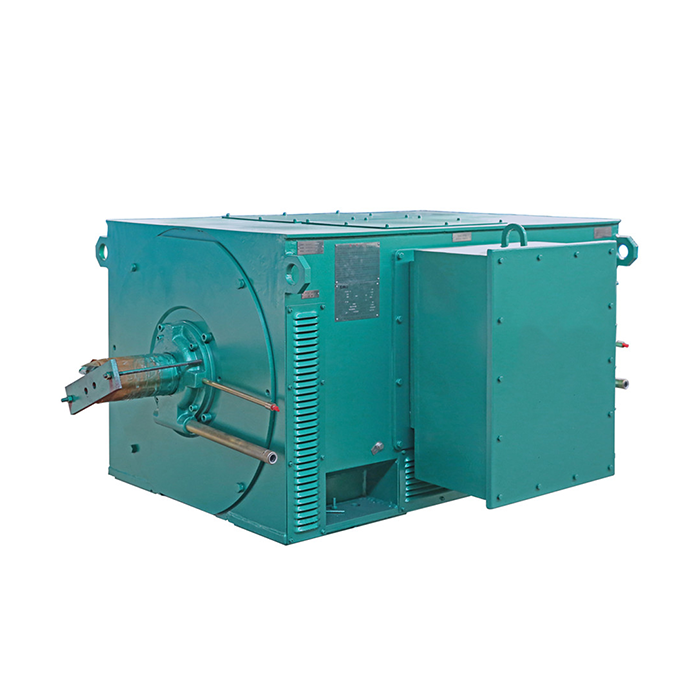
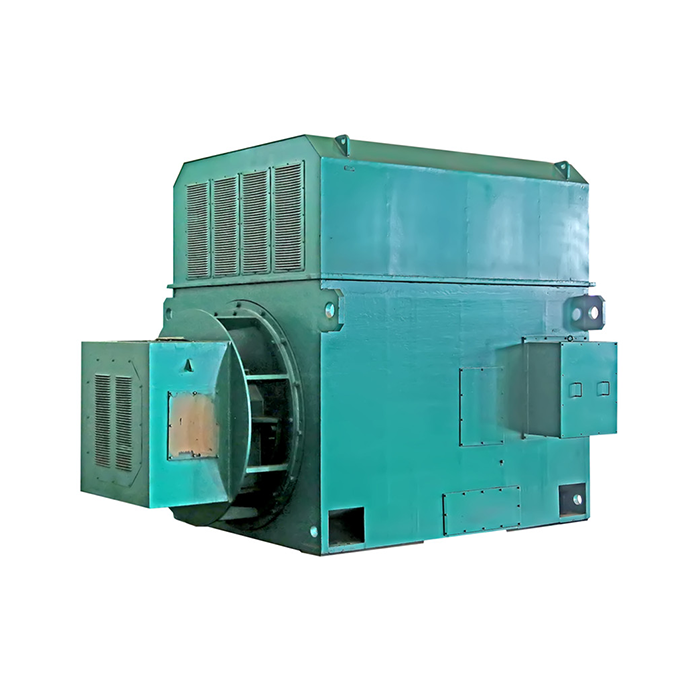
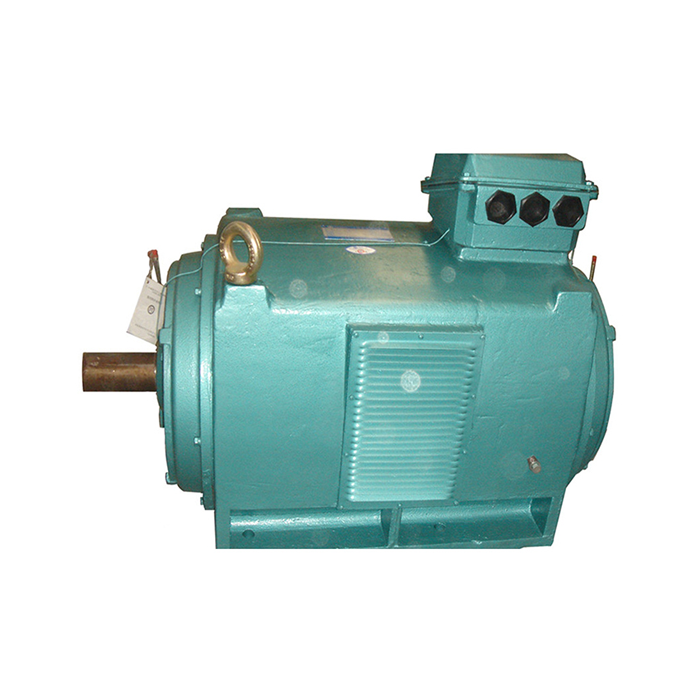
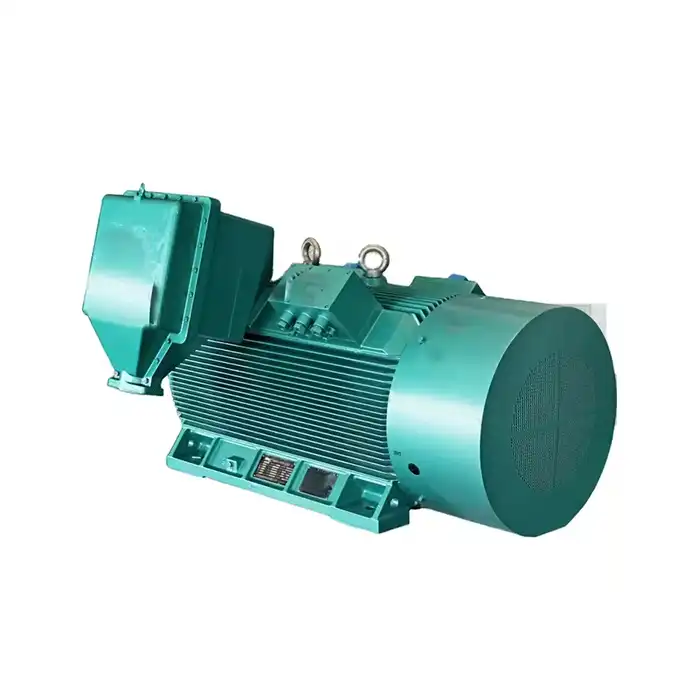
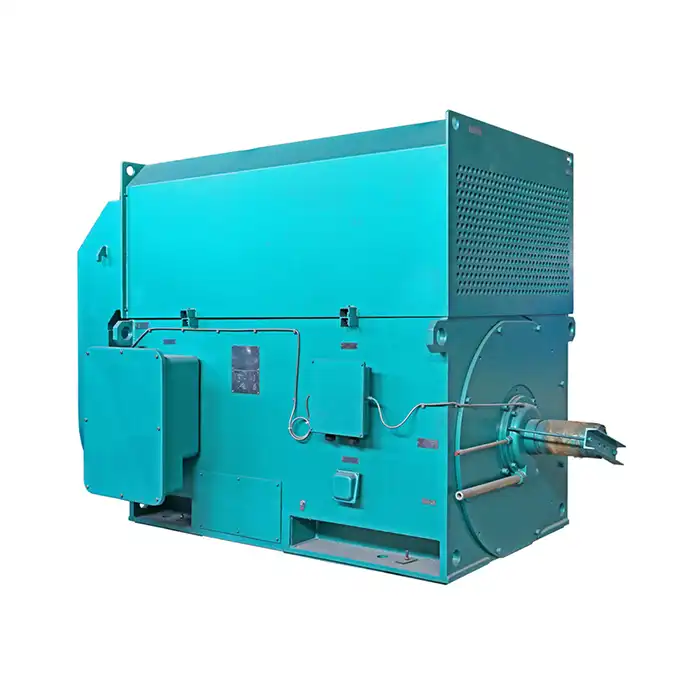
Series:Y-HV
Protection level:IP23
Voltage range:3000V±5%,3300V±5%,6000V±5%,6600V±5%,10000V±5%,11000V±5%
Power range:200-6300 kW
Application:fans, water pumps, compressors, crushers, cutting machine tools, transportation machinery, etc.
Advantage:light weight, low noise, small vibration, long service life, easy installation and maintenance.
Standard: This series of products complies withJB/T 12728 and JB/T 10446 standards.
Others: SKF, NSK, FAG bearings can be replaced according to customer requirements.
Understanding the Harmonic Problem in High Voltage AC Motors
Harmonics happen when the patterns of an electric current or voltage get messed up. When everything works right, AC power flows in a smooth sine wave at 50 or 60 Hz. In real life, nonlinear parts like semiconductor drives, rectifiers, arc furnaces, and other switching devices cut or deform this pattern. The third harmonic is at 150 Hz, the fifth at 250 Hz, and so on. Each disturbance makes a different harmonic frequency.
When these distortions build up in high-voltage AC Motor setups, they interact with the system resistance to create resonance conditions that make certain harmonics louder. Power quality gets worse, power control gets worse, and safety devices may trip for no reason. These problems are often seen by engineers in fields like mining, water treatment, and electricity generation, especially in places with a lot of machinery and motors that are managed by a drive.
How Harmonics Originate in Motor Systems
Harmonics are mostly caused by complex loads that are linked to the same power grid as your motors. Most of the time, it's variable frequency drives that are to blame. These drives change the speed of motors by switching power semiconductors at high rates. When these drives change from AC to DC and then back to variable-frequency AC, they add harmonic currents to the supply network. When more than one drive is running at the same time, harmonic distortion gets worse, affecting not just individual motors but also whole distribution systems.
Transient harmonics can also be caused by problems with the power source, like grid faults, lightning hits, or voltage drops. Small but noticeable flaws are caused by things that are built into the motor, like magnetic saturation in the stator core or rotor slot harmonics. All of these sources work together to make a complicated musical world that needs to be carefully studied and managed.
Impact on Power Quality and Motor Performance
Harmonic distortions in systems with high voltage AC Motors change the quality of the power in a number of ways that can be measured. The amount of frequency variation is measured by total harmonic distortion, which is given as a percentage. Values above 5% usually mean that there might be trouble with the process. Voltage distortion can make connected devices act strangely, like electric lights flickering, computers restarting by themselves, and sensitive instruments not working properly.
When motors are running at 3000V, 6600V, or 11000V, harmonic currents raise the temperatures of the windings beyond what is allowed by design. This causes copper and core losses to rise. When temperatures rise, insulation ages faster, which shortens its useful life from decades to years. Harmonic frequencies set off mechanical resonances that cause too much vibration, noise, and bearing wear, which leads to unexpected breakdowns and expensive repairs.
Causes and Consequences of Harmonics in High Voltage AC Motors
Harmonic flaws in high-voltage AC Motors are caused by the way they were built, how they are used, and outside factors. By knowing these reasons, maintenance teams can take specific steps to fix problems, and purchasing professionals can ask for motors with better harmonic tolerance.
Design and Construction Factors
Harmonic susceptibility is directly affected by the way the motor windings are set up. When slot harmonics happen, distributed windings with a short pitch may make them worse, while concentrated windings may make them less noticeable. Class F or Class H insulation materials have thermal reserves that can handle harmonic-induced heating, but polymer structures still break down after long-term contact. Whether it's a squirrel cage or a wound rotor, the type of rotor design changes how harmonic fields interact with rotor currents, creating extra losses and parasitic torques.
At harmonic frequencies, eddy current losses are kept to a minimum by stator core laminations made of high-permeability silicon steel. Precision production methods, like automatic winding machines and vacuum pressure impregnation for insulation, make the product more consistent and long-lasting. Motors that are made to GB/T 1032, JB/T 12730, or IEC 60034 standards have design gaps that allow for some harmonic distortion, but they are still dangerous in harsh circumstances.
Load Conditions and Operating Environment
When loads change, frequency patterns change too. Dynamic harmonic content is made when compressors turn on and off, breakers handle uneven material, and pumps deal with changing flows. Harmonic reactions are different for motors that are close to their maximum capacity than for motors that are not loaded very heavily. In three-phase systems, when there are voltage mismatches, negative-sequence harmonics get stronger. This makes spinning fields that heat the rotor even more.
The environment is also important. Installations at high elevations make the air less dense, which makes cooling less effective and raises the temperature stress caused by harmonic losses. Higher harmonic levels are experienced in buildings that don't have good power factor adjustment or grounding systems. Adding motors to systems that already have harmonic noise needs to be carefully thought out so that the effects don't build up over time.
Key Principles and Industry Standards for Managing Harmonics
Harmonic management that works well combines advanced High Voltage AC Motor design with smart use of devices that reduce harmonics and follow standards that are known around the world. These rules are the basis for long-term, stable operation in places with a lot of harmonics.
Advanced Motor Design Strategies
Modern methods for winding high voltage AC Motors cut down on noise production at the source. By using twisted rotor slots, fractional slot winding layouts, and the best pole-pitch ratios, you can reduce the spatial harmonics that come with building a motor. Manufacturers like XCMOTOR use these design improvements in high-voltage motors that range from 220 kW to 6300 kW, making sure that they work well in a wide range of situations.
The choice of material is very important. Harmonic flow doesn't heat up the core as much when high-grade silicon steel laminations with low hysteresis loss are used. Copper windings with Class F or H insulation can handle high temperatures, which means they don't need to be serviced as often. Precision-balanced wheels keep vibrations to a minimum, and protected bearings from SKF, NSK, or FAG make sure that the machine runs smoothly even when there are harmonic torques.
Harmonic Filters and Mitigation Devices
Harmonic frequency-tuned capacitors and inductors make up passive harmonic filters. These filters keep distortion currents away from sensitive equipment. Most filters work on the fifth and seventh harmonics, which are the most troublesome frequencies in three-phase systems. Power electronics are used by active harmonic filters to add cancellation currents in real time. This lets the filters adapt to changing load conditions and reduce noise across a wider range.
Harmonic currents are spread out over several sets of windings in phase-shifting transformers. This lowers the distortion in any one phase. In variable frequency drives, twelve-pulse or eighteen-pulse rectifier configurations naturally make fewer harmonics than six-pulse designs. To make sure that these devices work well with motor control systems and are compatible, electrical experts must work together to integrate them.
Solutions and Best Practices for Harmonic Mitigation
To solve harmonic problems, you need both hardware methods and good operational standards. Effective mitigation methods lower distortion levels, safeguard motor assets, and make uptime and efficiency gains that can be measured.
Deploying Passive and Active Filters
Harmonic currents are stopped before they can spread through the distribution network by putting passive filters near high-power drives or nonlinear loads. Most distorted energy can be removed by tuning filters to the fifth, seventh, and eleventh harmonics. Where you put the filters is important; putting them close to sources of distortion makes them work better while reducing connection losses.
Active filters can fix dynamic problems by detecting harmonic currents and creating exact opposite waves that cancel out distortion. Because these devices can adjust to different load conditions without having to be retuned by hand, they can be used in places where work plans change often. When you combine passive and active filters, you can get full harmonic reduction at a low cost over a wide frequency range.
Regular Diagnostic Testing and Monitoring
Power quality tests done on a regular basis find new harmonic problems before they damage equipment. Portable testers find main harmonic orders, figure total harmonic distortion, and look at voltage and current waveforms. Looking at this data over time shows trends that are connected to certain pieces of equipment or ways of working, which helps with planning focused interventions.
Software for managing facilities is connected to continuous tracking systems, which send real-time alerts when harmonic distortion levels go above certain limits. Thermal imaging finds hotspots in motor windings, bearings, and links, which show that harmonic losses are causing the temperature to be too high. Vibration monitors keep an eye on mechanical resonances and link changes in them to the harmonic frequency content.
Procurement Considerations for High Voltage AC Motors with Harmonic Issues in Mind
To choose high-voltage AC Motors that can handle harmonic stress, you need to carefully look at their technical specs, the supplier's skills, and the customer service they offer. Procurement choices that are well-informed protect long-term business success and keep lifecycle costs as low as possible.
Evaluating Motor Specifications for Harmonic Tolerance
Check the insulation class levels, which should be Class F (155°C) or Class H (180°C), to make sure there is enough thermal space for harmonic-induced warmth. Make sure that the designs of the windings include ways to reduce harmonics, like using distributed plans or twisted slots. Check to see if there is proof of testing for harmonic performance, such as limits on total harmonic distortion and temperature rise when the supply is affected.
Motors with IP54 or IP55 protection, such as High Voltage AC Motors, don't let dust and water in, which stops pollution that makes harmonic failures worse. Different ways of cooling, like IC411, IC611, or ICW37 for water-cooled systems, change how heat is managed when there are harmonic loads. By choosing the right cooling, you can make sure that motors get rid of extra heat properly, so they can keep working reliably in tough conditions.
Supplier Reliability and Technical Support
Work with sellers who can show they know about harmonic problems and give you detailed technical information. If a manufacturer lets you customise their products, they can make sure that the winding configurations, insulation materials, or cooling systems fit the harmonic profile of your building. Having access to skilled application engineers helps with designing systems, fixing problems, and making them run more efficiently.
The warranty terms should make it clear what kinds of problems are covered and what kinds are not covered when it comes to harmonic breakdowns. Suppliers who care about quality have certifications like ISO 9001 that show they have strict quality control systems. Supplier relationships are more trustworthy when clear information is shared about wait times, spare parts availability, and field service capabilities.
Key Purchasing Questions
Find out from sources how harmonic tolerance testing is done and if test results are available. Check to see if the motors meet the requirements of IEC 60034 and IEEE 519, and ask for proof of approval. Make sure it works with the variable frequency drives, harmonic filters, and safety switches you already have, so the integration goes smoothly.
Talk about help after the sale, such as expert training for maintenance staff, diagnostic tools, and quick response times for fixes that need to be done right away. Compare delivery times to project plans, taking into account any delays that might happen with customs, transportation, or final approval. Talk about price plans that balance up-front costs with long-term value, keeping in mind that motors designed for harmonic resistance work better over time.
Conclusion
Harmonics in high voltage AC Motors cause problems like thermal stress, insulation decay, mechanical vibration, and lower performance that need to be managed proactively. A complete plan for safeguarding important assets includes knowing where harmonics come from, using advanced motor designs, putting in place prevention devices, and following industry standards. To find equipment that is best for harmonic resilience, procurement professionals should look at motor specs, supplier reliability, and expert support skills. Case studies from real life show that there are real benefits in terms of uptime, speed, and cost savings. By using these ideas when choosing motors and keeping them in good shape, businesses can be successful in the long run, even in tough industrial settings where power quality has a direct effect on profits and productivity.
FAQ
1. What are harmonics in a high-voltage AC Motor?
In electricity, harmonics are changes in the shape of voltage or current waves that are not the ideal linear shape. They happen when nonlinear loads, variable frequency drives, or problems with the power source add frequencies that are whole-number multiples of the basic frequency, which is usually 50 or 60 Hz. In high-voltage AC Motors, these harmonics cause extra losses, higher temperatures, and damaged insulation, which makes the motors less reliable and efficient.
2. How do harmonics shorten motor lifespan?
When there are harmonic currents in motor windings, they raise the temperatures above what is allowed by design. High temperatures make insulation age faster, which lowers the insulating strength and raises the risk of electrical problems. Mechanical movements caused by harmonics put stress on bearings, joints, and shafts, which can cause them to wear out quickly or break down without warning. These factors together make motors last a lot less time.
3. Can variable frequency drives worsen harmonic distortion?
A lot of harmonic distortion comes from variable frequency drives, which change power semiconductors at high frequencies to control the speed of the motor. Harmonic currents are created during this switching process and spread through the electrical network. When you choose the right drive, add harmonic filters, and follow the rules in IEEE 519, you can reduce distortion and balance the benefits of speed control with the needs for power quality.
Partner with XCMOTOR for High Voltage AC Motor Solutions Built to Resist Harmonic Challenges
XCMOTOR specialises in providing high voltage AC Motors that can work in harsh settings with a lot of harmonics. Our water-cooled and air-cooled motor types have power ratings from 160 kW to 6300 kW and voltage ratings from 3000V to 11000V. They are used in mining, oil and gas, water treatment, and power production. Each motor goes through strict quality control, advanced winding processes, and vacuum pressure impregnation to make sure it has the best protection and lasts the longest against harmonic distortion.
When you choose XCMOTOR, you're working with a high-voltage AC Motor manufacturer that is dedicated to making designs that use less energy, building motors that last, and providing full technical support. Our engineering team can make changes based on your individual needs for reducing harmonics. They can use modern bearing systems from SKF, NSK, or FAG and make sure they meet GB/T, JB/T, IEC, and ISO standards. No matter if you need motors for compressors, pumps, fans, or crushers, our options give you solid performance, long service life, and low prices without sacrificing quality.
Email XCMOTOR at xcmotors@163.com right now to talk about your high voltage motor needs. Our dedicated team answers calls on both Saturday and Sunday, so you can get quick answers to technical questions, quotes, and shipping plans. Visit motorxc.com to see all of our products and learn how our knowledge of designing harmonic-resistant motors can help your business run more smoothly and save you money over its lifetime.
References
1. Chapman, Stephen J. Electric Machinery Fundamentals, Fifth Edition. McGraw-Hill Education, 2012.
2. Dugan, Roger C., Mark F. McGranaghan, Surya Santoso, and H. Wayne Beaty. Electrical Power Systems Quality, Third Edition. McGraw-Hill Professional, 2012.
3. Boldea, Ion, and Syed A. Nasar. The Induction Machines Design Handbook, Second Edition. CRC Press, 2010.
4. Institute of Electrical and Electronics Engineers. IEEE Recommended Practice and Requirements for Harmonic Control in Electric Power Systems, IEEE Standard 519-2014. IEEE, 2014.
5. International Electrotechnical Commission. Rotating Electrical Machines – Part 1: Rating and Performance, IEC 60034-1:2017. IEC, 2017.
6. Arrillaga, Jos, and Neville R. Watson. Power System Harmonics, Second Edition. John Wiley & Sons, 2003.