



Water Cooled Motors vs Air Cooled: Which Is Better?
When plant managers and procurement engineers ask whether water cooled motors or air cooled motors deliver better results, the honest answer depends on your operating environment. For high-power, continuous-duty applications in steel mills, mines, and power plants, water cooled motors consistently outperform their air cooled counterparts by maintaining stable winding temperatures under sustained load. Air cooled motors remain practical for lighter-duty, intermittent applications with clean ambient air. This comparison walks through the technical differences, real-world performance, and procurement logic so you can make a confident, well-grounded decision.
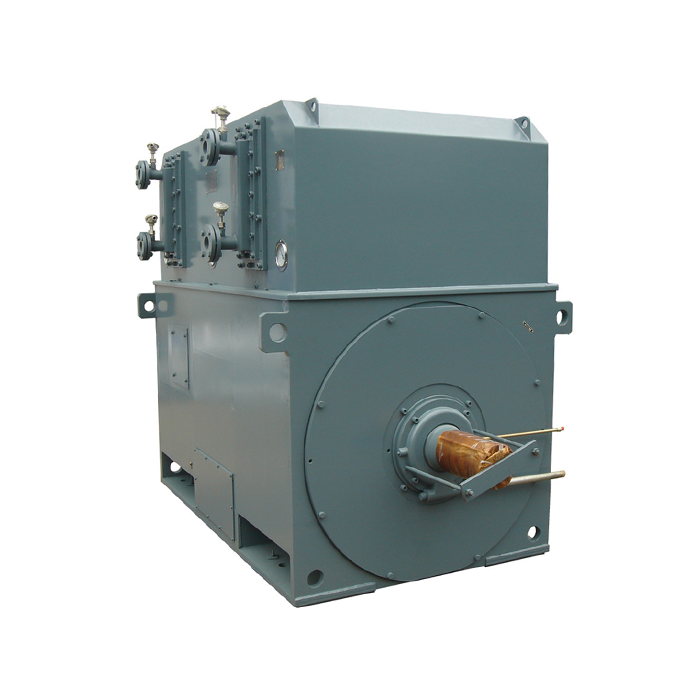
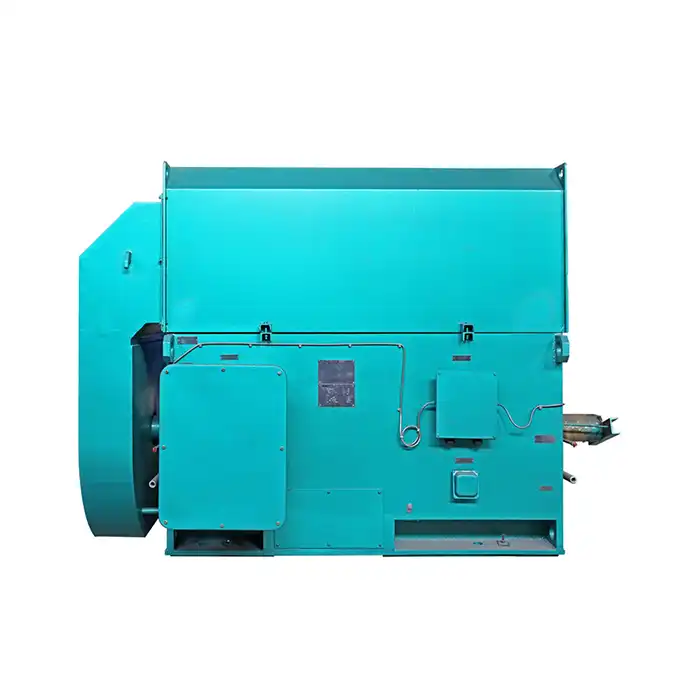
Series:YKS
Protection level:IP54
Voltage range:3000V±5%,3300V±5%,6000V±5%,6600V±5%,10000V±5%,11000V±5%
Power range:220-6300 kW
Application:fans, water pumps, compressors, crushers, cutting machine tools, transportation machinery, etc.
Advantage:low noise, low vibration, long service life, easy installation and maintenance.
Standard: This series of products complies withGB/T 1032 and GB/T 13957 standards.
Others: SKF, NSK, FAG bearings can be replaced according to customer requirements.
Understanding Water Cooled and Air Cooled Motors
This part of a motor controls almost everything about how it works over its lifetime. Knowing the difference between these two technologies helps buying engineers find the best answer for the site instead of just going with what they've always done or what costs the least per unit.
How Water Cooled Motors Work
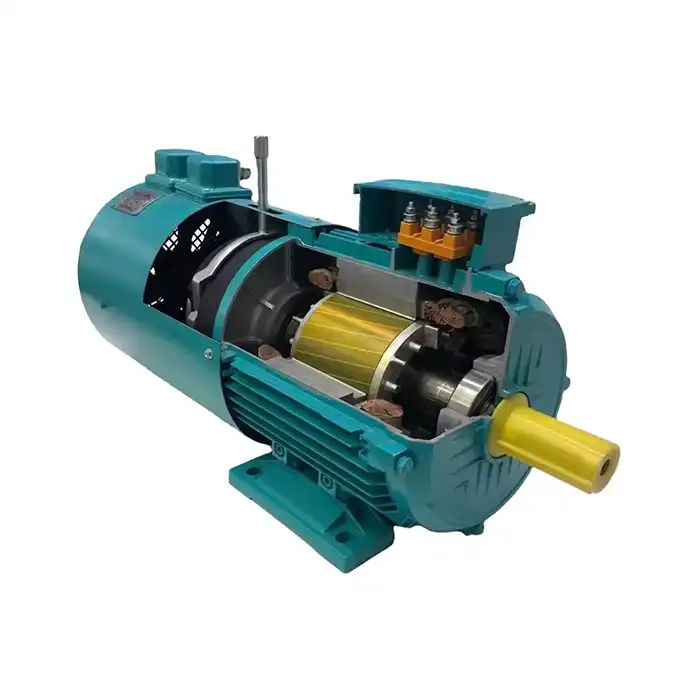
Water-cooled motors move coolant around the stator frame through a jacket or coil. The motor's heat moves through the housing wall and into the moving water. The water then moves the heat away from the winding and core. Liquid cooling works much better than air cooling because water has a specific heat capacity that is about 3,500 times higher by volume. This lets the motor keep working at its rated speed in tight areas, hot workplaces, and dusty places where open-frame air cooling would lead to overheating or contamination.
How Air Cooled Motors Work
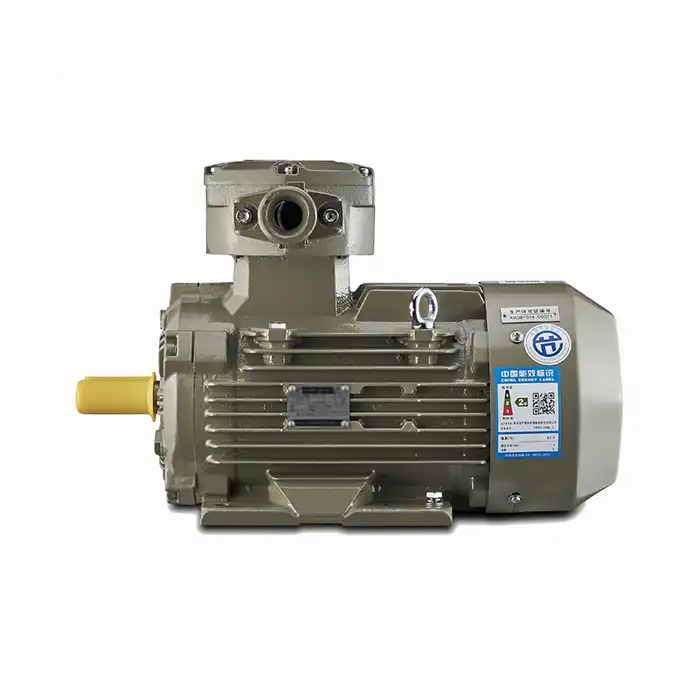
Motors that are cooled by air have an outside fan attached to the shaft that moves air across fin-covered housings or through holes inside the motor. The method is simple and doesn't need any outside plumbing. It works well in places that don't need a lot of power, are clean, and have job cycles that come and go. Examples include HVAC fan drives, light conveyors, and general-purpose machine tools that are used in buildings with good air flow.
Performance and Efficiency Comparison
How you handle heat has a direct effect on how reliable your machine is. IEC 60034-1 uses well-known Arrhenius degradation models to show that an electric motor that is run 10°C above its design temperature loses about half of its insulation life. Water-cooled motors get rid of this risk where it starts.
Thermal Stability Under Heavy Load
When the water cooled motors are running all the time, water-cooling keeps the winding temperatures in a smaller range. The flow of coolant soaks up sudden spikes in temperature that would otherwise cause wound insulation to break down. This temperature stability directly leads to fewer forced breaks in steel rolling mill drives and mine hoists, where the motor may run at 90–100% rated load for long periods of time without shut down windows.
Air-cooled motors aren't thermally worse by design, but their performance is much worse when the temperature outside is above 40°C, when dust builds up on the cooling fins and blocks airflow, or when the motor is inside a protected box. In fact, this is exactly how things are at a lot of big manufacturing sites.
Noise and Vibration Levels
Electrical experts will often point out noise as a problem during site surveys. Water-cooled motors have enclosed cases that naturally reduce electromagnetic noise. With precise dynamic balance and improved slot geometry, they make a lot less noise when they're running than regular air-cooled units. For instance, the XCMOTOR YKS series has a skewed-pole and uneven slot pitch design that cuts electromagnetic noise by 8–10 dB compared to regular motors. The low-noise axial flow fans in the cooling system are 15 dB quieter than other cooling methods. They keep mechanical noise below 85 dB for the 1,000 kW type when it's not working.
Application Suitability and Industry Use Cases
In the end, the choice between water-cooled and air-cooled options comes down to how well the motor design fits the needs of the spot.
Where Water Cooled Motors Excel
When there needs to be low shaking, a high power density, and the area is sealed or full of dust, water-cooled motors are the best choice. In the following industrial settings, liquid-cooled high-voltage motors clearly show their worth:
- Steel rolling mills and heavy drives: Large rolling mill drives need to keep putting out power and can't handle heat derating. Water-cooled motors with power ratings between 3,000 and 6,300 kW can keep their full torque at high outdoor temperatures without needing bigger frame sizes.
- Mine shaft hoists and crushers: Both underground and surface mines have silica dust, high humidity, and not enough air flow. While maintaining the power output required for main shaft lifting, enclosed water-cooled motors with IP54 or IP55 protection keep dust and dirt out.
- High-pressure compressors and process pumps: Compressors and moving water pumps are used 24 hours a day, seven days a week in petrochemical and power plants. In these continuous-duty designs, liquid cooling makes the bearings and insulators last longer.
- Coastal and corrosive environments: The sealed housing design of water-cooled motors makes them ideal for locations with salt spray, chemical fog, or high humidity levels.
These benefits directly help plant managers in the steel, mining, and power industries who have to deal with the risk of failure every day. When you keep the operating temperature of a motor in check, you lose less planned production.
Where Air Cooled Motors Remain Practical
Air-cooled motors are a smart and affordable choice for well-ventilated factories, HVAC systems, light conveyors, and small machine tools that don't see a lot of use and where the temperature stays between 25°C and 35°C. Their easier installation and lack of external plumbing make them easier to set up for buildings that don't have specific cooling water lines.
Procurement Considerations and Supplier Insights
Lead Times, Certification Coverage, and Customization Options
When buying industrial motors over 220 kW, there's more to it than just checking prices in catalogs. The total cost of ownership is affected by lead time, certification coverage, customization options, and the responsibility of the supplier.
Water-cooled motors, because they are more complicated thermally and mechanically, usually have longer wait times than standard air-cooled units. Standard setups usually ship in two to three weeks. If you need a different voltage, pole count, or bearing specs, it will take four to six weeks. This is something that buyers should think about when planning projects, especially for EPC contracts with set times for completion.
When equipment passes foreign borders, certification coverage is very important for water cooled motors. Motors going to Russia, the Middle East, South America, India, or North America need to have the right approvals, like GB, CE, UL, or GOST, to get through customs and meet the requirements of local inspection authorities. Costly compliance delays can be avoided by making sure that a supplier has up-to-date, auditable certificates before placing an order.
Bearing design is another tool for getting things. Name-brand rolling element bearings with documented load ratings and predictable service intervals are good for high-voltage motors that drive important equipment. Managers in charge of buying things should make sure that their seller lets them choose the bearing brand as part of the order, rather than switching out parts that weren't mentioned during production.
How to Make the Right Choice: Water Cooled vs Air Cooled Motors
Environmental Fit, Duty Cycle, and Total Cost of Ownership
Both over-engineering and under-specification can be avoided with a structured evaluation. Before you decide to buy something, think about these things:
- Operating environment: Does the area where the installation is happening have limited airflow, a lot of dust, or temperatures above 40°C? If so, water-cooled motors are the safer option in terms of technology.
- Power and duty cycle: Liquid cooling is very helpful for applications with constant duty rates that are over 500 kW. When the power is less than 200 kW and the rounds are short, air cooling is usually enough.
- Noise and vibration limits: Buildings with noise exposure limits or nearby equipment that is sensitive to vibration need motors that have a low vibration speed and less electromagnetic noise output.
- Voltage compatibility: Make sure that the motor's voltage range works with your source. When working on foreign projects, it's normal for supply voltages to not match up.
- Maintenance infrastructure: The cooling jacket of water-cooled motors needs to be inspected on a regular basis, and the water quality needs to be checked and the seals need to be checked. If your repair team doesn't have this skill, you might need to offer training or service contracts.
- Certification requirements: Make sure that the project site matches the approvals that are needed before choosing a provider.
In big industrial settings, water-cooled motors typically win when balancing initial cost versus lifetime costs. Over a five- to ten-year working horizon, lower noise-related compliance costs, less frequent downtime, and longer insulation service life more than make up for the higher original buy price and more difficult installation.
Conclusion
In high-power, sealed, dusty, or noise-sensitive industry settings, water cooled motors always work better than air-cooled motors. Liquid cooling is not a luxury for plant managers and procurement engineers who are in charge of steel mills, mine hoists, big compressors, and power plant pumps; it is the right choice from a technical point of view. Air-cooled motors work well in well-ventilated, light-duty situations and cost less at first. The above decision framework gives you the factors you need to match motor technology to site conditions without having to guess.
FAQ
1. Are water cooled motors difficult to maintain?
Maintenance mostly includes checking the quality of the coolant, looking at the jacket seals, and greasing the bearings at regular times. Each unit comes with a detailed maintenance schedule. Once standard procedures are set, the process is usually easy for teams that know how to work with industrial cooling circuits.
2. Can the voltage be customized?
Yes. It can handle 3,000 V, 3,300 V, 6,000 V, 6,600 V, 10,000 V, and 11,000 V with a ±5% error. We can talk about specific voltage needs that aren't in these areas during the technical proof step.
3. What is the standard delivery time?
Within two to three weeks, standard versions are sent out. Four to six weeks are usually needed after the order is confirmed for custom pole numbers, voltage levels, or bearing specs.
Get a Customized Water Cooled Motors Quote from XCMOTOR
Industrial customers in North America, Russia, the Middle East, South America, and India can purchase YKS series water cooled motors from XCMOTOR. We offer motors with a power range of 220–6,300 kW, voltage ranges from 3 kV to 11 kV, and standards such as GB, CE, UL, and GOST. These motors are custom-built to meet the needs of your place. You can email our technical team at xcmotors@163.com or go to motorxc.com to tell them about your application and get a recommendation that is tailored to your project.
References
1. IEEE Transactions on Industry Applications — "Thermal Management Strategies for High-Voltage Induction Motors in Continuous Industrial Duty," 2021.
2. IEC 60034-1: Rotating Electrical Machines — Rating and Performance, International Electrotechnical Commission, 2022.
3. Electric Motors and Drives: Fundamentals, Types and Applications, Austin Hughes & Bill Drury, Newnes/Elsevier, 2019.
4. Mining Engineering — "Motor Reliability and Cooling System Selection for Underground Hoist Drives," Society for Mining, Metallurgy & Exploration, 2020.
5. IEEE Industry Applications Magazine — "Noise and Vibration Reduction in High-Power Induction Motors: Design Approaches and Field Results," 2022.
6. GB/T 13957: Large AC High-Voltage Induction Motors — General Technical Requirements, Standardization Administration of China, 2008.