



Vibration Monitoring for Mining Motors: A Starter Guide
Vibration monitoring is one of the most practical tools available for keeping mining motors running without interruption. In a mining operation, an AC motor drives everything from underground conveyors to ventilation fans and crushing equipment. When vibration levels go unchecked, bearing wear, shaft misalignment, and rotor imbalance can progress silently until a motor fails completely. Proper ac motor maintenance that includes structured vibration analysis catches these problems early, cutting repair costs and preventing unplanned downtime. This guide walks procurement managers, engineers, and maintenance teams through the fundamentals of vibration monitoring as part of a sound ac motor maintenance program.
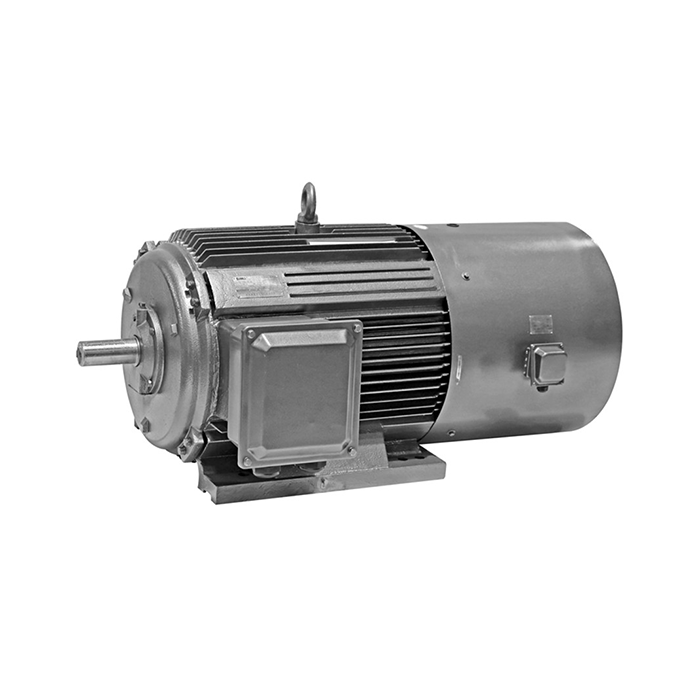
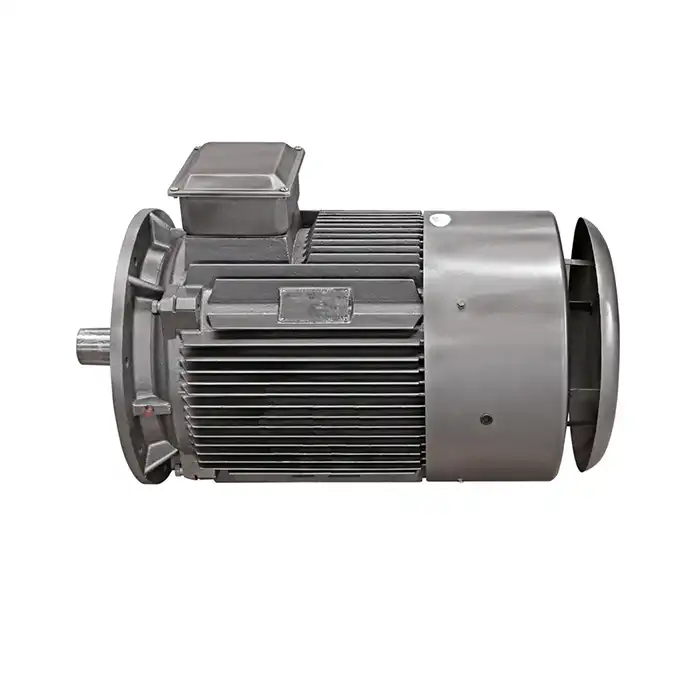
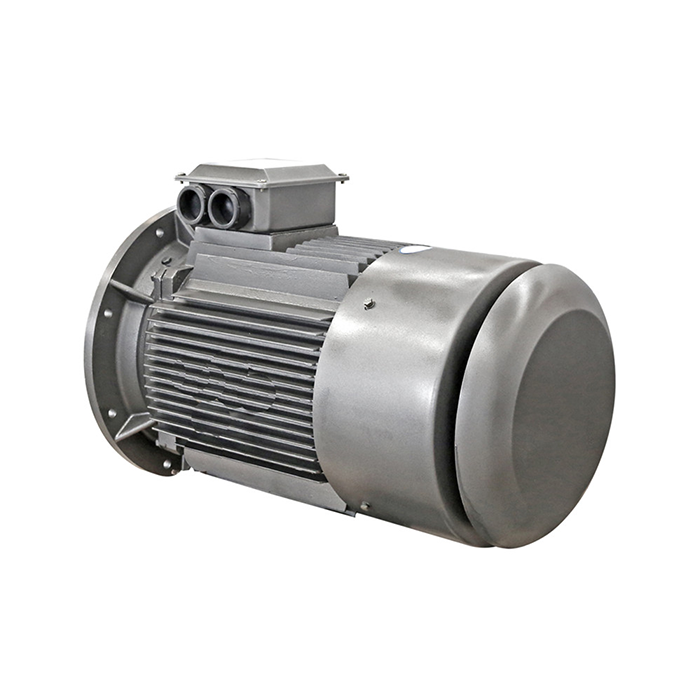
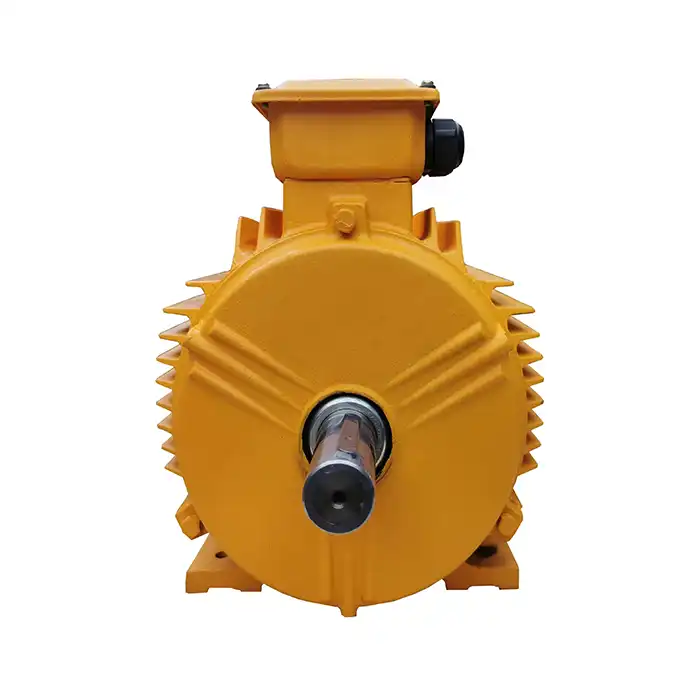
Series:YVFE2
Frequency conversion range:30hz~50hz,5hz~70hz,5hz~100hz
Power range:0.75-355kW
Protection level:IP55
Application:are suitable for driving various mechanical equipment that require continuous and frequent forward and reverse rotation, such as steel rolling, lifting, transportation, machine tools, printing and dyeing, papermaking, chemicals, textiles, pharmaceuticals, etc., and can be used with various domestic and foreign variable frequency power supplies.
Advantage:high efficiency, wide speed range, high precision, stable operation, and easy operation and maintenance.
Certificate:installation dimensions comply with International Electrotechnical Commission (IEC) standards.
Others: SKF, NSK, FAG bearings can be replaced according to customer requirements.
Understanding Vibration Monitoring in Mining AC Motors
Motors have to work hard in mining settings. Heavy shock loads, rough dust, changes in temperature, and continuous duty cycles all make mechanical wear happen faster. Vibration tracking checks for movement, speed, or acceleration at important places on the motor body and bearings. This gives information about the machine's internal mechanical state.
Why Vibration Matters in Mining Duty?
At its rated speed and load, a healthy motor makes a vibration pattern that can be recognized. If that signature changes in any way, like the overall amplitude going up or the appearance of new frequency components, it means that something mechanically or electrically has changed. ISO 10816 sets limits for how much vibration is acceptable in rotating machinery. Values above 4.5 mm/s RMS in the velocity band usually mean that something needs to be looked into.
Common Causes of Abnormal Vibration
In mining uses, high vibration is most often caused by broken bearings, an unbalanced rotor from growth of material, misaligned shafts at couplings, and mechanical looseness at mounting feet. Electrical problems like broken rotor bars or uneven air gaps can also cause vibrations at certain frequencies that can be found with a spectrum analyzer.
How Vibration Links to Motor Reliability?
By taking regular sound readings, maintenance teams can find problems early and plan to replace bearings, fix alignment issues, or clean the rotor during planned shutdowns, instead of waiting until something bad happens. According to research from the Electrical Power Research Institute, predictive maintenance programs that use vibration analysis can cut down on motor-related downtime by up to 30% compared to replacement schedules that are based on time.
AC Motor Maintenance Basics with Emphasis on Vibration Analysis
Effective Ac motor maintenance in mine is a multi-faceted process. It turns routine physical checks, lubrication schedules, insulation testing, and vibration checks into a process that can be used again and again. Vibration analysis loses a lot of its value when it is treated as a different job from other Ac motor maintenance tasks.
Preventive vs. Predictive Strategies
Preventive maintenance replaces parts at set times, no matter what their state is. This is good for products like grease but useless for bearings that still have life left in them. Measured data, such as sound readings, are used in predictive maintenance to figure out when a part really needs to be fixed. Both fixed-interval tasks for lubrication and cleaning as well as vibration-triggered decisions for bearing replacement and alignment checks are used in a well-designed mining Ac motor maintenance program.
Integrated Maintenance Checklist
The following items ought to be on a useful Ac motor maintenance checklist for mining activities. Each part adds up to a full picture of motor health:
- Vibration baseline recording at commissioning so future readings have a reference point. Without a baseline, trending data loses much of its diagnostic value.
- Bearing condition check every 250 operating hours using handheld vibration sensors positioned directly over the bearing housing, capturing both radial and axial readings.
- Visual inspection for signs of fretting corrosion at mounting feet, loose fasteners, and damaged coupling elements that introduce mechanical looseness and amplify vibration.
- Insulation resistance test using a 500 V or 1000 V megohmmeter at each planned shutdown to verify winding integrity, since insulation degradation in VFD-fed motors often appears alongside increased vibration from rotor eccentricity.
- Lubrication replenishment on the intervals specified by the bearing manufacturer, avoiding over-greasing, which generates heat and increases vibration in its own right.
When maintenance teams do these jobs regularly, they get the information they need to act on vibration results in the context of other things they are looking at, not just on their own.
Essential Tools for Mining Motor Vibration Work
A basic vibration toolbox for mine Ac motor maintenance consists of a portable vibration meter with speed and acceleration modes, a spectrum analyzer that can find the frequencies of bearing defects, and a laser alignment tool for coupling checks after any bearing replacement. Instruments must have the right intrinsic safety certification for motors that work in explosive environments, like coal mines.
Best Practices for Implementing Vibration Monitoring in Mining Motor Maintenance
It's more important to choose a monitoring method that works with the current working setting than to get the most high-tech device.
Choosing Equipment for Harsh Conditions
Instruments and monitors in mines are vulnerable to dust, water, and mechanical shock. Any sensor that is permanently attached to a motor body should be protected by at least IP67 and be rated for the temperature range where it will be used. Inspection workers need portable instruments with tough cases and plugs that can handle being handled over and over again in dirty and wet conditions. Continuous online monitoring with fixed accelerometers connected to a data acquisition system gives the most complete trending data and allows for remote condition monitoring for critical drives like main haulage motors and primary ventilation fans.
Setting Monitoring Frequencies
In a mine, not every motor needs to be checked at the same time. A risk-based schedule puts resources where they will be most useful if something goes wrong. Here is a useful framework to get started:
- Critical motors (main ventilation, primary conveyors): continuous online monitoring with alarm setpoints configured to ISO 10816 Band C limits.
- Important motors (secondary conveyors, pumps): monthly manual vibration survey using a portable meter.
- General-purpose motors (auxiliary equipment, non-process fans): quarterly manual survey or condition-based on visual inspection findings.
The cost of the Ac motor maintenance program is kept in line with the risk profile of each machine using this tiered method.
Interpreting Vibration Results
A single high reading does not always mean that failure is close at hand. A single data point is not as important as a trend. When the overall speed of vibration goes above the set baseline by 25% or more, the repair team should do a spectrum study to find the cause of the frequency. There are predictable spots in the frequency spectrum where bearing defect frequencies, unbalance (1 running speed), and misalignment (2 running speed) can be found. When you know these patterns, you can target your help instead of taking apart the whole motor system.
Troubleshooting Common Vibration-Related Motor Problems in Mining
The actual skill that distinguishes an efficient Ac motor maintenance program from one that just collects data and does nothing is the ability to identify which problem causes which vibration signature.
Mechanical Imbalance and Misalignment
A rotor imbalance causes a main peak at a speed of 1 in the radial direction. In mining, dust and other materials building up on the rotor is a common reason for imbalances that didn't exist when the machine was first put into service. When the connection isn't lined up right, it makes strong 2× components and high axial shaking. Both problems can be fixed: the imbalance can be fixed by cleaning the rotor or balancing the field, and the misalignment can be fixed with lasers during the next planned outage.
Bearing Failures and Mechanical Looseness
The shape of the bearing and the speed of the shaft are used to figure out the characteristic frequencies of bearing flaws. These frequencies are called BPFO (ball pass frequency outer race) and BPFI (ball pass frequency inner race). These show up at non-integer multiples of the moving speed and often have sidebands that go with them. XCMOTOR gets bearings from SKF, NSK, and FAG for its YE3, YVFE3, YVFE2, and YBX3 motor platforms. Before shipping, each platform goes through a factory vibration study that creates a standard that can be used to track trends from the very first day it is used.
Case Study: Proactive Intervention on a Mining Conveyor Motor
Over the course of four months, a mining operation that used YVFE3 inverter duty motors on variable-speed belt conveyors saw a 35% increase in the speed at which the bearing housing vibrated. Spectrum research found rates of bearing defects that matched the outer race of the drive-end bearing. The repair team changed the bearing during a weekend break. This kept the production from stopping for 18 hours because of an unplanned failure. It was estimated that the planned intervention would cost more than 15% of the cost of the unplanned failure, which would include lost production.
Procurement Guide: Acquiring Vibration Monitoring Solutions and Maintenance Services
When procurement managers look at vibration tracking options along with motor purchases, they should think of choosing an instrument and a motor as two separate but related choices.
Comparing Portable and Fixed Systems
For operations with established manual survey programs and a moderate number of motors, portable systems work well. Fixed online systems make sense for important drives that need to collect data all the time and send alarms to a faraway location. When you compare the cost of one unexpected failure to the cost of a fixed system on a single key motor, the fixed system usually pays for itself in 12 to 18 months.
Key Selection Criteria
When choosing vibration monitoring tools and service providers for mining Ac motor maintenance, the following are the important things to consider:
- Environmental rating: IP protection and temperature range must match the installation point, not just general mine duty.
- Frequency range: Ensure the instrument covers at least 10 Hz to 10 kHz to capture both low-speed imbalance and high-frequency bearing defect signals.
- After-sales support: A supplier offering 48-hour response to technical queries reduces the risk of data gaps that undermine trending programs.
- Integration capability: Data should export to existing CMMS platforms without manual transcription to preserve data integrity.
- Supplier track record: Verify that the supplier has documented experience with mining-duty rotating equipment, not just general industrial applications.
When these factors are regularly used to evaluate suppliers, they lead to a shortlist of trustworthy partners instead of a list of technical specs with no context.
Evaluating Service Providers
If a vibration tracking program works or not depends on more than just the choice of equipment. It also depends on how good the service provider is. A good service provider should be able to show they know how to do spectral analysis, give written diagnostic reports with suggested actions and due dates, and offer on-site support during the first survey cycle to make sure the program works with the real machine. It is important to ask for case studies from mining applications because the duty cycles and fault modes are very different from those used in general industrial applications.
Conclusion
Monitoring vibrations is a useful and tried-and-true way to cut down on unexpected motor breakdowns in mining operations. It provides engineers and procurement teams with clear data to support choices on bearing replacements, alignment work, and motor selection when it is combined into an organized Ac motor maintenance program. The most reliable results come from using regular monitoring methods, the right tools, and motors that are built to low-vibration standards with features like precision-balanced rotors and high-quality bearings. The AC motor range from XCMOTOR is vibration-tested at the factory before it is shipped. This gives operations a recorded starting point for tracking the state of the motors in service from the first day they are used.
FAQ
1. How often should vibration readings be taken on a mining motor?
The interval depends on the motor's role. Critical drives such as main ventilation fans and primary haulage conveyors benefit from continuous online monitoring. Important secondary drives should receive a manual vibration survey monthly. General auxiliary motors are typically checked quarterly. If overall vibration levels rise by 25% or more against the established baseline between surveys, the interval should be shortened until the cause is identified and corrected.
2. Can vibration data reveal electrical faults in the motor windings?
Yes, though the connection is indirect. Broken rotor bars produce vibration at twice the slip frequency, visible as sidebands around the running speed frequency. Asymmetric air gaps from eccentric rotors—sometimes caused by winding swelling after moisture ingress—produce elevated 1× components and increased electrical noise. Vibration analysis used alongside insulation resistance testing and motor current signature analysis gives a more complete picture of winding condition than any single measurement alone.
3. What are the main benefits of adding vibration monitoring to an existing ac motor maintenance program?
The primary benefit is converting reactive repairs into planned interventions. Planned bearing replacements during scheduled shutdowns typically cost 10–20% of the equivalent unplanned failure, factoring in parts, labor, and lost production. Secondary benefits include extended motor service life through earlier detection of alignment errors that accelerate bearing and seal wear, and a documented condition record that supports warranty claims and procurement decisions when motors approach end of life.
Partner with XCMOTOR for Reliable AC Motor Maintenance Support
XCMOTOR sells motors that are designed to work with condition monitoring systems from the start. As standard, every motor comes with SKF, NSK, and FAG bearing packages, as well as temperature monitors and encoder outputs for closed-loop control that can be added at the plant. XCMOTOR is a direct Ac motor maintenance supplier with more than 20 years of experience and partnerships with over 30 manufacturers. They provide technical support seven days a week and a response time of 48 hours after the sale. To get specs or a project quote, email the team at xcmotors@163.com or go to motorxc.com.
References
1. International Organization for Standardization. ISO 10816-3: Mechanical Vibration — Evaluation of Machine Vibration by Measurements on Non-Rotating Parts. 2009.
2. Electric Power Research Institute. Predictive Maintenance Technology Assessment: Vibration Analysis for Rotating Equipment. EPRI, 2018.
3. Scheffer, C., & Girdhar, P. Practical Machinery Vibration Analysis and Predictive Maintenance. Newnes/Elsevier, 2004.
4. Mobley, R. K. An Introduction to Predictive Maintenance. 2nd ed. Butterworth-Heinemann, 2002.
5. IEEE. IEEE Std 841: IEEE Standard for Petroleum and Chemical Industry — Premium-Efficiency, Severe-Duty, Totally Enclosed Fan-Cooled (TEFC) Squirrel Cage Induction Motors. IEEE, 2009.
6. Bloch, H. P., & Geitner, F. K. Machinery Failure Analysis and Troubleshooting. 4th ed. Elsevier, 2012.