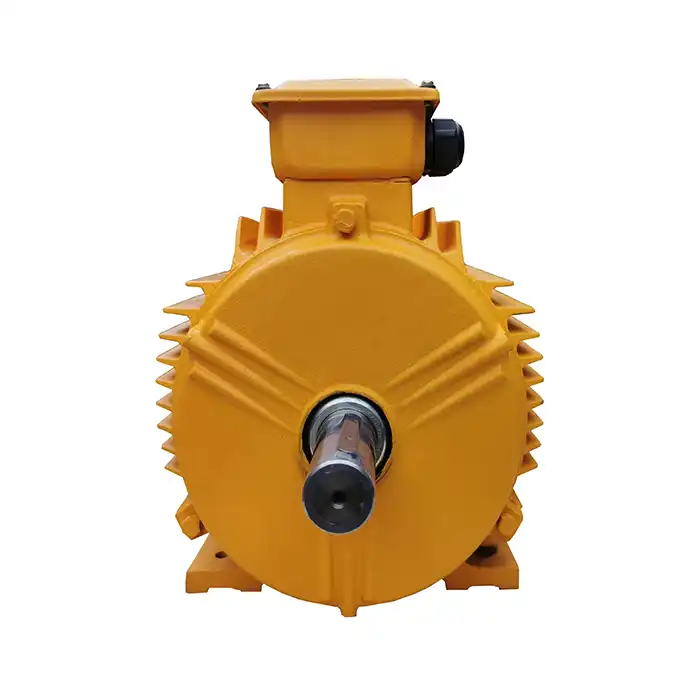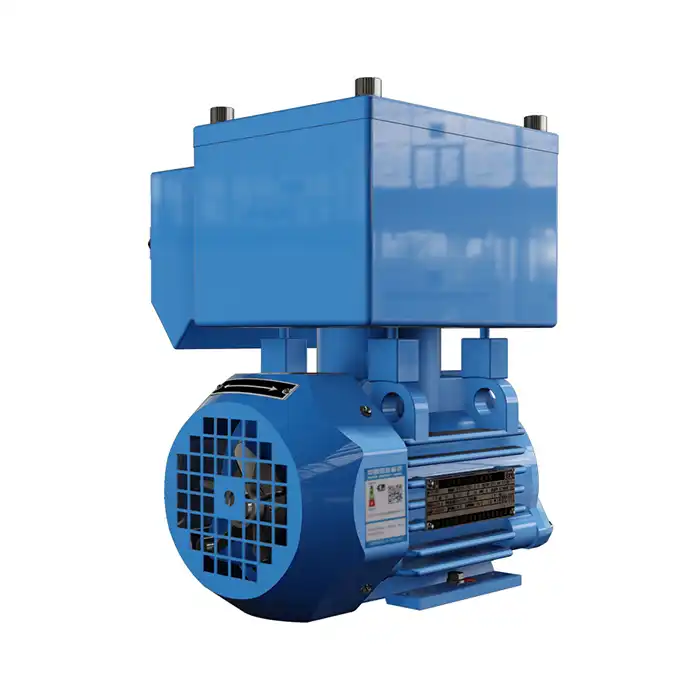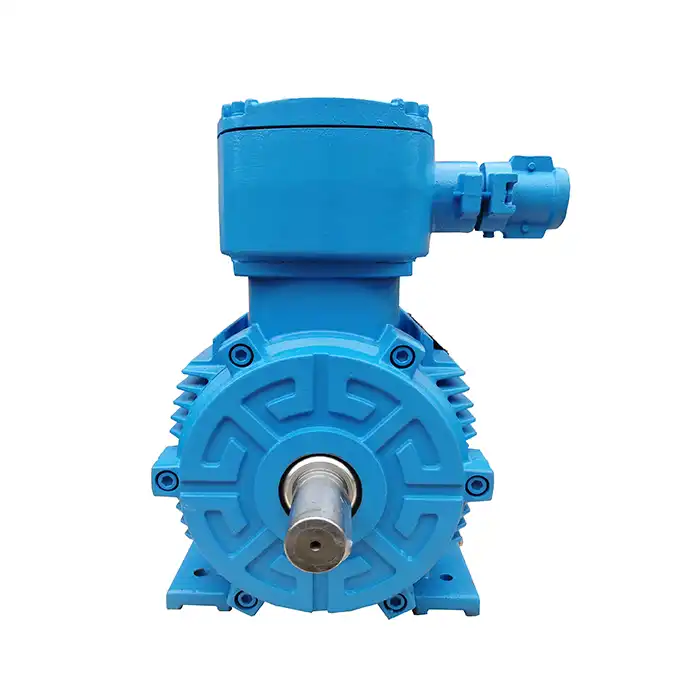




Mining Motor Requirements: Duty Cycle, Dust, Cooling
If you're involved in mine procurement or equipment engineering, you know that selecting the correct mining motor isn't a straightforward job. They are subject to constant mechanical stress, abrasive particles and heat build-up that would kill an ordinary industrial motor in weeks. “Get the specs right the first time, duty cycle, dust protection, cooling method. That’s what makes a two-year asset a ten-year asset.” This guide breaks down each criterion in plain language so your team is empowered to make an informed purchasing decision.
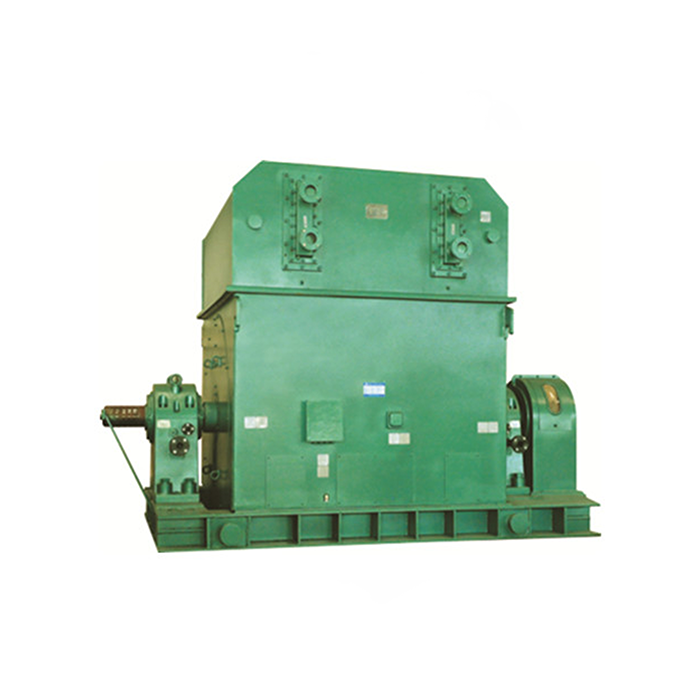
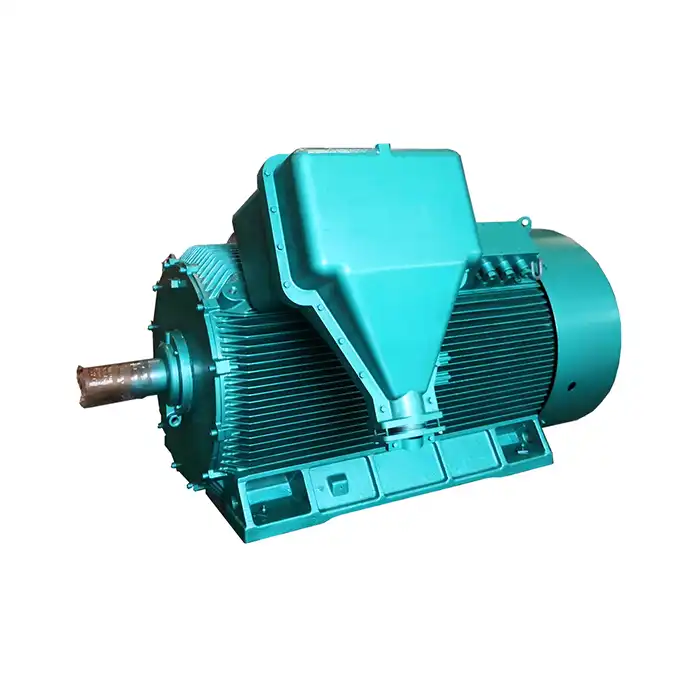
Series:T
Voltage range:3000V±5%,3300V±5%,6000V±5%,6600V±5%,10000V±5%,
Power range:800-12000 kW
Application:fans, water pumps, compressors.
Advantage:large starting torque.
Others: SKF, NSK, FAG bearings can be replaced according to customer requirements.
Understanding Mining Motor Duty Cycle
The duty cycle explains how a motor performs over time, whether it runs constantly, cycles often on and off, or carries large intermittent loads. Mining the improper duty grade causes premature wear of the winding and fatigue of the bearings.
Continuous Duty (S1) Applications
Most conveyors, ventilation fans and water pumps require S1 rated motors, which are rated for continuous operation at full load. A mining motor powering a belt conveyor can log 20+ hours/day with no thermal recovery window. The insulation and cooling architecture of the motor must accommodate that sustained heat output without degradation.
Intermittent and Heavy Start-Stop Duty
Crushers, feeders, and hoist drives cycle on and off repeatedly. Each start event draws up to 6.5 times rated current — a significant thermal and mechanical event. XCMOTOR's mining motors are rated with a starting current of ≤6.5× rated current, and insulation Class F with Class B temperature rise, giving adequate thermal headroom during repeated starts.
Matching Duty Rating to Your Application
Map out the actual load profile of your equipment before specifying any motor. Underground drills and tunnel boring machines are subject to shock loads and short full load bursts but different from steady pump operation. Choosing a motor with the improper duty classification might result in early winding failure, higher maintenance costs, and unscheduled downtime.
Managing Dust Ingress and Contamination in Mining Motors
One of the main reasons that electrical motors fail in the mines is that they become contaminated with particulates. Ore fines, silica and coal dust are abrasive and electrically conductive. They enter into a motor casing and cause the bearings and insulators to wear out sooner.
Understanding Enclosure Protection Ratings
If a case has an IEC IP grade, it means that it keeps solid objects out pretty well. If you put something solid bigger than 12.5 mm on the XCMOTOR mining motors, they will be protected by IP20. For when the motor will be kept in a motor home or shelter with good air flow, this is a useful and cheap standard.
Bearing Protection and Seal Design
Dust is a common cause of motor failure because it can foul the bearings. XCMOTOR motors feature stronger bearings that are capable of handling large radial loads and axial loads during continuous operation. That depends on what the buyer wants. You may obtain these bearings from SKF, NSK or FAG. Using the correct labyrinth seals and watching the grease will greatly lengthen the interval between bearing services.
Installation Practices That Reduce Contamination Risk
Even a highly rated motor will fail rapidly if installed incorrectly. The method of sealing a motor, the method of sealing the wires, and the method of establishing the airflow all have a bearing on the amount of dust picked up with the operation. Usually motors are installed in clean separate motor rooms and filtered air ducting is used to protect them without changing the class of enclosure.
Cooling Requirements for Mining Motors
IC01 Open Air Cooling: How It Works
XCMOTOR's mining motors use IC01 cooling, which means that an internal fan pulls air into and out of the machine. This keeps the motors cool from the inside out. As long as the building has access to clean, cool air, this method works well. Instead of closed liquid systems, this one keeps the motor light and makes the cooling circuit simpler to understand.
Managing High Ambient Temperature Underground
The useful thermal margin of the motor goes down when temperatures in the mine reach 35–45°C at depth. XCMOTOR motors have Class F insulation, which can handle temperatures of up to 155°C while they are running continuously. This gives them a useful range above ambient. There is also a layer on the windings that keeps water out, which is helpful for work in deep mines where it is common for the air to be damp.
Open-Pit vs. Underground Cooling Considerations
Open-pit sites often have more air flow and less humidity, which makes it easy to use motors that cool themselves with air. Lower ventilation rates and higher air temperatures need to be thought about for work that is done underground. As important as it is to use the right cooling method, it is also important to keep the air path clear of dust.
Integrated Approach to Mining Motor Selection: Balancing Duty Cycle, Dust, and Cooling
You can't use one single note by itself. A mining motor selected for its dust-handling ability may be undersized for the application; one selected for its ability to stay cool may not be able to take the shock of a crusher duty cycle. To choose correctly you need to think of all three of these things together.
Before placing an order for a motor, buying teams should ensure that these critical conditions are met:
- Power range match: XCMOTOR motors are available from 800-12000 kW, suited for fans, water pumps, compressors, conveyors and ore processing equipment.
- Voltage compatibility: Available in 3,000V ±5%, 3,300V ±5%, 6,000V ±5%, 6,600V ±5% and 10,000V ±5% to complement most medium voltage mining distribution systems.
- Speed range: 150-500 RPM Suitable for direct drive applications where the absence of the gearbox lowers maintenance points.
- Bearing Specification SKF, NSK or FAG bearings as per customer need, consistent performance and local availability of spare parts.
- Starting torque High starting torque output is provided for high inertia loads such as ball mills, compressors and fully loaded belt conveyors.
- Certifications: ISO 9001:2015 quality management, IEC Ex certification for explosive atmospheres and China Compulsory Certification (CCC) - MA/KA safety certification application available on request for coal mine buyers.
All in all, these criteria provide procurement engineers with a concrete inventory, instead of a generic selection. A good way to eliminate mismatches on the specifications during plant acceptance testing is to step through them with a seller early in the design phase.
Maintenance and Monitoring Strategies for Optimal Motor Performance
Taking care of the mine motor is important even if it was made well. This will make it last as long as it was meant to. Statistics from the IEC and studies on motor reliability show that over 60% of sudden motor stops are due to insulation degradation and bearing failures, which can both be avoided.
Routine Inspection Intervals
How long it goes without being oiled depends on how fast, how heavy, and how hot the machine is. Most bearings last between 1,500 and 3,000 hours before they need to be regreased at 500 RPM and continuous duty. The motor frames made by XCMOTOR are made of cast iron, which keeps the bearing housings stable and less likely to bend when the motor shakes. This keeps the alignment straight and makes the grease last longer.
Condition Monitoring Technologies
Thermography and vibration analysis can find faults that are beginning to form before they break. A temperature rise above the Class B limits found by thermography on the motor housing is an early sign of a problem with the windings or the way they cool. While the plant is scheduled to be closed, repair teams will have time to do their jobs.
Post-Maintenance Verification
Before turning the motor back on, the rotor should be balanced and the insulation resistance tested after the bearings or windings have been fixed. This method is used to make sure that every XCMOTOR is balanced, and it is also used to make sure that motors that have been fixed up work smoothly and with little vibration again.
Conclusion
To pick the right mining motor, you need to make sure that the duty cycle rating matches the actual load profile, that the dust protection is right for the installation site, and that the cooling method is right for the site. This is what XCMOTOR motors are made to do in hard rock, open-pit, and underground coal mines. The power runs from 800 to 12000 kW, and there are several middle voltage levels. They are also ISO 9001:2015 and IEC Ex certified. The gap between how long they say they will last and how long they actually last gets smaller if you keep up with regular maintenance and check on their health.
FAQ
1.How do I determine the correct duty cycle rating for my application?
Start with the load profile. How many hours a day does the motor run? How often does it start? Is the load variable or constant? Continuous conveyor and pump drives often require S1 (continuous duty). Crusher and hoist drives are often specified as S3 or S4 rated. Reviewing the IEC 60034-1 duty type definitions with your supplier ensures the rating is in line with the actual operating pattern.
2.What does IP20 protection mean for a mining motor in a dusty environment?
IP20 implies the motor is protected against solid objects larger than 12.5 mm, but is not sealed against fine dust. This rating is suited for motors in a designated motor enclosure or ventilated room where the motor is not directly exposed to dust. Motors directly in dusty airstreams need higher grades of IP or other enclosure measures.
3.Is air cooling (IC01) sufficient for underground mining conditions?
IC01 cooling works well where clean ventilation air is available and ambient temperatures stay within the motor's rated range. For deep underground locations with limited airflow or high ambient temperatures, confirm that the motor's insulation class — Class F in XCMOTOR units — provides adequate thermal margin. Keeping ventilation ducts and fan inlets free of dust accumulation is equally important.
Partner with XCMOTOR for Your Next Mining Motor Project
The mining motors that XCMOTOR sells are made to work in the conditions that you have, not the conditions that are written about in a catalog. They come in five medium-voltage levels and range from 800 kW to 12 000 kW. Based on what you need for maintenance, you can pick from SKF, NSK, or FAG bearings. You can trust us to give you a mine motor because we back up every one of them with ISO 9001:2015 quality standards and IEC Ex certification. You can email us at xcmotors@163.com or go to motorxc.com to tell us about your idea and get a suggestion that works for you.
References
1. IEC 60034-1: Rotating Electrical Machines – Part 1: Rating and Performance. International Electrotechnical Commission, 2017.
2. Bonnett, A. H., & Yung, C. Increased Efficiency Versus Increased Reliability. IEEE Industry Applications Magazine, 2008.
3. Lipo, T. A. Introduction to AC Machine Design. University of Wisconsin Press, 2017.
4. Tavner, P., Ran, L., Penman, J., & Sedding, H. Condition Monitoring of Rotating Electrical Machines. IET Power and Energy Series, 2008.
5. Stone, G. C., Culbert, I., Boulter, E. A., & Dhirani, H. Electrical Insulation for Rotating Machines: Design, Evaluation, Aging, Testing, and Repair. Wiley-IEEE Press, 2014.
6. Thorsen, O. V., & Dalva, M. A Survey of Faults on Induction Motors in Offshore Oil Industry, Petrochemical Industry, Gas Terminals, and Oil Refineries. IEEE Transactions on Industry Applications, 1995.