



Medium Voltage Motor Selection Guide (3.3kV-13.8kV)
When you are purchasing a medium voltage motor for industrial equipment such as a crusher, compressor or big pump, the voltage and power ratings selected will have a direct bearing on how long your machinery operates and how much it costs to maintain. This article discusses important selection parameters for medium voltage motors in the 3.3kV to 13.8kV range, with an emphasis on the 3.3kV motor range (160 – 1600 kW). Whether you are an OEM design engineer, a plant maintenance supervisor or a procurement manager, this information is aimed to help you make a quicker, more confident purchase choice.
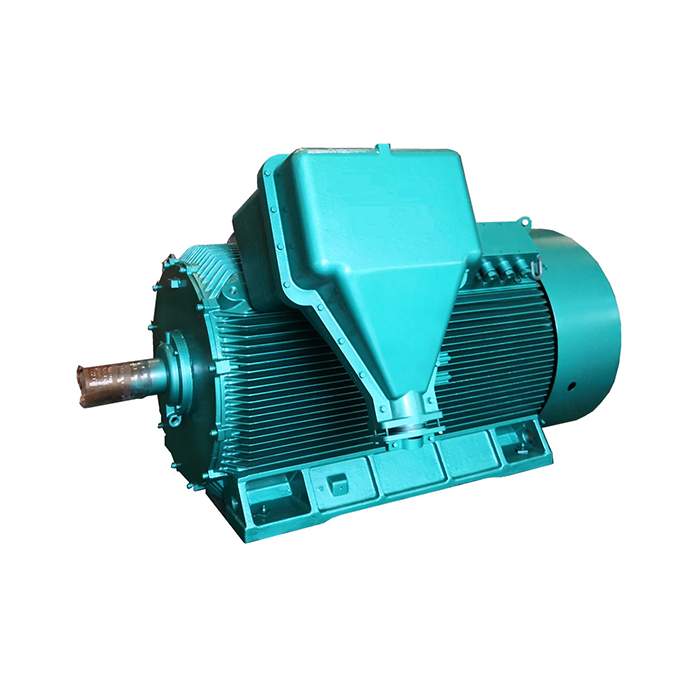
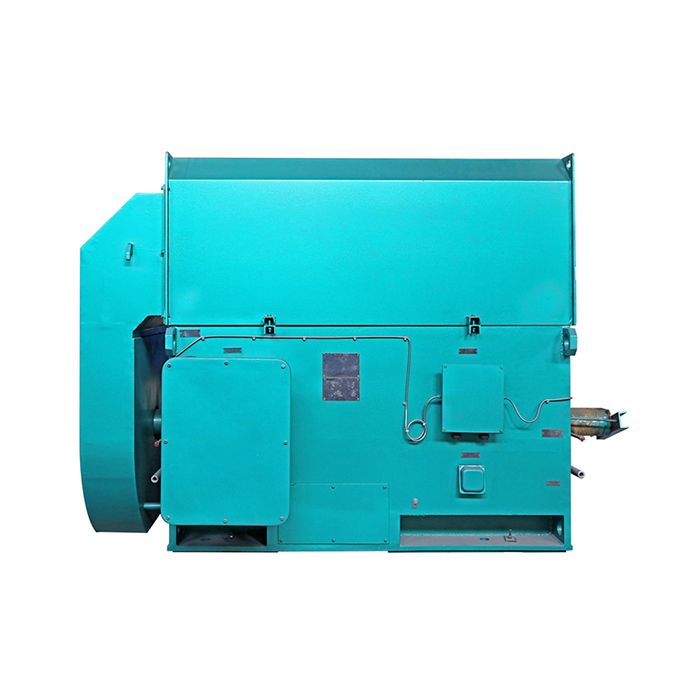
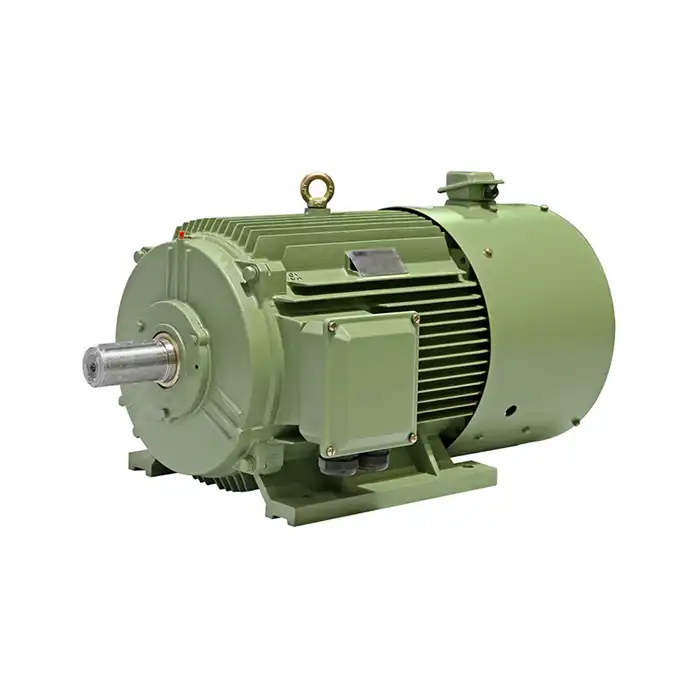
Series:Y2
Protection level:IP54
Voltage range:3000V±5%,3300V±5%,6000V±5%,6600V±5%,10000V±5%,11000V±5%
Power range:160-1600 kW
Application:fans, water pumps, compressors, crushers, cutting machine tools, transportation machinery, etc.
Advantage:compact structure, light weight, low noise, small vibration, long service life, easy installation and maintenance.
Standard: This series of products complies withJB/T10444-2004 standards.
Others: SKF, NSK, FAG bearings can be replaced according to customer requirements.
Understanding Medium Voltage Motors: Types, Operation, and Applications
The medium voltage motors are available in numerous voltages, the most common being 3.3kV, 6kV, 6.6kV, 10kV and 11kV. They are better on high power loads than low voltage systems . They reduce the current required for the same power . This implies that the cables are thinner, less heat is produced and there are less losses over lengthy cable lengths.
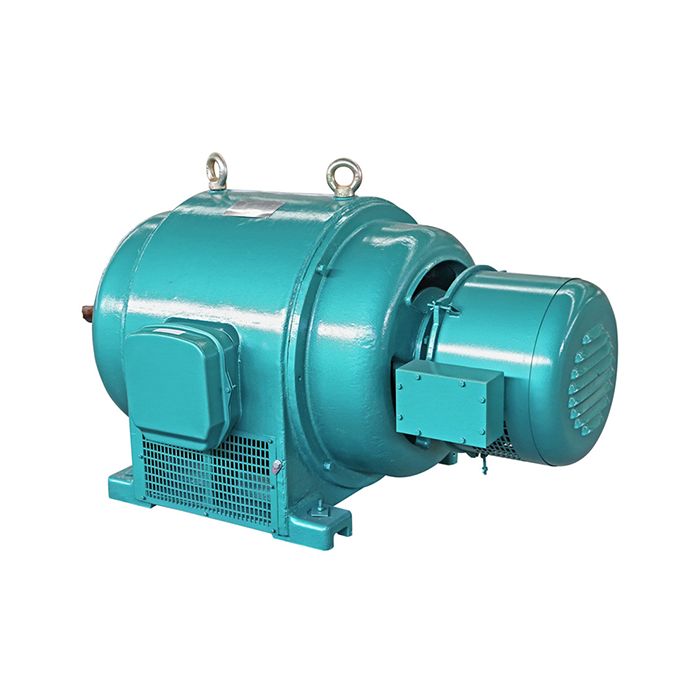
Squirrel Cage vs. Wound Rotor Motors
Squirrel cage induction motors (Y-series) are used for constant speed in many fans and centrifugal pumps. External resistance may be added while starting wound rotor motors (YR/YRKK). This reduces the inrush current, but maintains the high beginning torque which is highly critical in equipment such as crushers and ball mills which have to accelerate large loads from rest.
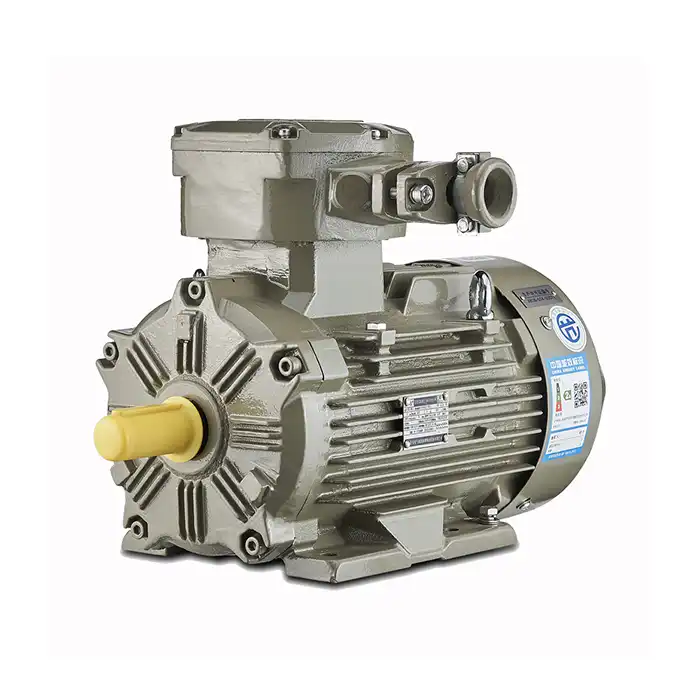
Explosion-Proof and Enclosed Cooling Variants
For applications in dusty or chemically reactive environments — such as quarrying or petrochemical plants — explosion-proof motor housings (Ex-rated) are available. YRKK-type motors with closed-circuit air-to-air cooling are commonly specified for mining machinery where airborne particles would damage open-ventilation windings.
The 3.3kV motor is well-suited for mid-range industrial loads. Standard applications include ventilation fans in power plants, water supply pumps, reciprocating compressors, ore crushers, metal-cutting machine tools, and conveyor or hoist systems. These are settings that demand stable torque delivery over extended operating cycles without frequent interruption.
Critical Factors When Selecting Medium Voltage Motors
Getting the motor specification wrong at the design stage creates problems downstream — mismatched torque curves, failed acceptance tests, or premature bearing wear. Before any 3.3kV motor order is placed, the following factors should be checked.
Load Profile and Starting Requirements
For heavy-load equipment like crushers, the stall torque multiple should be at least 2.5 times rated torque. Starting current should stay at or below 6.5 times rated current to avoid tripping protective relays. Wound rotor motors address this by allowing controlled acceleration through external resistors.
Voltage Level and Site Compatibility
Six voltage levels are available in the standard medium voltage range: 3000V, 3300V, 6000V, 6600V, 10000V, and 11000V — all with ±5% tolerance. Matching the motor rating to the site distribution voltage prevents transformer losses and avoids the need for additional step-down equipment.
Insulation Grade and Thermal Performance
For motors with more than 3kV of voltage, the stator windings need protection that can handle medium voltage stress. Class F insulation (155°C) is the standard for most industrial motors, while Class H insulation gives you extra thermal margin in places that are very hot or don't have enough air flow. Nameplate ratings for efficiency should match factory test records; differences in this area often lead to owner rejections of acceptance.
Brand and Supplier Insights: Trusted Medium Voltage Motor Providers
The 3.3kV motor market includes manufacturers with varying production standards, certification coverage, and after-sales support capacity. Selecting a supplier based on catalog price alone tends to create downstream problems with replacement parts, delivery gaps, and documentation gaps during audits.
What to Look for in a Verified Supplier?
A credible 3.3kV motor supplier should carry documentation for CCC, CE, ISO9001, and CQC certifications at minimum. Manufacturers with GOST/EAC certification serve CIS and Russian markets. Energy-saving certification supports procurement justification in facilities with carbon reduction targets.
Production Visibility and Order Tracking
Suppliers managing production through SAP or equivalent ERP systems can provide stage-by-stage documentation — useful for OEM clients who require quality records as part of their main equipment assembly process. Each unit should be tested against rated voltage, current, and torque specifications before shipment.
Bearing Specifications and Spare Parts
A common maintenance concern with medium voltage motors is bearing replacement lead time. Specifying internationally sourced bearings — SKF, NSK, or FAG — during initial order ensures that replacement parts are available through local distributors worldwide, not only through the motor OEM.
Practical Comparison and Decision-Making Guide for 3.3kV Motor Selection
The 3.3kV motor is the entry point of the medium voltage range. It occupies a practical position between low-voltage 690V systems and higher-voltage 6kV or 10kV configurations. For many mining OEM applications in the 200–800 kW range, the 3.3kV motor offers a cost-effective solution without requiring the more expensive switchgear associated with 6kV or 10kV distribution.
Induction Motor vs. Wound Rotor: When to Use Each
Standard induction motors work well for centrifugal loads — fans and pumps — where startup torque requirements are moderate. For equipment like jaw crushers or ball mills that start under full mechanical load, wound rotor motors reduce inrush current while delivering the torque needed to bring the load up to speed. The external resistance circuit also allows controlled acceleration, which reduces mechanical shock on drive couplings.
Power Range Considerations
The 160–1600 kW power band in the standard 3.3kV motor series covers a wide span of industrial equipment sizes. A 160 kW unit fits a mid-size conveyor drive or irrigation pump. At 1600 kW, the same voltage class can serve a primary crusher or large compressor stage without stepping up to 6kV infrastructure.
Pole Count and Speed Matching
The speed of the motor relies on the number of poles and the frequency of the supply. For a 50 Hz system a 4-pole motor will run at around 1480 r.p.m. , a 6-pole motor at 985 r.p.m. and an 8-pole motor at 740 r.p.m. The number of poles is selected for the optimal input velocity for the driven equipment . This means no extra gear box gears and complexity in the drive train .
Optimizing Procurement: How to Buy 3.3kV Motors Efficiently
Once the technical specification is confirmed, procurement efficiency depends on supplier access, lead time management, and documentation completeness. For 3.3kV motor orders, these factors carry equal weight in OEM procurement cycles that typically run 8–16 weeks from design approval to production delivery.
Practical steps that reduce procurement friction include:
- Confirm voltage and power standards early. Locking on the voltage level — 3300V, 6000V, or 10000V — before commencing supplier contact shortens the quote cycle and eliminates revision loops.
- Request test certificates with the order. Factory test documents indicating rated voltage, no-load current, and torque measurements should accompany each item. This guards against nameplate-versus-actual-performance anomalies at final acceptance.
- Specify bearing brands in writing. If your maintenance staff employs NSK or SKF stock, indicate this in the purchase order. It eliminates replacement during manufacturing and assures spare part compatibility.
- Align delivery timetable with production milestones. Motors arriving ahead of assembly ready generate storage and handling challenges. Coordinate production scheduling with the supplier's SAP system to coordinate delivery with your line schedule.
These steps are straightforward, but they require a supplier with the flexibility to accommodate them — not all manufacturers can adjust bearing sourcing, production timing, or documentation output on short notice. Choosing a sourcing partner with direct manufacturer access resolves most of these points before they become delays.
Conclusion
Choosing the right 3.3kV motor for your application comes down to four things: matching voltage and power to site conditions, choosing the right motor type for the load profile, checking certifications and test documentation, and working with a supplier who can deliver on schedule with after-sales support. The 160 - 1600 kW 3.3kV motor series has six voltage ranges from 3000V to 11000V. This range is sufficient to satisfy most industrial installations without bespoke designing. If specs are done properly and sourcing is controlled via approved channels, medium voltage motor procurement doesn’t have to be a drawn-out procedure.
FAQ
1. What does 3.3kV mean for a motor?
3.3kV refers to the rated supply voltage of 3,300 volts. The 3.3kV motor falls within the medium voltage class, used where high power output is needed but lower current levels are preferred over low-voltage systems — particularly across longer cable runs in plant or mining environments.
2. Is a 3.3kV motor considered high voltage?
No. Most industrial and IEC standards classify 3.3kV as medium voltage. High voltage typically begins at 11kV and above. The 3kV–6.6kV band is standard for heavy industrial equipment and infrastructure applications.
3. What power range does this motor series cover?
The series runs from 160 kW to 1600 kW, suitable for mid-size equipment such as water pumps and fans, as well as larger machinery like primary crushers and industrial compressors.
4. Can I specify a bearing brand?
Yes. SKF, NSK, and FAG bearings are available on request. State your preference at the inquiry stage so it can be confirmed during production scheduling.
5. What voltage levels are available?
Standard offerings are 3000V, 3300V, 6000V, 6600V, 10000V, and 11000V, each with ±5% tolerance to accommodate site distribution variations.
Get Your 3.3kV Motor Quote from XCMOTOR
XCMOTOR — operating through Shaanxi Qihe Xicheng Electromechanical Equipment Co., Ltd. — gives you direct access to over 30 verified manufacturers for your 3.3kV motor needs. With 20+ years in power equipment sourcing, we match each order to actual load conditions, not just catalog numbers. Our 3.3kV motor supplier network covers CCC, CE, ISO9001, and GOST certifications. Visit motorxc.com or contact us at xcmotors@163.com to request a quote or speak with a technical specialist.
References
1. IEEE Standard 841 — IEEE Standard for Petroleum and Chemical Industry — Severe Duty Totally Enclosed Fan-Cooled (TEFC) Squirrel Cage Induction Motors, IEEE, 2009.
2. IEC 60034-1 — Rotating Electrical Machines — Part 1: Rating and Performance, International Electrotechnical Commission, 2017.
3. Boldea, I. & Nasar, S.A. — The Induction Machine Handbook, CRC Press, 2002.
4. Chapman, S.J. — Electric Machinery Fundamentals, McGraw-Hill Education, 2012.
5. JB/T 10444-2004 — High Voltage Three-Phase Asynchronous Motors Technical Conditions, China Machinery Industry Standard, 2004.
6. Motor Systems Market Assessment, U.S. Department of Energy — Office of Industrial Technologies, 2002.