



Inverter Duty Motor Market: APAC Demand, Supply Risks
The inverter duty motor market is one of the fastest expanding areas in the Asia-Pacific. Demand for VFD-compatible motors has been driven by increasing manufacturing production, more stringent energy laws and growing adoption of automation in China and India, Southeast Asia and South Korea. For technical managers at OEMs buying 200 to 1,500 units per year – from crane systems to lift traction and stage machinery – knowing where this industry is headed and where its supply chain breaks are is directly relevant to procurement decisions made now.
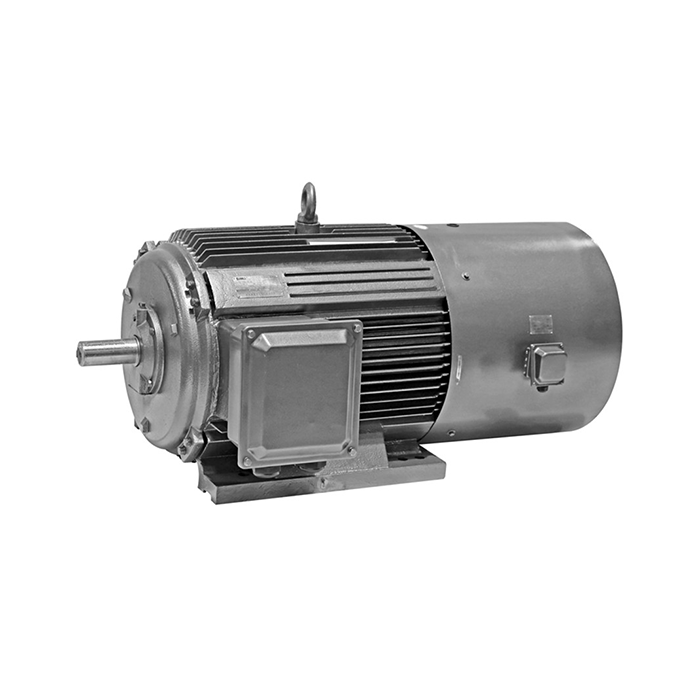
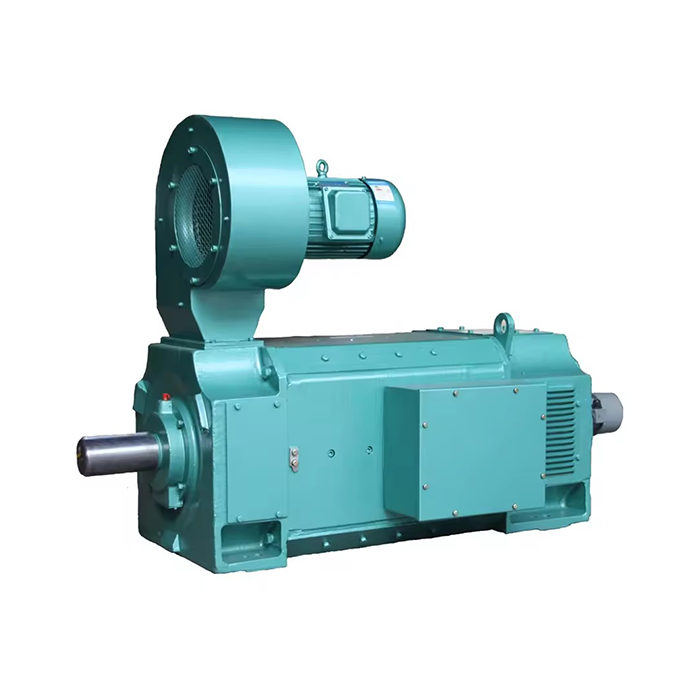
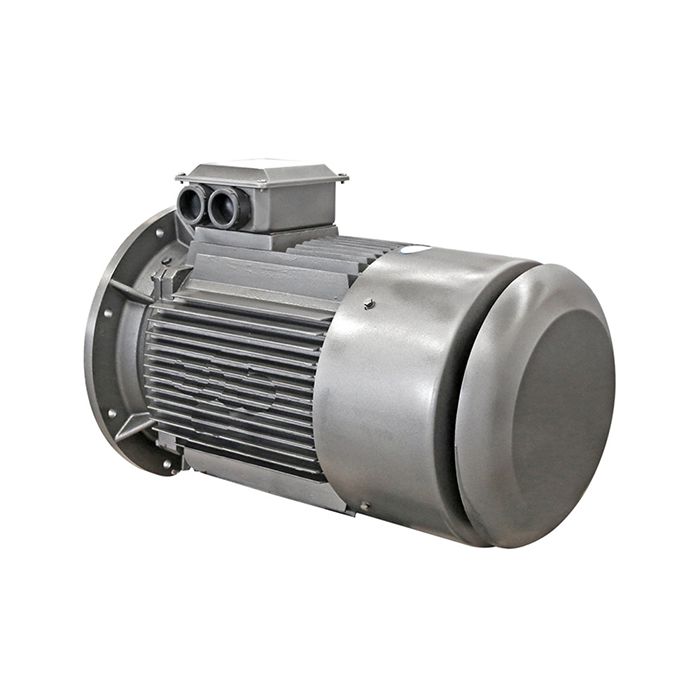
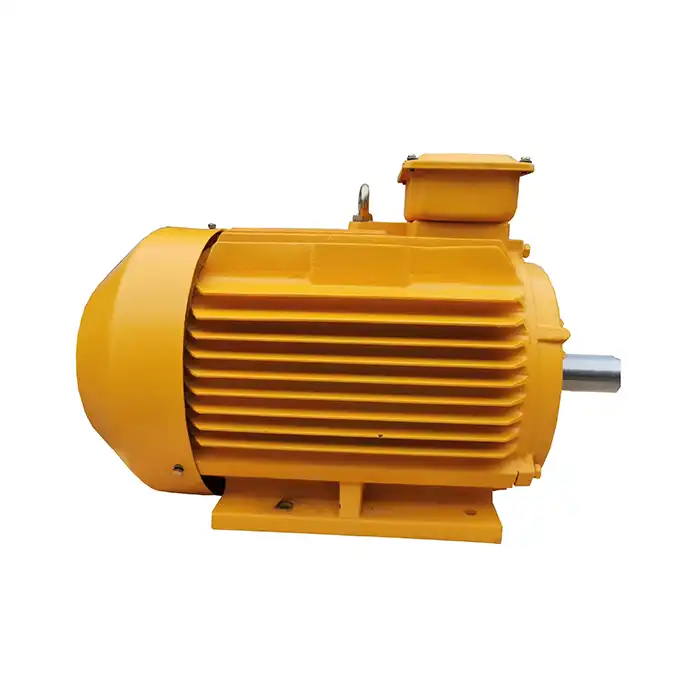
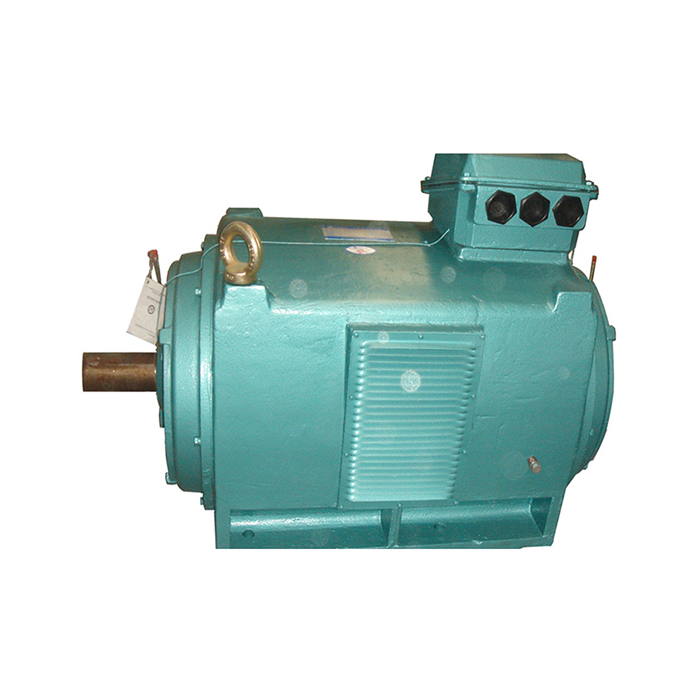
Series:YVFE3
Frequency conversion range:30hz~50hz,5hz~70hz,5hz~100hz
Power range:0.75-1000kW
Protection level:IP55
Application:are suitable for driving various mechanical equipment that require continuous and frequent forward and reverse rotation, such as steel rolling, lifting, transportation, machine tools, printing and dyeing, papermaking, chemicals, textiles, pharmaceuticals, etc., and can be used with various domestic and foreign variable frequency power supplies.
Advantage:high efficiency, wide speed range, high precision, stable operation, and easy operation and maintenance.
Certificate:installation dimensions comply with International Electrotechnical Commission (IEC) standards.
Others: SKF, NSK, FAG bearings can be replaced according to customer requirements.
Understanding the Inverter Duty Motor Market in APAC
The APAC inverter power motor market shows how fast the region's economy is growing. Higher levels of energy efficiency are being required by governments in China, India, Vietnam, and Indonesia. This is forcing OEMs to replace fixed-speed motors with variable frequency drive systems. Because of this change in regulations, inverter duty motors can now be used in HVAC, linens, medicines, and transportation, as well as heavy industry.
Demand Drivers in Industrial Sectors
Making things and moving things around are the main uses for VFD-compatible motors in APAC. More and more, crane OEMs ask for motors with speed ratios between 1:10 and 1:1000 so that mechanical gearboxes don't have to be used. This cuts down on both the cost of the motor and the number of times it needs to be serviced. Stage machinery builders need four-quadrant operation and regenerative braking, which is something that regular induction motors can't do.
Energy Policy and Efficiency Standards
The inverter duty motor market is moving toward IE3 and IE4 efficiency levels because of China's GB 18613-2020 standard and India's BEE motor efficiency rules. When looking for HVAC equipment for public sector projects, procurement teams now have to follow design guidelines that directly refer to IEC 60034-30 efficiency classes. Motors that can't show proof of compliance could be kicked out at any point during the buying process, not just at the final check.
Application Diversity Across APAC
It's interesting to see how many different uses the inverter duty motor market in APAC has. In Southeast Asia, motors that keep the torque stable at low speeds without getting too hot are needed in steel rolling mills in China, drug packaging lines in India, dyeing equipment in Vietnam, and elevator traction systems all over the region. Because of this range, a well-specified motor platform—one that can handle 0.75 kW to 355 kW and a number of frequency conversion ranges—has real business value for OEMs in a number of different industries.
Supply Risks Affecting the APAC Inverter Duty Motor Market
It's not enough to just understand demand. There are supply-side problems in the APAC inverter duty motor market that can throw off production plans and raise lifecycle costs.
Raw Material Dependencies
The prices of copper coil wire, electrical steel laminations, and rare earth elements used in different types of permanent magnets can change. China controls a big chunk of the world's rare earth refining capacity. This means that political unrest or signals that exports are being limited have a direct effect on motor prices and lead times across the region. Buyers who agree to buy a certain amount from manufacturers every year tend to be less affected by this volatility than buyers who buy on the spot.
Non-Certified Product Risk
One constant risk in the APAC inverter duty motor market is the spread of motors that have efficiency marks on them without being checked by a third party. If a motor doesn't have the right insulation ratings—specifically, if it hasn't been tested against NEMA MG 1 Part 31 or IEC TS 60034-25 standards—buyers could have the windings fail early when IGBT-based drives switch to high dv/dt. For OEMs that use crane hoists or elevator systems where bearing currents and insulation degradation can be dangerous, choosing a product that isn't certified costs a lot more than the initial price savings.
Logistics and Lead Time Pressures
Normalcy in freight has not yet fully returned for oversized or heavy industrial motor shipments after the pandemic. Port congestion at major hubs in APAC and stricter customs rules for motors with CCC or CE markings continue to add weeks to shipping times that are hard to estimate. OEMs that have to make decisions every 6 to 10 weeks need providers whose production planning is handled by SAP and whose inventory buffers are recorded, not guesstimated.
Comparing Inverter Duty Motors with Other Motor Types
The inverter duty motor market is driven due to the rising need for the flexible speed control, reliable operation and reduced energy consumption in the industrial applications. However, not all motors will behave the same when connected to a variable frequency drive (VFD). Inverter duty motors are built for the rigours of variable-speed use, but standard induction motors may be OK for constant-speed applications. Selecting the proper motor relies on the operating frequency, kind of load, cooling demands and long term maintenance requirements.
Inverter Duty Motors vs. Standard Induction Motors
Standard induction motors are well suited to equipment that runs at a reasonably consistent speed. But in conjunction with a VFD, they might incur extra electrical stress, insulation breakdown or overheating over extended periods of low speed. XCMOTOR provides inverter duty motors such as YVFE2 series for variable-frequency applications with a broad speed range and Class F insulation. Their IC416 independent forced cooling technology maintains appropriate operating temperatures at moderate speeds. These characteristics provide more dependable speed control under varying production needs for steel rolling, textile machines and material handling systems.
Inverter Duty Motors vs. Servo Motors
Servo motors are often used for applications that need accurate positioning , fast acceleration , and highly responsive motion control . Servo motors are used often in robotics and automated assembly equipment . But for general purpose industrial machines, these skills may be superfluous, and durability and practical running costs may be emphasised. Inverter duty motors are an acceptable choice for conveyors, pumps, fans, machine tools and other equipment where variable speed is required rather than precise positioning control. The YVFE2 series offers power ranges of 0.75-355 kW, with frequency possibilities to 100 Hz. If an application needs more control or stopping features, optional encoders and brake systems might be considered.
How to Select the Right Motor for Your Application
The motor category alone is not enough to pick a motor; the real operating circumstances must be considered first. Buyers should consider rated power, load torque, speed range, starting frequency, cooling and matching with the chosen VFD. Applications that demand continuous low-speed torque may have different requirements than those that run at high speeds under constant-power situations. XCMOTOR’s YVFE2 inverter duty motors are available with IP55 protection, IEC compatible mounting specifications and optional SKF, NSK or FAG bearings to suit various project needs. Matching these specs to the operational environment lets purchasers balance performance, maintenance needs and energy economy without paying for control features their equipment doesn’t require.
How to Select and Procure Inverter Duty Motors in APAC
The structured evaluation methodology facilitates the procurement decision for inverter duty motor market.
Technical Specification Alignment
Define the whole duty envelope before going to suppliers. Required speed ratio Overload capacity (≥2x rated torque for 60 seconds is a standard crane spec) Encoder interface requirements Brake integration compatibility Motors that permit encoder installation and incorporated electromagnetic brakes in a single package decrease the assembly complexity and remove the problems of mismatched brake-brands that are common in the supply chains of solution providers.
Supplier Verification and Certification Review
Request CCC and CE certification papers, registration of the ISO 9001 quality system, IEC installation dimensions. Another baseline for railway or transport equipment applications is CRCC certification. Ensure that the insulation class testing and the IP55 protection validation are carried out on production units, not merely on type-test samples. Suppliers able to demonstrate 100% performance testing before shipment give a significant layer of quality assurance that assists in preserving OEM production timelines.
Bearing and Customization Options
In applications where shaft currents are a known issue, especially for longer frame motors 250 kW and beyond, specify insulated bearing alternatives or request insulated end covers. It is a real procurement advantage that allows substitution of SKF, NSK or FAG bearings based on application requirements or regional availability or customer desire, reducing reliance on a single bearing supply chain.
Mitigating Supply Risks and Ensuring Market Agility
Inverter duty motor market resilient sourcing demands more than one reputable source.
Multi-Sourcing and Buffer Stock Strategy
OEMs using 200 to 1,500 motors a year have adequate volume to negotiate with more than one qualified supplier at a time. Having a buffer stock of maximum consumption frame sizes of 4 to 6 weeks decreases sensitivity to transportation interruptions and raw material price increases. The investment in the buffer is usually repaid in one saved production stop.
Demand Forecasting and Order Coordination
Even at a rudimentary level, linking motor procurement planning to production scheduling systems allows purchasers to put out estimates that producers can plan against. This gives vendors visibility to pre-stage materials and minimises stated lead-times. A 12-week demand forecast provided to a supplier by an OEM with seasonal project pipelines typically yields better pricing and delivery reliability than reactive ordering.
Proactive Quality and Maintenance Programs
Application-matched selection, optimum VFD parameters setting and scheduled thermal inspections extend motor service life, therefore reducing total fleet replacement cost . As an option, inverter duty motors can be combined with temperature sensors to enable condition-based maintenance instead of calendar-based replacement, which is more economical for operators that run equipment 24/7.
Conclusion
OEMs that define and source carefully have a substantial development opportunity in the APAC inverter duty motor market. Energy efficiency regulations and the growth of automation provide structural support for demand. Structured purchasing methods, validated supplier credentials and enough inventory buffers can handle supply risks such as the variation of raw material costs and the proliferation of non-certified products. When technical managers are looking at motor platforms for use in cranes, lifts or stage machinery they have clear criteria to make their choice. The platforms need to have good insulation, good thermal performance at low speeds, the ability to add encoders and brakes and the supplier must have paperwork to back up what they say.
FAQ
1.What speed ratios does an inverter duty motor support in crane applications?
Use 1:20 or higher ratios for tasks that need more precise placement control. The YVFE2 series can convert frequencies from 5 Hz to 100 Hz, which means it can handle speed ratios well above 1:20 in steady torque mode without losing any performance due to heat.
2.How does independent forced cooling address low-speed heating?
Most motor cooling fans are fixed on shafts, which means that as the speed goes up, the airflow goes down by the same amount. At 5 Hz, a normal motor has almost no cooling airflow. IC416 independent forced cooling uses a separate-powered axial fan that keeps the rated airflow the same no matter how fast the shaft is turning. This keeps the temperature of the windings within the Class F range throughout the whole operating range.
3.What certifications should I require from a supplier in the APAC inverter duty motor market?
For market access, you need to have CCC and CE certification. For quality system guarantee, you need ISO 9001 certification. For drop-in replacement compatibility, you need IEC installation dimension compliance. And for industrial environment suitability, you need IP55 protection proof. For compliance with NEMA MG 1 Part 31 and IEC TS 60034-25, ask for clear proof of insulation tests.
4.Can an inverter duty motor replace a gearbox-motor combination?
Yes, in many types of cranes and hoists. Electronically, a motor that has enough low-speed torque and a wide range of constant-torque frequencies can handle a number of different mechanical gear ratios. This takes the gearbox out of the drivetrain, which makes it lighter and easier for OEM assembly teams to plan maintenance.
5.What bearing options are available to prevent shaft current damage?
Insulated bearing housings or insulated end covers are the usual way to protect frames with power levels above 250 kW or in situations where the VFD shift frequency is high. The YVFE2 line can use SKF, NSK, or FAG bearings instead, depending on what the customer wants. This lets buying teams choose the bearing brand that works best with their local service network.
Partner with XCMOTOR for Your Inverter Duty Motor Needs
XCMOTOR sells the YVFE2 inverter duty motor series to OEMs in the crane, elevator, and industrial machinery industries. This series has motors ranging from 0.75 kW to 355 kW, IP55 protection, Class F insulation, and IC416 forced cooling. We've been a supplier to the inverter duty motor market for over 20 years and back up every order with CCC/CE certification, IEC-compliant dimensions, and technical support seven days a week. You can talk about your needs and get a quote by emailing xcmotors@163.com or going to motorxc.com.
References
1. International Electrotechnical Commission. IEC TS 60034-25: Guidance for the Design and Performance of AC Motors Specifically Designed for Use with Variable Frequency Inverters. IEC, 2022.
2. National Electrical Manufacturers Association. NEMA MG 1: Motors and Generators, Part 31 – Definite-Purpose Inverter-Fed Polyphase Motors. NEMA, 2021.
3. International Energy Agency. Energy Efficiency 2023: Analysis and Outlooks to 2030. IEA, 2023.
4. Asia-Pacific Economic Cooperation. APEC Energy Demand and Supply Outlook, 7th Edition. APEC Energy Working Group, 2022.
5. Grand View Research. Variable Frequency Drive Market Size, Share & Trends Analysis Report by Application, by Region, and Segment Forecasts, 2023–2030. Grand View Research, 2023.
6. McKinsey & Company. Supply Chain Resilience in Industrial Equipment Manufacturing: Strategies for Asia-Pacific OEMs. McKinsey Global Institute, 2022.