



IE4 vs IE5 Motor: Efficiency Gains and Loss Reduction
If your business uses more than 50 million kWh of power annually, a 1% increase in motor efficiency might mean hundreds of thousands of dollars in electricity savings. The choice between an IE4 or IE5 motor is no longer merely a technical choice – it immediately impacts your ESG reporting goals, the accumulation of your carbon credits and the ROI of your long-term capital projects. This article lays down the true differences in efficiency, loss reduction techniques and procurement considerations that energy managers and OEM engineers need to make a solid, data-backed choice.
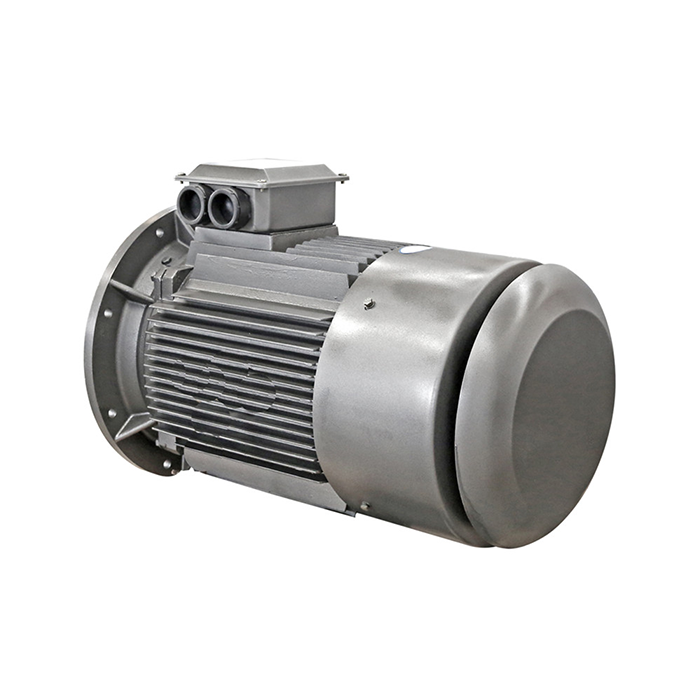
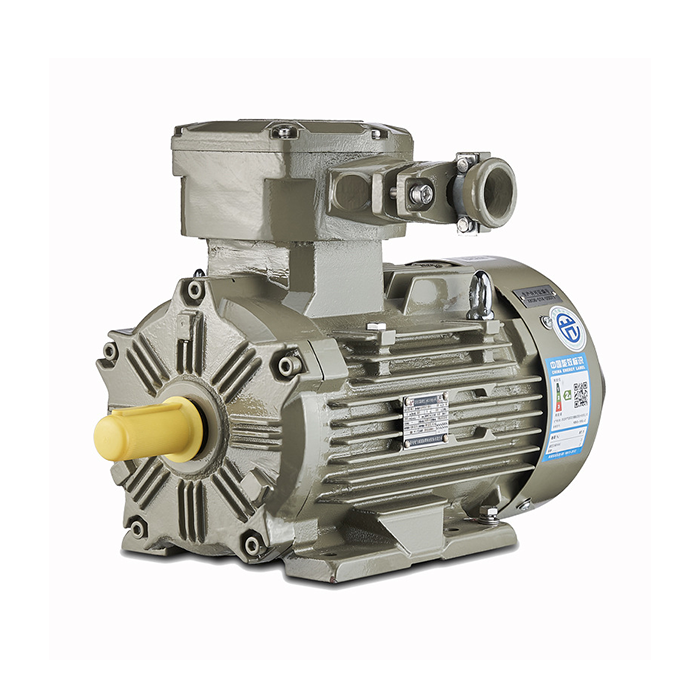
Series:YE5
Frame number: 80-450
Power range:0.75-1000kW
Protection level:IP55
Energy efficiency class: IE5
Voltage range: 380V,400V,415V, 660V,etc.
Application:can be used in various fields of the national economy, such as machine tools,water pumps,fans,compressors,and can also be used in transportation, mixing, printing, agricultural machinery, food and other occasions that do not contain flammable, explosive or corrosive gases.
Certificate: international standard IEC60034-30 "Efficiency Classification of Single-speed Three-Phase Squirrel Cage Induction Motors".
Advantage:The high quality of the electric motor guarantees high operational reliability.
Others: SKF, NSK, FAG bearings can be replaced according to customer requirements.
Understanding IE4 and IE5 Motor Efficiency Ratings
The International Electrotechnical Commission's standard IEC 60034-30-1 divides low-voltage AC motors into efficiency levels, ranging from IE1 to IE5. IE4 is in the “Super Premium” segment and that IE5 as specified in IEC 60034-30-2 is in the “Ultra-Premium” segment. Both specifications apply to single-speed three phase squirrel cage induction motors, across a wide range of powers.
What IEC 60034-30-1 and -30-2 Actually Define
Actually IEC 60034-30-1 is for IE1 to IE4 for ordinary induction motors. IEC 60034-30-2 upgrades the classification to IE5, requiring that total losses be at least 20% lower than IE4 for the same rated output. And this is not a marketing statement, it is a tested, quantitative threshold that qualified test labs will be able to verify. Prior to procurement, buyers are advised to seek third party test results aligned to these particular sub-standards to verify compliance.
IE4 Motor Technical Profile
XCMOTOR's ie4 motor induction motors are available from 0.75 kW to 1000 kW, and the voltage is 380V, 400V, 415V, 660V. They are IP55 protected, insulation class F (optionally class H) and up to 96% efficiency at full load with a power factor > 0.85. Starting current is not more than 6.5 times of rated current and noise level is 3 to 5 dB(A) lower than normal motors. These motors are CE and GOST marked and IEC 60034-30 2014 approved.
IE5 Motor Technical Profile
XCMOTOR's IE5 motors share the same power range of 0.75 kW to 1000 kW and voltage compatibility, but push full-load efficiency up to 96.5%. The power factor exceeds 0.9, rotor losses are reduced through precision die-cast components, and the stator winding design improves copper utilization. Frame sizes run from 80 to 450. Like the IE4 line, IP55 protection is standard with higher ratings available. Both product lines support SKF, NSK, and FAG bearing substitutions based on customer requirements.
Key Benefits of Upgrading to IE5 Motors
The difference between IE4 and IE5 may not seem big on a nameplate, but it gets bigger over the 15–20 years that an asset is in use. This is especially true for facilities that run continuous-duty loads, like pumps, fans, compressors, and conveyor systems.
Here are the main reasons why you should look into an Ie5 motor for applications with a lot of load and a long run time:
- Reduced total losses by at least 20% vs. IE4: At a 75% load factor — which is typical for many variable-duty cycles — the absolute loss reduction is proportionally larger in kilowatt-hour terms than at full load. A 200 kW motor running 6,000 hours per year at 75% load can recover the IE4-to-IE5 price premium within 18–24 months at a U.S. industrial electricity rate of $0.08–$0.12/kWh.
- Lower operating temperature: Reduced losses mean less heat generated inside the motor housing. Cooler winding temperatures slow insulation degradation, which directly extends motor service life. For Class F insulation, every 10°C reduction in winding temperature roughly doubles insulation life expectancy, according to the Arrhenius thermal aging model referenced in IEEE 117.
- Quieter operation: XCMOTOR's IE5 motors produce lower harmonic distortion and reduced mechanical noise compared to standard induction designs, which matters for HVAC installations and food processing environments where acoustic limits apply.
In factories where motors run at least 4,000 hours a year, these benefits can make the total cost of ownership go down by a large amount. The IE4 induction motor is still a good choice for equipment that doesn't get used very often because it is reliable in machine tools, farming equipment, and printing machines.
Comparing IE5 Motors with Other Motor Technologies
Choosing the right efficiency tier requires matching motor characteristics to actual load profiles — not just selecting the highest-rated product available.
IE4 vs. IE5 at Variable Load Rates
At 100% load, the efficiency gap between IE4 and IE5 is relatively narrow — roughly 0.3–0.5 percentage points for a 75 kW motor. However, at 50% load, losses diverge more noticeably because IE5 motors are optimized to reduce both iron losses and resistive losses across a broader operating range. Facilities using variable frequency drives (VFDs) benefit most from IE5 at partial loads, where the VFD-motor system efficiency curve widens in favor of the IE5 design.
IE5 vs. Conventional Induction Motors (IE2/IE3)
Compared to IE2 and IE3 motors still common in older U.S. industrial installations, an IE5 motor can reduce annual electricity consumption by 20–40% depending on application and load factor. The IEA's 2023 Energy Efficiency report notes that electric motors account for approximately 45% of global electricity consumption, and upgrading motor fleets from IE2 to IE4/IE5 represents one of the highest-leverage efficiency interventions available to industrial operators.
Lifecycle Cost and Payback Period
A straightforward lifecycle cost analysis covering a 10-year period typically favors IE5 for motors above 22 kW running more than 4,000 hours annually. For motors below 11 kW or running fewer than 2,000 hours per year, the IE4 induction motor delivers a better IRR because the energy savings from the additional IE4-to-IE5 efficiency gain do not recover the premium within a reasonable payback window.
Procurement Considerations for IE5 Motors in B2B Markets
Procurement teams face a legitimate risk: suppliers misrepresenting IE3 products as IE4 or IE5. The only reliable defense is requesting test certificates issued by accredited third-party laboratories referencing IEC 60034-30-1 or IEC 60034-30-2 by name, alongside traceability documentation from the manufacturer.
Verifying Supplier Credentials
When sourcing from an IE5 motor supplier, confirm that the manufacturer can provide full test data at multiple load points — not just nameplate efficiency at 100% load. Request efficiency curves at 25%, 50%, 75%, and 100% load. This data is required under IEC 60034-2-1 testing methods and is essential for calculating motor efficiency payback, and legitimate suppliers maintain it on file.
Delivery Lead Times and Inventory
XCMOTOR maintains inventory across standard frame sizes, with typical delivery for IE4 induction motors within 2–4 weeks. Custom configurations, modified mounting arrangements (B3 foot-mounted, B5 flange-mounted, or combination), or non-standard voltage ratings may extend lead times. Planning procurement 6–8 weeks ahead of installation schedules reduces schedule risk for capital projects.
Avoiding Specification Drift During Tendering
Internal procurement teams should lock in IEC efficiency class, frame size, IP rating, and insulation class as non-negotiable specifications during the tendering phase. Allowing substitutions without technical review is how lower-grade motors enter the supply chain under higher-grade labeling.
Maintenance Tips and Longevity of IE5 Motors
High-efficiency motors need to be maintained. To keep the efficiency gains over the course of their service life, they need organized inspection processes.
Routine Inspection Schedule
For both IE4 and Ie5 motors, bearing condition is the main area of maintenance. XCMOTOR's motors can use replacement bearings from SKF, NSK, and FAG, which makes it easier for facilities that already have preferred bearing suppliers. Every three to six months, vibration analysis finds worn bearings before they cause the rotor to become unbalanced. Testing the strength of winding insulation once a year can find moisture or heat damage early.
VFD Compatibility and Harmonic Management
Bearing protection on the drive end of Ie5 motors intended for VFD operation must be paid attention to keep shaft current damage at bay, especially on motors over 30 kW. If you want to use a VFD, you should specify shaft grounding rings or insulated bearings when you buy them. This is an important feature that is often left out of specs and leads to premature bearing failure in installations that have been well taken care of.
Condition Monitoring Integration
When you put IoT-enabled temperature and vibration sensors on motor housings, they give you constant data that you can use to train predictive repair models. This data infrastructure cuts down on unplanned downtime in big facilities with dozens or hundreds of motors. It also lets maintenance teams prioritize repairs based on real state instead of set schedules.
Conclusion
It's not as simple as "higher is better" when deciding between an IE4 motor and an Ie5 motor because of the load profile and cost involved. The Ie5 motor reduces total loss in high-load, continuous-duty situations in places like data centers, paper mills, chemical plants, and metallurgical works. This helps with ESG goals and carbon credit strategies. If you need an induction motor for moderate duty or low runtime, the IE4 from XCMOTOR is a better option than traditional designs because it is more efficient and costs less. Both product lines are made to IEC 60034-30 standards and come with third-party certification, IP55 protection, and different types of bearings. This gives procurement teams a solid basis for getting capital project approvals.
FAQ
1.How much more efficient is an IE5 motor compared to an IE4 motor?
In real life, this means an extra 0.3 to 0.8 percentage points of full-load economy, based on the size of the motor. At partial loads, the gap gets a little bigger.
2.Can I retrofit an IE5 motor into existing equipment designed for IE3 or IE4?
Most of the time, yes. Ie5 motors from XCMOTOR are made to be easy drop-in replacements for standard frame configurations. Before you place your order, make sure that the link voltage, mounting type (B3, B5, or mixed), and shaft width are all the same. Our expert team at xcmotors@163.com can let you know if it will work with your unique application.
3.Do IE5 motors work with existing variable frequency drives?
Ie5 motors work with typical VFD systems. When buying motors over 30 kW that are used with VFDs, make sure they have insulated bearings or shaft grounding rings so that shaft current doesn't damage the bearings. This is also a good idea for IE4 motors that are used with VFDs.
4.What maintenance does an IE5 motor require compared to an IE4?
Similar upkeep tasks include lubricating the bearings on a regular basis, analyzing the vibrations every three to six months, and checking the winding insulation resistance once a year. Due to lower losses, Ie5 motors typically operate at lower temperatures, which slightly lessens the thermal stress on insulation over time.
5.How do I verify that a supplier's motor actually meets IE5 standards?
Ask for third-party test certificates that use the IEC 60034-30-2 and IEC 60034-2-1 test methods and include data on performance at different load points (25%, 50%, 75%, and 100%). Do not accept paperwork that only shows the title as proof of efficiency class.
Partner with XCMOTOR for Your IE5 Motor Procurement Needs
With CE and GOST certification and a variety of bearing options, XCMOTOR, which stands for Shaanxi Qihe Xicheng Electromechanical Equipment Co., Ltd., offers both IE4 and Ie5 induction motors in the full 0.75–1000 kW power range. As a direct Ie5 motor manufacturer and supplier, we offer 30-day return policies, help with efficiency audits, and advice on how to choose the right motor for your application. For your next big project, email us at xcmotors@163.com or go to motorxc.com to get a selection guide, bulk price, or a technical advice.
References
1. International Electrotechnical Commission. IEC 60034-30-1: Rotating Electrical Machines – Efficiency Classes of Line Operated AC Motors. IEC, 2014.
2. International Electrotechnical Commission. IEC 60034-30-2: Rotating Electrical Machines – Efficiency Classes of Variable Speed AC Motors. IEC, 2016.
3. International Energy Agency. Energy Efficiency 2023: Analysis and Outlooks to 2030. IEA, 2023.
4. IEEE. IEEE 117: Standard Test Procedure for Evaluation of Systems of Insulating Materials for Random-Wound AC Electric Machinery. IEEE, 2015.
5. International Electrotechnical Commission. IEC 60034-2-1: Rotating Electrical Machines – Standard Methods for Determining Losses and Efficiency. IEC, 2014.
6. IEA 4E Electric Motor Systems Annex. Motor Systems Efficiency in Industry: Policy and Technology Options. IEA 4E EMSA, 2021.