




IC411 vs IC611 Motor: Which Cooling Fits Your Duty?
When you’re running huge industrial equipment such as rolling mills, mine hoists, massive compressors, the choice between an IC411 air-cooled motor and an IC611 water cooled motor is not a trivial technical matter. It directly impacts the amount of time your equipment can operate before failing, the amount of heat buildup in your workplace, and what your maintenance crew has to deal with on every shift. This handbook clearly lays out both cooling techniques, so procurement managers and electrical engineers may make an informed selection before executing a purchase order.
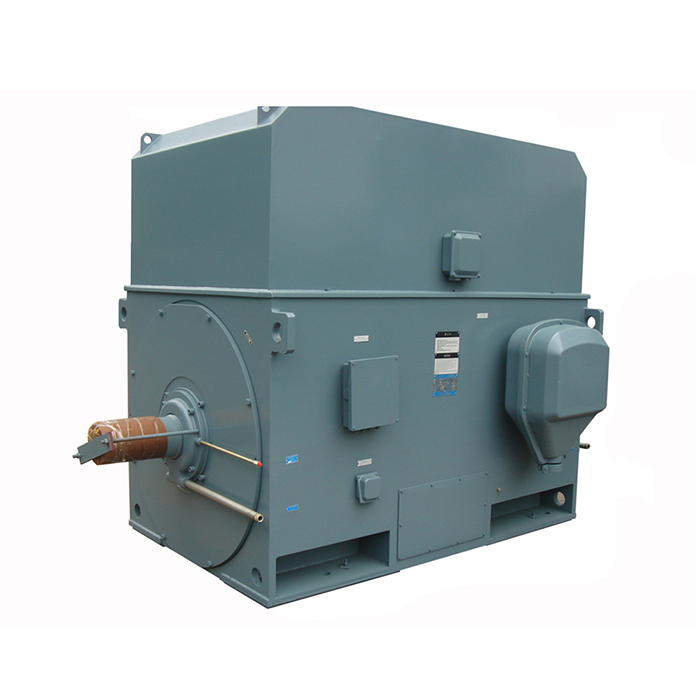
Series:YKS
Protection level:IP54
Voltage range:3000V±5%,3300V±5%,6000V±5%,6600V±5%,10000V±5%,11000V±5%
Power range:220-6300 kW
Application:fans, water pumps, compressors, crushers, cutting machine tools, transportation machinery, etc.
Advantage:low noise, low vibration, long service life, easy installation and maintenance.
Standard: This series of products complies withGB/T 1032 and GB/T 13957 standards.
Others: SKF, NSK, FAG bearings can be replaced according to customer requirements.
Understanding IC411 and IC611 Motor Cooling Systems
The motor cooling techniques are defined by IC codes in IEC 60034-6 standard. IC411 and IC611 are at the extremes of the cooling range.
How IC411 Air Cooling Works
An external fan mounted on the shaft of IC411 motors draws ambient air over the motor's ribbed housing to cool it. It has a simple design. The motor may be installed almost wherever there is enough air movement, and there is no external piping to connect. The ease of use results in lower purchase costs and faster installation.
How IC611 Water Cooling Works
IC611 motors have a water jacket covering their stator frame. To remove heat from the motor body, coolant—usually treated water—is put into the jacket and circulated through it. Because liquid transmits heat far more efficiently than air, the motor stays cooler under the same load. This kind of water-cooled motor could run at full load indefinitely without the thermal ceiling that restricts air-cooled systems in cramped or hot environments.
Core Differences at a Glance
Heat transfer capacity, acoustic output, physical footprint, and service complexity are the four practical differences between the two systems. IEC thermal engineering research shows that a water-cooled motor transfers heat 3,000–4,000 times more effectively per unit volume than its air-cooled counterpart. That separation is important when your engine runs continuously in a dusty, cramped space.
Performance and Efficiency Comparison: Water Cooled vs Air Cooled Motors
Thermal Management Under Continuous Load
IC411 motors are suitable for low load or intermittent use. Where, however, a motor needs to be running at its rated power all the time, such as operating a circulating water pump in a power plant or a primary compressor in a petrochemical facility, the build-up of heat in an air-cooled system becomes a serious concern. Water cooled motors keep the windings at a more even temperature, putting less stress on the insulation, and allowing for longer service intervals.
Noise Levels in the Workplace
Noise is not generally a consideration when purchasing motors but is in steel mills and mines where noise regulations are increasing harsher. IC411 motors are based on high speed fans. These fans generate a lot of noise owing to aerodynamics. The IC611 motors are virtually totally silent. For example, the water cooled motor of the XCMOTOR YKS series decreases the electromagnetic noise to 8-10 dB compared to the normal motors and maintains the total mechanical noise below 85 dB while the motor is not in use. This makes a huge impact in confined workplaces.
Reliability and Maintenance Trade-offs
IC411 motors are easy to repair. Just clean fins, check fan and look over bearings. IC611 motors include an additional cooling line for electric motor water cooling that should be examined for corrosion, poor coolant and sluggish flow. However, a water cooled motor has a lower winding temperature which often means less bearing replacements and longer insulation life that more than offsets the additional circuit maintenance over a multi year operating span.
Application Scenarios: When to Choose IC411 or IC611 Motor Cooling
Where IC411 Air Cooling Makes Sense
With good air flow, moderate temperatures, and short or sporadic run cycles, the IC411 motor is perfect for light to moderate workload applications. Most of the time, they perform effectively in offices with normal conveyor drives, open bays, and additional fans in areas with less dust.
Where a Water Cooled Motor Is the Right Choice
The IC611 water cooled motor will outperform an air cooled option in the following industrial applications:
- Steel rolling mill and slab-handling drives need a motor that is not influenced by the quality of the surrounding air for cooling purposes. This is because of the continual high-torque loads in enclosures filled with metal dust and heat radiation from furnaces.
- Fan-based cooling would suck abrasive particles straight into the motor in high-dust tunnels and open-pit situations. IP54 protection together with liquid cooling allows for operation for Mine Main Shaft Hoists and Crusher Drives.
- Power plants have to employ big water pumps that are running all the time. A water-cooled motor with low vibration velocity (≤2.5 mm/s) may substantially decrease shaft fatigue and bearing wear throughout a ten-year service life.
- High pressure compressors for petrochemical usage need sealed motor housings to prevent the escape of hazardous vapor . The IC611 cooling jacket maintains winding temperatures within safe limits without requiring air passage through the motor body .
For the continuous high-torque loads of steel-rolling mills and slab-handling drives, which are covered with metal dust and heat-radiation from furnaces, a motor is needed which need not be cooled by the quality of the outside air.
Matching Cooling Choice to Site Conditions
Make sure you know the temperature, dust levels, elevation and work schedule of the region before choosing any kind. Above 1,000 meters the air density decreases, limiting the efficiency of IC411 cooling. The XCMOTOR YKS series may be used at an altitude of up to 2,000 meters above sea level, which means it can be used in high-altitude mines in South America, Central Asia and the Middle East without any problems.
Procurement Guide: Selecting and Buying IC411 and IC611 Motors
Key Technical Specifications to Confirm
First, check if the voltages are compatible. The YKS water cooled motor series voltage range with 5% tolerance is 3000V, 3300V, 6000V, 6600V, 10000V, 11000V. Thus, one series may suit most high voltage plant configurations world-wide without the requirement for a specific transformer.
Coverage of the power range is also very important. The YKS line covers most heavy industrial drive needs with 220–6,300 kW and 2–16 pole choices (375–3,000 r/min). It does this without using parallel motor arrangements, which make the power system more complicated and increase the number of places where it can fail.
Bearing Selection and Interface Compatibility
If you are replacing an old motor, the shaft size and the mounting holes have to be the same. The YKS series allows clients to select between SKF, NSK and FAG bearings based on their desire for electric motor water cooling. “This makes spare parts management easier for plants already stocking one brand of bearings.”
Lead Times and Certification Requirements
Standard YKS installations ship 2-3 weeks. Custom voltage/power setups 4–6 weeks. The series is certified by GB/T 1032, GB/T 13957, CE, UL and GOST, which implies it is safe for the US, European and Russia/CIS markets. Before ordering an EPC work, be sure the contract says what qualifications are required.
Maintenance Best Practices and Troubleshooting for IC411 and IC611 Motors
Routine Maintenance for IC611 Water Cooled Motors
The most work needs to be done on the cooling circuit. Check the pH and concentration of the inhibitor every three months. Every six months, check the input and output of the jacket for scale growth. Regularly flush and replace the coolant—every year in places with hard water. Although the YKS aluminum alloy cooler core doesn't rust, using clean coolant makes it last a lot longer.
Routine Maintenance for IC411 Air Cooled Motors
Clean the outside cooling fins and fan guard every 1 to 3 months, depending on the quantity of dust. With a clogged fin array, the coil becomes hotter and the insulation degrades faster. The manufacturer’s instructions or motor tag will indicate the load and speed at which the bearings should be lubricated.
Troubleshooting Common Problems
Any odd vibration in a motor is usually caused by an imbalanced rotor or worn bearings. YKS series with G1.0 dynamic balancing accuracy and vibration velocity of ≤2.5 mm/s, it is easy to evaluate its condition. If you observe vibrations during operation that exceed this level, you should examine the bearings before the next planned stop, not wait for a failure.
Conclusion
IC411 or IC611 cooling should be chosen based on your duty cycle, the noise level, the environment, and your budget for long-term maintenance. IC411 motors that are cooled by air work well in moderately well-ventilated spaces. A water cooled motor with liquid jacket cooling is the more realistic and long-lasting choice for constant heavy-duty operations in enclosed, high-dust, or high-temperature settings, such as steel mills, mine shafts, power plants, and petrochemical crushers. This is exactly what the XCMOTOR YKS series is made for: IP54 protection, a power range of 220–6,300 kW, voltage coverage of 3–11 kV, and a low-noise design that cuts noise emissions by 8–15 dB compared to normal motor baselines.
FAQ
1.What is the main advantage of a water cooled motor over an air-cooled motor?
A water cooled motor is more effective at removing heat, hence the motor may operate at lower winding temperatures while running under continuous full load. This usually increases insulating life and decreases bearing replacement frequency as compared to an air-cooled motor under the same operating circumstances.
2.Can I replace an IC411 motor with an IC611 motor directly?
You can, but you need to verify shaft dimensions, mounting frame size, voltage rating, and connection type. You also need to install a cooling water supply circuit. XCMOTOR's technical team reviews existing motor drawings and confirms compatibility before production.
3.What protection rating does the YKS series carry?
The standard YKS water cooled motor carries IP54 protection. IP55 is available for outdoor installations. The casing passes over 1,500 hours of salt spray testing, making it suitable for coastal and chemically aggressive environments.
4.How long does delivery take?
Standard YKS models ship within 2–3 weeks. Custom configurations — different voltages, special bearing brands, or non-standard power ratings — typically require 4–6 weeks.
5.What certifications does the YKS series hold?
The YKS series complies with GB/T 1032 and GB/T 13957 standards and holds CE, UL, and GOST certifications, covering major international procurement requirements.
Get the Right Water Cooled Motor for Your Plant — Contact XCMOTOR
The YKS series water cooled motor is offered by XCMOTOR with factory-direct pricing, genuine SKF, NSK, and FAG bearings, and documentation for GB, CE, and UL Compliance. Orders usually get sent out in two to three weeks. With 4–6 week lead times, you can get custom voltage and power configurations. If you want a direct quote, email xcmotors@163.com with your motor specifications or existing nameplate data, or go to motorxc.com. Our technical team responds within one business day as a water cooled motor supplier with over 20 years of experience in heavy industrial power equipment.
References
1. International Electrotechnical Commission. IEC 60034-6: Rotating Electrical Machines – Methods of Cooling. IEC, 2019.
2. Boldea, I., and Nasar, S. A. The Induction Machine Handbook. CRC Press, 2002.
3. Chapman, S. J. Electric Machinery Fundamentals. McGraw-Hill, 2012.
4. National Electrical Manufacturers Association. NEMA MG 1: Motors and Generators. NEMA, 2021.
5. Bianchi, N. Electrical Machine Analysis Using Finite Elements. Taylor & Francis, 2005.
6. IEEE Standards Association. IEEE Std 112: Standard Test Procedure for Polyphase Induction Motors and Generators. IEEE, 2017.
YOU MAY LIKE
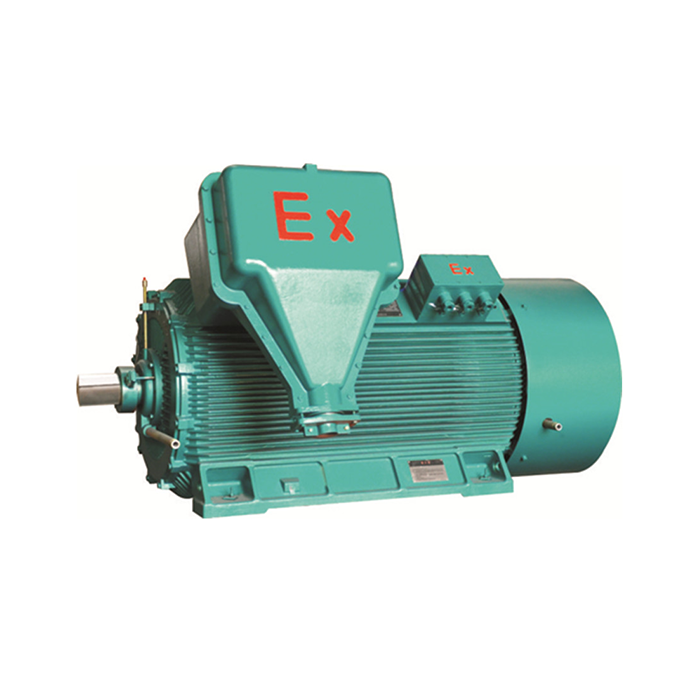 VIEW MOREYB2 series high voltage explosion-proof motor
 VIEW MOREbutterfly valve full lug type
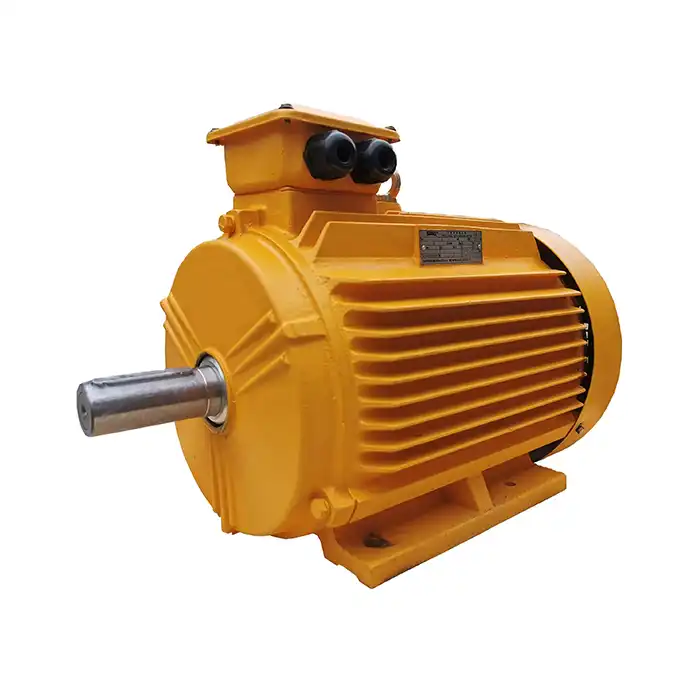 VIEW MOREie4 induction motor
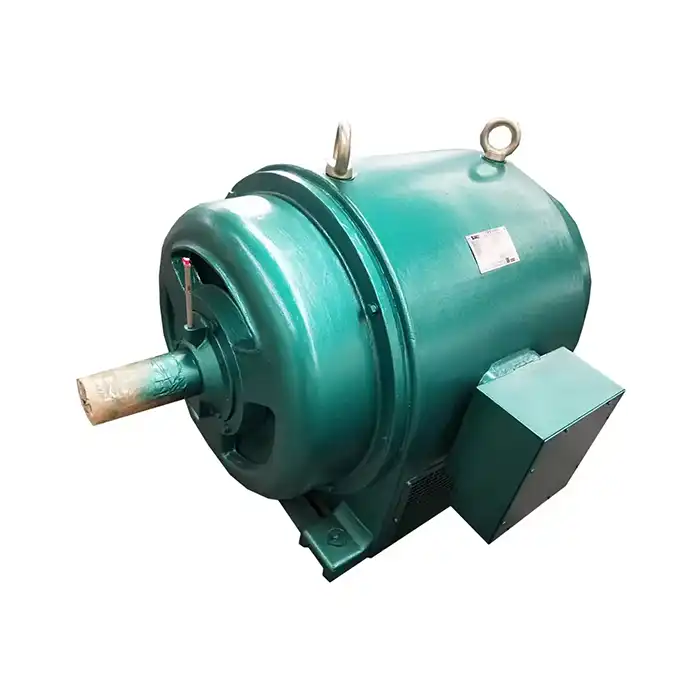 VIEW MORE200 hp ac electric motor
 VIEW MORE200 hp ac motor
 VIEW MORE3ph squirrel cage induction motor
 VIEW MOREasynchronous motor with squirrel cage
 VIEW MOREflame proof motor enclosure