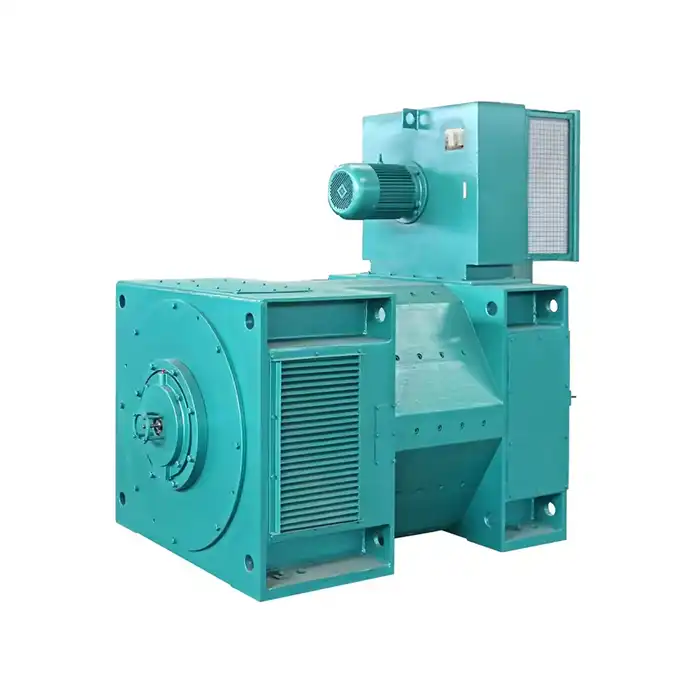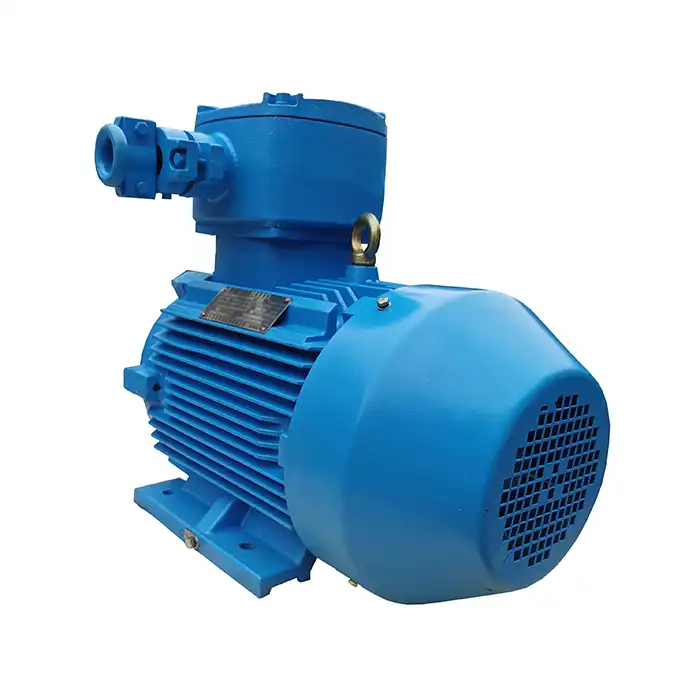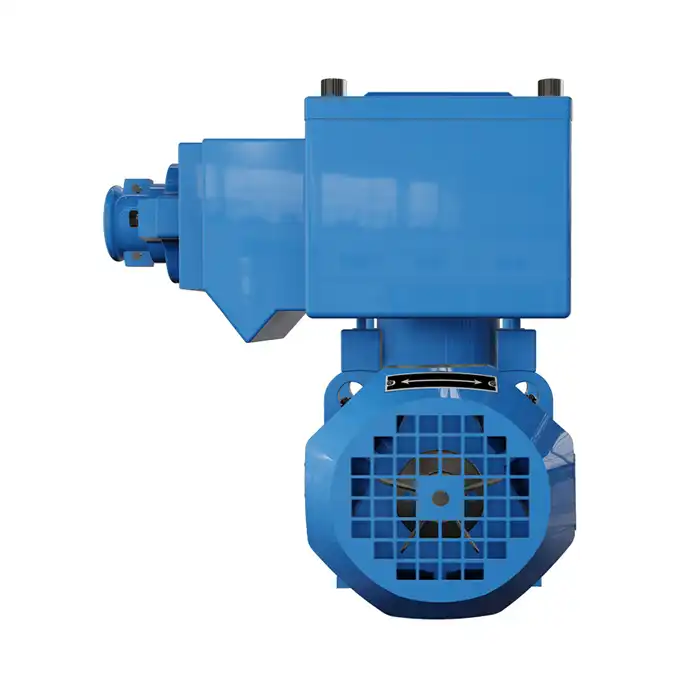




IE4 Motor Upgrade: Does Premium Efficiency Pay Back?
If you manage motor procurement for an OEM or industrial operation, you have probably asked this question at least once: is an IE4 motor worth the higher price tag? The short answer is yes — and the numbers back it up. Electricity costs account for roughly 97% of a motor's total lifecycle cost, while the purchase price represents only 1–2%. An IE4 motor, certified under IEC 60034-30-1 as Super Premium Efficiency, can reduce energy losses by 15–20% compared to IE3 models, with payback periods typically under four years for motors running more than eight hours daily.
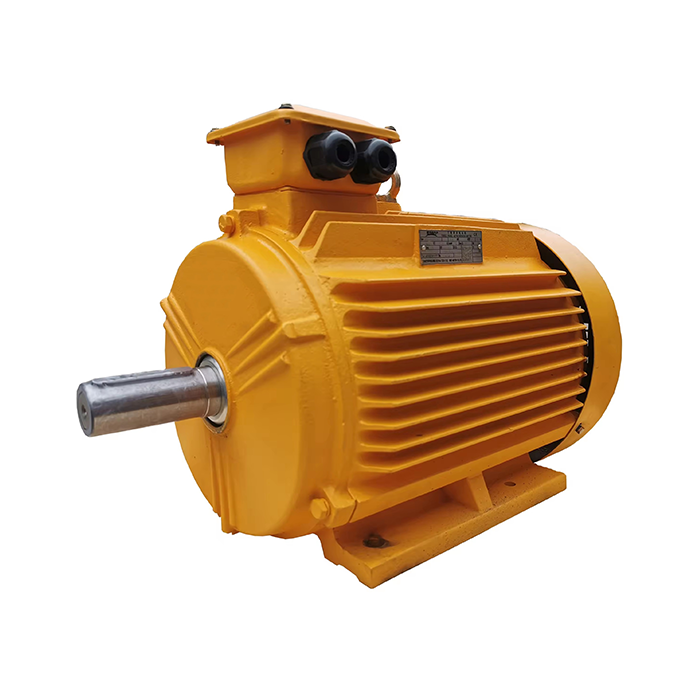
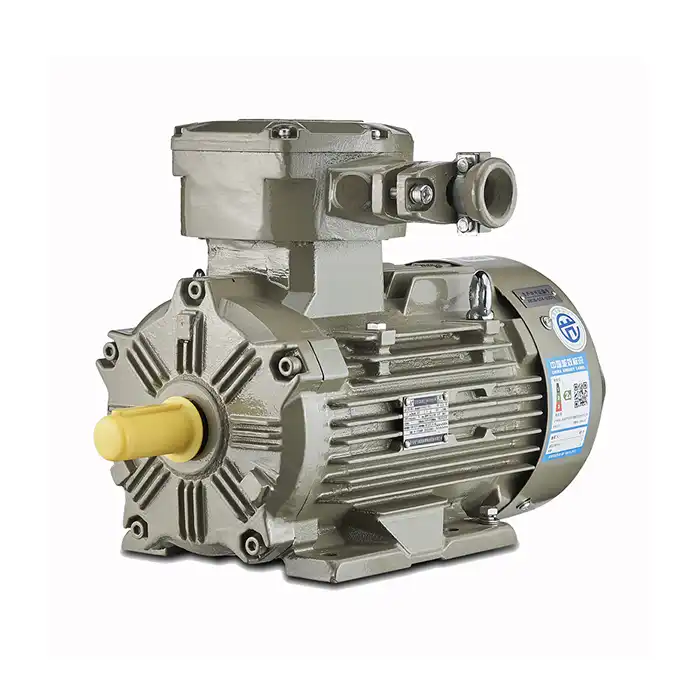
Series:YE4
Frame number: 80-450
Power range:0.75-1000kW
Protection level:IP55
Energy efficiency class: IE4
Voltage range: 380V,400V,415V, 660V,etc.
Application:can be used in various fields of the national economy, such as machine tools,water pumps,fans,compressors,and can also be used in transportation, mixing, printing, agricultural machinery, food and other occasions that do not contain flammable, explosive or corrosive gases.
Certificate: international standard IEC60034-30 ""Efficiency Classification of Single-speed Three-Phase Squirrel Cage Induction Motors"".
Advantage:The high quality of the electric motor guarantees high operational reliability.
Others: SKF, NSK, FAG bearings can be replaced according to customer requirements.
Understanding IE4 Motor Efficiency and Specifications
What the IE4 Standard Actually Means
IE4 is the most efficient rating according to IEC 60034-30-1. It is higher than IE1 (Standard), IE2 (High), and IE3 (Premium). With each step up the IE ladder, more electricity is saved. At full load, an Ie4 motor can be up to 96% efficient, while an IE3 motor in the same power range can only get to 93–94% efficient. That difference directly leads to lower electricity bills over the life of the motor.
Core Technical Specifications
from XCMOTOR.There is a power range for the 4 induction motor from 0.75 kW to 1000 kW, so it can be used for both small secondary drives and big industrial tools. The voltage range includes 380V, 400V, 415V, and 660V, which lets OEM engineers support both domestic and international projects with the same SKU without having to keep separate stock. IP55 is the standard level of defense, but better IP ratings can be requested. Class F insulation is standard, but class H insulation can be used in high-temperature areas if needed.
Performance Metrics That Matter on the Factory Floor
The efficiency number isn't the only thing that procurement teams should look at. They should also look at the starting current (≤6.5 times the rated current), the power factor (above 0.85 at full load), and the noise output (3–5 dB(A) less than standard motors). It can go from 500 to 3000 rpm. You can mount the B3 on a foot, the B5 on a flange, or a combination of the two. The end covers can be switched around to give you more installation options. You can get SKF, NSK, or FAG bearings, depending on the needs of the application.
Comparing IE4 Motors with Traditional and Alternative Motors
IE4 vs. IE3: Where the Gap Shows Up
Many buyers think that at partial load, the difference in speed between IE3 and IE4 is not very noticeable. This is a real worry that should be talked about frankly. A well-designed Ie4 motor still works better than an IE3 motor at 75% load because it has lower iron losses and better winding shape, which means it is more efficient across the whole load curve, not just at the nameplate rate, improving motor efficiency payback. Before agreeing to a framework agreement, you should ask your supplier for actual test curves at 50%, 75%, and 100% load.
IE4 vs. Rewound Motors: A Hidden Cost Comparison
Every time a motor is rewound, it loses some of its efficiency. Industry data shows that a rewound motor can lose 1-2 efficiency points every turn, which adds up over time. It is often cheaper to replace a broken motor with a new IE4 unit than to rewind the old one, when you think about how much energy the rewound machine uses when it runs all the time.
Material Quality and Build Consistency
It's a common worry among OEM chief engineers that sources might use cheaper silicon steel instead of the higher-grade stuff to save money. A motor made of 0.35 mm grain-oriented silicon steel laminations will keep its efficiency rating even when it's under load, but a motor made of 0.50 mm stock will not. XCMOTOR's IE4 induction motors have a precise die-casting process for the rotor and advanced winding technology to keep copper and iron losses low. Before shipping, each unit goes through a full set of performance tests.
Economic Impact: ROI and Cost-Benefit Analysis of Upgrading to IE4 Motors
Lifecycle Cost Structure
A motor costs a lot to run for 15 to 20 years, but it only costs a small amount to buy. A 2% increase in efficiency saves about 17,600 kWh per year for a 110 kW motor that runs at full load for 8,000 hours per year. At an industrial electricity rate of about $0.08 per kWh in the U.S., that saves each motor about $1,400 per year. The price difference between IE3 and IE4 usually pays for itself in two to four years, and then the saves keep adding up for the rest of the motor's life.
Payback Scenarios for OEM Applications
Here are three common situations that procurement teams face, along with how the math works in real life:
- Pump and fan drives running 6,000+ hours/year: These applications benefit the most from IE4 efficiency gains because the load profile is steady and predictable. Payback on the price premium is commonly under three years.
- Compressor duty at variable load: At partial load, an IE4 motor's lower no-load losses give it an edge over IE3. This advantage holds even when the compressor cycles between 50% and 100% demand.
- Export OEM units destined for EU or North American markets: These markets increasingly require IE4 compliance for equipment tenders. Using IE4 as the standard SKU removes the need to maintain two separate motor inventories and simplifies CE documentation.
The higher initial cost of an Ie4 motor pays for itself in lower energy costs, and the saves keep coming in for the duration of the unit's useful life.
Maintenance Cost Reduction
Ie4 motors with good bearings and the right insulation class run cooler, which directly increases the life of the windings. Thermal aging models say that a 10°C drop in the temperature of the winding roughly doubles the life of the insulation. The main maintenance tasks are planned lubrication intervals and regular vibration checks. The less heat that is released also means that the equipment around it doesn't have to work as hard to cool down. This is a secondary energy savings that doesn't show up in simple ROI calculations but adds up over time.
Procurement Guide: How to Source and Evaluate IE4 Motors
What to Ask a Supplier Before Placing a Sample Order
It takes more than reading a catalog to check an IE4 claim. Not just the nameplate number, but also test results that show how efficient the system is at different load levels. If your projects are going to be shipped to people in Europe, Russia, or North America, make sure the motor has CE, GOST, and UL certifications. Make sure you have language nameplates on hand in case your customers need them. XCMOTOR sells IE4 induction motors that are certified to IEC 60034-30-1 and come with CE and GOST paperwork. Most common frame sizes can be delivered within two to four weeks.
Evaluating Multi-Voltage Flexibility
When OEM teams work on both 380V projects in the U.S. and 415V or 660V projects in other countries, a motor that can't change voltage without being physically rewound is a problem for the supply chain. Make sure that the supplier's design can handle the volts you need at the terminal box level, not through a different SKU. This single point gets rid of the need for two sets of inventory and lowers the risk of sending the wrong specification to a customer site.
PPAP and Batch Consistency
Batch-to-batch consistency is a must if your procurement process goes like this: technical specification → sample test → PPAP → annual framework. Ask your seller how they keep track of the specifications of the lamination material across production runs and if they keep documents for each lot of material. If your provider can give you this paperwork, you'll have a solid audit trail in case efficiency drops between batches and affects motor efficiency payback.
Future Outlook and Strategic Advantages of IE4 Motor Adoption
Tightening Regulations in Key Export Markets
From July 2023 on, the European Union's Ecodesign Regulation (EU) 2019/1781 said that motors with more than 0.75 kW had to have IE3. In EU policy working groups, people are already talking about IE4 as a possible requirement. The North American NEMA Premium and DOE efficiency rules move in the same direction. If OEMs stick to IE4, they won't have to change their products every two to three years, and they can market their gear as meeting the next level of regulations.
Competitive Positioning for OEM Exporters
An OEM that sells pump sets or compressor packages to people in Europe or the United States can set its products apart by making Ie4 motors standard. The efficiency certificate is added to the bid documents and takes away a frequent complaint from end users who care about saving energy. This is a real benefit of the product that doesn't need a lower price to get the sale.
Preparing Your Team for the Transition
It's not necessary to make big changes to the assembly or commissioning steps when you switch from IE3 to IE4 as your standard motor specification. The mounting dimensions are the same as the IEC frame standards, so fixture designs that have already been made will still work. The main thing you need to do is make sure that your technical specification sheets, purchase agreements, and customer records all reflect the new efficiency class and standard version that applies.
Conclusion
An Ie4 motor update is not just a thought experiment in efficiency; it is a proven way to cut costs. Since power costs most of a motor's total running cost, the extra 2–5% efficiency that an Ie4 motor offers over an IE3 motor pays for itself in a reasonable amount of time. One multi-voltage SKU that meets CE, GOST, and UL requirements makes supply chain management easier and helps export growth for OEM engineers who are in charge of product lines for more than one market. The data always backs up the change.
FAQ
1.What efficiency does an IE4 motor achieve at full load?
At full load, an IE4 induction motor can be up to 96% efficient. This is noticeably higher than IE3 motors in the same power range, and the gap is still important at low loads because the motor's core design reduces iron and copper losses.
2.Does IE4 efficiency hold up at partial load?
It's a good worry to have this. At 50% and 75% load, a properly built Ie4 motor still outperforms an IE3 motor in terms of efficiency because it cuts down on losses even when the motor is not in use. Before you sign off on the final specs, ask your supplier for a measured efficiency curve that shows the range of loads.
3.What certifications should an IE4 motor carry for export projects?
For markets in Europe, CE marking and following IEC 60034-30-1 are required by law. Projects for the Russian market usually need GOST approval. UL approval may be needed for projects in North America. The Ie4 motors from XCMOTOR come with CE and GOST paperwork.
4.How long does delivery take?
Standard frame sizes can usually be ordered in two to four weeks. Custom configurations or voltage variations that aren't standard may need more lead time. Contact XCMOTOR at xcmotors@163.com to make sure they have the parts you need in stock.
5.Can an IE4 motor replace an existing IE3 or Y-series motor directly?
Most of the time, yes. Since IEC frame sizes are standardized, mounting footprints can be used with any frame. Before deciding on a replacement, make sure you check the length of the shaft extension, the size of the keyway, and the location of the terminal box.
Request an IE4 Motor Quote from XCMOTOR
XCMOTOR sells approved Ie4 motor units with power ranges from 0.75 kW to 1000 kW. These motors come with CE/GOST paperwork, IP55 protection, and a choice of 380V, 400V, 415V, or 660V voltages. Because we are a reliable Ie4 motor manufacturer, we offer a 30-day return policy and technical support seven days a week for all of our products. You can get a sample or sign up for an annual supply deal by sending your specs to xcmotors@163.com or going to motorxc.com.
References
1. International Electrotechnical Commission. IEC 60034-30-1: Rotating Electrical Machines – Part 30-1: Efficiency Classes of Line Operated AC Motors. IEC, 2014.
2. European Commission. Commission Regulation (EU) 2019/1781 on Ecodesign Requirements for Electric Motors and Variable Speed Drives. Official Journal of the European Union, 2019.
3. U.S. Department of Energy, Office of Industrial Technologies. Improving Motor and Drive System Performance: A Sourcebook for Industry. DOE, 2014.
4. Carbon Trust. Motors and Drives: A Guide for Investors and Users. Carbon Trust, 2011.
5. Waide, P., & Brunner, C. U. Energy-Efficiency Policy Opportunities for Electric Motor-Driven SystemsInternational Energy Agency Working Paper, IEA, 2011.
6. NEMA (National Electrical Manufacturers Association). NEMA MG 1: Motors and Generators. NEMA Standards Publication, 2021.