



How to Match a Motor with a VFD: Complete Guide
Matching a motor with a variable frequency drive is one of the most consequential decisions in any variable-speed application. Get it wrong, and you risk premature winding failure, overheating, or erratic speed control. Get it right — starting with a properly rated inverter duty motor — and you gain precise speed management, longer service life, and lower energy bills. This guide walks engineers, OEM technical managers, and procurement teams through every step: from understanding what makes a VFD-rated motor different, to sizing, installing, and sourcing the right unit for cranes, elevators, stage machinery, and HVAC systems.
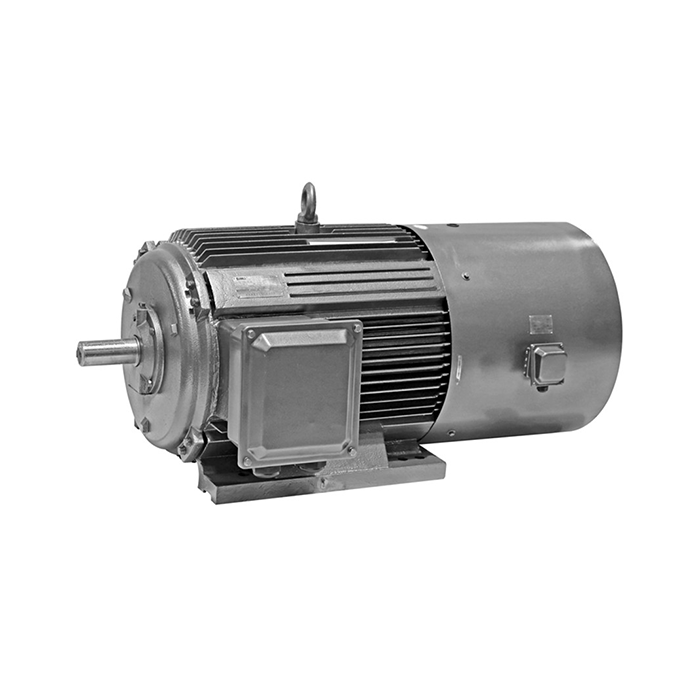
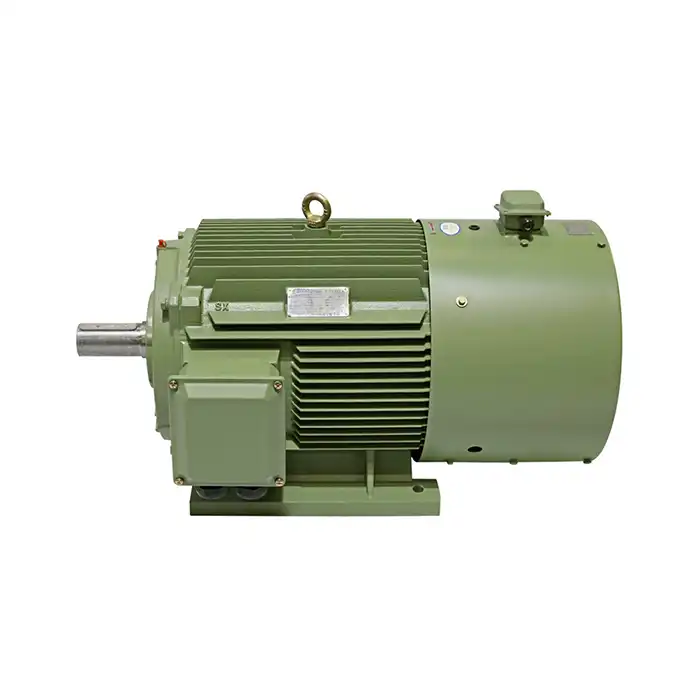
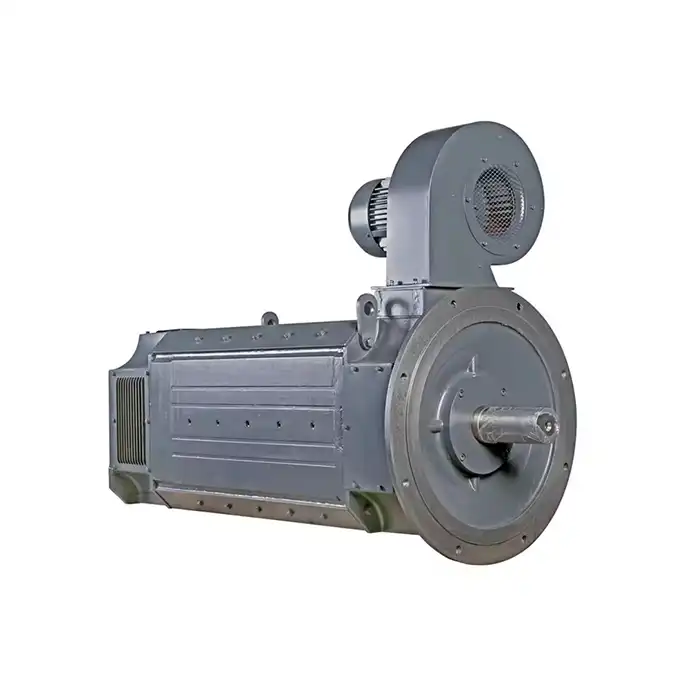
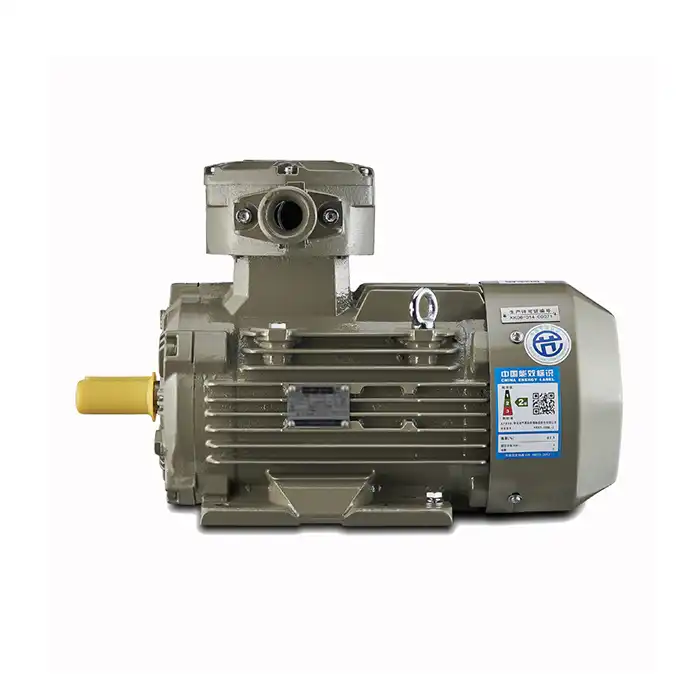
Series:YVFE2
Frequency conversion range:30hz~50hz,5hz~70hz,5hz~100hz
Power range:0.75-355kW
Protection level:IP55
Application:are suitable for driving various mechanical equipment that require continuous and frequent forward and reverse rotation, such as steel rolling, lifting, transportation, machine tools, printing and dyeing, papermaking, chemicals, textiles, pharmaceuticals, etc., and can be used with various domestic and foreign variable frequency power supplies.
Advantage:high efficiency, wide speed range, high precision, stable operation, and easy operation and maintenance.
Certificate:installation dimensions comply with International Electrotechnical Commission (IEC) standards.
Others: SKF, NSK, FAG bearings can be replaced according to customer requirements.
Understanding the Basics: What Is an Inverter Duty Motor?
It's helpful to know what physically sets a VFD-rated motor apart from a regular AC induction motor before choosing a drive and motor mix.
How a VFD Changes the Electrical Environment?
Utility power with a set frequency is changed into a pulse-width-modulated (PWM) output by a varying frequency drive. These short voltage pulses—with rise times of up to 0.1 µs and peak voltages that can reach twice the DC bus voltage—put a lot more stress on normal motor windings than a clean sine wave does. Repeated high dv/dt events weaken regular enamel insulation over time, which causes turn-to-turn shorts. In order to meet the requirements of NEMA MG 1 Part 31 and IEC TS 60034-25, an inverter duty motor is wrapped in stronger magnet wire and coated with a varnish system that is acceptable in this electrical setting.
Insulation Class and Thermal Rating
Most standard motors have insulation that is Class B (130 °C). An inverter duty motor steps up to Class F (155 °C), which gives it an extra 25 °C of thermal safety above normal operation. This is important because VFD harmonics cause copper and iron losses that aren't taken into account by a standard motor's thermal model. For instance, the XCMOTOR YVFE2 series uses Class F insulation across its 0.75–355 kW range.
Cooling at Reduced Speed
Many times per second, a fan on a shaft spins very slowly and moves a lot less air than at 50 Hz. An motor with inverter that is meant to run continuously at low speeds needs its own forced-cooling system. The YVFE2 has an IC416 axial fan that keeps the coil temperatures fixed from 3 Hz to 100 Hz, no matter how fast the motor shaft is turning.
Technical Factors for Matching Motors with VFDs
Once you know how the motor is put together, you need to check a number of factors that affect each other in order to match it to a specific drive.
Torque and Speed Range Requirements
The first thing that is always asked is: what speed ratio does the job need? It's possible for a bridge crane's travel drive to need a constant-torque range of 1:10, for example. For precise inching, a hoist might need a range of 1:120 or even 1:100, and for a live performance, a stage hoisting system might need a range of 1:1000. There are three frequency bands that the YVFE2 can handle: 30–50 Hz, 5–70 Hz, and 5–100 Hz. This means that a single motor frame can handle most of these situations without the need for a gearbox. The steady force for frames H80–250 is between 5 Hz and 50 Hz, and the steady power is between 50 Hz and 100 Hz. The band of constant torque for H250–355 begins at 3 Hz.
Voltage Compatibility and Insulation Withstand
Make sure that the insulation withstand voltage of the motor meets the DC bus level of the drive. In a 460 V system, the peak reflected wave voltage can get close to 1,200 V on long cable runs. According to NEMA MG 1 Part 31, an inverter duty motor needs to be able to handle a high voltage of 1,600 V and a rise time of 0.1 µs. This should always be checked in the motor's datasheet before connecting it to any drive brand.
Overload Capacity and Encoder/Brake Integration
For cranes and elevators to handle starting inertia and emergency stops, they need short-term overloads of about 2× of their maximum torque for 60 seconds. It's important to make sure that factory-installed choices like a shaft encoder (for closed-loop positioning) and an electromagnetic stop (for parking and safety holds) are also available. Getting both types of brakes from the same supplier eliminates the risk of mixing brands during the assembly process, which can cause delays in commissioning.
Comparing Motor Types for VFD Applications: Making the Right Choice
It is important to know the differences between enclosed motors that can be used with a drive when you are buying hundreds of them every year.
TEFC vs. Inverter-Rated Construction
A normal Totally Enclosed Fan-Cooled (TEFC) motor gets all of its cooling from its shaft fan. If you keep running it below 30 Hz, the temperature of the windings will rise until the thermal protection trips or the insulation wears out too quickly. A real inverter duty motor has a separate fan that gets rid of that problem. No matter how cheap they are, a normal TEFC motor is not the right choice if your process needs a speed less than half of the base frequency.
Non-Inverter-Rated Motors on VFDs
Some teams that buy things buy regular motors and add output filters to stop voltage jumps. But filters aren't as good as the protection that's built into a motor wound for inverter service. They also add space on the panel, points for cable loss, and maintenance points. When OEMs make between 200 and 1,500 units a year, the cost of filters and standard motors often goes over the cost of custom-built inverter duty motors.
When Explosion-Proof Ratings Are Also Needed?
Pharmaceutical and chemical plants sometimes need both VFD control and safety for dangerous areas. In that case, make sure the motor has both an Ex/ATEX or NEC Class/Division grade and an inverter duty label. It can't have just one of these. It is easy to adapt the YVFE2 to safe areas because it has IP55 ingress protection and IEC-compliant fitting measurements.
Practical Guide to Sizing and Installing an Inverter Duty Motor with a VFD
The right size stops both underperformance and cost that isn't necessary.
Calculating Motor Size from Load Data
Don't start with the running torque; start with the highest torque that the load needs. That means taking into account the rated hook load, the friction between the rope and sheave, and the acceleration ramp for a hoist. For the YVFE2, divide the peak torque by the overload multiplier (2× for 60 s). This will give you the minimum continuous rated torque. Change the base speed to kilowatts, and then choose the next standard frame size up. Make sure that the VFD can handle at least 110% of the motor's full-load power.
Wiring and Cable Practices to Reduce Bearing Current
Common-mode currents are made by PWM drives and flow through motor bearings, damaging the fluting over time. As a general rule, you should use shielded motor cable with the shield bonded to both ends, keep cable runs as short as possible (less than 50 m), and put insulated bearing end covers on the end that isn't being driven. The XCMOTOR engineering team says that all crane and lift uses over 15 kW should use shielded end covers.
Commissioning and Ongoing Maintenance
Once the motor is installed, run it through its full speed range without any load on it. At each frequency, listen for any strange noises or vibrations. Start by writing down the no-load current at 5 Hz, 25 Hz, and 50 Hz. Every 2,000 hours of use, check the condition of the bearing grease and use a 500 V megohmmeter to measure the resistance of the winding insulation. If the number drops below 1 M after 30 seconds, it means that moisture got in or the insulation is getting old, and the motor needs to be looked into more before it can be put back into service.
Procurement and Supplier Considerations for Inverter Duty Motors
For OEM buyers who buy 200 or more units a year or more, the reliability of the supplier is just as important as the motor specifications.
What to Verify Before Placing a Volume Order
These are the most important things to check when qualifying a supplier:
- Certification documentation: Confirm CCC, CE, and ISO 9001 certificates are current and cover the specific motor series you are ordering.
- Standards compliance: Ask for written confirmation that the insulation system meets NEMA MG 1 Part 31 and IEC TS 60034-25, not just a general "VFD-compatible" claim.
- Bearing options: For applications with shaft voltage risk, confirm that insulated bearing end covers or premium bearings (SKF, NSK, FAG) are available as catalogued options rather than special requests.
- Encoder and brake compatibility: Verify that the supplier can ship the motor pre-fitted with the encoder type your drive requires and a brake matched to your safety circuit voltage.
- Lead time and pilot batch process: Most OEM qualification cycles run 6–10 weeks. A supplier who can deliver 2–4 prototype units within three weeks of order placement keeps your schedule intact.
There is a lead time and a pilot batch process. Most OEM qualification cycles last between 6 and 10 weeks. You stay on schedule if you can find a source who can send you two to four sample units within three weeks of placing your order.
During main machine acceptance testing, these checks lower the chance of having to do expensive work over again. Once they are confirmed, the next step is to make a small pilot batch before committing to large-scale production.
Conclusion
You can't just plug in any three-phase motor and change the drive parameters to make a motor work with a vfd rated motor. When PWM switching happens, it creates an electrical environment that needs stronger insulation, separate cooling, and proven overload rates. In order to meet the mechanical needs of cranes, elevators, and stage systems, encoders, brakes, and verified shaft-current protection must all be built in. Starting with a motor made just for inverter work and making sure it meets NEMA MG 1 Part 31 and IEC TS 60034-25 gets rid of the main reasons why things break down too soon. After that, careful measuring, clean installation, and a reliable supplier finish off the picture.
FAQ
1. Can a standard AC motor run on a VFD without modifications?
A standard motor can run on a VFD at or near base speed, but continuous operation at low frequencies causes overheating because the shaft-mounted fan does not move enough air. For any application requiring sustained operation below 30 Hz, a motor rated for inverter service with independent cooling is the practical requirement, not an optional upgrade.
2. What speed range does the YVFE2 support?
The YVFE2 is available in three frequency bands: 30–50 Hz, 5–70 Hz, and 5–100 Hz. Frames H80–250 deliver constant torque from 5 Hz to 50 Hz and constant power from 50 Hz to 100 Hz. Frames H250–355 extend the constant-torque range down to 3 Hz.
3. How do I prevent bearing damage from shaft currents?
Use shielded motor cable, bond the cable shield at both ends, and fit insulated bearing covers on the non-drive end. For drives above 30 kW, an output reactor between the drive and motor also reduces common-mode current amplitude.
4. What certifications does the YVFE2 carry?
The YVFE2 holds CCC and CE certification, complies with ISO 9001:2000, and meets IEC installation dimension standards. Class F insulation and IP55 protection are verified on every unit.
5. What customisation options are available?
Factory options include encoder mounting, electromagnetic brake integration, thermal sensors (PTC/PT100), and bearing upgrades to SKF, NSK, or FAG. Custom shaft dimensions and mounting flanges are also available for OEM fitment.
Partner with XCMOTOR for Your Next Inverter Duty Motor Order
XCMOTOR sells the YVFE2 inverter duty motor series with a power range of 0.75 to 355 kW. It has IC416 independent cooling, Class F insulation, and three frequency bands so you can find the right speed range for you. Our team is here to help you Monday through Sunday with specs, pilot samples, and after-sales support, whether you are testing a new crane drive platform or expanding an elevator production line. Our engineering team will get back to you quickly if you visit motorxc.com or email xcmotors@163.com with your technical needs. We make inverter duty motors and are ready to help you with your OEM procurement cycle from the first sample to mass production.
References
1. National Electrical Manufacturers Association. NEMA MG 1: Motors and Generators, Part 31 — Definite-Purpose Inverter-Fed Polyphase Motors. NEMA, 2021.
2. International Electrotechnical Commission. IEC TS 60034-25: Rotating Electrical Machines — Guidance for the Design and Performance of AC Motors Specifically Designed for Use on Converter Supplies. IEC, 2022.
3. International Electrotechnical Commission. IEC 60034-30-1: Rotating Electrical Machines — Efficiency Classes of Line-Operated AC Motors. IEC, 2014.
4. Mohan, Ned, Tore M. Undeland, and William P. Robbins. Power Electronics: Converters, Applications, and Design. 3rd ed. John Wiley & Sons, 2003.
5. Bonnett, Austin H. "Analysis of the Impact of Pulse-Width Modulated Inverter Voltage Waveforms on AC Induction Motors." IEEE Transactions on Industry Applications, vol. 32, no. 2, 1996, pp. 386–392.
6. Lawson, J. David. "Variable Frequency Drive and Motor Selection for Industrial Applications." IEEE Industry Applications Magazine, vol. 18, no. 4, 2012, pp. 44–51.