



How to Choose a Globe Valve for Steam Line Applications
Choosing the right globe valve for steam line systems is one of the most consequential decisions a procurement engineer makes. These valves regulate superheated steam flow across turbine bypass circuits, boiler feed lines, and refinery headers — environments where a single leak translates directly into lost energy and unplanned downtime. The correct selection depends on pressure class, temperature range, body material, trim specification, and compliance with recognized standards such as ASME B16.34 and API 602. This guide walks through every factor that matters, so your team can specify with confidence.
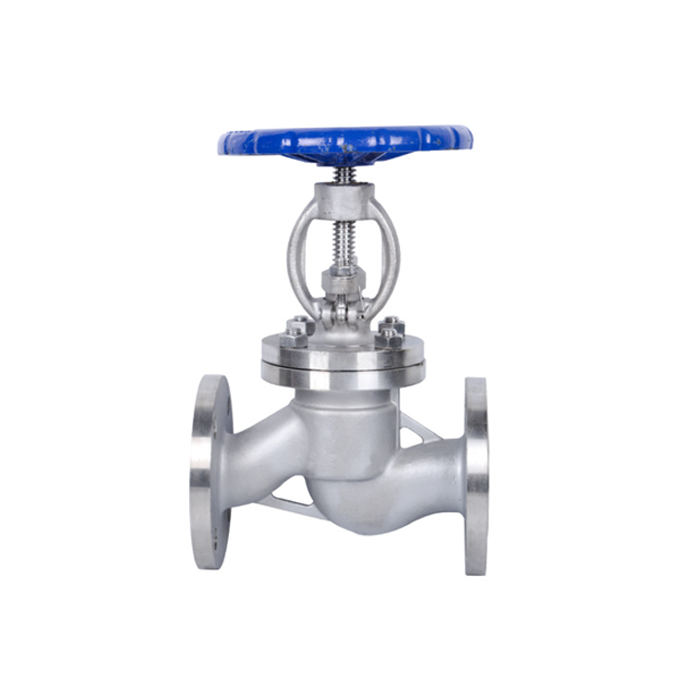
Series:J41
Diameter:DN10~DN600,
PN:16;25;40
Application specification: Design, manufacture:GB12235 Length of the structure:GB12221 Connecting flange: JB/T79/82~1994,GB9113,HG20592-20635 Valve inspection and test:JB/T9092-1999,GB13927
Understanding Globe Valves for Steam Lines
How Linear Motion Controls Steam Flow
A globe valve controls the flow by moving a disk in a straight line against a seat ring that stays in place. This straight-line motion lets workers fine-tune control in a way that gate, ball, or butterfly valves can't. That level of accuracy is very important in a steam line, where even a 5% change in flow can throw off the conditions at the turbine outlet. The S-shaped path inside the body causes an expected drop in pressure, which thermal engineers can take into account when they figure out the body's heat balance.
In steam service, globe valves for steam lines are also better at closing. When the disk closes firmly onto the seat, metal-to-metal contact can be made over and over again. This is because the wedge shape of gate valves makes wire-draw corrosion more likely. Long-term tightness is measurably better when manufacturers machine seating surfaces to tight tolerances and then test them to ISO 5208 Rate A leakage. As a result of that standard, leakage is limited to almost no visible flow. This is very important in high-pressure, superheated steam circuits, where every kilogram of lost steam costs real energy.
Why Material Selection Determines Service Life
The corrosion protection, temperature expansion behavior, and general life are all affected by the body material. ASTM A216 WCB carbon steel is still the standard for temperatures up to 425 °C because it is easy to machine and has enough tensile strength for Class 600 use. The disk, seat ring, and stem are the trim parts that are most likely to wear down, so SS316 or Alloy 20 internals are used to protect them from oxidation and sulfur attack in industrial steam circuits. Because flexible graphite packing can handle being heated and cooled many times without losing its sealing strength, maintenance crews don't have to call back as often to fix stem leaks.
Essential Selection Criteria for Globe Valves in Steam Applications
Pressure-Temperature Rating, Flow Sizing, and Actuation Matching
Making sure the specifications are correct before sending out a purchase order saves a lot of money on re-procurement. Here are the most important things that heat engineers and buying managers must agree on:
- Pressure class and temperature rating: Match the valve's pressure-temperature curve to the worst-case scenario for your system, not just the standard working point. This includes both the pressure class and the temperature grade. PN40 or Class 300–600 grades give high-pressure steam heads the extra safety they need. The J41 series includes PN16, PN25, and PN40, and can handle temperatures from -29 °C to 425 °C, so it can be used for everything from cryogenic isolation to superheated steam service.
- Bore size and flow coefficient: Make the globe valve for steam line the right size so that the Cv keeps the speed below the limits that would erode it when the throttle is fully open. The J41 type has sizes from DN10 to DN600, which is ½" to 24". It can fit instrument impulse lines to main steam heads. If you undersize a globe valve, the pressure drop is too high. If you oversize it, the valve has to work close to closed, which speeds up seat wear.
- Actuation method: A manual handwheel works well for occasional solo tasks. When fast stroking or remote action is needed for turbine bypass control, pneumatic or electric motors are the way to go. Check the actuator force against the valve's needed stem thrust at the highest pressure difference.
- End connection and face-to-face dimension: Flanged ends that meet GB9113 or HG20592-20635 standards make sure that the dimensions can be switched around. The length of the structure is based on GB12221, and the design and production follow GB12235. These standards are the same as those needed for foreign projects in Southeast Asia, the Middle East, and Eastern Europe.
When put together, these factors show whether a globe valve for steam line service works reliably for thousands of cycles or needs to be replaced sooner.
Comparing Globe Valves with Other Valve Types for Steam Lines
Where Globe Valves Outperform Alternatives
Gate valves let full-bore flow through with little resistance, but their wedge disk isn't good for slowing because it causes vibrations and speeds up seat wear when it's only partially open. Ball valves can be opened quickly with a quarter-turn and have a low pressure drop, but their soft seats can't handle superheated steam for long periods of time above about 200 °C without deforming. Butterfly valves are small and light, but when there is a lot of difference pressure, the disk can flutter, which can cause wear and leaks.
Globe valves are willing to have a higher pressure drop in exchange for better closing and more accurate flow control. That trade-off makes a lot of sense in turbine bypass systems and boiler feed isolation. Your thermal engineer can easily budget for pressure drop when modeling a 40-bar steam circuit because the resistance value of a globe valve for steam line is always the same, unlike a partially open gate valve, which can change.
Maintenance Tips and Troubleshooting for Globe Valves in Steam Lines
Extending Service Intervals Through Preventive Practice
Most problems with globe valve for steam lines can be fixed before they get worse by doing regular inspections. Seat erosion, which can be seen as radial scoring on the disk contact face, usually happens when valves are partially open for a long time. Setting up regular full-open/full-close processes moves the wear around. When stem moisture is visible, the packing gland should be adjusted. Torquing the stem back to the manufacturer's specifications generally fixes small fugitive emissions without having to shut down.
Most stem damage is caused by side loading during placement that isn't done right. Before you bolt, make sure that the pipe flanges are parallel and flat, and make sure that the actuator mounting pieces don't put any twisting moments on the stem. When leakage past the seat doesn't go away after lapping, the disk and seat ring are measured to see whether it's cheaper to fix them or replace them. Hardened Stellite seat overlays help valves work better in abrasive condensate services by extending the time between laps by a large amount.
Procurement Guide: Where and How to Buy Globe Valves for Steam Lines
Evaluating Suppliers for Long-Term Reliability
Globe valve for steam line procurement choices go beyond unit price. Certification traceability, which includes material test records, hydrostatic test certificates at 1.5× rated pressure, and proof of compliance with API 598, shows that the product provided meets the requirements. When piping plans need non-catalog face-to-face measurements, suppliers who can turn around non-standard prototypes in 48 hours lower the risk to the project timeline.
When it comes to EPC contractors and power group frame agreements, volume pricing structures are important. When suppliers offer savings based on the number of units ordered, it's easier to make budget predictions. Having access to CAD 3D models speeds up reviews of plant layouts. Ask for STEP or IGES files along with 2D drawings to help your modeling environment find clashes.
A strategic supply partner is different from a transaction seller because they offer after-sales help 24 hours a day, seven days a week, with emergency spare parts and written repair methods. Check for regional certification pre-approval (CE, CRN) if the project destination needs it, and make sure the company can handle customs for door-to-door delivery to make your team's job of managing logistics easier.
Conclusion
The pressure class, temperature rating, material compatibility, dimensional standards, and supplier dependability must all be considered when choosing a steam globe valve specification for steam line service. If you skip any of these steps, you're taking a chance that will usually show up as a field failure when you least expect it. The J41 line covers all steam needs in power plants, industrial plants, and food processing plants. It has ASTM A216 WCB bodies and SS316 trim, and its sizes run from DN10 to DN600 and PN16 to PN40. It is much cheaper to specify correctly at the start than to replace something in an emergency during a planned outage.
FAQ
1. Can the valve face-to-face dimension be modified for tight piping spaces?
Yes. Send your isometric or layout drawing of the pipes, and within 48 hours, the engineering team will make a sample of a non-standard face-to-face measurement. This feature comes in handy when changing old valves in pipes in a crowded turbine building where standard GB12221 sizes don't fit.
2. What certifications apply to these steam service globe valves?
All J41 series globe valves for steam lines are in line with ASME B16.34, API 602, API 598, and ISO 9001. Region-specific approvals, such as CE and CRN, have already been given. This cuts down on the time it takes to get certified for export projects in North America and Europe.
3. How quickly can large orders ship to international destinations?
Most stock sizes ship via air freight within 72 hours. Custom orders, like ones with a non-standard bore, special trim alloys, or changed end connections, have a four-week lead time, which includes handling customs from door to door.
Get Reliable Globe Valve for Steam Line Solutions from XCMOTOR
XCMOTOR sells approved steam globe valve specification products for steam lines to EPC builders, power plants, and petrochemical plants all over the world. Our J41 line is a reliable and cost-effective choice for buying teams. It comes with ISO 5208 Rate A leakage validation, 48-hour custom prototyping, and bulk price starting at 100 units. You can email our engineering team at xcmotors@163.com or go to motorxc.com to get a quote, download CAD models, or talk to a specialist about your specific steam service needs.
References
1. American Society of Mechanical Engineers. ASME B16.34: Valves – Flanged, Threaded, and Welding End. ASME, 2020.
2. American Petroleum Institute. API 602: Gate, Globe, and Check Valves for Sizes DN 100 and Smaller. API, 2016.
3. International Organization for Standardization. ISO 5208: Industrial Valves – Pressure Testing of Metallic Valves. ISO, 2008.
4. American Petroleum Institute. API 598: Valve Inspection and Testing. API, 2016.
5. Skousen, Philip L. Valve Handbook. McGraw-Hill Education, 2011.
6. Zappe, R. W. Valve Selection Handbook. Gulf Professional Publishing, 2004.