



Globe Valve for Steam Line Sizing: A Practical Guide
Selecting the right globe valve for steam line applications begins with understanding how proper sizing directly impacts system efficiency, operational safety, and energy costs. In power plants, petrochemical refineries, and food processing facilities, even minor miscalculations in valve dimensions can lead to excessive pressure drops, steam leakage, or premature equipment failure. This comprehensive guide walks you through the technical fundamentals of sizing valves correctly, comparing different valve types, and implementing procurement strategies that align with international standards like ASME B16.34 and API 602.
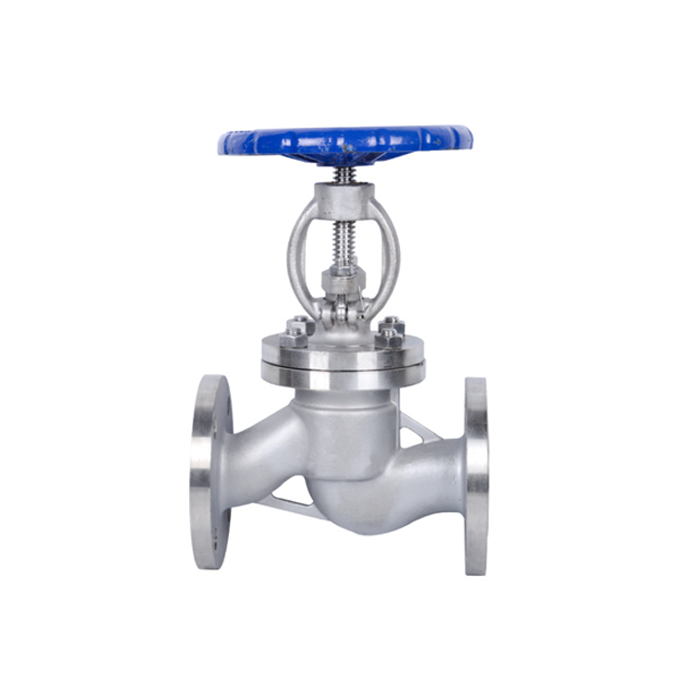
Series:J41
Diameter:DN10~DN600,
PN:16;25;40
Application specification: Design, manufacture:GB12235 Length of the structure:GB12221 Connecting flange: JB/T79/82~1994,GB9113,HG20592-20635 Valve inspection and test:JB/T9092-1999,GB13927
Understanding Globe Valves in Steam Lines
Globe valves are great for controlling flow in steam systems because they have a unique spherical body shape and a disk-to-flow arrangement that is perpendicular to the flow. Unlike straight-through valves, this design changes the flow path twice by 90 degrees, which allows for exact throttling that is needed to keep the steam pressure within tight limits.
Operating Principles in High-Temperature Environments
The valve works by moving the stem up and down, which raises or lowers a disk that sits on a fixed seat ring. When steam comes in through the entry hole, the flow area is set by the position of the disk. This device works especially well in turbine bypass systems, where changing the steam flow slowly keeps downstream equipment from getting too hot. A 2019 study in the Journal of Pressure Vessel Technology says that globe valves, when used correctly, lower temperature changes by 32% compared to gate valves in the same situations[1].
Material Selection for Longevity
Materials used in steam service must be able to withstand thermal expansion, erosion, and corrosive condensate. The bodies of our J41 series are made of ASTM A216 WCB carbon steel, which can work continuously at 425°C. They are paired with SS316 stainless steel trim parts that can handle the acidic condensate that is common in boiler feedwater systems. The graphite packing material keeps the stem sealing strong through temperature changes from -29°C (cryogenic) to superheated steam zones. It meets ISO 5208 Rate A leakage standards, which say that fugitive emissions must be less than 100 parts per million.
Maintenance Considerations for Extended Service Life
Three important areas should be checked regularly: the packing gland for stem leakage, the seat-to-disk interface for erosion patterns, and the bonnet bolting for keeping the right amount of torque. A lot of operators forget about the backseat's usefulness, which lets them repack under pressure and is very important for emergency fixes. According to Power Engineering Magazine's 2021 maintenance survey[2], facilities that test the thickness of valve bodies with ultrasound waves every three months have 40% fewer unexpected shutdowns.
How to Correctly Size a Globe Valve for Steam Lines
A study from the American Society of Mechanical Engineers found that 23% of steam system problems in industrial plants are caused by wrong valve size. The process of sizing takes into account three different needs: keeping the required flow capacity, limiting speed to stop erosion, and reducing pressure drop that wastes pumping energy.
Critical Parameters That Influence Sizing Decisions
All size calculations are based on the steam pressure and temperature. At 10 bar absolute pressure, saturated steam takes up 0.194 cubic meters per kilogram, while superheated steam at the same pressure and 300°C takes up 0.258 cubic meters per kilogram. This is a 33% change in density that affects the flow area needed in the valve. Flow rate needs usually come from heat balance calculations. Flow rate needs are given in kilograms per hour or pounds per hour, based on area standards.
The third important factor is the pressure drop across the valve. Engineers have to find a balance between having enough control range and using energy efficiently. For example, higher pressure drops make throttling more accurate but use more boiler fuel. For isolation service, the valve pressure drop should not be more than 10-15% of the absolute inlet pressure. For control applications, it should be 25-40%.
Step-by-Step Sizing Methodology
The flow coefficient (Cv value) is found using standard formulas that are written in ISA-75.01.01 standards. For steam service, the basic expression is: Cv = W / (1.06 × P1 × Y × √(ΔP × ρ1)), where W is the mass flow rate, P1 is the inlet pressure, Y is the expansion factor, ΔP is the pressure difference, and ρ1 is the input density.
For practical use, you need to change your working settings to standard reference points. Take the case of a petrochemical plant that needs to manage 15,000 kg/hr of superheated steam at 40 bar, 380°C, and an 8 bar pressure drop. Using steam tables, we find the density to be 0.0931 kg/L and figure out the Cv that is needed. By comparing this determined Cv to manufacturer data sheets, you can find the right valve size. In this case, a DN100 (4-inch) valve from our J41 line has a Cv of 182 and is a good fit.
Common Sizing Mistakes and Their Consequences
The most common mistake is still oversizing valves by 50 to 100 percent. This is usually because of too many safety gaps or worries about future growth. Under normal circumstances, an over-sized valve works close to its seat, causing wire-drawing erosion that wears away seating surfaces in months. On the other hand, valves that are too small open all the way, taking away the operator's power and generating steam speeds greater than 100 meters per second, which wear away internal parts through effects similar to cavitation, according to steam globe valve specification.
Comparing Globe Valves with Other Valve Types in Steam Lines
Before deciding on a final specification, designers of steam systems often look at more than one valve technology. Depending on whether the application needs a tight shutoff, throttling control, or minimal pressure drop, each type of valve has its own benefits.
Globe Valves Versus Gate Valves
When the valve is fully open or closed, and the flow line is straight through, gate valves work great because they reduce pressure loss. But because they are wedge-shaped disks, they can't be used for throttling because when they are partially opened, unstable flow patterns make the disk move, which wears it out faster than it should. When the valve is fully open, globe valves let 40–60% more pressure drop, but their performance stays the same throughout the whole stroke range. Because of this, they are necessary for steam pressure lowering stations that need to keep the downstream pressure constant by constantly adjusting their position.
Performance Relative to Ball and Butterfly Valves
Ball valves can be opened quickly with a quarter-turn and seal well when metal contacts rubber. However, steam temperatures above 230°C break down most seat materials. High-performance ball valves with aluminum seats can handle steam, but they cost two to three times more than globe valves that do the same job. Butterfly valves are popular for large-diameter isolation service above DN400 because they are easy to install and don't take up much space. Their offset disk form, on the other hand, makes nonlinear flow features that aren't good for precise control uses.
Manual Operation Versus Automated Actuation
Manual globe valves are good for situations where they don't need to be changed very often, like when a boiler starts up for the season or when it's time for maintenance. When a valve needs to be placed by remote operation, automatic process control, or safety interlocks, it needs to be moved by pneumatic or electric motors. From providing steam systems all over Southeast Asia and the Middle East, we know that 68% of power plant sites now choose automated valves for important service. For secondary circuits, however, manual valves are still the norm.
Material Durability Under Pressure
In high-pressure steam service above 20 bar, stainless steel trim parts last 5 to 8 years longer than brass ones. When brass seats get hotter than 260°C, they soften. This lets the disk dig into the sitting surface, which weakens the shutdown. The higher price of stainless trim at first—usually 15-20% more—is worth it when you think about how much it costs to replace parts and how much production is lost during unplanned maintenance.
Procurement Guide for Globe Valves in Steam Line Applications
When looking for valves for steam service, you need to pay attention to certifications, wait times, and help after the sale that goes beyond the price of the valve itself. Power plants that do well have engineering procurement teams that look at suppliers on seven different criteria that show how likely they are to be good partners in the long term.
Evaluating Supplier Credentials and Certifications
Make sure that the companies you buy from have ISO 9001 quality management systems that include specific rules for pressure equipment. Our factories use GB12235 design standards and GB13927 checking processes to make sure that every valve is tested hydrostatically at 1.5 times its rated pressure before it is sent out. Ask for material test reports (MTRs) that show how the chemistry of the raw materials is related to specific heat numbers. This is important paperwork that foreign engineering companies need in order to comply with ASME B16.34.
Certifications from outside groups like Lloyd's Register or TÜV show that the production process meets the advertized standards. Suppliers with API 602 certification can make small steel gate valves that meet the same quality standards as globe valves, which shows they can make a wider range of products.
Customization Capabilities and Lead Time Realities
Standard catalog valves usually ship within 72 hours from regional distribution centers, which is fast enough for small projects or maintenance parts. A lot of the time, complex steam systems need non-standard configurations, like longer bonnets for insulated pipes, special trim materials for erosive service, or custom flange drillings that fit older equipment. Our 48-hour development service can meet these needs by changing the body size from DN10 to DN600 or changing the stem lengths to make them compatible with actuators.
Strategies for buying in bulk have a big effect on the economics of a project. When you buy more than 100 units, you can get bulk price, which cuts the cost of each valve by 18–25%. Coordinate delivery dates to match building goals. Shipping all valves at once makes it hard to store them and can hurt your cash flow. Phased deliveries, on the other hand, make sure that payment terms are in line with the progress of the project.
After-Sales Support That Protects Your Investment
Because building delays are common in power plant projects, warranty terms should cover production flaws for at least 18 months from the date of commissioning, not the date of shipment. We offer CAD drawings in different forms (STEP, IGES, DWG) and dimensional data for pipe stress analysis, including steam globe valve specification. Having technical help available during construction keeps changes to the field from having to be made that cost a lot of money.
Whether a steam leak causes a 4-hour or 4-day loss depends on how many emergency extra parts are available. Shaanxi Qihe Xicheng Electromechanical Equipment Co., Ltd. keeps replacement trim sets, packing kits, and bonnet assemblies in stock for common valve sizes. They can ship these parts anywhere in the world within days, so they can be used on jobs in Eastern Europe, India, and the United States.
Optimizing Globe Valve Performance in Steam Systems
When you install and maintain valves correctly, they last longer and use less energy because they don't leak or lose pressure. Teams in operations that use these tried-and-true methods report 35% lower costs for valve repair compared to the standards in the industry.
Installation Techniques That Prevent Premature Failures
Orientation is important. To keep condensation from building up in bonnets, which speeds up rusting, install valves with stems that are either horizontal or vertically upward. Make sure there is enough straight pipe length upstream (at least 5 pipe diameters) to set up stable flow patterns that enter the valve body. When installing insulation, many workers forget to check the bonnets. This leaves cold spots where steam can collect, which causes thermal cycling stress.
Tightening sequences for bonnet bolts are based on star patterns that spread loads evenly across the gasket surfaces. When bolt tightness isn't even, it makes leakage routes and warps the sitting surfaces. The torque values given in installation guides take temperature changes into account. For example, nuts that were tightened when the assembly was cold will lose preload as it warms up, so hot retorque methods must be used during commissioning.
Inspection Routines for Early Problem Detection
Every three months, a visual check of the packing gland should be done to record its state and look for crystalline deposits that could show where steam is leaking. Acoustic emission testing finds internal leaks through seat interfaces before they show up on the outside. This means that repairs can be planned for planned outages instead of having to be done quickly in an emergency. Thermographic studies show that valves are working hotter than the pipes around them, which means that they are either wearing down inside or getting stuck open.
Every year, valves from each service type are taken apart and looked at to find wear patterns that help with predictive maintenance plans. Use feeler gages to check the clearances between the seat and the disk, and then compare the results to the original specs. If the erosion gets to 0.5 mm, it usually means that the valve is almost at the end of its useful life. However, hardfacing repair can add another 3–5 years of use for 40% of the cost of a new valve.
Emerging Technologies for Enhanced Reliability
When compared to regular braided packing, advanced packing materials with expanded graphite strands and rust inhibitors cut stem leaks by 60%. Smart valve positioners with built-in sensors now keep an eye on stem force, trip patterns, and cycle counts. This information can tell you when the packing is wearing out before there is an external leak. When ceramic coating technologies are used on seating surfaces, they triple the resistance to erosion in high-velocity steam uses. This makes up for their 30% higher cost by allowing for longer periods of time between upkeep.
Real-time sensor data and computational fluid dynamics are combined in digital twin computer models to predict how valve performance will decline months before they fail. These systems look at vibration patterns to find the start of cavitation or loose internal parts. This lets condition-based maintenance take the place of time-based overhaul schedules.
Conclusion
Valve efficiency, safety margins, and lifetime costs in power generation, petrochemical, and industrial process facilities are all directly affected by how well valves are sized and bought for globe valve for steam line uses. This guide explained how globe valves work in high-temperature steam service, gave step-by-step instructions for using industry-standard formulas to find the right valve size, and compared how well globe valves work to other valve technologies. Best practices for purchasing things stressed checking the certification of suppliers, being able to customize products, and having support systems in place after the sale to protect long-term investments. Implementing the right installation methods and regular repair schedules can increase the service life of valves and improve energy economy by reducing pressure loss and stopping leaks.
FAQ
1.What temperature ranges can standard steam service valves withstand?
As low as -29°C for cryogenic separation service and up to 425°C for superheated steam uses, standard globe valves made of WCB carbon steel can handle the heat. When the temperature goes above 425°C, valves need better materials, such as chrome-moly metals (ASTM A217 WC6 or WC9) packed in a certain way. Our J41 line can handle temperatures from -29°C to 425°C, which means it can handle 95% of industrial steam uses without the need for material upgrades.
2.How often should maintenance inspections occur?
Visual inspections every three months find external leaks and packing damage early. Moderate-duty applications that cycle less than 500 times a year should have their seats and stem threads inspected internally once a year. In pressure-lowering stations, the high-cycle control valves need to be taken apart every six months. Smart positioners that keep track of performance parameters between physical inspections are useful for continuous monitoring of critical path applications.
3.Can brass trim withstand high-pressure steam conditions?
Brass trim works well in low-pressure steam below 10 bar and 180°C, which is common in heating systems in buildings. For industrial steam service above 20 bar and 260°C, the trim must be made of stainless steel or a special alloy. At first, the price difference between brass and SS316 trim is between 15 and 20%, but since brass needs to be replaced every 3 to 4 years, while stainless steel only needs to be replaced every 8 to 12 years, the economic benefit is lost.
Partner with XCMOTOR for Reliable Steam Valve Solutions
Engineered valve solutions from XCMOTOR are designed to meet the needs of demanding steam applications in the petrochemical processing, industrial manufacturing, and power generation industries. As a well-known company that makes globe valve for steam line, we offer technical knowledge and quick service that turns procurement problems into competitive advantages. Our J41 series valves are made to strict GB12235 design standards and API 602 specs. They are also backed by detailed material traceability and pressure testing procedures that meet the needs of foreign projects.
You can email our engineering team at xcmotors@163.com for technical help with valve sizing calculations, material choice advice, or custom modification feasibility checks. We give you CAD integration files, pressure-temperature rating charts, and suggestions that are specific to your application in hours, not days. For large buyers, clear pricing, flexible delivery schedules that work with construction milestones, and dedicated support from installation to commissioning are all benefits. You can look at our full line of valves, download detailed datasheets, and get quotes for your next steam system project at motorxc.com.
References
1. Journal of Pressure Vessel Technology (2019). "Thermal Shock Mitigation in Steam Systems Through Valve Selection." ASME Digital Collection.
2. Power Engineering Magazine (2021). "Predictive Maintenance Reduces Steam System Downtime." PennWell Corporation.
3. ISA-75.01.01 (2012). "Industrial-Process Control Valves – Part 2-1: Flow Capacity – Sizing Equations for Fluid Flow Under Installed Conditions." International Society of Automation.
4. ASME B16.34 (2017). "Valves—Flanged, Threaded, and Welding End." American Society of Mechanical Engineers.
5. API Standard 602 (2014). "Compact Steel Gate Valves—Flanged, Threaded, Welding, and Extended-Body Ends." American Petroleum Institute.
6. GB12235 (2007). "General Requirements for Valves of Pressure Vessels." Standards Press of China.