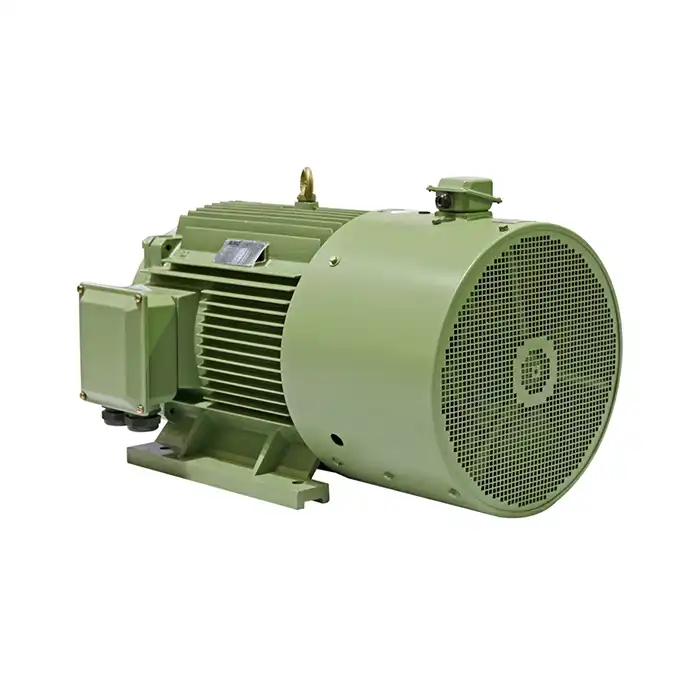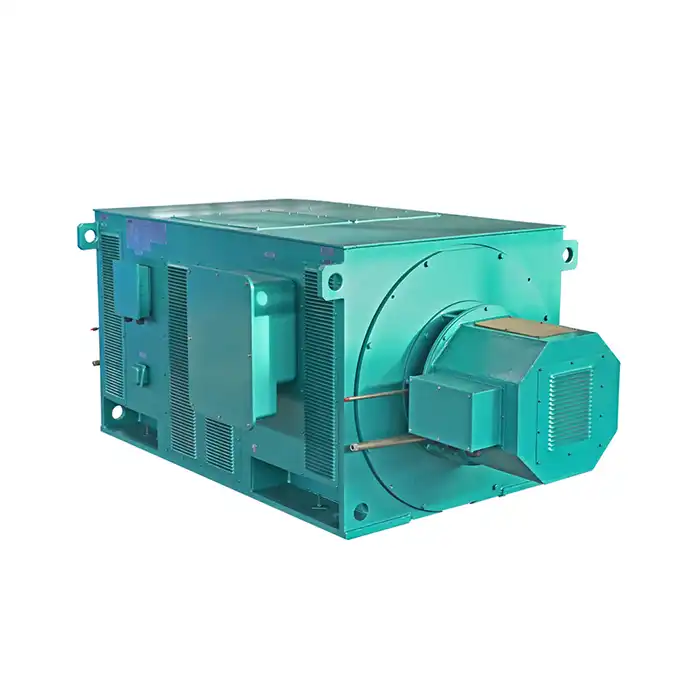




Dust-Ignition Proof vs. Explosion Proof AC Motor Design Differences
It is very important to know the important differences between dust-ignition-proof and explosion proof AC motor types when choosing motors for hazardous settings. These specialized motors have different safety functions. For example, explosion proof AC motor units contain internal combustion events to prevent flammable gases or vapors from igniting outside, while dust-ignition-proof models stop combustible dust from entering enclosures. The design theory differs greatly: explosion proof AC motor focuses on containing flame paths with carefully machined joints, while dust-ignition-proof versions emphasize complete airflow blockage through tight sealing. These basic differences are critical for maintaining facility safety and operational efficiency.
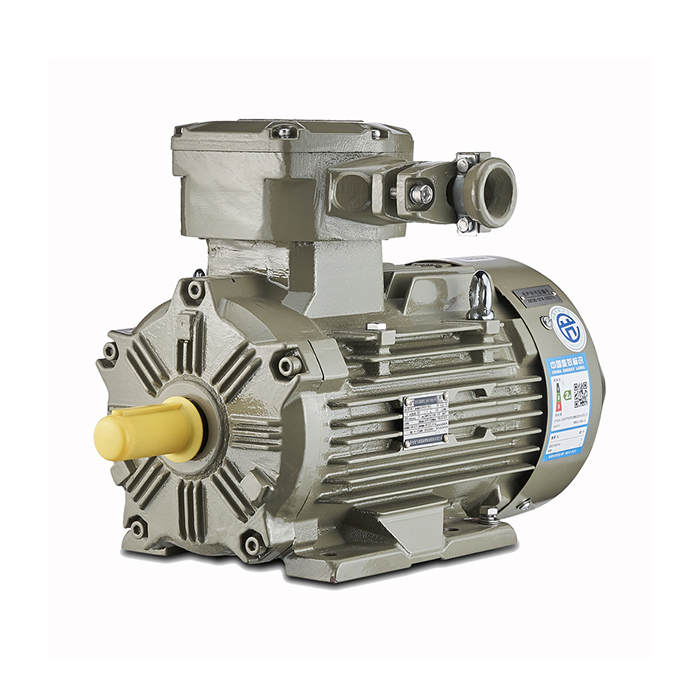
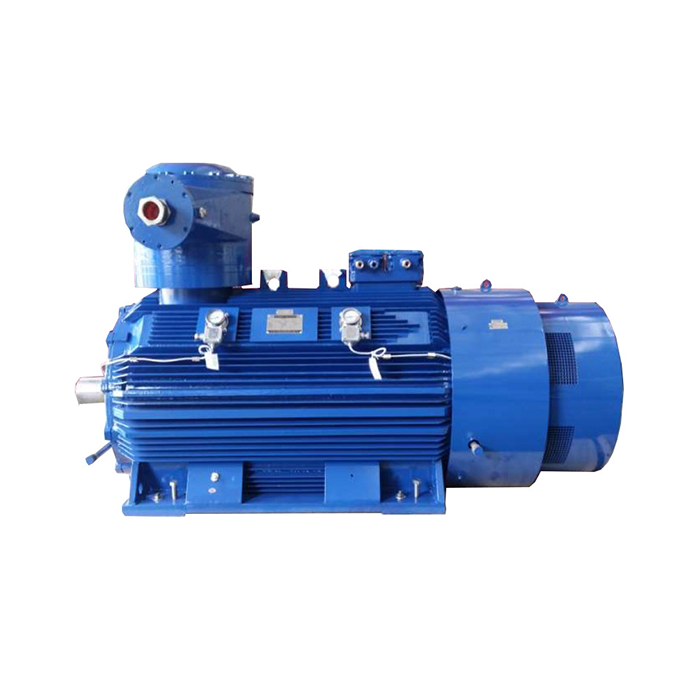
Series:YBX3
Voltage range:380V,660V,415V,380/660V,660/1140V
Power range:0.55-630 kW
Application:places where explosive gas mixtures exist in petroleum, chemical, mining, metallurgy, electric power, machinery and other industries.
Advantage: fully enclosed, self-fan cooling, squirrel cage type, high efficiency.
Explosion-proof mark: Ex d I Mb, Ex d IIB T4 Gb, Ex d IIC T4 Gb
Others: SKF, NSK, FAG bearings can be replaced according to customer requirements.
Understanding Dust-Ignition Proof and Explosion Proof AC Motors
What Makes an Explosion Proof Motor Unique?
Our explosion-proof AC motors are carefully designed to ensure safe operation in high-risk settings that are full of dangerous gases, vapors, or dust. The frames of these units are made of strong cast iron, and the flanges that make flame tracks are carefully cut. When internal arcing or sparks happen during operation, the cage completely encloses the fire. As the hot gases move through the narrow flame path, they cool down. When they come out, the temperatures are lower than what would cause a fire in the air around them. This design principle keeps oil tanks, chemical plants, and paint factories safe, all of which use volatile compounds that are always a risk of starting a fire.
Heavy-duty materials that can survive explosion forces are used in the building. Some of the approvals our models have are Ex d I Mb for use in mines, Ex d IIB T4 Gb for common industrial gases, and Ex d IIC T4 Gb for settings with a lot of hydrogen. These explosion-proof marks show that the product meets ATEX standards, which means it can be used legally in Class I, Division 1 or Zone 1 dangerous places.
Dust-Ignition Proof Design Philosophy
Motors that are dust-ignition-proof deal with a different problem. Instead of stopping fires, they stop flammable dust from getting into the cage at all. The design uses seals, sealed bearings, and carefully thought-out air systems that keep dust out while keeping the temperature just right. Fine particles in the air can cause explosions in places like grain elevators, flour mills, and pharmaceutical factories that use these motors.
The cover usually has an IP65 grade or higher, which keeps dust from getting on the internal parts. While explosion-proof versions let some air flow, dust-ignition-proof versions stay mostly closed. This difference changes how heat management techniques work and means that ambient temperatures and duty cycles need to be carefully thought through during design.
Certification Standards That Matter
Both types of motors are regulated globally through different approval routes. International markets are mostly governed by ATEX and IECEx approvals, while North American sites are mostly governed by UL and CSA standards. Legal compliance and insurance coverage depend on knowing which certifications apply to your operating zone.
Class I places have gases or fumes that can catch fire, so they need tools that can't explode. Class II settings have flammable dust, so motors must be dust-ignition-proof or have a similar certification. Division 1 zones have risks even when things are going as planned, while Division 2 zones only have risks when things aren't going as planned. To avoid fines and accidents at work, procurement professionals must make sure that motor licenses are exactly right for their facility's risk level.
Core Design Differences and Their Impact on Performance
Enclosure Construction: Containment Versus Exclusion
The main design difference between these motor types can be seen in how they are enclosed. Motors that are safe from explosions have housings made of thick-walled cast iron with flange joints that are cut to within thousandths of an inch of accuracy. These flame paths let the pressure go down while stopping the flame from spreading. In order to maintain structure integrity during internal combustion events, our explosion proof ac motor types have end shields and frames made to handle pressures above 10 bar.
Motors that don't spark dust put full protection first. Openings for ventilation have filters and screens that let air move but stop particles bigger than a certain micron. The housing doesn't have to be strong enough to stop an explosion, but it does have to keep dust out for the whole life of the motor, even as seals wear out and vibrations weaken connections.
Thermal Management and Efficiency Implications
Class F or H insulation rated for 155°C to 180°C handles temperature spikes inside an explosion proof AC motor during fault conditions. Our self-fan cooling systems maintain proper temperatures for explosion proof AC motor power ranges from 0.55 kW to 630 kW, achieving IE2, IE3, or IE4 efficiency. Dust-ignition-proof motors face different thermal challenges; sealed enclosures reduce natural convection, requiring larger frames or external cooling. This may force derating in high-altitude or high-ambient-temperature conditions for dust-ignition-proof designs.
Performance Metrics: Efficiency and Torque Characteristics
Explosion proof AC motor units typically achieve slightly better efficiency ratings due to no airflow restriction issues. Our models operate with voltages including 380V, 415V, 660V, and dual-voltage 380/660V and 660/1140V configurations. Copper windings enhance electrical efficiency in every explosion proof AC motor. Torque characteristics remain largely comparable across motor types at equivalent power ratings. Dust-ignition-proof motors may exhibit marginally higher temperature rise under continuous loads, affecting duty cycle selection for applications like conveyor systems.
Practical Applications and Industry Use Cases
Where Explosion Proof Motors Excel?
Explosion proof AC motor units are essential where flammable gases, vapors, or mists exist. Oil refineries use explosion proof AC motor to power pump drives, valve actuators, and agitators contacting hydrocarbon vapors. Chemical processing plants place explosion proof AC motor throughout production lines manufacturing solvents, paints, and specialty chemicals. Underground coal mines require explosion proof AC motor where gas accumulation creates hazards. Metallurgy operations use explosion proof AC motor in foundries and metal processing plants. Power plants need explosion proof AC motor for auxiliary equipment in transformer yards.
Dust-Ignition Proof Applications in Combustible Dust Environments
Grain silos and flour mills commonly use dust-ignition-proof motors where organic particles create explosive dust clouds. These motors power bucket elevators, screw conveyors, and milling equipment without introducing ignition sources into Class II areas. Pharmaceutical manufacturing facilities processing active ingredients into fine powders need dust-ignition-proof motors to protect valuable batches. Cement production and material handling operations in mineral processing also require dust-ignition-proof motors. Feed mills, sugar cane crushing facilities, and woodworking shops producing combustible dust must select proper motor protection for safety.
Procurement Considerations: Choosing the Right Motor for Your Needs
Identifying Your Hazardous Area Classification
Accurately classifying hazards is the first step in strategic buying of an explosion proof AC motor. Get experienced safety experts to evaluate your facility and determine whether it fits Class I or Class II designations for your explosion proof AC motor application. This review examines material properties, concentration levels, and operating conditions unique to your processes before selecting an explosion proof AC motor. Proper hazard classification ensures your explosion proof AC motor provides adequate protection while avoiding unnecessary overspecification that increases costs without adding safety value.
Motors that can't explode are needed in Class I places, while units that can't catch fire from dust are needed in Class II places. In some places, there are more than one type of danger, so motors need to be approved for both gas and dust safety. Division classifications help narrow down the choices even more. For example, Division 1 zones with normal hazards need higher levels of security than Division 2 zones with abnormal hazards.
At XCMOTOR, our expert team helps with hazard classification reviews to make sure that motor specs meet government standards. We give advice on zone mapping and matching certifications, which helps procurement workers stay safe and follow the rules by avoiding design mistakes.
Evaluating Supplier Capabilities and Customization Options
Along with basic requirements, choosing a provider also includes looking at things like the quality of the making, the validity of the certification, and the level of customization that is possible. Precision machining, strict testing methods, and full quality control at every stage of building are all parts of our production process. Each part is inspected separately before it is put together, which makes sure that the performance is the same across production runs.
Customization choices have a big effect on how well a motor fits. Depending on what the customer wants, we can update bearings with SKF, NSK, or FAG parts, which increases their service life in harsh or corrosive conditions. International power standards are met by voltage setups that range from 380V to 1140V to match local infrastructure. Protection types from IP55 to IP65 give you options for a range of risk levels.
Lead times, guarantee coverage, and the ability to get expert help are all things that set capable sellers apart. Our 30-day return policy and dedicated help that works on weekends show that we care about making sure our customers are happy. On-time delivery keeps project plans on track, and detailed paperwork makes installation and commissioning easier.
Installation and Maintenance Best Practices
Installing a motor correctly protects its certifications and extends its useful life. Place motors on stable bases to reduce the amount of shaking they send. To avoid thermal stress, make sure that the voltage and phase of the links fit the specs. Use approved sealing fittings that are right for the danger rating to make sure that conduit entries keep the enclosure's integrity.
Enclosure seals, gaskets, and wire glands should be checked regularly as part of maintenance plans. Any hole in the protected housing makes approval impossible and increases the risk of an explosion. When to lubricate depends on the specs of the bearing. Our high-quality bearings have longer service lives, which lowers the cost of upkeep.
Keep thorough service records that show when the vehicle was inspected, fixed, and parts were replaced. This paperwork shows that proper care was taken during regulatory audits and insurance reviews. Set up predictive maintenance that uses sound analysis and thermal imaging to find problems before they break down. This will keep key processes from having to go down without warning as much as possible.
Explosion Proof vs. Dust-Ignition Proof: Cost and ROI Analysis
Initial Investment Comparison
Explosion proof AC motor units typically cost 30–40% more than standard industrial motors due to heavier construction and strict testing. Dust-ignition-proof versions fall between these price ranges. For explosion proof AC motor installations, approved conduit systems, sealing fittings, and junction boxes add 15–25% to electrical infrastructure costs. Our efficient manufacturing provides competitive pricing for explosion proof AC motor purchases. Volume discounts and total ownership optimization minimize upfront costs while maintaining quality.
Long-Term Operational Economics
Energy consumption dominates lifecycle costs for any explosion proof AC motor, often exceeding purchase price within 12–18 months. Our IE3 and IE4 rated explosion proof AC motor reduces electricity use by 3–8% compared to standard efficiency units. This saves $4,000–$10,000 annually for a 630 kW explosion proof AC motor running 8,000 hours yearly. Maintenance costs vary by environment. Explosion proof AC motor in clean gas service typically extends service intervals versus dust-ignition-proof versions handling abrasive particles, reducing labor expenses significantly.
Risk Mitigation Value Proposition
Safety incidents dwarf motor price differences economically. A single fire in an improperly protected hazardous area can cause injuries, production losses, regulatory fines, and liability claims worth millions. Insurers recognize explosion proof AC motor certification and adjust premiums accordingly. Purchasing properly certified explosion proof AC motor versions constitutes critical risk mitigation. The incremental cost difference becomes negligible against potential incident consequences. Our ATEX and CCC certified explosion proof AC motor supports insurance claims and demonstrates due diligence in regulatory processes. Unplanned downtime reduction further improves ROI.
Conclusion
To choose between dust-ignition-proof and explosion proof ac motors, you need to carefully look at the types of risks, the needs of the job, and the cost. Designs that are explosion-proof include internal combustion events that keep dangerous gases and vapors from starting on fire in Class I sites. Motors that are dust-ignition-proof keep particles out, protecting Class II flammable dust settings. Knowing these main differences in design, like how the container is built and how heat is managed, helps you make smart purchasing choices that balance safety, performance, and cost concerns. Risk assessment, supplier review, and maintenance plans that are done correctly can help oil, chemical, pharmaceutical, and agricultural businesses get the most out of their investments and stay in line with the rules.
FAQ
1. What distinguishes Class I from Class II motor requirements?
Class I sites have flammable fumes or vapors, so they need motors that can't explode and have internal combustion. Class II settings have flammable dust particles that need designs that keep dust out and don't let it in. These groups are set by the National Electrical Code based on the qualities of the material and the chance of concentration. Division 1 shows areas that are dangerous when things are running normally, and Division 2 shows areas that are dangerous when things aren't working normally. To follow the law and keep everyone safe at work, the motor choice has to match the exact class and division grade that was written down in the facility danger assessments.
2. Can one motor type serve both gas and dust hazards?
Some motors are certified for both Class I and Class II work, which makes them more expensive and harder to build. These combination units have both features for containing explosions and keeping dust out. Many facilities make the buying process easier by only asking for one type of main danger and are okay with a little over-specification instead of asking for two ratings. Talking to safety engineers and certification groups will help you figure out if dual-rated motors are worth the extra cost or not for your unique operation.
3. How do altitude and temperature affect motor selection?
Motors that work above 1,000 meters have trouble cooling because the air is thinner, so they need to be derated or their frames need to be bigger. When the temperature outside goes above 40°C, thermal derating is also needed to keep the insulation's life and dependability. Our technical specs include correction factors for altitude and temperature, which help buying teams choose motors of the right size. Options with an extended temperature range can work in harsh settings, but they take longer to make and cost more than normal ratings.
Partner with XCMOTOR for Certified Explosion Proof AC Motor Solutions
Shaanxi Qihe Xicheng Electromechanical Equipment Co., Ltd. offers a wide range of power equipment options that are specifically made to meet your needs in dangerous areas. We are a trusted explosion proof ac motor supplier. We offer approved motors ranging from 0.55 kW to 630 kW in voltage ranges such as 380V, 415V, 660V, and combination setups. We are a reputable explosion-proof AC motor maker. Our YBX3 line is made of cast iron, has copper windings, and uses high-quality SKF, NSK, or FAG bearings to make sure it lasts longer in the toughest petroleum, chemical, mining, and pharmaceutical settings.
Our dedication goes beyond just delivering the goods. We offer special technical help seven days a week, and we quickly answer both pre-sales and post-sales questions. Our 30-day return policy gives you peace of mind when you buy, and fast, free delivery keeps your project plans on track. Each motor goes through strict testing and approval, and comes with proof that it meets ATEX and CCC standards.
Our team can make solutions that are exactly what you need, whether you need a single repair unit or a complete motor package for a new building. You can talk to skilled application engineers who understand the problems that come with working in dangerous places by emailing xcmotors@163.com. We become your safety and performance goals a reality by being a reliable explosion-proof AC motor provider.
References
1. National Fire Protection Association, "NFPA 70: National Electrical Code, Article 500 - Hazardous (Classified) Locations," 2023 Edition.
2. International Electrotechnical Commission, "IEC 60079 Series: Explosive Atmospheres - Part 0: Equipment - General Requirements," 2017.
3. American Petroleum Institute, "API Standard 547: General Purpose Form-Wound Squirrel-Cage Induction Motors - 375 kW and Larger," Fourth Edition, 2020.
4. Underwriters Laboratories, "UL 674: Standard for Electric Motors and Generators for Use in Division 1 Hazardous (Classified) Locations," 2018.
5. European Commission, "ATEX Directive 2014/34/EU: Equipment and Protective Systems Intended for Use in Potentially Explosive Atmospheres," Official Journal of the European Union, 2014.
6. Institute of Electrical and Electronics Engineers, "IEEE Standard 1349: Guide for Application of Electric Motors in Class I, Division 2 and Class I, Zone 2 Hazardous (Classified) Locations," 2011.