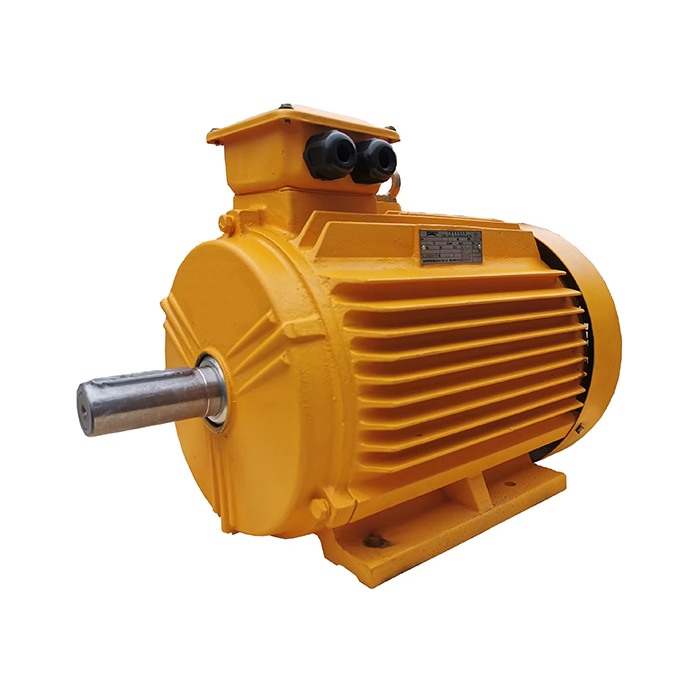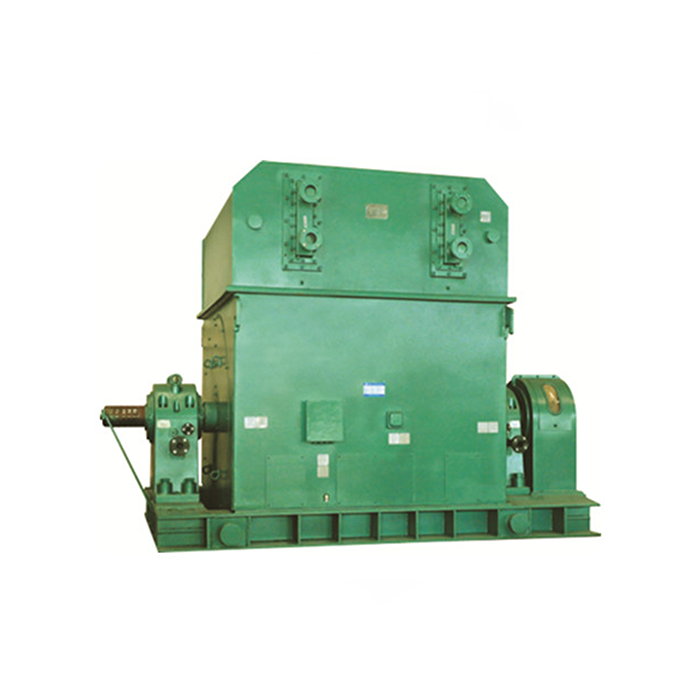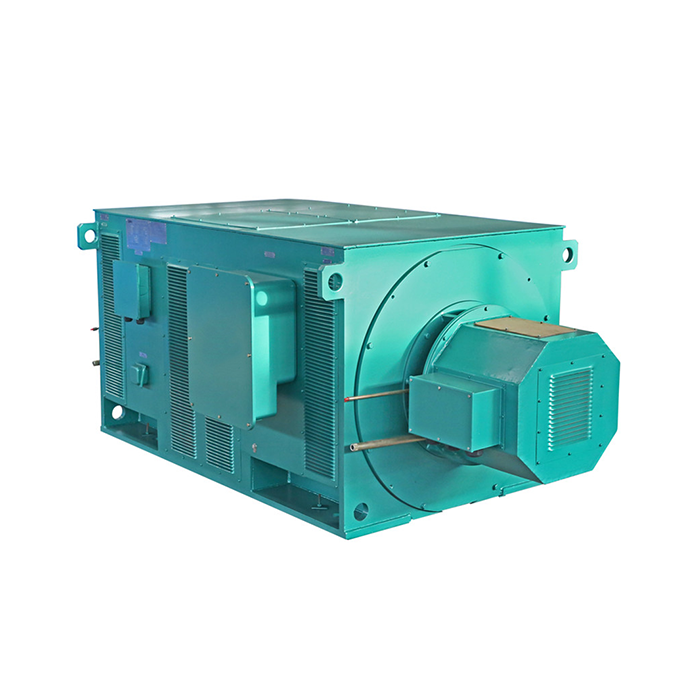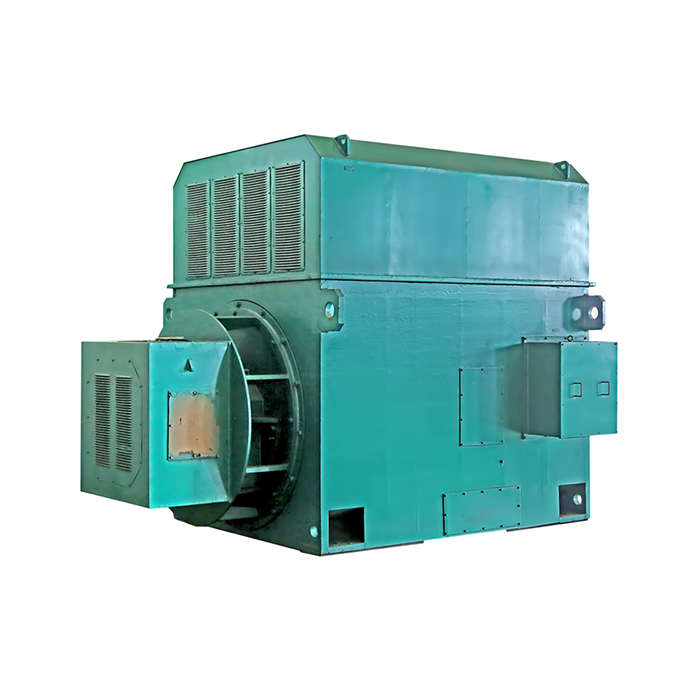




Best High-Voltage Increased-Safety Motor for Industrial Pump Systems
When it comes to an industrial pump system, the best high-voltage increased-safety motor is the one whose certification, voltage, cooling, and mounting are all perfect for your pump and the dangerous area. Start with the temperature class and zone. Then, compare the motor's voltage range, power, speed, and case to the duty of the pump. Before you sign, get the certificate number, the type test report, and the factory test record. XCMOTOR's YAKK series works with 3 kV to 11 kV and 200 kW to 3550 kW, which means it can be used for a lot of different large pump drives. I'll go over each point below in the order that buyers usually look them over.
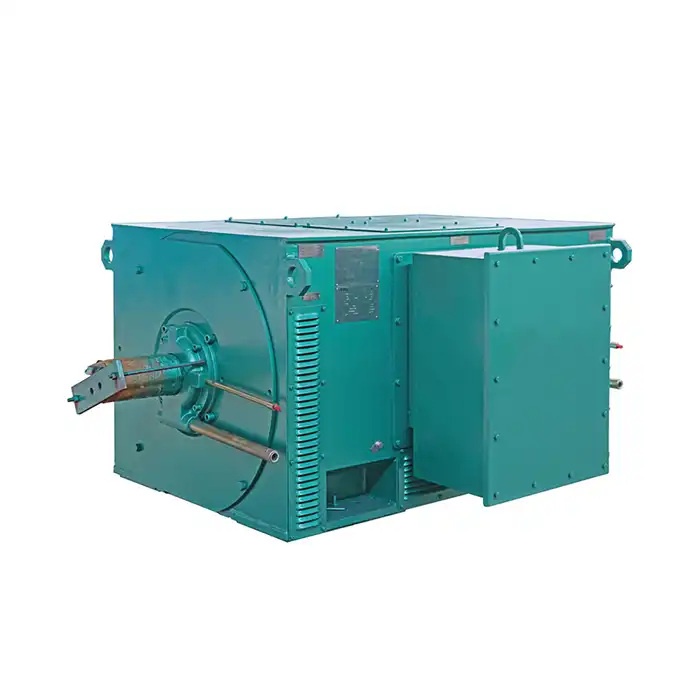
Series:YR
Protection level:IP23
Voltage range:3000V±5%,3300V±5%,6000V±5%,6600V±5%,10000V±5%,11000V±5%
Power range:200-5600 kW
Application:hoist, rolling mill, wire drawing machine.
Advantage:low noise, small vibration, reliable performance, easy installation and maintenance.
Standard: This series of products complies with JB/T10314.1-2002 and JB/T7594 standards.
Others: SKF, NSK, FAG bearings can be replaced according to customer requirements.
Why High-Voltage Increased-Safety Motors Matter in Industrial Pump Systems
Where These Motors Run
Oil and gas sites, mines, water treatment stations, and chemical plants are just a few of the places where you can find big pumps where flammable gas or vapor can appear. In a Zone 1 area, there is a chance that an explosive gas atmosphere will appear from time to time. A normal motor can make that surface hot or spark up. As an extra safety measure, a high-voltage increased-safety motor is built to avoid both of these problems. A lot of buyers start by looking at the rated power. First, you should look at the hazardous-area class, which tells you which motors you can even think about.
What "Increased Safety" Means
The aim of “ e ” protection in IEC 60079-7 is to make it safer . A basic guideline is that the motor shouldn't produce arcs, sparks or hot patches that might be harmful when it's idling. For this, producers utilize greater insulation, longer creepage and clearance distances, safe connections and a strict temperature control of the winding. Flameproof design , however , expects that an explosion inside may occur , and creates the enclosure to contain it . The temperature class is significant. The idea of "e" inhibits ignition. For example T4 maintains the surface temperature below the ignition threshold of several common gasses at 135 °C.
What Pump Buyers Should Weigh Before Choosing
It’s one line in a lengthy series of lines. Check the certification of the motor, starting current and torque, cooling, delivery date, and lifetime cost. Make sure you check interface fit too. First time around, the foot size, shaft extension and cooling air routes all have to match the pump skid. When designs don’t align, commissioning might be held up for days. In the US, before choosing a high-voltage increased-safety motor, consult early with the local inspector or insurance firm. The National Electrical Code (NFPA 70) allows either the Class/Division technique or the Zone method for designated locations.
How a High-Voltage Increased-Safety Motor Works and How to Select One
Construction Features That Limit Ignition Sources
Like any induction motor, a high voltage higher safety motor converts electrical power to shaft power . Small things make a big impact. Insulation system of windings is more robust. Terminals maintain the required set clearances and provide a secure connection. The YAKK frame is composed of sturdy cast iron, the rotor is properly balanced and the terminal box is built so that wiring is simple and safe. It is also vital to protect the enclosure. IP55 protects live parts from dust and water jets. IP56 protects against stronger jets. Higher ratings may be specified. All these pieces work together to regulate the temperature and electrical stress at safe levels.
Matching Voltage, Power, and Speed to Pump Duty
First, check the pump data sheet. It will display flow rate, head, speed, torque curve, duty cycle, beginning frequency and load inertia. Then hook up the power side. The YAKK series includes the following: 3000V, 3300V, 6000V, 6600V, 10000V and 11000V. each accurate to within ±5%. The power range is 200 kW up to 3550 kW and the speed range is 500 rpm up to 3000 rpm. Check the project grid voltage against the list and know how to start and what the lowest voltage may be. When you size a high-voltage increased-safety motor factory direct, you don’t want to oversize it, but you don’t want to undersize it either. A larger motor will have a heavier frame and a greater starting current.
Cooling, Insulation, and Bearings
IC611 is used to cool the YAKK series. IC611 in the IEC 60034-6 code talks about an air-to-air setup with a heat exchanger that is mounted on the machine. This way, you don't have to run cooling water pipes to the motor. That means less work for the plumbers on site. We use Class F insulation, but you can also choose Class H. Customers can choose different brands of bearings, which is helpful if a plant already has a spare of a popular type on hand. Ask each supplier of a high-voltage increased-safety motor to tell you the maximum temperature rise, the type of bearing, and the space that needs to be left around the heat exchanger.
Hazardous-Area Compliance and Alternative Motor Types
Reading the Ex Marking and Certificate
Model choice comes after compliance. Find out if there is gas, vapor, dust, or a mix of these. Then check the zone, the gas group, the temperature class, and the level of protection for the equipment. As an example, look at the mark Ex e II T4 Gb. The "e" means more safety, the "II" means surface industry, T4 means the temperature class of 135 °C, and Gb means the level of protection used in Zone 1. Read everything that's written on the nameplate and compare it to the certificate. Make sure to look at any special use instructions that are included. Saying that a motor meets a standard is not the same as having a certificate for it, so ask for the number of the certificate and when it is valid.
Ex e Compared With Flameproof and Non-Sparking Motors
Each idea for safety fixes a different issue. Through construction and thermal control, increased-safety motors stop sparks from starting. Flameproof motors, which are marked Ex d or Ex db, can handle an explosion inside and keep the flame from spreading. This usually means that the enclosure is heavier. Motors marked Ex n or Ex ec that don't spark are better for Zone 2 duty that isn't as tough. A normal industrial motor that hasn't been approved for use in a hazardous area shouldn't be in a classified area. Think of these labels as separate ideas, not as sales terms that can be used in place of each other. For a big pump drive in Zone 1, look at the cost of the high-voltage increased-safety motor, how much the enclosure weighs, how it is cooled, how easy it is to do maintenance, and how much it costs to install.
Certificates, Test Records, and Documents to Request
For extra safety, the YAKK series is built to IEC 60079-0 and IEC 60079-7 standards. It also has ATEX and IECEx certifications for use in explosive environments and is governed by an ISO 9001:2015 quality system. I still tell every buyer to check the paperwork that comes with their order. Need the most up-to-date certificate number, type test report, and factory test record for each serial number. In case of a claim, these records let the technical director track a unit all the way back to the test results. When you ask for the high-voltage increased-safety motor, make sure you include a list of the countries where your machines will be shipped. Each of those countries may need its own certificate.
YAKK High Voltage Increased Safety Motor: Specifications and Production
Series Specifications at a Glance
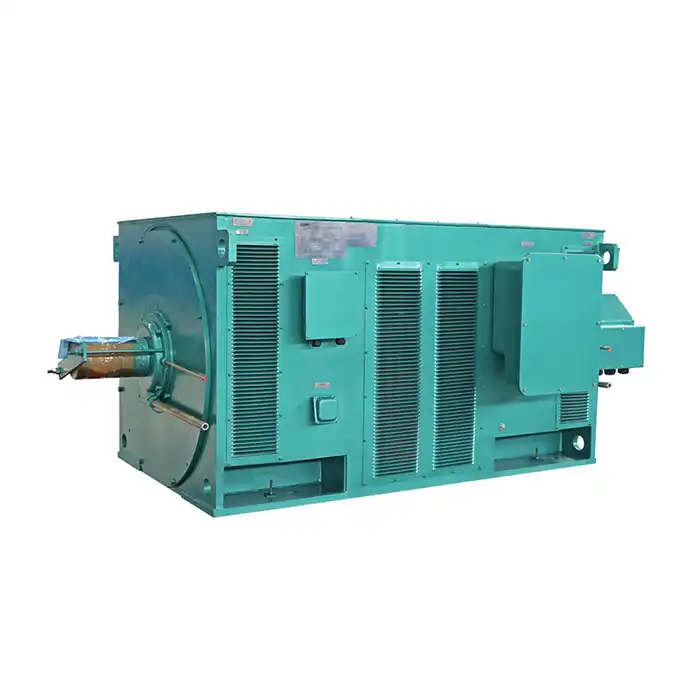
With a tolerance of ±5%, the YAKK high voltage increased safety motor from XCMOTOR works with voltages from 3 kV to 11 kV. It has six voltage steps. Power ranges from 200 kW to 3550 kW, and speed ranges from 500 rpm to 3000 rpm. The level of protection is IP55 or IP56, and higher ratings can be requested. You can choose Class H insulation if you want to, and IC611 cooling is what you need. When it comes to vibration, the series follows GB 10068. Ventilators, compressors, water pumps, crushers, cutting machines, and transportation machines are some of the uses listed. Some of the benefits are low noise, little vibration, and ease of use and maintenance. An OEM for pumps can use the same high-voltage increased-safety motor series for more than one project grid because of this spread.
Production Process and Factory Testing
The first step in production is quality control, and each part is made with precision machining equipment. Then, each motor is put through a basic function test with no load, a full-load test to see how well it works in real life, and a vibration analysis to make sure it runs smoothly. This is important for OEM buyers who care about batch consistency because every unit goes through the same set of tests. I think you should ask for the test record by its serial number. In the technical agreement, you should also agree on acceptance values, like the GB 10068 vibration limit, before anything is made. Having clear numbers on paper stops arguments during commissioning.
Where the YAKK Series Fits
On the list of possible uses are oil and gas facilities, chemical and petrochemical plants, mines, pulp and paper mills, and water treatment plants. In pump systems, transfer, circulation, and water supply pumps are common jobs. Ventilators and compressors are also powered by the same series, so an OEM that makes different kinds of machines can use the same motor family for all of them. Before ordering a new base, a steel mill or cement plant that needs to replace a motor during a shutdown should compare the frame, shaft, and foot sizes to the ones that are already there. We'll look over the fit with you after we get your drawings.
Maintenance, Monitoring, and Supplier Evaluation
Monitoring and Maintenance Plans
A motor is only certified as long as it is maintained in good working order. Terminal connections, cable glands, grounding, cooling passages, bearings, seals, and the condition of the enclosure should all be covered in a maintenance plan. A lot of people connect them to a SCADA or DCS system and then add temperature sensors for the bearings and the windings, as well as sensors for vibration and earth fault protection. Insulation resistance tests done on a regular basis show changes in the winding over time. Inspection and maintenance in explosive environments are covered by IEC 60079-17. If you need to fix something, you need to use qualified service staff and the right spare parts for each high-voltage increased-safety motor in the plant.
How to Judge a High-Voltage Increased-Safety Motor Manufacturer
Don’t just look at pricing – push your suppliers to technical standards too. Have they have expertise with high voltage Ex e motors on pump duty? Do they have a traceable production process? Do they have valid certificates? Do they test the goods in-house? It is necessary to know whether any of the phases of winding are shipped to another workshop, since this might cause discrepancies in the batches. Along with the estimate ask for drawings, data sheets, inspection plan, manuals, advise on replacement parts, information on how to package the item and the conditions of the guarantee. See how soon the engineers can get a fresh technical proposal back to you 48 hours is a realistic request to ask for. Companies that are just companies can’t always give these products, so the questions rapidly separate out the categories of suppliers.”
A Simple Pre-Inquiry Checklist and Decision Steps
Before you request an estimate, gather details including: Pump duty Rated power Voltage and frequency Speed Starting method Zone and gas group Temperature class Cooling Enclosure rating Ambient circumstances Mounting Shaft dimensions Cable entry Accessories This will assist speed up the quoting process. Then choose in three stages. First, get rid of any non-certified motors for the region. Second, be sure you have the proper fit for the power, speed, torque and start characteristics of the pump. Thirdly, check the cost of maintenance, replacement parts, shipping and delivery. You need a strategy to transport and lift heavy frames. Request lifting points and crate dimensions in quotation on a separate line.
Conclusion
The power rating is not the most important factor when selecting a high-voltage increased-safety motor for a pump, but the risky location. The protective idea is dependent on the zone, gas group and temperature class. Ex e, flameproof and non-sparking motors cannot be interchanged with one other. Then the voltage, power, speed, coolant, insulation and housing must be suitable for the duty of the pump and the site grid. YAKK series features 3 kV to 11 kV, 200 kW to 3550 kW, IC611 cooling, Class F insulation Each motor is tested on vibration, no load and full load conditions. Before you purchase anything, you should verify certifications, test records and drawings. Maintaining approved construction is also a necessary. Checking these items in the appropriate sequence reduces the chance for mistakes in specifications and noncompliance.
FAQ
1. What happens if the voltage is too high on a motor?
The square of the voltage makes the torque go up, so 110% voltage gives you about 121% torque. The starting current also goes up, which makes the motor and load overheat and put stress on their mechanics. Because of this, make sure that the motor's rated voltage and its ±5% tolerance match the grid.
2. Is a high-voltage increased-safety motor the same as a flameproof motor?
No, a high-voltage increased-safety motor keeps arcs, sparks, and hot surfaces from happening when it's working normally. A flameproof motor has an explosion inside that keeps the flame from getting out. Every idea needs its own stamp and certificate.
3. Do ATEX and IECEx certificates cover installation in the United States?
Not all the time. Under NFPA 70, the authority with jurisdiction decides which listings it will accept. Make sure you know what the requirements are before you place your order. Send us the details of your project, and our team will look them over with you.
Request a High-Voltage Increased-Safety Motor Recommendation from XCMOTOR
To get your pump duty, voltage, hazardous-area class, and delivery date, email xcmotors@163.com and ask for an engineer to look over the fit and documents with you. Shaanxi Qihe Xicheng Electromechanical Equipment Co., Ltd. sells original parts and provides technical support before and after the sale. They are also open on Saturday and Sunday. You can find out more about high-voltage increased-safety motor suppliers at motorxc.com, whether you need one for a new pump skid or a replacement while the plant is shut down.
References
1. IEC 60079-7: Explosive Atmospheres – Part 7: Equipment Protection by Increased Safety "e", 2015
2. IEC 60079-0: Explosive Atmospheres – Part 0: Equipment – General Requirements, 2017
3. IEC 60079-14: Explosive Atmospheres – Part 14: Electrical Installations Design, Selection and Erection, 2013
4. IEC 60034-6: Rotating Electrical Machines – Part 6: Methods of Cooling (IC Code), 1991
5. NFPA 70: National Electrical Code, 2023
6. GB/T 10068: Mechanical Vibration of Certain Machines with Shaft Heights 56 mm and Higher – Measurement, Evaluation and Limits of Vibration Severity, 2020