



Everything You Need to Know About Explosion Proof Motors
An electric motor that is designed to prevent any spark or flame from starting a fire in the gas, vapor, or dust outside of it is known as an explosion proof AC motor. The housing is strong enough to hold an internal blast and cool gasses that are escaping through joints that are very precisely machined. There is a mark on each motor, like Ex d IIB T4 Gb, that tells you what gasses and temperatures it can handle on its surface. Before they do anything else, buyers should compare that mark to the site's hazardous-area classification. I'll show you how these motors work, how to read their certificates, and how to confidently buy one in this guide.
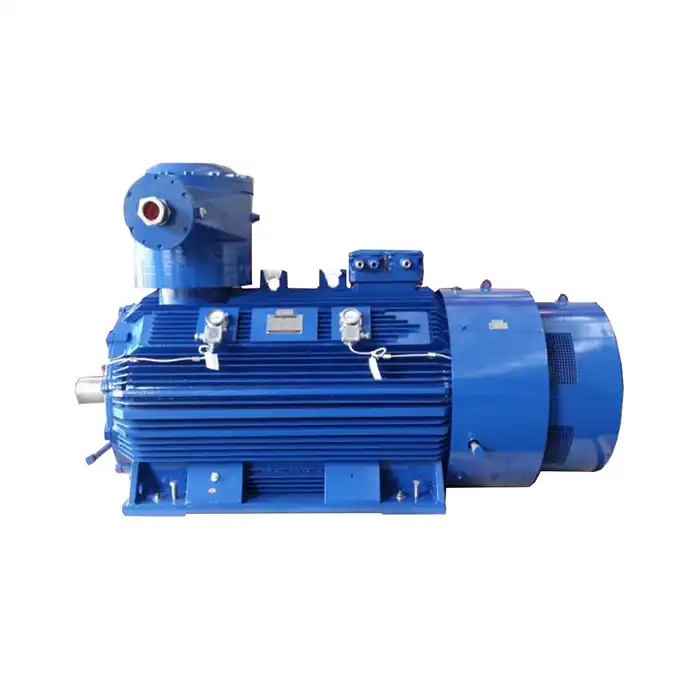
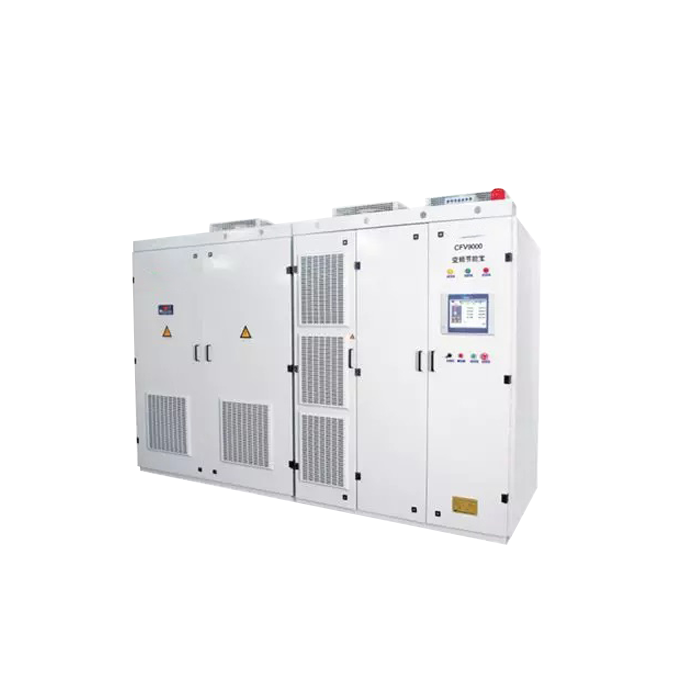
Voltage range:3000V±5%,3300V±5%,6000V±5%,6600V±5%,10000V±5%,11000V±5%
Power range:185-1800 kW
Application:compressors, water pumps, crushers, cutting machine tools, transportation machinery.
Advantage: wide modulation range, high efficiency and energy saving, low noise, long life, high reliability.
Others: SKF, NSK, FAG bearings can be replaced according to customer requirements.
How an Explosion Proof AC Motor Works in Hazardous Areas
What the Flameproof Enclosure Does
No effort is made to keep gas out of a flameproof explosion proof AC motor. Gas can get into the housing, and if it starts to burn inside, the enclosure will keep the pressure inside and keep the flame from spreading to the outside air. The rules for this "d" protection method are set by IEC 60079-1. The flame path, which is the small, precisely machined space between parts that fit together, like the end shield and the frame, is the most important part. As hot gasses move through that gap, they lose heat, which makes the motor too cool to light the mixture around it. The opening for the shaft and the terminal box work in the same way. That's why flame paths need to stay clean, and they shouldn't have any rust or dents.
Explosion Proof AC Motor vs. Standard AC Motor
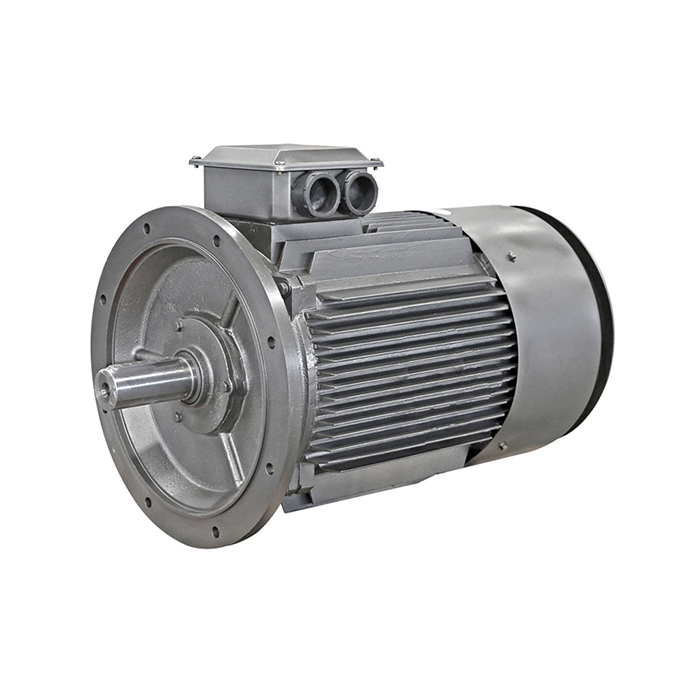
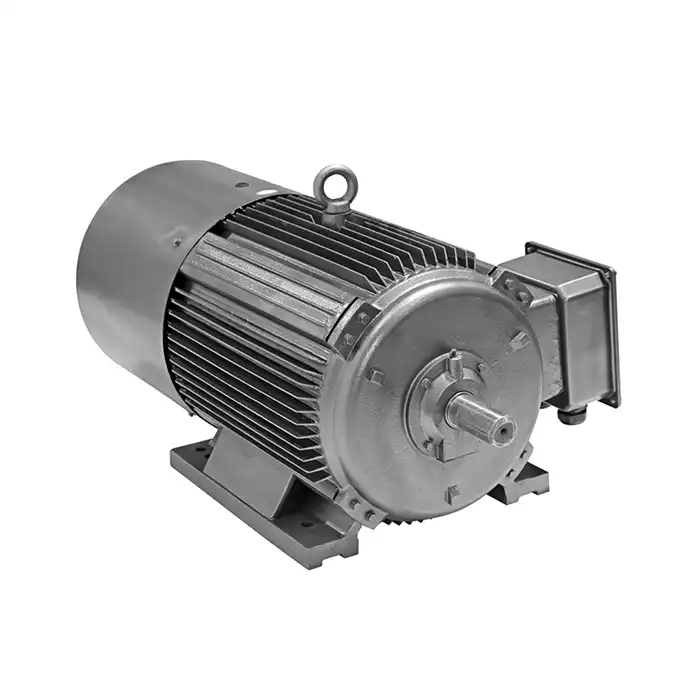
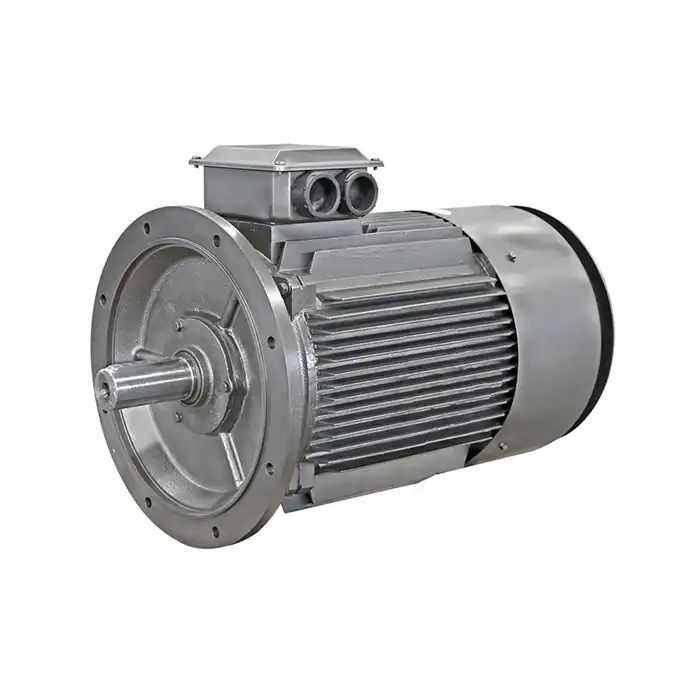
This type of motor can work well in a clean workshop, but it doesn't have a certified flame path, a controlled surface temperature, or a certified cable entry. Even if the frame size is the same, you can't put one up in a Zone 1 area. Fully enclosed fan-cooled construction, which is written as TEFC, is a way to cool a motor and keep dust and water out. It doesn't show that the area is safe. That can only be done with the nameplate marking and the matching certificate. With a cast iron frame and end shields, our explosion proof AC motor range is completely enclosed, self-cooling with fans, and squirrel cage style. Those features make it last longer, and the Ex mark lets you use it in a classified area.
The Parts Around the Motor Matter Too
The motor itself is certified, not everything that is connected to it. Cable glands, terminal boxes, brakes, encoders, and starters all need to be certified and match the level of protection for the motor. Load, ambient temperature, and duty cycle can also change the surface temperature. For example, a motor that is under a lot of load in a hot yard will run warmer than one that is on a test bench. IEC 60079-14 talks about how to choose and set up electrical equipment in places where there is a risk of explosion. It is important for buyers to remember that a certified motor with an uncertified gland is no longer a certified assembly. For operation to be safe, ventilation, proper installation, and regular inspection are still needed. Although the explosion proof AC motor reduces the risk of an explosion, it does not eliminate the danger.
Explosion Proof AC Motor Classifications and Certification Requirements
Zones, Gas Groups, and Temperature Classes
Ex d IIB T4 Gb is written in four separate parts. Ex d means protection against flames. IIB is the gas group, and ethylene is a member of it. The highest temperature on the surface is limited by T4 to 135°C. According to IEC 60079-0, Gb is the equipment protection level for Zone 1, which is where an explosive gas atmosphere is likely to appear sometimes during normal operation. Group IIC includes hydrogen and acetylene, which are the gasses that can catch fire the easiest, so it is the safer option. From T1 (450°C) to T6 (85°C), the temperature ranges. The limit you choose must be below the gas's ignition temperature at your site. Ask your safety engineer for the area classification drawing first before choosing an explosion proof AC motor from a top flameproof motor factory in china.
Certification Systems Are Not Interchangeable
The motor will need to be certified based on where it will be used. ATEX is based on Directive 2014/34/EU and applies to all equipment sold in Europe. In the US, the National Electrical Code (NFPA 70) controls dangerous areas using the Class and Division or Class and Zone methods. Usually, inspectors look for equipment that has been listed or labeled by a nationally recognized testing laboratory. One approval doesn't take the place of another. The ATEX and CCC certifications for our explosion proof AC motor. Tell us right away if your site, insurer, or authority needs a different listing. This way, we can make sure we have the right documents before you place your order.
Why IIC and IIB Should Never Be Mixed
Gasses IIC, IIB, and IIA can be used with a motor marked IIC. A motor marked IIB isn't made for IIC gasses. As the rule only works in one direction, going from IIC to IIB can fail a safety review and actually make it more likely that something will catch fire. When you order a spare, make a copy of the old nameplate's full marking and make sure that each explosion proof AC motor you get has it. This should include the gas group, temperature class, and Gb level. Our YBX3 range comes with both Ex d IIB T4 Gb and Ex d IIC T4 Gb marks, so make sure you clearly state the group on every order. There is a separate mark called Ex d I Mb that is only used for underground mining and not for refinery use.
Choosing and Buying an Explosion Proof AC Motor for Replacement
Match the Old Motor Before You Match the Price
Most replacement orders work or don't work based on fit. Before you approve the order, make sure you compare the installation dimensions, flange, shaft extension, and mounting type to the motor you want to get rid of. You can also ask for a dimensional drawing. After that, check the duty, power, speed, voltage, and number of poles. We have 2, 4, 6, and 8 poles, and our range goes from 0.55 kW to 630 kW. Ask for the labeling, certificates, and datasheet, and make sure that the nameplate and manual language will pass the acceptance check in your country. A like-for-like swap keeps the base from having to be changed, new connections made, and a new approval cycle started. Rather than just comparing prices, compare any explosion proof AC motor quote to the original nameplate.
XCMOTOR YBX3 Specifications at a Glance
Our YBX3 explosion proof AC motor is described in detail below.
- Electrical: Power from 0.55 kW to 630 kW at 50 Hz, with 2, 4, 6, or 8 poles. Voltages include 380 V, 400 V, 415 V, 660 V, and 1140 V, plus 380/660 V and 660/1140 V options, and other voltages can be customized. Insulation class is F or H, and efficiency class is IE2, IE3, or IE4.
- Build: Cast iron frame and end shields, copper windings, and corrosion-resistant paint. Protection class is IP55, IP56, or IP65. The motor is fully enclosed, self-fan cooled, and squirrel cage type. Bearings can be replaced with other well-known brands on request. Ask for the dimensional drawing to confirm flange and shaft details.
- Conditions: Ambient range of -20°C to +40°C, with extended ranges available, and altitude up to 1000 m, with derating for higher sites. Temperature rise class is B or F. Marks are Ex d I Mb, Ex d IIB T4 Gb, and Ex d IIC T4 Gb. Choose the mark that matches your area classification.
It only takes one pass for your electrical engineer to compare these numbers to site data and check the motor.
Voltage and Frequency for US Sites
The standard for YBX3 says 50 Hz, but most plants in the U.S. run on 60 Hz. That gap is important. It says that voltages can be changed in the product data, but it doesn't say what the standard 60 Hz rating is. Write to us and ask if a 60 Hz winding is available for your voltage. Before you approve a purchase order, make sure you understand the price and lead time. Any other custom option needs the same written confirmation. Check the delivery schedule, see if shipments can be split up, and find out how much time you need to prepare for planned shutdowns versus emergency repairs. A mismatched explosion proof AC motor can't reach your dock if you give clear answers up front.
Explosion Proof AC Motor Applications, Maintenance, and Supplier Checks
Where These Motors Run
In the oil, chemical, mining, metallurgy, electric power, and machinery industries, our YBX3 series works well in places where there are mixtures of explosive gasses. Some common places are oil refineries and petrochemical plants, chemical processing plants, factories that make paint and solvents, underground mines, and factories that make medicines. An explosion proof AC motor typically powers pumps, compressors, and fans close to process units and tank areas in a refinery. Grain elevators and flour mills are also on the list of products. Places with a lot of dust need extra care because the danger changes from gasses to layers of dust and the temperature of the surface. Before you order, make sure that the marking fits the real danger with your safety engineer and with us.
Maintenance and Inspection
Maintenance that is done right starts at the receiving dock. First, compare the certificate, voltage, frequency, temperature class, and cable entries to the purchase order. Then, compare the nameplate to the order. Record insulation resistance, grounding, rotation, alignment, vibration, and load current during commissioning so that you have starting points. Watch the temperature, vibration, noise, and current balance of the bearing and winding while it is running. IEC 60079-17 talks about checking and maintaining electrical systems in places where explosives are present. People who are trained should be the only ones who fix flameproof housings. Any explosion proof AC motor supplied by a flameproof ac motor supplier may have its certification revoked by drilling, welding, machining, or switching out parts. Those baseline readings also help with predictive maintenance, which means that the money saved on the purchase price can be used to improve monitoring of the condition.
What to Ask a Supplier Before You Order
There should be more than just a price in a quote. Ask who makes the explosion proof AC motor and whether you're buying from the manufacturer or a trader before you agree to the price. If you order the same model more than once, find out if the same materials and process are used each time. This way, the look and temperature rise will be the same from batch to batch. Precision milling, winding and insulation, assembly and balancing, testing and certification, final inspection and packaging are all parts of our production process. Get the test report, certificate numbers, and datasheet for the exact model you want. We at XCMOTOR sell original parts from well-known brands, let customers return items within 30 days, and are open on Saturdays and Sundays so that technical questions don't have to wait until Monday.
Conclusion
The nameplate marking, the matching certificate, and the site classification determine whether an explosion proof AC motor is acceptable. It protects a site by containing internal ignition and limiting surface temperature. The protection comes from the flameproof enclosure, not the cooling type, and all parts and installation must meet the same standard. Gas group IIC can't be switched out for gas group IIB, and certification systems like ATEX and the U.S. hazardous-location rules can't be used instead of each other. When replacing something, making sure that the dimensions, flange, shaft, voltage, and frequency are all the same saves time and effort. The YBX3 data shows what to check, including the power, poles, voltage, protection class, ambient range, and Ex marking. The approval stays valid for as long as the motor is in use as long as it is inspected regularly, fixed correctly, and the supplier gives clear answers.
FAQ
1. Are EC motors and air motors the same as an explosion proof ac motor?
No, an EC motor is switched on and off electronically, while an air motor runs on air pressure. Either type can be used in a dangerous area as long as it has the right certification. An alternating-current motor that is built and approved for a certain zone, gas group, and temperature class is called an explosion proof ac motor.
2. What does Ex d IIC T4 Gb mean?
Ex d means a flameproof container. IIC covers gasses like hydrogen and acetylene that are easy to set on fire. T4 keeps the temperature of the surface at 135°C. Gb means it's good for Zone 1. This kind of motor can also handle IIB gasses.
3. Can I replace an IIC motor with an IIB motor?
No, IIB equipment isn't made to handle IIC gasses. The swap lowers the level of safety and might not pass a safety review. Match the full marking on the old nameplate, or first get written permission from the safety authority.
4. Can a standard TEFC motor work in a classified area?
No, TEFC talks about the type of cooling and enclosure. For use in a hazardous area, you need an Ex mark and a certificate that matches your classification.
Request a Quote for the Right Explosion Proof AC Motor from XCMOTOR
Send your power, voltage, frequency, gas group, temperature class, mounting information, and quantity to xcmotors@163.com. XCMOTOR will compare them to our YBX3 range. We are an explosion proof AC motor supplier that offers free shipping, 30-day returns, and technical support on the weekends. Send us a picture of your nameplate and any certificate requirements, and we'll get back to you in writing. For more information on products, go to motorxc.com.
References
1. IEC 60079-0: Explosive Atmospheres – Part 0: Equipment – General Requirements (2017)
2. IEC 60079-1: Explosive Atmospheres – Part 1: Equipment Protection by Flameproof Enclosures "d" (2014)
3. IEC 60079-14: Explosive Atmospheres – Part 14: Electrical Installations Design, Selection and Erection (2013)
4. IEC 60079-17: Explosive Atmospheres – Part 17: Electrical Installations Inspection and Maintenance (2013)
5. NFPA 70: National Electrical Code (2023)
6. Directive 2014/34/EU of the European Parliament and of the Council, Official Journal of the European Union (2014)