



Why Cooling Design Matters in YE3 112M 2 Motor Operation
Cooling design matters in ye3 112m 2 motor operation because heat sets how long the winding insulation, bearings, and grease last. A 2-pole motor has a synchronous speed of 3,000 r/min at 50 Hz, so friction and electrical losses turn into heat fast. The fan, housing, and surrounding airflow must carry that heat away. When heat stays inside, winding temperature climbs, vibration can rise, and downtime follows. This guide explains how the cooling system works, what changes motor temperature, and what to check before you buy or install. I wrote it for engineers, buyers, and maintenance teams who need clear answers.

Series:YE3
Frame number: 80-450
Power range:
Protection level:IP55
Energy efficiency class: IE3
Voltage range: 380V,400V,415V,660V, etc.
Application:can be used in various fields of the national economy, such as machine tools,water pumps,fans,compressors,and can also be used in transportation, mixing, printing, agricultural machinery, food and other occasions that do not contain flammable, explosive or corrosive gases.
Certificate: international standard IEC60034-30 "Efficiency Classification of Single-speed Three-Phase Squirrel Cage Induction Motors".
Advantage:The high quality of the electric motor guarantees high operational reliability.
Others: SKF, NSK, FAG bearings can be replaced according to customer requirements.
Why Cooling Design Is Critical for the ye3 112m 2 Motor?
The Role of Cooling in a 4 kW, 2-Pole Motor
The ye3 112m 2 is commonly specified as a 4 kW, 2-pole, three-phase induction motor, so confirm power and speed on the nameplate and datasheet. Every motor loses some input energy as heat in the copper windings, the silicon steel core, the rotor, and the bearings. At 50 Hz, the 2-pole shaft turns at close to 3,000 r/min, so the bearings work hard. Cooling moves heat from the inside to the surrounding air. If it falls short, winding temperature rises past the limit of the F class insulation, which is rated at 155°C.
What Happens When Motor Heat Is Not Managed?
Heat damages a motor in stages. A common rule of thumb, repeated in U.S. Department of Energy motor guidance, says insulation life roughly halves for every 10°C above its rated temperature. Next, bearing grease thins and breaks down, which raises friction and vibration. Then the motor draws more current to do the same work, so energy cost climbs. Finally, a trip or winding failure stops the machine. On a small OEM line, one stopped spindle or fan can hold up an entire station, and a hot ye3 112m 2 winding is a common starting point for that chain of events.
What Engineers and Buyers Should Verify First
Before you compare prices, check the facts that set thermal behavior. Our series covers frame sizes 80 to 450, with IP55 protection, F class insulation, S1 continuous duty, and an ambient range of -15°C to +40°C. Voltage options include 380V, 400V, 415V, and 660V. Ask for the nameplate data, dimension drawing, and test report, and confirm the mounting type you need, such as B3, B5, or B35. If your site runs on 60 Hz power, ask us to confirm the rating first, because a 2-pole motor has a synchronous speed of 3,600 r/min at 60 Hz.
Understanding the Cooling Design of the ye3 112m 2 Motor
How the External Fan and Cast Iron Housing Remove Heat
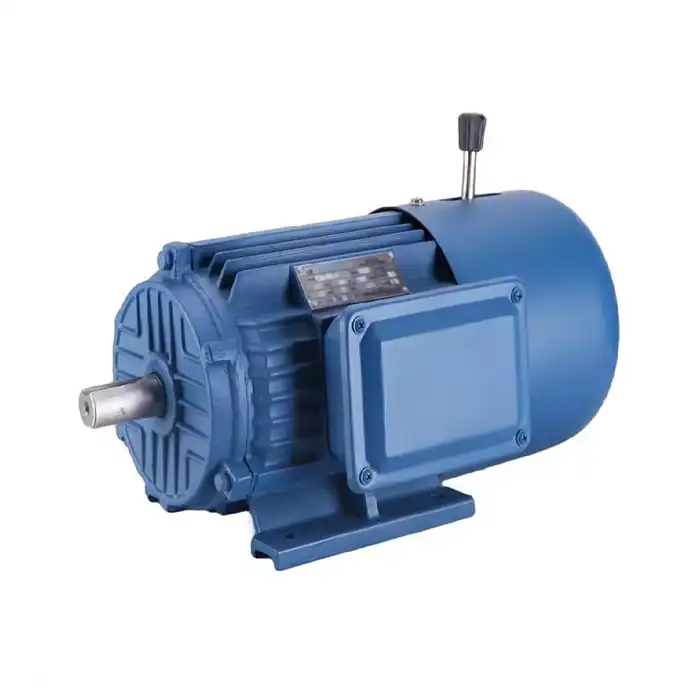
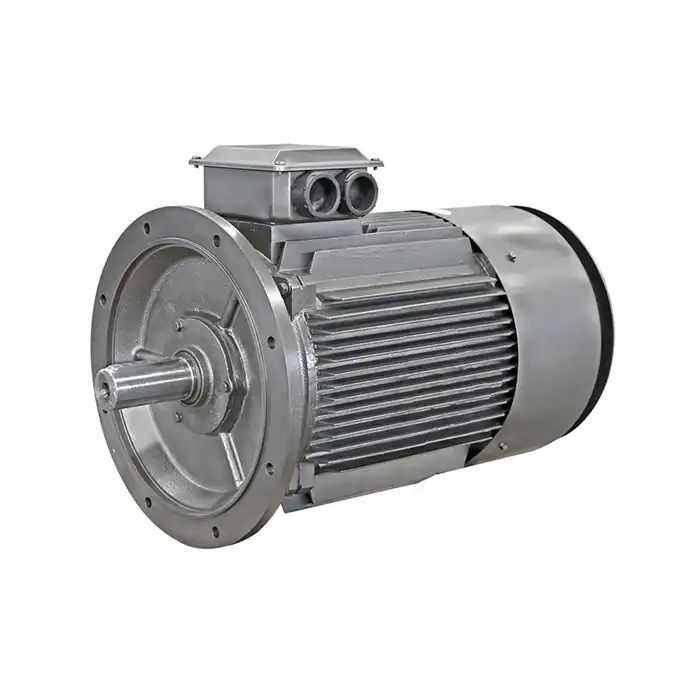
A standard ye3 112m 2 uses a fan mounted on the shaft at the non-drive end. The fan pulls air through the fan cover and pushes it along the ribs on the outside of the frame. Heat travels from the winding and core into the frame, then into the moving air. Our motors use a cast iron frame, which supports heat dissipation and adds durability. The ribs add surface area, so more heat reaches the air. Because the fan rides on the shaft, airflow rises and falls with motor speed. That detail matters when we discuss variable frequency drives.
TEFC and IC411 Cooling Explained
TEFC means totally enclosed, fan cooled. The enclosure keeps dust and moisture out of the windings. IP55, as defined in IEC 60034-5, means dust-protected and protected against water jets. IC411 is the IEC 60034-6 code for a surface-cooled motor with a shaft-mounted fan. The air inside stays inside, and outside air only touches the frame. That is why a dirty fan cover or clogged ribs can overheat a sealed motor. Our listing shows IP55, so please confirm the cooling code on the datasheet for the ye3 112m 2 enclosure you plan to order.
How Frame Size and Mounting Affect Thermal Performance
In the 112M name, 112 is the shaft height in millimeters, and M marks a medium frame length. Frame size sets the surface area available for shedding heat, so swapping to a smaller frame at the same power adds thermal risk. Mounting changes airflow too. A foot-mounted B3 motor needs open space around the fan cover. Flange-mounted B5 and combined B35 motors need clearance where they bolt to the machine and where the cover draws air. Keep walls, guards, and nearby equipment away from the air inlet, and follow the clearance shown on the dimension drawing.
How Operating Conditions Affect ye3 112m 2 Motor Temperature
Load, Torque, and Rated Speed
Copper loss grows with the square of current, so a motor running above its rated load heats up fast. A fan, pump, or spindle with hidden friction pulls extra current even when the machine looks normal. Compare the load curve of the driven equipment with the motor torque data. Fans and pumps usually load the shaft smoothly, while conveyors and compressors may need higher starting torque. Measure running current and compare it with the nameplate value instead of guessing. If steady current sits near or above the rating, the cooling system is fighting too much load.
Ambient Temperature, Altitude, and Enclosure Conditions
IEC 60034-1 sets standard conditions of up to 40°C ambient temperature and up to 1,000 meters altitude. Our ye3 112m 2 listing gives an ambient range of -15°C to +40°C. Hot rooms, enclosed cabinets, and high sites warm the cooling air or thin it, so the motor may need a lower load or a different design. Dust, lint, and oil can coat the ribs like a blanket. Humid or washdown areas call for a close look at the IP rating. If your site goes beyond the listed range, send us the details and we will review them before you order.
Duty Cycle, Frequent Starts, and VFD Operation
The listed duty type is S1, which means continuous running at a constant load. Machines that start and stop often add heat, because starting current runs several times higher than rated current and the rotor heats with each start. Allow rest time between starts, and ask us about allowed starts per hour. On a VFD, low speed cuts the airflow from the shaft-mounted fan, so a ye3 112m 2 can run hotter at the same load. Low-speed duty may call for a separate forced-ventilation fan. Please confirm inverter use with us before you place the order.
Common Cooling Problems and How to Verify Performance
Blocked Airflow and Incorrect Clearance
Wood dust, paper fiber, oil mist, and packaging debris collect on fan covers and ribs, and machine tool, woodworking, and packaging lines create exactly that mix. Even a thin layer on a ye3 112m 2 slows heat transfer. Poor clearance does the same. If the cover sits too close to a wall or guard, the fan recirculates warm air. Clean the cover screen and ribs on a set schedule using dry methods that suit the dust. Keep the inlet open and keep the motor away from furnaces and exhaust ducts. Plan clearance from the dimension drawing before the machine is built, not after the first hot day.
Overload, Undervoltage, and Phase Imbalance
Electrical faults add heat that no fan can fully remove. Overload raises current. Low supply voltage makes the motor draw more current for the same torque. Voltage imbalance between phases hurts more than many people expect: U.S. Department of Energy motor guidance reports that a 3.5% voltage imbalance can raise motor heating by about 25%. Measure all three phase voltages and currents, and set overload protection to the nameplate current. Mechanical friction adds heat too. A bent coupling, tight belt, or misaligned shaft loads the bearings and warms the drive end.
Baseline Measurements and Condition Monitoring
Surface temperature alone can mislead, since the winding runs hotter than the frame. Record a baseline when the motor is new and running steadily: ambient temperature, frame temperature, current, voltage, load, vibration, and running hours. Repeat the readings monthly or on an interval you set. Log them in a simple sheet that maintenance and purchasing can both read. An infrared thermometer shows hot spots, a vibration meter flags bearing wear, and an insulation resistance test shows winding condition before a failure. Set alarm and trip limits from the manufacturer datasheet, not from habit. A change from your baseline tells you more than any single reading.
Selecting and Installing the Right ye3 112m 2 Motor
Match the Motor to the Application
Start with the machine. Pumps, fans, compressors, conveyors, machine tools, and HVAC systems all appear on our application list, and each loads the motor differently. A fan has a smooth load. A compressor or conveyor may need higher starting torque. A machine tool spindle may start and stop often. Write down duty, starting frequency, speed control, and ambient conditions before you choose. Our series also serves mixing, printing, agricultural machinery, and food equipment where no flammable, explosive, or corrosive gas is present. A ye3 112m 2 does not suit explosive atmospheres.
Confirm Technical Parameters and Dimensions
Request a datasheet that lists rated power, voltage, frequency, current, speed, insulation class, IP rating, and duty. For mechanical fit, compare shaft diameter, keyway, frame height, mounting type, and flange size against your drawing. Our motors fall under the IEC 60034-30 efficiency classification as IE3, and we hold CE, ISO 9001:2015, and GOST certificates. Each motor goes through automated winding and final testing, and bearing brands can be changed on request. Ask about packaging and gross weight if you plan to ship in volume. Weigh total cost too, because a heat-related stop costs more than a small price gap on each ye3 112m 2 order.
Installation Checklist and Troubleshooting
Mount the motor on a rigid, level base. Align the shaft with the coupling, ground the frame, size the cable correctly, and check rotation before loading. Keep the fan cover clear. If the motor runs hot, check in this order: current against nameplate, airflow around the cover and ribs, voltage balance, bearings and coupling, belt tension, and drive settings. Stop the motor at once if you see smoke, smell burning, feel severe vibration, or hit repeated trips. Send us the nameplate data, measurements, photos, and fault history, and our team can help narrow down the cause.
Conclusion
Heat decides how long a ye3 112m 2 motor runs without trouble. The motor sheds heat through a shaft-mounted fan, a ribbed cast iron frame, and a TEFC enclosure, so clean airflow and proper clearance matter as much as the nameplate. Load, ambient temperature, altitude, starting frequency, and VFD operation all change how much heat builds up, and electrical or mechanical faults add more. Baseline measurements, regular cleaning, and clear alarm limits catch problems early. Matching the motor to its application and confirming parameters, dimensions, and mounting before purchase keeps the cooling design working as intended and lowers the risk of downtime.
FAQ
1. What cooling method does a ye3 112m 2 motor use?
Many standard versions use TEFC construction with IC411 cooling, which means a shaft-mounted fan blows air over the ribbed frame. Confirm the exact configuration on the nameplate and datasheet.
2. Why does my ye3 112m 2 motor run hot when it is not overloaded?
Check airflow, ambient temperature, voltage balance, bearing friction, and drive settings. Any of them can add heat even when the load looks normal.
3. Can a ye3 112m 2 run on a VFD?
Ask us to confirm before ordering. Slow speed reduces fan airflow, so forced ventilation may be needed for low-speed duty.
4. How often should I inspect the cooling system?
Inspect more often in dusty areas such as woodworking or packaging lines, and compare readings with your baseline each time.
5. What should I include in a ye3 112m 2 quotation request?
Send voltage, frequency, mounting type, protection level, operating environment, quantity, application, destination, and target delivery date.
Contact XCMOTOR for a ye3 112m 2 Datasheet or Quotation
Send your ye3 112m 2 requirements to XCMOTOR at xcmotors@163.com, and our team will review them with you. As a ye3 112m 2 supplier, we offer original products, free delivery, 30 days returns, and support on Saturday and Sunday. Share your voltage, frequency, mounting type, and quantity, and we will reply with a datasheet and dimension drawing.
References
1. IEC 60034-6, Rotating Electrical Machines – Methods of Cooling (IC Code), 1991
2. IEC 60034-5, Rotating Electrical Machines – Degrees of Protection Provided by the Integral Design (IP Code), 2020
3. IEC 60034-1, Rotating Electrical Machines – Rating and Performance, 2022
4. IEC 60034-30-1, Efficiency Classes of Line Operated AC Motors (IE Code), 2014
5. U.S. Department of Energy, Improving Motor and Drive System Performance: A Sourcebook for Industry, 2014
6. NEMA MG 1, Motors and Generators, 2016