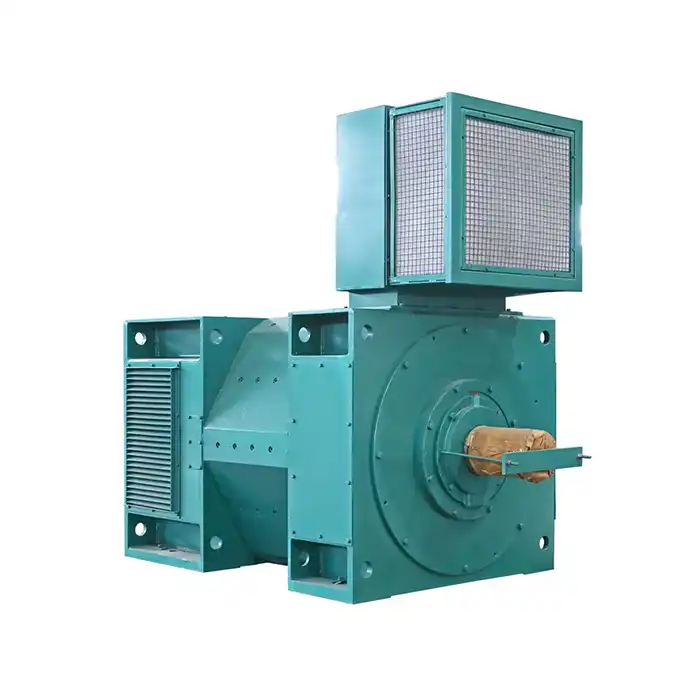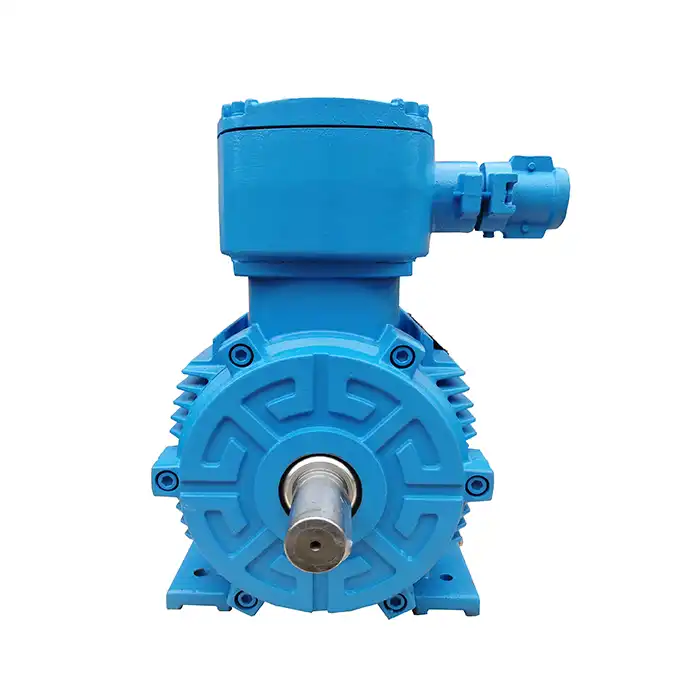




Why Choose a High-Voltage Increased-Safety Motor for Hazardous Areas?
A high-voltage increased-safety motor is suitable for hazardous places, since it does not produce arcs, sparks or hot surfaces that might cause ignition during normal operation. The insulation is thicker, the creepage and clearance distances are bigger, the terminal box is covered and the thermal protection is adjusted to the motor tE time. It uses a lot less current than a low voltage motor of the same horse power. This is of use with large pumps, fans and compressors. The voltage varies between 3 kV and 11 kV. This book has been prepared for engineers and OEM buyers who seek clear criteria on how to pick suppliers, a means to compare them in a practical manner and record inspections.

Voltage range:3000V±5%,3300V±5%,6000V±5%,6600V±5%,10000V±5%,11000V±5%
Power range:200-6300 kW
Application:fans, water pumps, compressors, crushers, cutting machine tools, transportation machinery, etc.
Advantage:low noise, low vibration, long service life, easy installation and maintenance.
Standard: This series of products complies with JJB/T12730 and JB/T12729 standards.
Others: SKF, NSK, FAG bearings can be replaced according to customer requirements.
What Is a High-Voltage Increased-Safety Motor?
How Increased Safety Protection Works
More safety, represented by a "e", is about not letting things happen. IEC 60079-7 offers guidance to designers on how to prevent devices generating arcs, sparks or harmful temperatures while not in operation. It applies to equipment with a voltage rating up to 11 kV. For this purpose the builders employ better insulation for the windings, larger distances for creepage and clearance, safe terminal connections and restrictions for the surface temperature. Also protection from the heat is vital. When a locked-rotor condition occurs, the motor must trip within the tE time before the winding becomes too hot. These regulations are applied to a high-voltage increased-safety motor because the insulation and terminals are subjected to more electrical stress than in a low-voltage machine. I constantly advise folks when they purchase anything to read the certificate and the Exe label.
Where These Motors Run
It is possible for explosive gas to appear in Zones 1 and 2, which are where Ex e motors are designed to work. The equipment needs to be protected to level Gb in zone 1. Most of the time, it says Ex e II T4 Gb. The surface industries are in Group II, the surface temperature is limited to 135 °C by T4, and the protection level is given by Gb. Facilities for oil and gas, chemicals and petrochemicals, mining, pulp and paper mills, and water treatment plants are all on the list. There are typically pumps, compressors, and fans powered by a high-voltage increased-safety motor. Before you order, compare the temperature class of your gas ignition to the temperature class you have.
The YAKK Series at a Glance
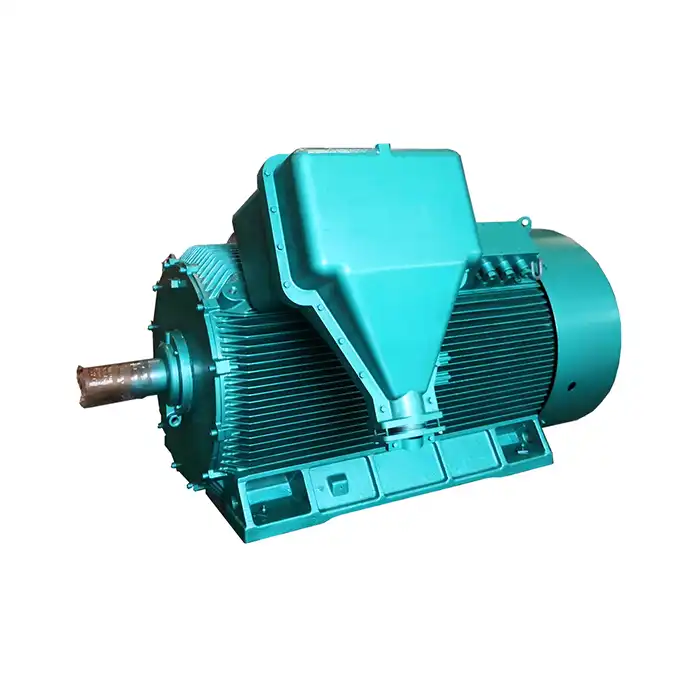
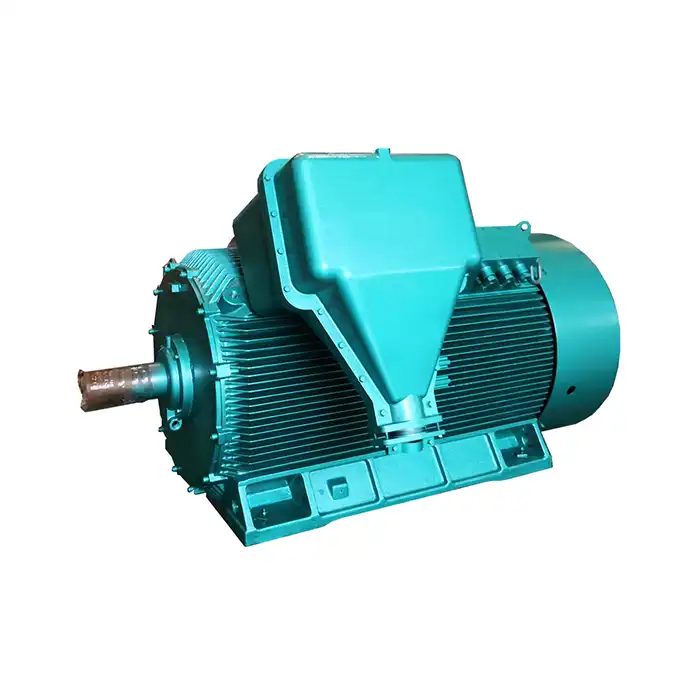
A high-voltage increased-safety motor line from XCMOTOR is the YAKK series. The six voltages it has are 3000 V, 3300 V, 6000 V, 6600 V, 10000 V, and 11000 V. Each one has a ±5% tolerance. Power ranges from 200 kW to 3550 kW, and speed ranges from 500 rpm to 3000 rpm. The rotor is perfectly balanced, the frame is made of strong cast iron, and the electrical stress is handled by a reinforced winding insulation system. Protection is IP55 or IP56, and higher ratings can be asked for. Insulation is Class F, and Class H can be added if needed. Cooling is IC611. Some examples of uses are air conditioners, compressors, water pumps, crushers, cutting tools, and transportation tools. They list IEC 60079-0, IEC 60079-7, ATEX, IECEx, and ISO 9001:2015 and follow GB 10068.
High-Voltage Increased-Safety Motor vs. Other Motor Options
Compared With Ordinary High-Voltage Motors
There is no certified way to keep an ordinary high-voltage motor from starting on fire. It shouldn't be in a classified area because no one checked the wires, terminal box, or surface temperature for flammable gas. A high-voltage increased-safety motor costs more because it takes longer to build and has more paperwork, but it comes with a certificate that plant owners and inspectors can check. That certificate keeps the whole package safe for an OEM. The buyer can reject your compressor or pump skid if it gets to a dangerous site with an uncertified drive motor. Make sure you have the certificate before you freeze the mechanical design. Changes to the frame and terminal box can affect how the interfaces work.
Compared With Flameproof Ex d Motors
An ex d motor goes in a different direction. A flameproof enclosure keeps an explosion inside and keeps flames from spreading to the air outside. In the first place, ex e stops ignition sources from happening. In every case, neither idea wins. Ex d can be used for jobs where arcing or hot parts are hard to rule out. On the other hand, a high-voltage increased-safety motor is usually best for continuous-duty machines that have a clear way to start up and tE-based protection. There are also other ideas, like Ex p pressurization or Ex ec for Zone 2. If I have to choose one, I look at the zone, gas group, starting duty, and maintenance access.
Why Medium Voltage Suits Large Loads
The higher the voltage the less the current. Taking 6600 divided by 690 gives you 9.6. That example, a 6.6 kV motor will consume roughly a tenth of the current of a 690 V motor of the same output and power factor. The lower the current the smaller the cables and the lower the voltage drop on long runs from the substation. This is critical for huge fans, compressors and pumps. But voltage alone does not make a motor safer. The insulation, cooling, loading, protection settings and quality of installation still have an influence on the behavior of any high-voltage increased-safety motor in service. That is why I study every motor's complete spec before checking pricing.
How to Select the Right High-Voltage Increased-Safety Motor
Match Voltage, Power, and Speed to the Project
Start with the plant grid when selecting a high-voltage increased-safety motor. Choose a voltage range from the YAKK series: 3000V, 3300V, 6000V, 6600V, 10000V, 11000V. Each range has a +/ - 5 % tolerance . So make sure your project voltage is in one of those ranges . If you have a site that uses a level not on this list, please contact a high-voltage increased-safety motor factory direct so we can see if we can build unique design. The motor should be between 200 and 3550 kW and between 500 and 3000 rpm. You have to check beginning current , torque , inertia , time to accelerate and sag in voltage . That’s because a powerful engine may drag a weak grid down when it boots up. In your query you need provide your supply frequency, altitude, ambient temperature and duty cycle.
Interfaces, Cooling, and Enclosure
Fit is what OEM teams care about most. That way, the motor will line up with your base frame the first time you use it. Send the foot dimensions, shaft extension, coupling type, and airflow space. The YAKK series uses IC611 cooling, which is an air-to-air system. This means that there are no cooling water pipes running to the motor, which makes installation easier on-site. Protection for the enclosure is IP55 or IP56, and higher ratings can be requested. Ask for a drawing review before production starts because the location of the terminal box can affect the layout of the skid. Anyone can ask for a different brand of bearing, which is helpful if your spares list already lists a preferred bearing for the high-voltage increased-safety motor.
Temperature Class and Starting Method
The surface of the motor must stay below the temperature at which the gas will ignite. T4 only lets the surface get to 135 °C, while T3 lets it get to 200 °C. Class F insulation, or Class H if you want, tells you how much heat the winding can handle. Temperature class, on the other hand, tells you about the outside, so they are two different checks. The way you start changes the picture of the heat. There are different ways that across-the-line starts, soft starters, and variable frequency drives load the winding. Please let us know before you place your order if you plan to use a drive and make sure that the certificate covers drive operation. This is how you set the protection relay for your high-voltage increased-safety motor to the tE time on the certificate.
Certifications, Testing, and Documentation to Verify
Reading the Ex Marking and Certificate
A marking like Ex e II T4 Gb notifies you about the idea of protection, the gas group, the temperature class and the equipment protection level. The certificate will include data like the certificate number, its period of validity, the ambient range and any particular conditions of usage. Be sure each item is suitable for your zone, gas and site temperature. A data sheet that shows a motor fulfills a standard is not the same as a certificate number you can verify. Ask XCMOTOR for the latest certificate, drawings, information for the terminal box, manuals and test results of the precise high voltage higher safety motor type you desire.
Standards and US Acceptance
It is ATEX and IECEx certified, IEC 60079-0 and IEC 60079-7 for intrinsic safety and ISO 9001:2015 for quality management. In the US, we follow the National Electrical Code (NFPA 70). This code has a provision in Article 505 regarding the zone system, and refers to high strength equipment as AEx e. The body that controls the site will select which listing or permission it will accept so ask the inspector early and let us know what they say. For Europe destinations you need an ATEX certificate. You require EAC Ex certificate in nations of Eurasian Economic Union in compliance with TR CU 012/2011. There are numerous types whereby every market requires a high voltage enhanced safety motor.
Factory Tests and Records to Request
Every YAKK motor is tested no-load, full-load and vibration. If you purchase from an OEM you should request the type test reports and the routine test record for each serial number. Compare the insulation resistance statistics, vibration and noise measured to your request. Some OEM requirements specify shaft vibrations can’t be higher than 2.8 mm/s. YAKK series follow GB 10068. Want the actual numbers? Don’t listen to generalities. You may compare batches using serial numbers to check that the winding quality is the same on all the high-voltage increased-safety motors in a delivery.
Installation, Maintenance, and Supplier Evaluation
Installation and Commissioning Checks
If the installation no longer maintains that, then the protection is no longer certified. The manual and electrical standards of the project should be followed by trained people. IEC 60079-14 covers design, selection and installation in explosive atmospheres. Pay attention to cable glands, sealing, earthing and bonding, terminal tightness, alignment and make sure that air can flow freely around the IC611 cooler. Before initial start, record insulation resistance, rotation, lubrication and vibration data. The next time you make additional checks, those data might assist you compare items. Think about how you will move and lift items too. Get a price for the YAKK high voltage increased safety motor and find out how much it weighs, where it can be lifted and how it will be packaged.
Maintenance Routine
A simple technique may find most issues early. Regularly check the temperature and vibration patterns, the quality of the bearings, the cooling channels, the cable entry and the tightness of the connections. Keep the cooler and the fence clean so air may pass through. Replace only defective parts with permitted parts and do not modify a certified motor without the manufacturer's approval, since this may breach the protection concept. Please write down each serial number. Then the service experts can detect faults faster and the supplier has all the information needed if there is a warranty question.” You should ask the provider what components do they have in stock for your high voltage higher safety motor .
Evaluating a Supplier and Requesting a Quote
A good supplier is more than simply a trader. Ask about experience on Ex-e certificate. Ask about winding and isolating the rotor. Ask about balancing the rotor. Ask about routine and type testing. Ask about traceability. Ask about replacement parts. Ask about assistance with commissioning. Review export documentation, warranty language, and turnaround time for technical updates. Please provide the following details to receive a precise quote: Voltage, Frequency, Power, Speed, Duty, Zone, Group of gas, Temperature Class, Starting technique, Mounting arrangement, Ambient circumstances, Inspection demands, Delivery location, Warranty expectations. The lifting and transport lines must be priced individually and are not included in the price of the motor. If your terminal arrangement or base is not standard, please let us know and we will look into bespoke possibilities for the high voltage higher safety motor.
Conclusion
The increased-safety motor for high voltage is spark-free due to the better insulation, larger creepage and clearance distances, secure connections, regulated surface temperature and thermal protection according to the tE time. Unlike Ex d, it is not designed for containment, but for prevention. It is also certified for a risky region, unlike a conventional motor. Large loads demand less current between 3 and 11 kilovolts. However the optimal voltage is also influenced by the zone, gas group, temperature class, starting technique, interfaces and cooling. If a motor is eligible to go into service, it is based on its certificate scope, test records and local acceptance regulations, e.g. National Electrical Code for US locations. That protection is still there because of meticulous installation, recorded maintenance, and a source that can really handle engineering and documentation for a high-voltage increased-safety motor.
FAQ
1. Is an Ex e motor suitable for Zone 1?
Yes, as long as the certificate shows that the protection level is Gb and the temperature class is right for your gas. Read the whole mark, not just the Ex e label.
2. What is the difference between Ex e and Ex d?
Ex e stops arcs, sparks, and hot spots from happening. Ex d has an internal explosion that is contained in a flameproof enclosure that stops the flame from spreading. Based on the zone, gas group, and starting duty, the best fit will vary.
3. Does the YAKK series need cooling water?
No, it doesn't have any cooling water pipes connected to the motor because it uses IC611 air-to-air cooling.
4. Can a variable frequency drive run an Ex e motor?
Only if the certificate lets you use the drive. Before you order, let us know what kind of drive it is so we can look it over with you.
5. What should I send for a quotation?
Type of voltage, frequency, power, speed, duty, zone, gas group, temperature class, starting method, mounting information, and delivery site should all be sent. We can check the interface better if you draw your base frame and shaft extension.
Request a High-Voltage Increased-Safety Motor Proposal from XCMOTOR
Write down your voltage, power, zone, and interface drawings and email them to xcmotors@163.com. As a high-voltage increased-safety motor supplier, our team will look over your project. We deliver all of our products for free, let you return items for 30 days, and offer support on Saturdays and Sundays. To learn more about the YAKK series, go to motorxc.com and ask for the datasheet, certificate scope, and delivery schedule that you need.
References
1. IEC 60079-7, Explosive Atmospheres – Part 7: Equipment Protection by Increased Safety "e", 2017
2. IEC 60079-0, Explosive Atmospheres – Part 0: Equipment – General Requirements, 2017
3. IEC 60079-14, Explosive Atmospheres – Part 14: Electrical Installations Design, Selection and Erection, 2013
4. NFPA 70, National Electrical Code, 2023
5. Directive 2014/34/EU of the European Parliament and of the Council on Equipment for Use in Potentially Explosive Atmospheres, 2014
6. IEC 60034-14, Rotating Electrical Machines – Part 14: Mechanical Vibration of Certain Machines with Shaft Heights 56 mm and Higher, 2018