



Key Features to Look for in a Explosion Proof Motor
The key features to look for in an explosion proof motor are a flameproof enclosure, a marking that matches your hazardous area, a suitable temperature class, the right ingress protection, and electrical ratings that fit your supply. A well-chosen explosion proof ac motor also needs sound bearings, good insulation, and documents you can verify. I wrote this guide for buyers who replace motors one for one and cannot accept a mismatch in markings or dimensions. Each section explains one feature in plain terms, so your engineers and safety team can check a motor before it arrives.

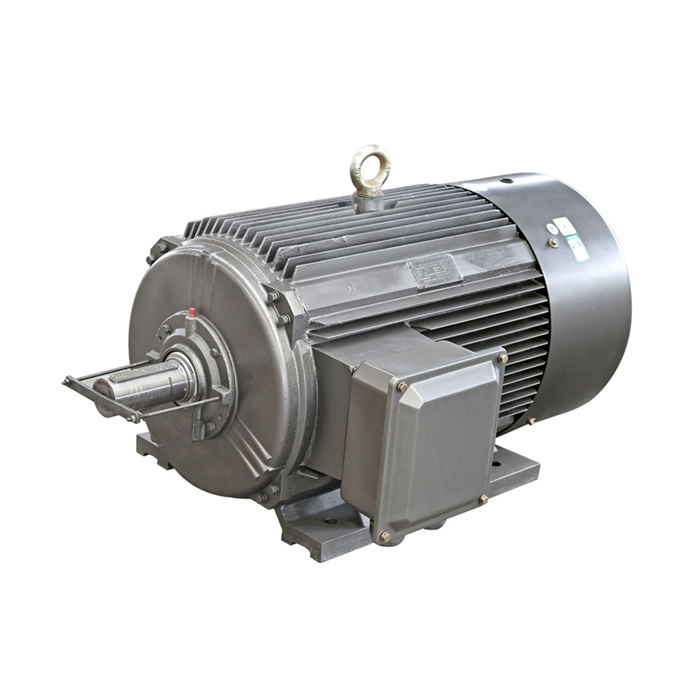
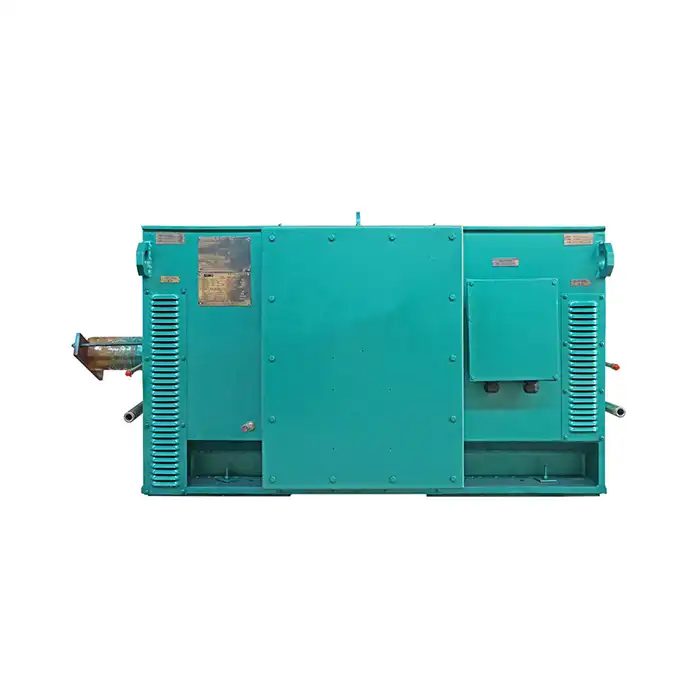
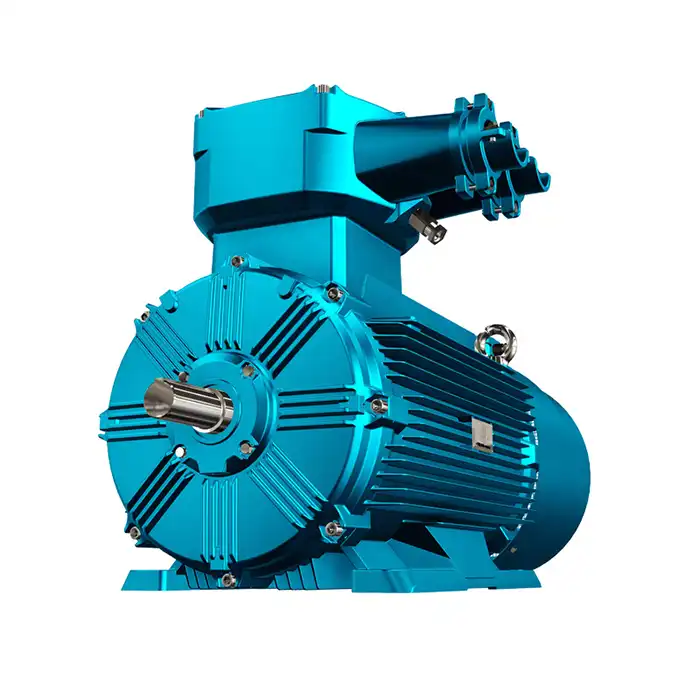
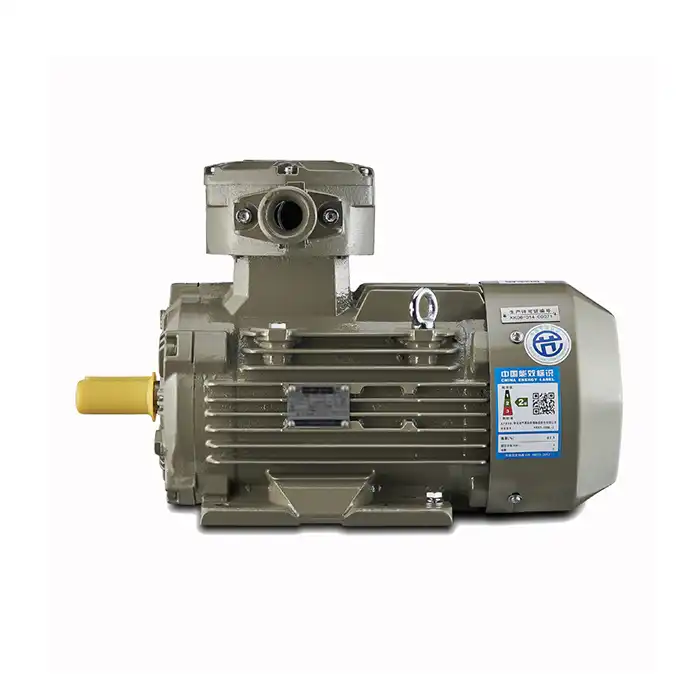
Series:YBX3
Voltage range:380V,660V,415V,380/660V,660/1140V
Power range:0.55-630 kW
Application:places where explosive gas mixtures exist in petroleum, chemical, mining, metallurgy, electric power, machinery and other industries.
Advantage: fully enclosed, self-fan cooling, squirrel cage type, high efficiency.
Explosion-proof mark: Ex d I Mb, Ex d IIB T4 Gb, Ex d IIC T4 Gb
Others: SKF, NSK, FAG bearings can be replaced according to customer requirements.
Core Safety Features of an Explosion Proof AC Motor
Flameproof Enclosure and Rugged Frame
The first feature I check on any explosion proof ac motor is the flameproof enclosure, marked "d." IEC 60079-1 describes this protection type. If gas enters the housing and ignites, the enclosure withstands the internal pressure. Tight, precisely machined joints cool the hot gases as they escape, so the flame does not reach the atmosphere outside. XCMOTOR's YBX3 series uses a cast iron frame and end shields, and corrosion-resistant paint protects the surface in harsh sites. Inspect the joint surfaces, the cover bolts, and the cable entry when the motor arrives. Never drill, grind, or repaint flame paths in the field. A small change to a joint can void the certificate and put your site at risk.
Hazardous Area Classification and Certificates
Certification starts with your site, not with the motor. Engineers first classify the area by the substance present, such as gas, vapor, or dust, and by how likely it is to appear. Under the IEC system, gas areas are split into Zones 0, 1, and 2. In the United States, NFPA 70, the National Electrical Code, uses Class, Division, and Zone methods. The motor marking must match that classification. Our explosion proof ac motor range lists ATEX certification and CCC certification for the Chinese market. I advise buyers to request the certificate number, the scope, and any special conditions of use. Your inspector or insurer decides which listings they accept. If your project requires a UL listing, tell us before ordering so our team can confirm which documents apply.
How to Read Ex d Marks on an Explosion Proof AC Motor?
A marking looks like code, but each part has a meaning. "Ex d" means flameproof enclosure. "I Mb" means Group I, for mines with firedamp. "IIB" and "IIC" are gas groups for surface industries, and IIC covers the most easily ignited gases, including hydrogen and acetylene. "T4" limits the surface temperature to 135°C. "Gb" is the protection level for Zone 1. XCMOTOR lists three marks for this series: Ex d I Mb, Ex d IIB T4 Gb, and Ex d IIC T4 Gb. Here is the rule I give maintenance teams: equipment marked IIC can serve in IIB areas, but IIB equipment cannot serve in IIC areas. Check the nameplate against your purchase order, because a downgrade or a mixed batch can fail a safety review top flameproof motor factory in china.
Thermal and Environmental Protection for an Explosion Proof AC Motor
Temperature Class and Surface Temperature
Temperature class sets the highest surface temperature the motor may reach. T4 means 135°C, so the surrounding gas must ignite at a higher temperature than that limit. Several conditions push a motor toward its limit: overload, voltage imbalance, blocked airflow, frequent starts, and high ambient heat. The YBX3 data lists an ambient range of -20°C to +40°C, with extended ranges available, and an altitude limit of 1000 m, with derating for higher sites. If your plant sits outside those conditions, state the real values in your inquiry. Our technical team can then check the rating before you order. An explosion proof ac motor that ignores your ambient temperature is a risk, however good its certificate looks.
IP Rating and Self-Fan Cooling
The IP rating tells you how well the enclosure resists dust and water. IEC 60034-5 defines the code for rotating machines. This series is offered in IP55, IP56, and IP65. IP65 is dust-tight, while IP55 and IP56 are dust protected, and the second digit shows resistance to water jets. An IP rating never replaces hazardous-area certification, so read both. Each explosion proof ac motor in this series is fully enclosed with self-fan cooling. A fan on the shaft pushes air over the outside of the frame, and no outside air enters the motor. Keep the fan cover and frame fins clear of dirt, paint, and insulation wrap, because blocked airflow raises the temperature.
Insulation Class and Temperature Rise
Insulation protects the winding, and heat wears it out first. The YBX3 series offers insulation class F or H and temperature rise class B or F. Class F insulation is rated for 155°C and class H for 180°C. A lower temperature rise generally leaves more margin between the winding and its limit, which helps when the motor runs hot for long hours. The windings use copper. Repeat buyers often worry that two batches of the same model may run at different temperatures. To reduce that risk, ask the supplier to keep the same design and process on every order, and request test data for each batch. A consistent explosion proof ac motor makes the safety department's review much quicker.
Electrical Ratings and Long-Term Reliability of an Explosion Proof AC Motor
Voltage, Power, and Frequency Range
Match the electrical data first. The YBX3 series covers 0.55 kW to 630 kW. Voltages are 380V, 400V, 415V, 660V, and 1140V, with customization available, and dual ratings such as 380/660V and 660/1140V appear in the range. Frequency is 50 Hz, and the pole options are 2, 4, 6, and 8. The motors are squirrel cage type and fully enclosed. Most US plants run on 60 Hz, so I ask American buyers to state their supply frequency in the first message. Our team can then confirm whether a suitable explosion proof ac motor configuration exists, along with lead time and price. Do not assume a 50 Hz motor will run correctly on a 60 Hz supply.
Bearings, Windings, and Service Life
Enclosure certification does not guarantee a long service life. Bearings, windings, and balance decide how long a motor runs between repairs. The series uses copper windings and high-quality bearings, and well-known international bearing brands can be specified on request. Check the bearing type, lubrication interval, and sealing against the load, whether that is a pump, a fan, or a belt drive. Ask for factory test records, including vibration and temperature rise. XCMOTOR's production process covers precision machining, winding and insulation application, assembly and balancing, testing and certification, and final inspection. Good maintenance access and a written lubrication schedule also extend the life of an explosion proof ac motor, so request the manual before installation.
Dimensions and Direct Replacement Fit
A motor with the same kilowatt rating is not always a direct replacement. For one-for-one swaps, compare frame size, mounting type, shaft diameter, keyway, flange, terminal box position, and cable entry direction. A mismatch forces base plate changes, coupling work, or new conduit runs, and any field modification can affect the certification. Send a nameplate photo and a dimension drawing with your inquiry, and our team will compare them against the YBX3 data. Ask early about nameplate and manual language, since your local inspectors need documents they can read. Confirming these points in writing before the order avoids rework at installation and keeps your explosion proof ac motor swap on schedule.
Selecting and Verifying the Right Explosion Proof AC Motor
Matching Applications to Motor Features
The application decides the specification. This series serves petroleum, chemical, mining, metallurgy, electric power, and machinery industries, wherever explosive gas mixtures exist. Refineries and chemical plants need the correct gas group and temperature class, plus corrosion-resistant finishes. Underground mines use Group I equipment, so the Ex d I Mb mark applies there. Paint and solvent plants and pharmaceutical plants need accurate vapor classification. Grain elevators and flour mills involve combustible dust, so confirm the dust marking your site requires before relying on a gas-group mark. Each site has its own rules, and your safety department should approve the final choice of explosion proof ac motor from a dust proof ac motor factory china.
Comparing Flameproof and Other Protection Methods
Terms differ by region. In the United States, NFPA 70 uses "explosion-proof" for equipment in Class I, Division 1 locations. IEC and ATEX documents use "flameproof" and the "d" mark. The two systems overlap but are not interchangeable, so compare the actual markings and installation rules rather than the names. Other protection types exist, such as increased safety and non-sparking designs, and they suit different zones and conditions. A standard industrial motor must never go into a classified area, even if the housing looks heavy. Ask your supplier to explain which protection concept the nameplate shows and which zones it covers.
Supplier Verification and a Practical Buying Checklist
Verification protects you before the order, not after it. I suggest four steps. First, request certificate numbers and check the scope against your required marking. Second, ask for a nameplate sample and a datasheet. Third, request routine test records, such as winding resistance, insulation resistance, no-load test, vibration, and temperature rise. Fourth, confirm that repeat orders use the same design and process. When you send an inquiry, include the area classification, gas group, temperature class, power, voltage, frequency, poles, mounting, quantity, and needed delivery date. Compare total value, including documents, support, and repeat consistency, and not unit price alone.
Conclusion
Choosing an explosion proof ac motor starts with the site. The area classification sets the gas group, temperature class, and protection level, and the nameplate must match each one; an IIC area cannot accept IIB equipment. The flameproof enclosure, cast iron frame, and untouched flame paths form the safety design, while IP rating, self-fan cooling, insulation, and ambient limits decide how the motor handles its duty. Voltage, power, frequency, and frame dimensions decide whether the unit fits the plant. Bearings, windings, and consistent test records indicate how long it will last. Application needs, regional terms, and verified certificates then confirm the choice. A motor that passes these checks gives the safety team clear evidence and the maintenance team a straightforward replacement.
FAQ
1. Is an explosion proof ac motor the same as a standard motor with a thick housing?
No. It has a certified flameproof enclosure with controlled joints, and its nameplate carries an Ex marking. A thick housing alone has no certification.
2. Can I install an IIB motor in an IIC area?
No. IIC gases ignite more easily, so an IIB motor would be a downgrade. An IIC motor can serve in IIB areas.
3. Does an IP65 rating make a motor suitable for hazardous areas?
No. The IP code describes dust and water protection only. Suitability depends on the Ex marking, the certificate, and your area classification.
4. Does the YBX3 series support 60 Hz?
The standard data lists 50 Hz. Please state your supply frequency before ordering, and our team will confirm what is available.
5. What should I send with an explosion proof ac motor inquiry?
Send the nameplate photo, area classification, gas group, temperature class, power, voltage, poles, mounting dimensions, quantity, and delivery date.
Request an Explosion Proof AC Motor Quote from XCMOTOR
XCMOTOR supplies explosion proof ac motor models from 0.55 kW to 630 kW, with original products, free delivery, a 30-day return policy, and support on Saturdays and Sundays. As an explosion proof ac motor supplier, we can check your nameplate, marking, and dimensions before you order. Email your requirements to xcmotors@163.com for product details.
References
1. IEC 60079-0: Explosive Atmospheres – Part 0: Equipment – General Requirements, 2017
2. IEC 60079-1: Explosive Atmospheres – Part 1: Equipment Protection by Flameproof Enclosures "d", 2014
3. IEC 60079-10-1: Explosive Atmospheres – Part 10-1: Classification of Areas – Explosive Gas Atmospheres, 2015
4. IEC 60034-5: Rotating Electrical Machines – Part 5: Degrees of Protection Provided by the Integral Design of Rotating Electrical Machines (IP Code), 2020
5. NFPA 70: National Electrical Code, 2023
6. Directive 2014/34/EU of the European Parliament and of the Council on Equipment and Protective Systems Intended for Use in Potentially Explosive Atmospheres, 2014