



What Is a T series synchronous motor and How Does It Work?
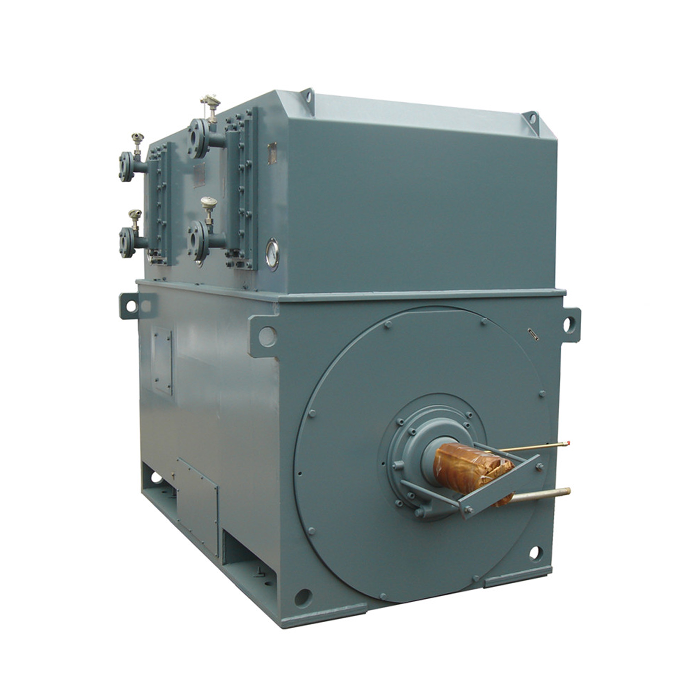
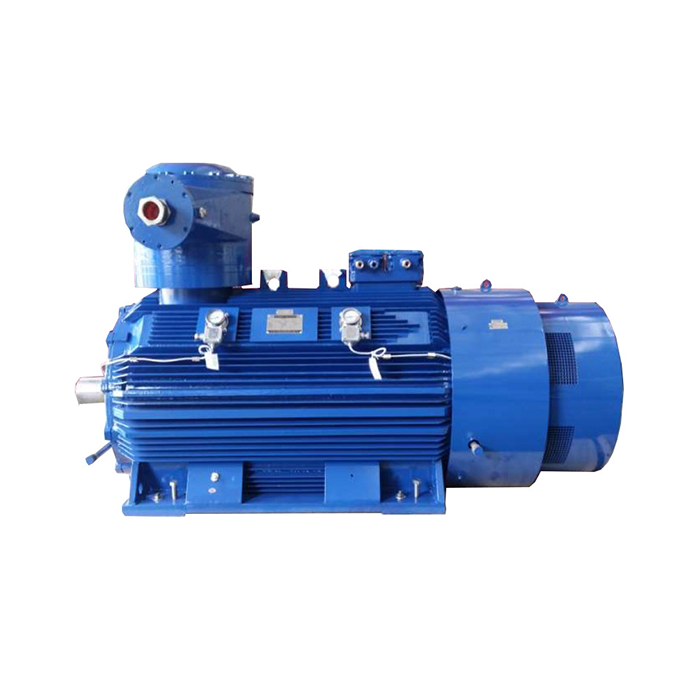
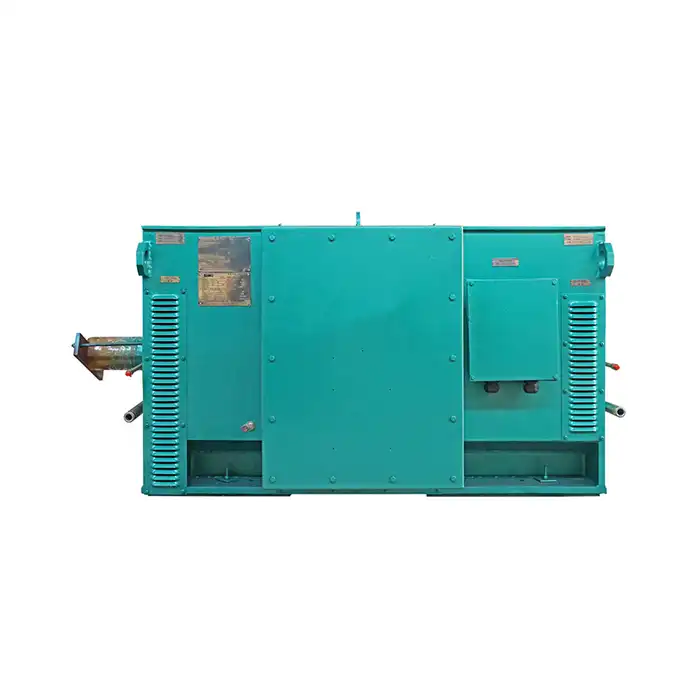
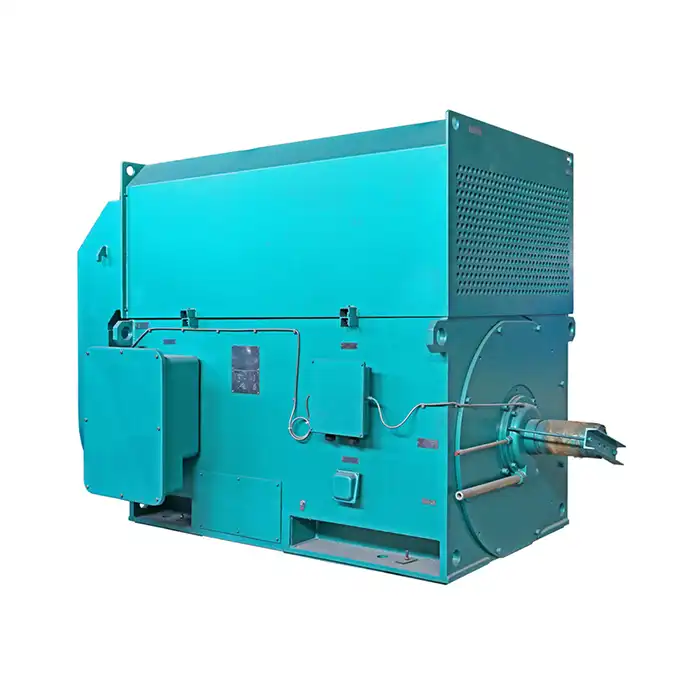
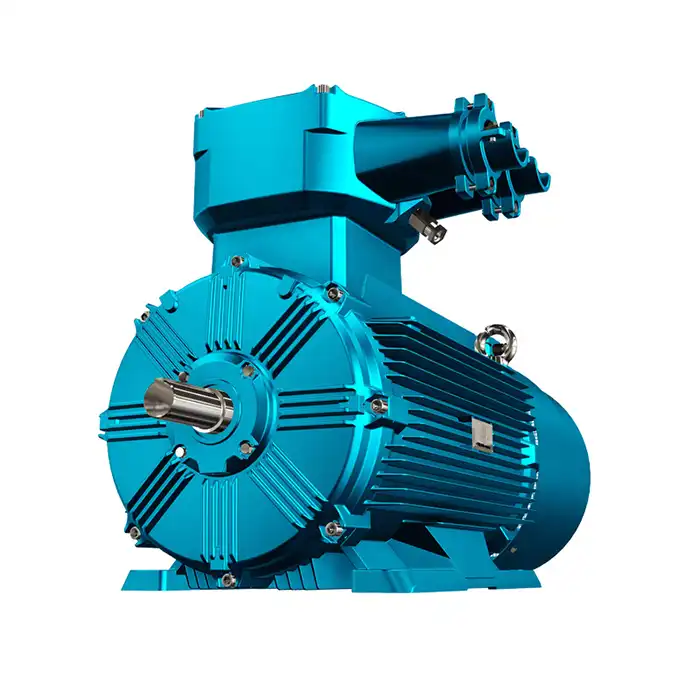
A T series synchronous motor represents a specialized category of AC electric machines engineered for high-power, low-speed industrial applications where efficiency directly translates into cost savings. These motors operate at a constant speed synchronized with the supply frequency, featuring electromagnetic field excitation that enables precise torque control and superior power factor correction. Unlike standard induction motors, T series units deliver efficiency gains of 2-5% in heavy-duty scenarios—savings that project managers in mining and cement operations immediately recognize as significant operational advantages over equipment lifespans extending 15-20 years.
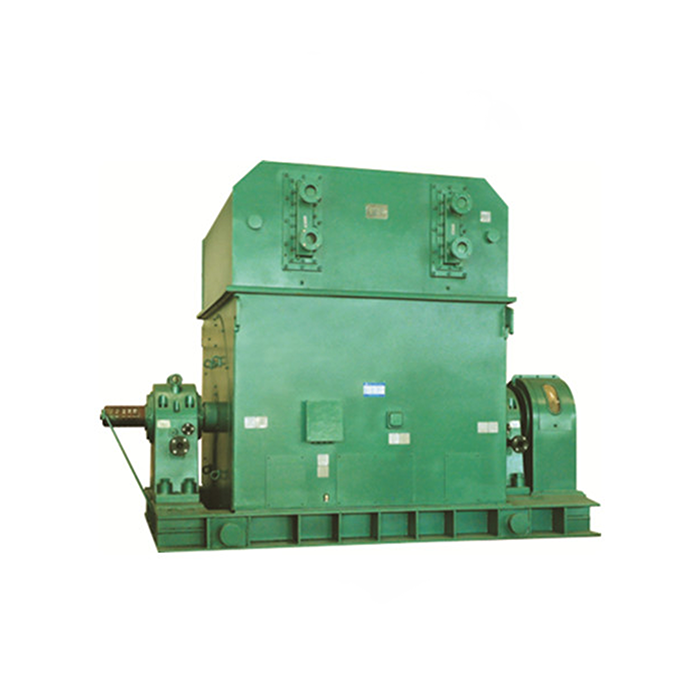
Voltage range:3000V±5%,3300V±5%,6000V±5%,6600V±5%,10000V±5%,
Power range:800-12000 kW
Application:fans, water pumps, compressors.
Advantage:large starting torque.
Others: SKF, NSK, FAG bearings can be replaced according to customer requirements.
Understanding the T Series Synchronous Motor
Core Construction and Design Features
There are three main parts that go into making these high-voltage motors: a laminated stator with copper or aluminum windings, a strong rotor assembly with important poles, and a special mechanism that gives DC current to the rotor winding. When three-phase AC electricity powers the windings, the stator makes a spinning magnetic field. This rotating field reacts with the DC-excited rotor poles to make mechanical torque. This torque moves linked equipment at fixed speeds that are set by the supply frequency and the arrangement of the poles.
Each unit from XCMOTOR is made with an IP20 protection class shell and Class F insulation materials that can work continuously in temperatures up to 155°C. The rotor is precisely balanced to ISO 1940 standards. This gets rid of the vibrations that wear out bearings and structures too quickly. The IC01 cooling method uses self-ventilation through carefully placed air channels to get rid of the heat that is produced during operation without using external cooling systems. This way of building gives the mechanical reliability needed for continuous use in places like ore processing plants and cement grinding mills, where unplanned downtime costs tens of thousands of dollars every hour[1].
Working Principle and Speed Regulation
When three-phase electricity makes a spinning magnetic field in the stator, the motor starts to work. Slip rings or brushless stimulation systems send DC to the rotor, which sets up magnetic poles that stay in place. When the motor starts up, embedded damper windings provide asynchronous torque until the rotor speeds up to a speed that is close to synchronous. At this very important moment, the rotor poles lock into sync with the stator's rotating field. This allows the motor to run at a constant speed, even if the load changes within its rated capacity.
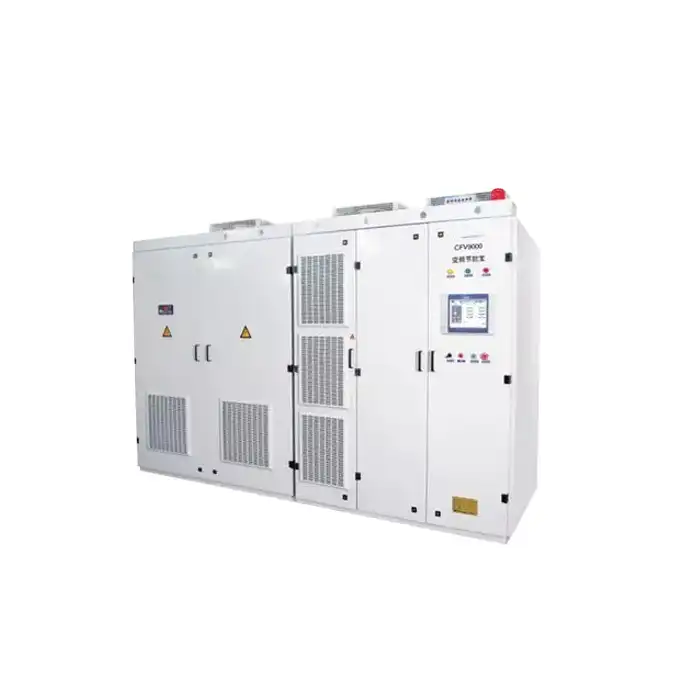
According to the formula: Speed (RPM) = (120 ÷ Frequency) ÷ Number of Poles, the source frequency is the only thing that controls the speed. Our T series units work at speeds between 150 and 500 RPM and are designed to connect directly to ball mills, SAG mills, and large-diameter fans without the need for gears in between. This direct-drive setup gets rid of the 3-5% loss in efficiency caused by gearboxes, as well as the need for maintenance and possible failure spots. Variable frequency drives allow for soft starting and precise speed changes for processes that need to work based on load, but many installations use direct-online starting with damper windings to save money on the initial investment [2].
Differences From Standard Synchronous Motors
Standard synchronous motor china motors are used for tasks that need a constant speed and moderate power levels. T series units, on the other hand, are designed for heavy-duty situations. The features that set them apart are higher starting torque thanks to an improved damper winding design, voltage ranges from 3000V to 10000V with a ±5% tolerance, and power outputs from 800 kW to 12000 kW. This power range is designed to work with tools like mine air fans that need 1500–5000 kW of power all the time and drives for cement mills that use 3000–8000 kW.
Material choices are very different. Forged steel, not cast iron, is used to make T series rotors, which means they can withstand the mechanical stresses of 150 to 300% of their stated force when they are not working normally. Bearing systems can handle both radial and axial loads caused by direct connections and belt drives. They can also use high-quality SKF, NSK, or FAG bearings, depending on what the customer wants. These changes to the design are made to meet the tough needs of mineral processing and bulk material handling, where equipment has to deal with constant loading, rough environments, and short maintenance windows.
Key Advantages and Performance Characteristics of the T Series Synchronous Motor
Energy Efficiency and Operating Cost Reduction
Measurable improvements in efficiency are the main reason why procurement decisions are made. By adjusting the field input, synchronous motors keep their power factors close to one (0.95-0.98 leading), while similar induction motors work at 0.85-0.90 lagging. This power factor correction cuts down on utility demand charges and transmission losses. When an induction motor with 3% less efficiency is replaced with a 5000 kW unit that runs 8,000 hours a year at $0.10/kWh, the yearly savings are $40,000 to $60,000. The total savings over the 20-year lifetime of the tools are $800,000 to $1,200,000, which is a lot more than the extra cost for synchronous technology.
In contrast to induction motors, which lose efficiency quickly below 70% load, efficiency stays the same from 50 to 110% load. Mining companies with varying throughput can use this feature to their advantage when production is low. Because there are no rotor losses from slip, the operating temperatures are lower and the insulation lasts longer. Heat-resistant Class F insulation can handle changes in temperature without breaking down, so it can be used continuously in places where temperatures can hit 40°C, like in tropical and desert mining areas.
Torque Characteristics and Load Handling
The ability to provide starting torque is an important feature for mill drives and crushers. When accelerating asynchronously, our T series motors produce 140–18% of their maximum torque, which is enough to beat the static friction of mills that are loaded with material. Once the motors are in sync, they can handle 200–250% transient overload capacity for 15 seconds. This means they can handle short-term load spikes when over-sized ore enters crushers or when material surges happen in conveyor systems.
Synchronous function is different because it delivers stable power even when the voltage changes. Power grids in outlying mining areas have voltage changes of about 10%. Because torque changes with voltage squared, these voltage changes cause induction motors to have torque changes of about 20%. Synchronous units keep output constant by adjusting the excitation. This makes sure that the process is stable, which is important for keeping product quality in cement grinding, where particle size distribution relies on how consistently the mill speed runs. This operational stability cuts down on rejected products and helps automated process control systems work.
Reliability and Maintenance Considerations
These motors are made to last for 100,000 hours or more before they need to be completely replaced. They also have low lifecycle costs because they are durable and easy to maintain. Since there are no rotor bars that can be heated and cooled, the broken bar problems that happen in big induction motors are not possible. Standard industrial greases can be used in bearing lubrication systems, and they need to be re-oiled every 2000 to 4000 hours, which works with existing maintenance schedules. When requested, slip ring assemblies use silver-graphite brushes that last between 8,000 and 12,000 hours and are easy to change with little downtime.
Monitoring points that are easy to get to help predictive maintenance strategies work better. Bearing temperature monitors, vibration measurement sites, and winding temperature indicators can all connect to plant SCADA systems. This lets you do condition-based maintenance, which keeps things from breaking down when they shouldn't. Because the motors are built in modules, bearings, slip rings, and activation parts can be changed in the field instead of sending the motors back to a service center. This ability to be easily fixed is very important for projects in Central Asia and Africa that take place far away, where delays in shipping can cause equipment to be out of commission for weeks at a time, causing even more production losses.
Comparing T Series Synchronous Motors to Other Motor Types
Performance Metrics: Efficiency and Power Quality
When you compare efficiency, you can see changes that can be measured and that affect the total cost of ownership. At full load, synchronous motors are 96–97.5% efficient, while premium-efficiency induction motors in the 300–8000 kW range are only 94–96% efficient. This benefit of 1.5% to 2.5% immediately means less electricity use. The best power factor feature also avoids utility penalty charges for poor power factor, which is worth $5,000 to $15,000 a year in reactive power compensation. By getting rid of specialized capacitor banks, some facilities save between $20,000 and $40,000 on the starting costs of building their electrical systems.
During operation, harmonic generation lowers the quality of the electrical system. When given clean sinusoidal voltage, synchronous motors produce very little harmonic content (THD < 3%) whereas large induction motors can produce 5-8% THD, which can damage sensitive electronic equipment. Harmonics need to be filtered out in variable frequency drive uses, but the higher power factor of the synchronous motor lowers the needed drive rating by 5–10%, which in turn lowers the cost of buying a VFD. This better electrical performance becomes more useful as companies add automation systems and electronic process controls that are aware of problems with power quality [3].
Cost Analysis and Return on Investment
Synchronous motors are 15–25% more expensive than equivalent induction motors at first purchase because they have an extra excitation system and are better built. A 5000 kW synchronous unit costs $180,000 to $220,000, while an induction version costs $150,000 to $180,000. But the operational savings from being more efficient pay for themselves in two to four years, based on how much energy costs in the area and how much is used. Operations that use a lot of energy and run for 7,000 hours or more a year pay for themselves in 18 to 30 months, which makes synchronous technology a good investment.
Maintenance costs, changes in reliability, and utility incentives must all be taken into account when figuring out the total cost of ownership. Some power companies give refunds of $50 to $100 per kW for high-efficiency motors or equipment that fixes power factor problems. For big systems, this lowers the net investment by $40,000 to $80,000. Due to not having to check and repair rotor bars, maintenance costs stay the same or go down. The longer working life (25+ years vs. 15-20 years for induction motors in heavy use) makes the lifespan economics even better. When procurement teams look at the 10-year net present value, they always find that synchronous motors have 15–30% lower total purchase costs in continuous-duty uses above 2000 kW.
Customization Capabilities and Application Fit
Customization enables industrial motors from a synchronous motor supplier china to meet specialized voltage, speed, mounting, shaft, gear, and bearing requirements. Engineering teams can adapt units for non-standard voltages, process-specific speeds, and customer-selected bearings such as SKF, NSK, or FAG. Customized motors typically require 8–12 weeks, reduced to 6–8 weeks with standardized patterns, supporting retrofits, OEMs, and EPC projects.
Practical Applications and Industry Use Cases of T Series Synchronous Motor
Mining and Mineral Processing Applications
Synchronous motors are ideal for mining ball mills and underground ventilation fans because of their high efficiency, continuous operation, and stable power factor. A 12,000 kW SAG mill can save 480,000–720,000 kWh annually, while direct-drive fan systems eliminate gearbox losses and maintenance. South American copper mines reported 2.8–3.5% energy savings and reduced maintenance.
Cement Production and Material Processing
Synchronous motors suit cement grinding, powering large raw and finish mills continuously while maintaining stable speed, consistent particle size, and energy efficiency. One Central Asian plant reduced energy costs by 3.2% and achieved payback in 28 months. They also support kiln drives, cooler fans, and roller drives, offering durability against heat, vibration, and axial loads.
Pumping and Compression Systems
Synchronous motors efficiently drive large water pumps and compressors at fixed speeds, offering reliability, long service life, and overload capability. Their precise speed stability suits centrifugal, reciprocating, and screw compressors, while supporting direct-on-line starting and process-control integration. Although initial costs are higher, reduced failures and lifetime energy savings can justify the investment.
Procurement Guide: How to Choose and Buy T Series Synchronous Motor
Evaluating Supplier Capabilities and Support
Supplier evaluation should consider technical expertise, delivery reliability, references, inventory, and support—not price alone. Proven experience in similar applications and stocked spare parts reduce project risks and downtime, especially at remote sites. Comprehensive support, including installation supervision, commissioning, operator training, engineering assistance, drawings, maintenance guides, and spare-parts recommendations, lowers lifecycle costs.
Specifications and Customization Considerations
Accurate specifications should cover driven equipment, speed, torque, duty cycle, environment, mounting, electrical parameters, shaft dimensions, bearings, and coupling. Custom requirements such as non-standard voltage, shaft configurations, premium bearings, cooling methods, or higher protection classes require engineering review and may affect cost and lead time. Application engineers help optimize specifications and prevent premature failures.
Delivery Logistics and Project Integration
International motor delivery requires planning for transport, customs, and site access. Heavy units may need ocean freight, heavy-haul trucks, or specialized lifting, with manufacturing taking 8–12 weeks and shipping 4–8 weeks. Protective packaging, desiccants, shock-mounted crates, shaft sealing, bearing preservation, and corrosion protection enable safe transport and extended storage.
Conclusion
When these high-power electric machines are looked at, they show strong benefits for uses in industries that use a lot of energy and where running costs are higher than total lifetime costs. The efficiency gains of 1.5% to 3% save a lot of money—$40,000 to $100,000 a year for most big installations—and pay for themselves in two to four years, even though T series synchronous motor cost more to buy. Power factor correction lowers utility bills and makes the electricity system more stable, which is especially helpful in places with limited power infrastructure. The strong construction and easy-to-maintain design allow for continuous use in harsh environments like those found in mining, cement production, and heavy industry. Customization options let you fit the exact needs of specialized equipment, which means you can get performance levels that aren't possible with normal stock motors. When purchasing new motor technologies for projects or upgrading old ones, teams should do a total cost of ownership analysis that looks at things like how much energy they use, how reliable they are, how much they cost to maintain, and how flexible they are in how they can be used. This thorough study regularly shows the economic and operational benefits of advanced motor technologies in uses with more than 2000 kW of power that run more than 4000 hours a year.
FAQ
1.How Does Maintenance of These Motors Compare to Induction Motors?
The amount of maintenance needed is the same as or less than for induction motors in the same type of service. Since there are no rotor bars, broken bars don't cause failures that need to take the rotor off and fix it. Maintenance plans for factories say that bearings should be oiled every 2000 to 4000 hours. If needed, slip ring assemblies need to have their brushes inspected every 2,000 hours and replaced every 8,000 to 12,000 hours. This can be done in two to four hours without taking the motor out of the case. This maintenance is not needed at all with brushless excitation systems. Overall upkeep costs are usually 10–15 percent less than with induction versions because they are more reliable and don't break down as often. Unplanned downtime is cut down even more by predictive maintenance that uses vibration monitoring and thermal imaging.
2.What Efficiency Gains Can Be Expected Compared to Induction Motors?
Improvements in efficiency that have been logged range from 1.5% to 3.5%, depending on the power level and the conditions of operation. Absolute efficiency gaps are bigger for motors that are bigger than 5000 kW. A 6000 kW unit that works at 96.5% efficiency instead of 94% for an induction equivalent saves 150 kW of power all the time, which is 1,200,000 kWh a year at 8000 hours of use. At $0.10/kWh, you can save $120,000 a year. Power factor correction can also save you $10,000 to $20,000 a year in utility costs, and you might not have to invest $30,000 to $50,000 in capacitor banks. The total economic gains are greater than the easy estimates of efficiency.
3.Can These Motors Be Customized for Specific Applications?
A lot of customization options allow for different application needs. Changes in voltage help non-standard systems work (3300V, 6600V, and middle voltages). From 150 RPM to 500 RPM, speed estimates match the needs of each process. The sizes and shapes of the shafts can be changed to fit current connections and driven equipment. Mounting setups can be used with a variety of foundations and mounting angles. Premium brands like SKF, NSK, and FAG are available as bearing options based on customer needs. Improvements to the protection class and different cooling methods work well in tough environments. Depending on how reliable and cheap they need to be, excitation systems can be set up to work with brushes or slip rings. Customized designs have lead times of 8 to 12 weeks from the time the specifications are approved. This means that they need to be planned for ahead of time and worked into project schedules.
Partner With XCMOTOR for Your T Series Synchronous Motor Supplier Needs
Our engineering team has over 20 years of experience matching motor technologies to tough industrial uses in the cement, mining, and heavy manufacturing industries. We know how important it is for operations to have reliable equipment because unplanned downtime costs thousands of dollars every hour and energy saving has a direct effect on a company's ability to compete. XCMOTOR offers full solutions, from application engineering to commissioning support for T series synchronous motor. This means that you don't have to worry about the risks of working with vendors who don't have enough technical knowledge or service commitment.
You can look through our full catalog of products, which includes motors ranging from 800 kW to 12000 kW and voltages from 3000V to 10000V, and have them set up to fit your needs. We can customize our services to fit non-standard voltages, speeds, and technical requirements, and you can choose from quality bearings from SKF, NSK, and FAG. Email our team at xcmotors@163.com to talk about the needs of your project and get full technical offers. You can look at specifications, application guides, and request quotes at motorxc.com. Technical support on the weekends makes sure that your questions are answered quickly, no matter what time zone affects an international project.
References
1. Boldea, I., & Nasar, S. A. (2010). The Induction Machines Design Handbook (2nd ed.). CRC Press.
2. Chapman, S. J. (2012). Electric Machinery Fundamentals (5th ed.). McGraw-Hill Education.
3. IEEE Standards Association. (2014). IEEE Standard 519-2014: Recommended Practice and Requirements for Harmonic Control in Electric Power Systems.
4. De Almeida, A. T., Ferreira, F. J., & Baoming, G. (2014). Beyond Induction Motors—Technology Trends to Move Up Efficiency. IEEE Transactions on Industry Applications, 50(3), 2103-2114.