



VFD Rated Motor vs Standard: Insulation and Cooling
So the answer comes down to two technological fundamentals that engineers must address when asking whether an inverter duty motor is actually required or if a standard motor would be enough for VFD control: insulation integrity and thermal management. A conventional motor was designed for power with a constant frequency sine wave. Connecting to a variable frequency drive instantly causes voltage spikes in the PWM switching waveforms that may exceed 1,600 V at the motor terminals. The reduced shaft speed starves the internal fan of air-flow. A Class F-rated, 155°C insulated inverter duty motor with a separate forced-cooling system has been developed to handle both failure situations. It is the best choice for OEM applications in crane, elevator and stage equipment.

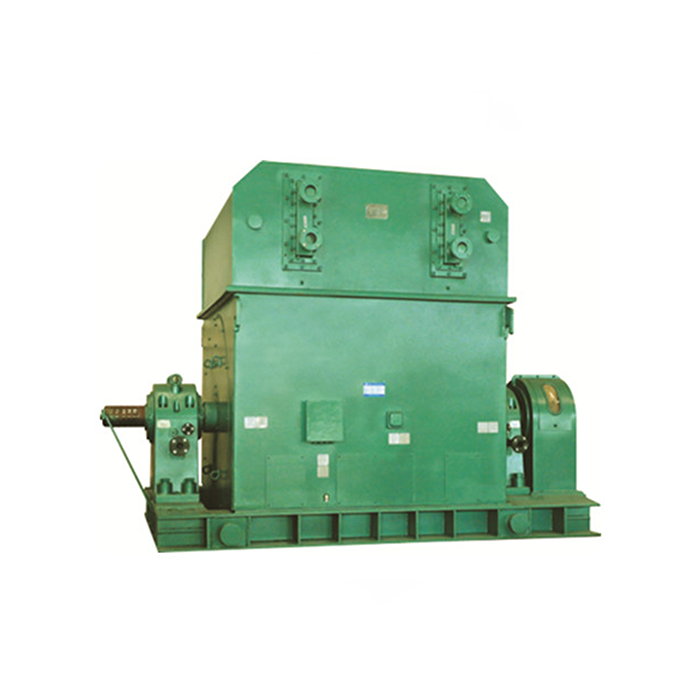
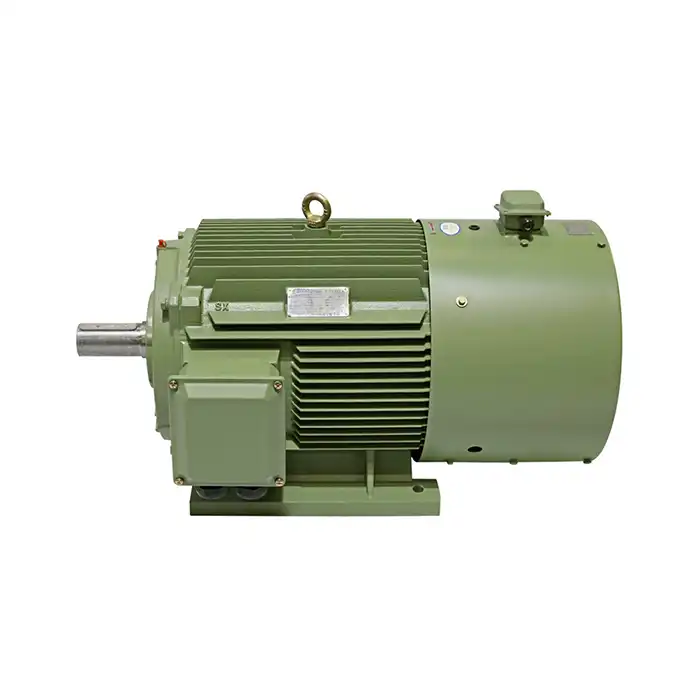
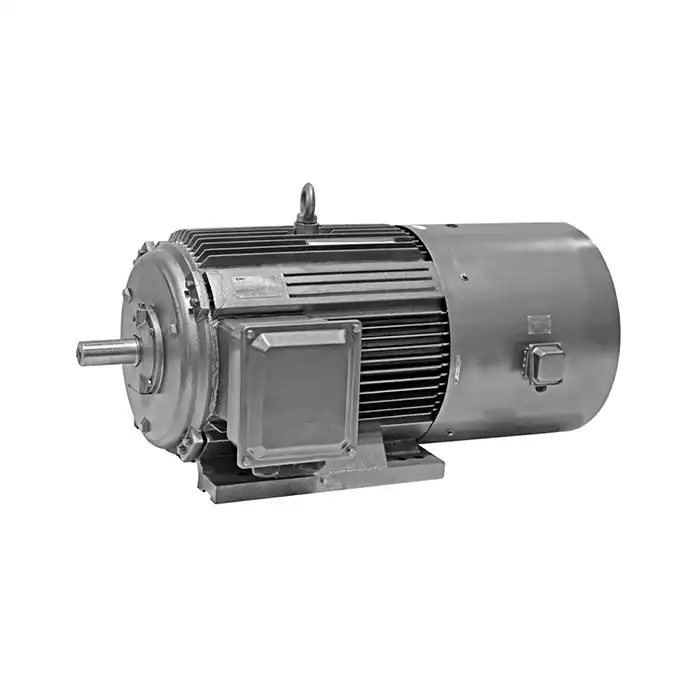
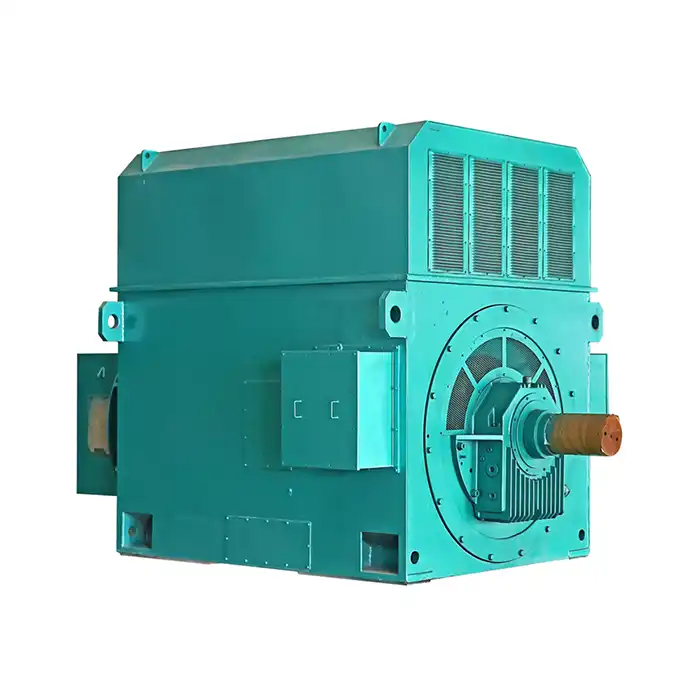
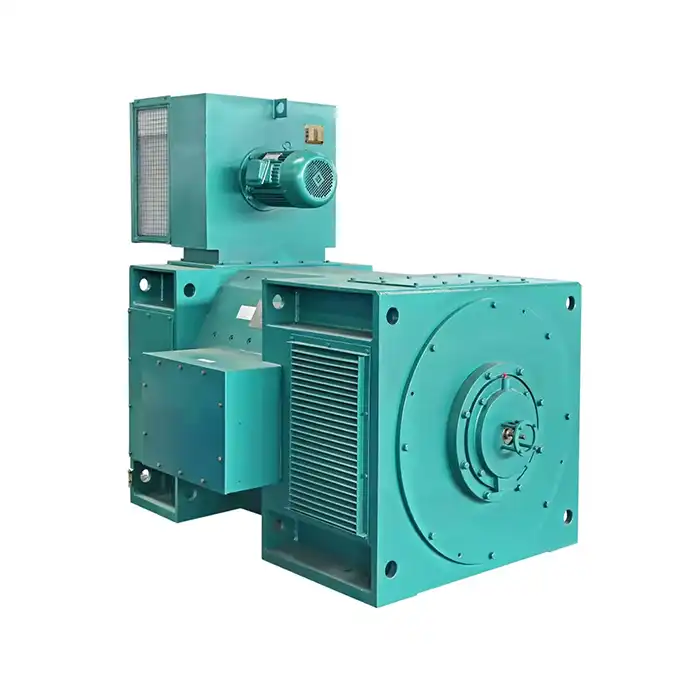
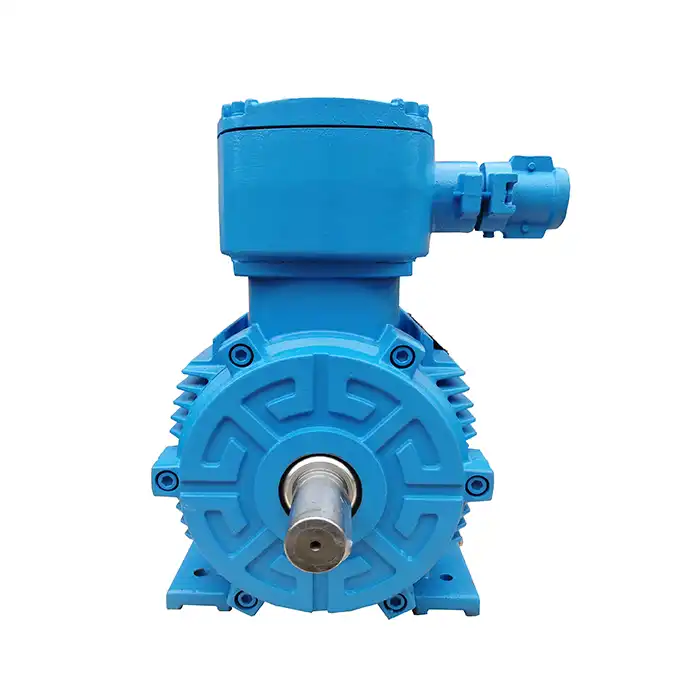
Series:YVFE2
Frequency conversion range:30hz~50hz,5hz~70hz,5hz~100hz
Power range:0.75-355kW
Protection level:IP55
Application:are suitable for driving various mechanical equipment that require continuous and frequent forward and reverse rotation, such as steel rolling, lifting, transportation, machine tools, printing and dyeing, papermaking, chemicals, textiles, pharmaceuticals, etc., and can be used with various domestic and foreign variable frequency power supplies.
Advantage:high efficiency, wide speed range, high precision, stable operation, and easy operation and maintenance.
Certificate:installation dimensions comply with International Electrotechnical Commission (IEC) standards.
Others: SKF, NSK, FAG bearings can be replaced according to customer requirements.
Understanding Insulation Differences Between VFD Rated Motors and Standard Motors
The difference between a regular motor and a VFD-rated motor starts at the insulation on the windings. This difference has direct effects on the cost over the life of the motor.
How IGBT Switching Damages Standard Motor Insulation
These days, VFDs change speeds between 2 kHz and 16 kHz. Every time the switch is made, the voltage goes up quickly—dv/dt values often reach 500–2,000 V/µs. Standard motor insulation, which is usually Class B (rated to 130°C), wasn't made to handle this much repetitive impulse stress. Partially discharge wears away the enamel covering on each wire over time. This is most noticeable at the beginning of each coil, where voltage stress is highest. IEEE 1776-2012 goes into great detail about this way that things break down, pointing out that motors with normal insulation can stop working in 6 to 18 months when they are constantly excited by PWM.
What Class F Insulation Actually Provides
An inverter duty motor that is built to NEMA MG 1 Part 31 and IEC TS 60034-25 uses magnet wire that can handle impulse voltages of more than 1,600 V peak-to-peak and slot guards that don't let partial discharge happen. In its 0.75–355 kW power range, the XCMOTOR YVFE2 line calls for Class F protection. This means that the winding can handle a steady temperature limit of 155°C and also handle the electrical stress of PWM patterns. In real life, this means that a motor that is driven by a VFD doesn't lose insulation life at a rate that can be measured.
Shaft Current and Bearing Protection
One way that insulation can fail that procurement engineers often miss is shaft current. A common-mode voltage is created on the rotor shaft when the dv/dt switching is high. This voltage drops through the bearings, making the bearing races pitted and fluted. This is a failure mode that shows up in exposed motors within 12 to 24 months. An insulated end bracket on the end that isn't being driven is suggested as a solution. It is just as important to check the insulation class of a vfd rated motor for crane or hoist duty as it is to make sure that there are choices for protecting the bearings.
Cooling Mechanisms: VFD Rated vs Standard Motors
The second structural difference between a regular motor and a variable-speed motor is how they handle heat. This is most important when the shaft speed is low.
Why Self-Cooling Fails at Low Speed
A normal TEFC motor uses a fan on the shaft to move air across the outside of the fins. At 50% speed, the fan's output drops to about 25% of its rated flow because it changes with the cube of the shaft speed. Copper and iron losses in the motor, on the other hand, don't go down in the same way. When the torque load stays the same and the speed is low, heat builds up faster than it disappears. This pushes the temperatures of the windings closer and closer to the insulation thermal limit.
IC416 Independent Forced Cooling
IC416 is used to cool the YVFE2 inverter duty motor. It is an axial fan that is driven separately and runs at a steady speed regardless of the motor shaft. This design keeps the airflow steady over the whole operating range, which is from 3 Hz to 100 Hz. When a bridge crane hoist is keeping a load in the air at creep speed or a stage lift is placing a piece of scenery with millimeter accuracy, the thermal headroom given by IC416 cooling is what lets the machine keep running at low speed and high torque without shutting down due to overheating.
Embedded Thermal Monitoring
Thermosensors built into the stator winding send temperature information to the VFD or PLC in real time. Instead of depending on a thermal overload relay that only acts after the winding has absorbed too much heat, this lets the control system lower the load or sound an alarm before the motor hits a dangerous temperature. Preventive thermal monitoring cuts down on unplanned downtime, which is very important in lifting and stage applications where a failure in the middle of a cycle is expensive to run and pay for.
Performance and Energy Efficiency Comparison
Speed Range and Torque Consistency
The YVFE2 inverter duty motor can change frequencies between 30 and 50 Hz, 5 and 70 Hz, and 5 and 100 Hz. From 5 Hz to 50 Hz, the motor gives constant torque for frame sizes H80 to 250. From 50 Hz to 100 Hz, it changes to constant power. The constant-torque zone goes down to 3 Hz for frame sizes H250–355. Because of this feature, a single motor can be used instead of a mechanical gearbox with multiple ratios in many crane and elevator drive trains. This makes the machinery simpler and easier to maintain.
Vibration and Positioning Accuracy
When standard motors are powered by PWM, torque ripple from harmonic currents can cause them to vibrate more at low speeds. When the rotors of an inverter duty motor are perfectly balanced and the winding geometry is optimized, the torque is smoother at low frequencies. For a stage machine that needs to be able to repeat its position to within a few centimeters or an elevator that needs to be able to smoothly slow down and land on a floor, this smoothness is an engineering requirement, not an extra feature.
Practical Applications and Industry Use Cases
The YVFE2 inverter duty motor is used in a variety of situations where the speed needs to change often, stay low for long periods of time, and be very reliable.
Here are the main types of uses for which this motor regularly works well:
- Overhead and gantry cranes: Constant-torque low-speed operation for precise load positioning; four-quadrant regenerative braking capability returns energy during lowering cycles.
- Elevator traction drives: Smooth acceleration and deceleration profiles reduce passenger discomfort; encoder integration supports closed-loop position control.
- Stage machinery: Millimeter-level positioning accuracy for scenery lifts and wagon drives; integrated brake options allow fail-safe holding under power loss.
- Industrial fans and pumps (HVAC): Variable flow control from 30% to 100% reduces energy consumption; IP55 protection suits plant environments.
- Conveyors, machine tools, textiles, and chemical processing: Frequent forward/reverse cycling without insulation fatigue; compatibility with all standard VFD brands simplifies integration.
All of these uses have one thing in common: the motor has to work reliably over a wide range of speeds without breaking down due to heat or insulation. Under constant VFD running, a regular motor with inverter can't meet this need. The YVFE2 inverter duty motor is made to work with it.
Procurement Considerations for Inverter Duty Motors
Selecting the right motor for a VFD-driven application requires more than matching horsepower and frame size. Several specification points determine whether the motor will meet lifecycle cost expectations.
Key Specification Checkpoints
Before finalizing a purchase order, technical managers should verify the following against the motor datasheet:
- Insulation class and impulse voltage rating (NEMA MG 1 Part 31 / IEC TS 60034-25 compliance)
- Cooling method (IC416 independent forced cooling vs. shaft-mounted fan)
- Speed range and torque characteristics across the full frequency range
- Overload capacity (≥2× rated torque for 60 seconds is the standard for crane duty)
- Encoder and brake integration options
- Bearing protection for shaft current (insulated end bracket availability)
Each of these checkpoints maps directly to a failure mode that shortens motor life or increases maintenance cost in service.
YVFE2 Series Specifications at a Glance
The XCMOTOR YVFE2 series covers 0.75–355 kW with three selectable frequency ranges. Protection is IP55. Cooling is IC416. Insulation is Class F. IEC installation dimensions allow direct replacement of YVF2 and YJTG series motors without mounting modifications. Bearings from SKF, NSK, or FAG are available on request. Optional accessories include encoders, integrated brakes, gear reducers, and thermal sensors. The motor carries CCC and CE certification, and installation dimensions comply with IEC standards.
Evaluating Total Cost of Ownership
A standard motor costs less at purchase. However, when you account for earlier insulation failure, unplanned downtime, bearing replacement due to shaft current damage, and the thermal derating required at low speeds, the total cost over a five-year service period typically favors the inverter duty motor. For OEM procurement volumes of 200–1,500 units per year, the per-unit savings from avoided failures accumulate into a measurable budget line.
Conclusion
It's not a matter of price whether to choose a normal motor or an inverter duty motor. It's a technical choice that will have clear cost effects. When a standard motor is controlled by a VFD, it has to deal with insulation stress from PWM voltage spikes, thermal stress from less airflow at low speed, and bearing damage from shaft currents. All three are taken care of by an inverter duty motor, which has Class F insulation, IC416 independent cooling, and choices for protecting the bearings.
FAQ
1.What is the difference between an inverter duty motor and a standard motor?
An inverter duty motor is built with higher-grade insulation, an independent cooling system, and reinforced windings to handle the electrical and thermal stresses that a VFD generates. A standard motor lacks these features and typically degrades faster under variable frequency operation.
2.What speed and torque range does the YVFE2 inverter duty motor support?
For frame sizes H80–250, the motor delivers constant torque from 5 Hz to 50 Hz and constant power from 50 Hz to 100 Hz. For H250–355, constant torque begins at 3 Hz. Three frequency conversion ranges are available: 30–50 Hz, 5–70 Hz, and 5–100 Hz.
3.Can the YVFE2 replace existing YVF2 series motors?
Yes. IEC-compliant installation dimensions allow direct substitution without mounting modifications. The motor is also compatible with all standard VFD brands.
4.What certifications does the YVFE2 carry?
The motor holds CCC and CE certification, complies with IEC installation dimension standards, and meets the IE2 efficiency standard per IEC 60034-30.
5.Are encoder and brake integration options available?
Yes. Encoder mounting, integrated brake systems, thermal sensors, and specialized bearing selections are available as factory-configured options.
Partner with XCMOTOR for Your Inverter Duty Motor Supply
The YVFE2 inverter duty motor is sold directly by XCMOTOR to OEM engineering teams in the crane, lift, and stage machinery industries. We can help you with your specifications from the first review of the datasheet to small-batch production. We have over 20 years of experience with applications, a 30-day return policy, and dedicated technical support every day of the week. You can email our engineering team at xcmotors@163.com or go to motorxc.com to get product paperwork or talk about your needs for an inverter duty motor provider.
References
1. IEEE Std 1776-2012, Recommended Practice for Thermal Evaluation of Unsealed or Sealed Insulation Systems for AC Electric Motors — IEEE Standards Association, 2012.
2. NEMA MG 1-2021, Motors and Generators — National Electrical Manufacturers Association, 2021.
3. IEC TS 60034-25:2014, Rotating Electrical Machines — Part 25: AC Electrical Machines Used in Power Drive Systems — International Electrotechnical Commission, 2014.
4. Boldea, I. & Nasar, S.A., The Induction Machine Handbook — CRC Press, 2002.
5. Chapman, S.J., Electric Machinery Fundamentals, 5th Edition — McGraw-Hill, 2011.
6. Muetze, A. & Binder, A., "Practical Rules for Assessment of Inverter-Induced Bearing Currents in Inverter-Fed AC Motors up to 500 kW," IEEE Transactions on Industrial Electronics, 2007.