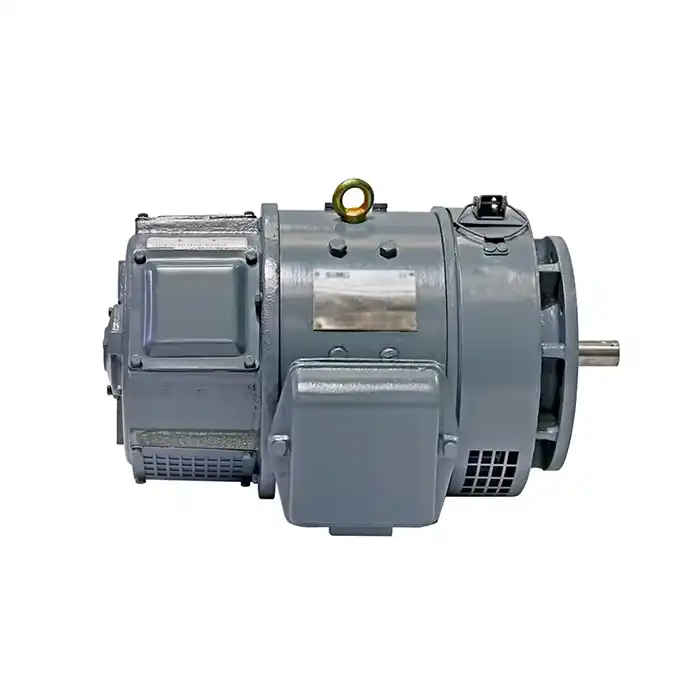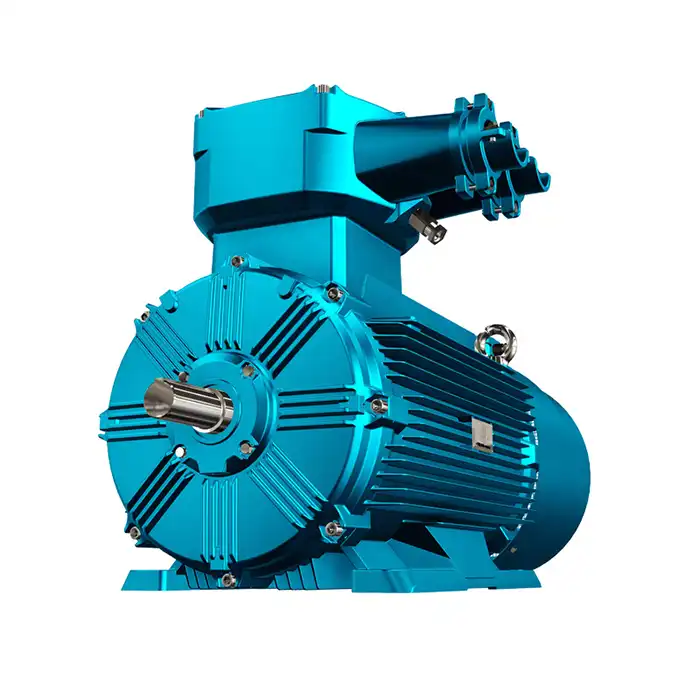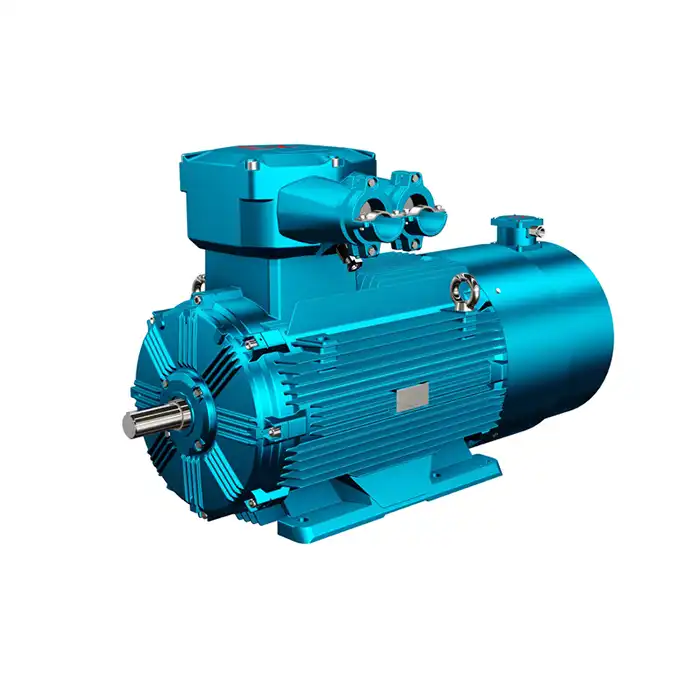




11 kV Motor Selection: Insulation Class and Cooling
Selecting the right 11 kV motor for heavy industrial applications comes down to two decisions that shape every other outcome: insulation class and cooling method. Get these right, and the motor runs reliably for years under full load. Get them wrong, and you face premature winding failure, unplanned shutdowns, and costly rework. This guide breaks down what insulation classes F and H actually mean for your winding temperature budget, how cooling codes like IC37W and IC611 perform under real site conditions, and what procurement teams in mining, cement, and metallurgy EPC projects need to confirm before signing off on a spec sheet.
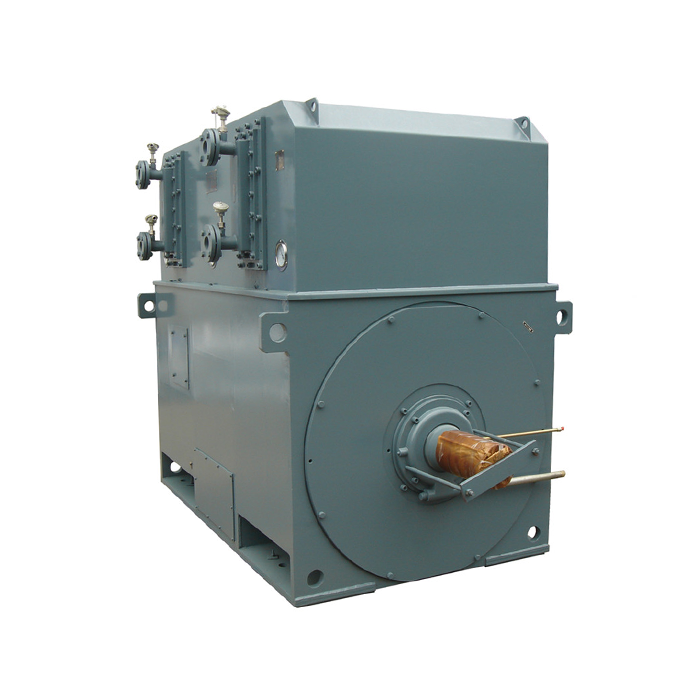
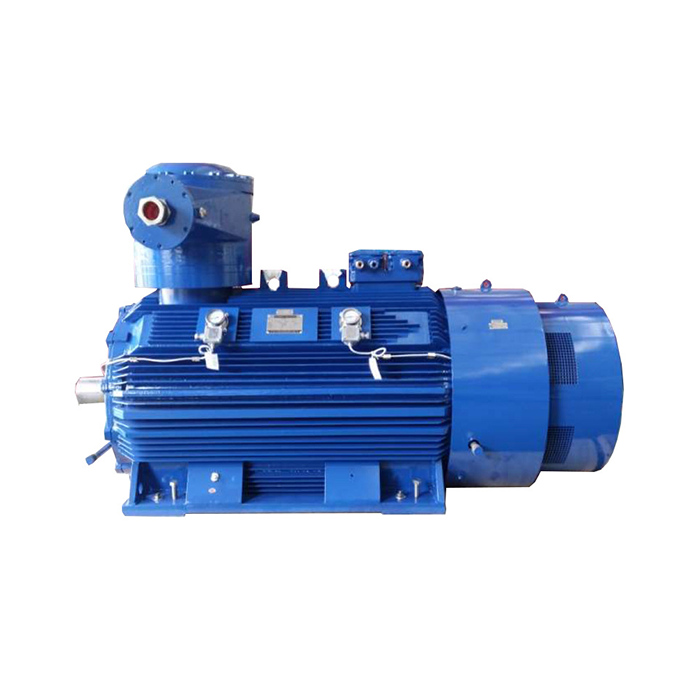
Series:YXKS
Protection level:IP54
Voltage range:3000V±5%,3300V±5%,6000V±5%,6600V±5%,10000V±5%,11000V±5%
Power range:220-3550 kW
Application:fans, water pumps, compressors, crushers, cutting machine tools, transportation machinery, etc.
Advantage:high efficiency and energy saving, light weight, low noise, small vibration, long service life, easy installation and maintenance.
Standard: This series of products complies with JB/T 12728 and JB/T 10446 standards.
Others: SKF, NSK, FAG bearings can be replaced according to customer requirements.
Understanding Insulation Class in 11 kV Motors
The insulation class tells you the highest temperature that the winding system of a motor can handle. For any 11 kV high-voltage induction motor, this number tells you exactly how long the winding will last when it's loaded.
Class F vs. Class H: What the Numbers Mean
The highest temperature that Class F insulation can handle is 155 °C (ambient 40 °C plus 100 K rise plus 15 K hot-spot limit). That ceiling goes up to 180 °C for Class H. The YKK and YRKK series 11 kv motors from XCMOTOR come with Class F insulation, but they are wound and tested to a Class B temperature rise. This means that the winding runs about 20–25 K cooler than the insulation limit. The thermal cushion directly leads to longer service life because insulation ages according to the Arrhenius rule: for every 10 K drop in working temperature, insulation life doubles.
Winding Materials and Resin Systems
The usual way to make 11 kV winding systems is to use vacuum pressure impregnation (VPI) with epoxy glue. VPI fills in tiny holes in the winding, stopping moisture from getting in and starting a partial discharge. The XCMOTOR series uses a two-stage VPI cycle that is confirmed by IEC 60034-18-41 test protocols. This makes sure that the resin is evenly spread along the length of the stator bar.
How Insulation Class Affects Procurement Decisions
When EPC procurement managers look over technical specifications, they should make sure of three things: the rated insulation class, the actual temperature rise class used in the design, and the type-test report that shows measurements of the winding temperature. When a motor is labeled as Class F but only tested at Class F rise, there is no room for error. A motor labeled Class F but built to Class B rise gives about 25 K of headroom, which is a big deal for continuous-duty crushers or kiln fans that run more than 8,000 hours a year.
Cooling Systems in 11 kV Motors: Ensuring Optimal Performance
Controlling temperature is where insulation class and performance in the real world meet. If heat can't get out of the frame, even a well-insulated wound will break down quickly.
IC37W: Closed-Circuit Water Cooling Explained
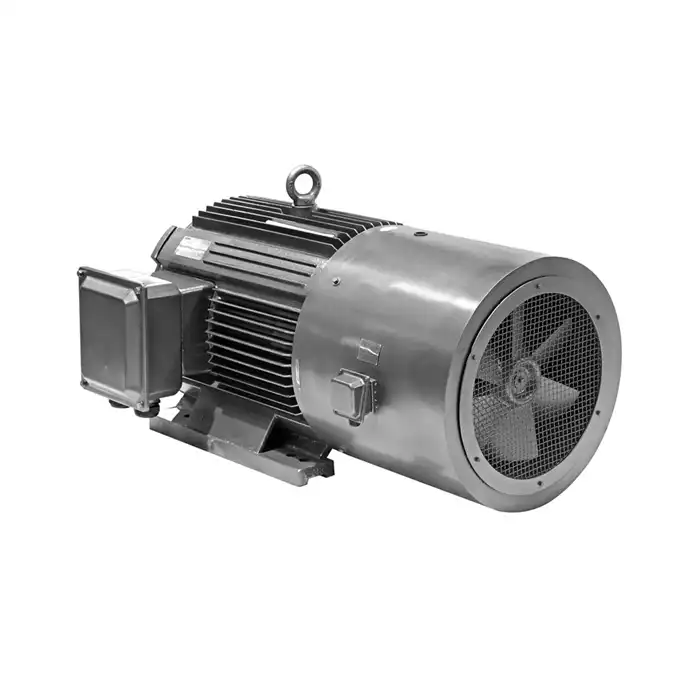
IEC 60034-6 says that the IC37W title refers to a closed air circuit that is cooled by water flowing through a frame-mounted heat exchanger. Inside the motor, hot air moves around and picks up heat from the core and windings. It then goes through the water-cooled exchanger and comes back to the air gap cooler. The IC37W works well in dusty, humid, or chemically aggressive places like copper concentrators, cement finish mills, and steel sintering plants because the way it is set up keeps dirty plant air completely away from the motor. The XCMOTOR IC37W motors come with IP54 protection by default, and IP55 protection can be added upon request.
Air Cooling Methods: IC01 and IC06
Open-circuit air cooling (IC01) lets air from outside flow straight through the motor. It is easy to use and doesn't cost much, but it can't be used where the dust level is higher than 10 mg/m³. Pipe-ventilated cooling (IC06) uses piped outside air to improve cleanliness without the wiring hassles of a water system. The IC06 is still a good choice for 220–1000 kW installations inside with a clean, conditioned air supply.
Matching Cooling Code to Site Conditions
Height of the site, the temperature of the area, and the size of the enclosure all affect the choice of cooling method. The density of the air drops above 1,000 m, which slows down convective heat movement by about 1% for every 100 m above sea level. This altitude derating problem is completely solved by water cooling, which is one reason why the IC611 and IC37W designs are used so often in high-altitude mine projects in Central Asia, Chile, and Peru. Making sure of the site's available cooling water flow rate and inlet temperature early on in the design process keeps changes to the specifications from having to be made at the last minute.
Key Factors for Selecting 11 kV Motors: Insulation and Cooling Focus
Insulation and cooling choices do not exist in isolation. They interact with load type, starting method, voltage tolerance, and environmental protection requirements.
Load Characteristics and Duty Cycle
Crushers, ball mills, and high-inertia fans impose severe thermal stress during starting. The YRKK wound-rotor configuration handles these loads by inserting rotor resistance at start, limiting stator current while allowing the rotor to absorb starting energy through external resistors. This keeps winding temperature rise during start within the Class F budget. For continuous-duty pumps and compressors, squirrel-cage YKK motors with direct-on-line or soft-start drives are the standard selection.
Voltage Tolerance and Grid Compatibility
The XCMOTOR 11 kV motor range covers 11000V ±5%, which accommodates the voltage fluctuations common on industrial grid feeds shared with large drives and arc furnaces. The same frame design supports voltage ratings of 3000V, 3300V, 6000V, 6600V, and 10000V, all at ±5% tolerance, giving EPC contractors a single qualified supplier across multi-voltage projects.
Environmental Protection: IP54, IP55, and IP65
IP54 keeps out dust deposits and low-pressure water splashes—adequate for most indoor industrial locations. IP55 adds protection against directed water jets, required in washdown areas such as ore preparation plants. IP65 seals the enclosure completely against dust and water jets, typically specified for outdoor coastal installations. The XCMOTOR series offers IP54 as standard, with IP55 and IP65 available as factory options, all verified per IEC 60529 during the Factory Acceptance Test (FAT).
Comparative Insights: 11 kV Motor Insulation and Cooling vs. Other Voltage Classes
Knowing where 11 kV fits in relation to 6.6 kV and higher voltage classes helps engineers explain the need for the standard to people who look over budgets and audit the design school.
Insulation Stress at Different Voltage Levels
At 6.6 kV, the partial-discharge inception voltage is low enough that standard Class F insulation is safe. At 11 kV, the stress from turn to turn and phase to ground is greater, which makes the quality of the VPI and the shape of the end-winding support more important. At 33 kV, form-wound coils with Roebel transposition and graded stress-relief tape are needed. This adds a level of complexity that makes the price go up by a lot. In practice, the 11 kV range is ideal because it has easy-to-handle insulation engineering, a smaller wire cross-section than 6.6 kV, and doesn't need the complicated coil shape that's needed at 33 kV.
Thermal Management Efficiency Across Voltage Classes
At 11 kV, water-cooled motors usually have frame temperatures 15–20 K lower than air-cooled motors of the same power output. For big frames between 2000 and 3550 kW, this thermal advantage makes the motor smaller than an air-cooled version. This means that it takes up less space and weighs less when lifted by a crane, which directly saves money in plant plans that are limited.
Bearing and Shaft Considerations
The XCMOTOR line uses SKF, NSK, or FAG bearings, which can be chosen at the time of order to match the customer's repair stock or the bearing supply chains in their area. This gives multi-site EPC operators who are working on projects in different countries at the same time more spare parts options.
Maintenance Best Practices to Preserve Insulation and Cooling Efficiency
Choosing the right motor is an investment that should be protected by good care rules. The 11 kv motors with IC37W water cooling and Class F insulation should use the procedures listed below.
Insulation Resistance Testing Schedule
Before starting up, after any rewinding work, and once a year during planned outages, megger testing at 5 kV DC should be done. The polarization index (PI) method is described in IEC 60034-27-1. A PI value above 2.0 means the insulation is healthy, while a PI value below 1.5 means moisture absorption or contamination that needs to be fixed before restarting.
Cooling System Inspection and Water Quality
When the hardness of the cooling water goes above 150 ppm CaCO₀, scale builds up on water-cooled heat exchangers. Scale that is only 1 mm thick lowers heat transfer efficiency by about 20%, which directly raises the temperature of the winding. The thermal performance promised in the motor's design data sheet is kept up with quarterly water analysis and yearly exchanger cleaning.
Thermal Imaging and Vibration Monitoring
During operation, infrared scans of the terminal boxes, bearing housings, and outside areas of heat exchangers find hot spots before they cause problems. ISO 10816-3 vibration monitoring gives information about the state of the bearings; a trend rise of 2 mm/s above the baseline means that the bearings need to be inspected. When maintenance teams use both methods together, they get early warning at least 4–6 weeks before a fault turns into an unplanned outage.
Conclusion
Picking the correct insulation class and cooling method for a high-voltage induction motor is a technical choice that has clear business effects. When EPC procurement teams combine Class F insulation designed to a Class B temperature rise with IC37W water cooling and IP54 protection, they get a specification that passes design-institute review, can handle heavy loads starting with YRKK wound-rotor configurations, and can handle the voltage swings that are common on industrial grids. The XCMOTOR 11 kv motor range has six voltage levels that cover 220–3550 kW, is compliant with JB/T 12728 and JB/T 10446 standards, and has undergone IEC 60034 type tests to confirm their reliability. You can look at the full specs sheets and ask for a FAT timetable at motorxc.com.
FAQ
1.What insulation class do XCMOTOR 11 kV motors use?
XCMOTOR 11 kV motors use Class F insulation with a Class B temperature rise, providing roughly 25 K of thermal headroom above the actual operating temperature. This margin extends winding service life significantly in continuous-duty applications such as kiln fans and ball mill drives.
2.What is the standard cooling method for the XCMOTOR 11 kV series?
The standard cooling method is IC37W—a closed internal air circuit cooled by a frame-mounted water-to-air heat exchanger. This keeps plant air outside the motor, making it suitable for dusty and humid environments. IP54 protection is standard; IP55 is available on request.
3.What is the typical lead time?
Standard lead time is 8–12 weeks. Rush orders can be accommodated depending on current production scheduling.
4.Does XCMOTOR offer installation and commissioning support?
Yes. Experienced technicians provide on-site installation and commissioning support worldwide, including FAT attendance at the factory prior to shipment.
5.What warranty applies?
XCMOTOR provides a 12-month warranty from the date of shipment or 12 months from the date of installation, whichever comes first.
Get Your 11 kV Motor Quote from XCMOTOR
High-voltage induction motors from XCMOTOR range from 220 kW to 3550 kW and are available in 6 kV, 10 kV, and 11 kV voltage classes. They come with IP54/IP55 protection and IC37W cooling as standard. We provide 45–60 day delivery on custom configurations, on-site commissioning assistance, and FAT attendance as a direct 11 kv motor manufacturer. Get in touch with our technical team at xcmotors@163.com or motorxc.com right away to find the right motor for your project.
References
1. IEC 60034-1: Rotating Electrical Machines – Rating and Performance. International Electrotechnical Commission, 2022.
2. IEC 60034-6: Rotating Electrical Machines – Methods of Cooling. International Electrotechnical Commission, 2021.
3. IEC 60034-18-41: Qualification and Acceptance Tests for Partial Discharge Resistant Electrical Insulation Systems. International Electrotechnical Commission, 2014.
4. IEEE Std 43-2013: IEEE Recommended Practice for Testing Insulation Resistance of Electric Machinery. Institute of Electrical and Electronics Engineers, 2013.
5. ISO 10816-3: Mechanical Vibration – Evaluation of Machine Vibration by Measurements on Non-Rotating Parts. International Organization for Standardization, 2009.
6. JB/T 10446: High-Voltage Three-Phase Squirrel-Cage Induction Motors – Technical Requirements. China Machine Press, 2004.