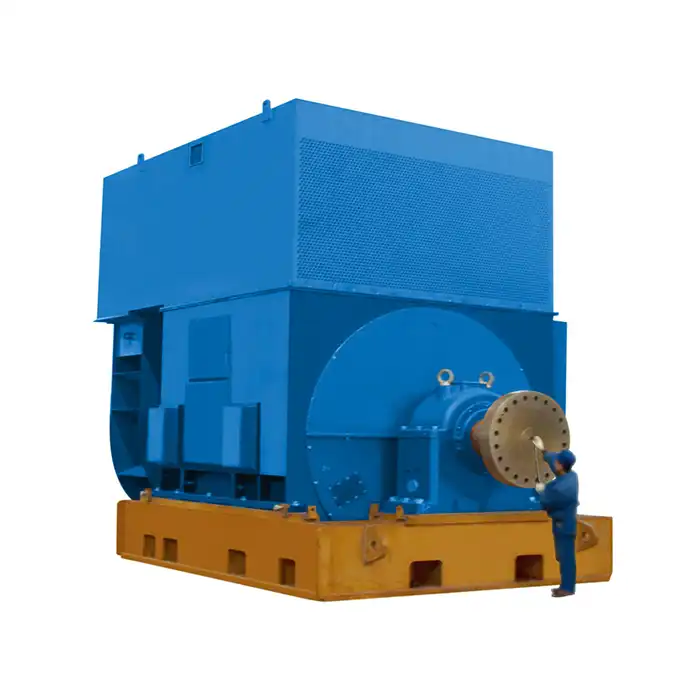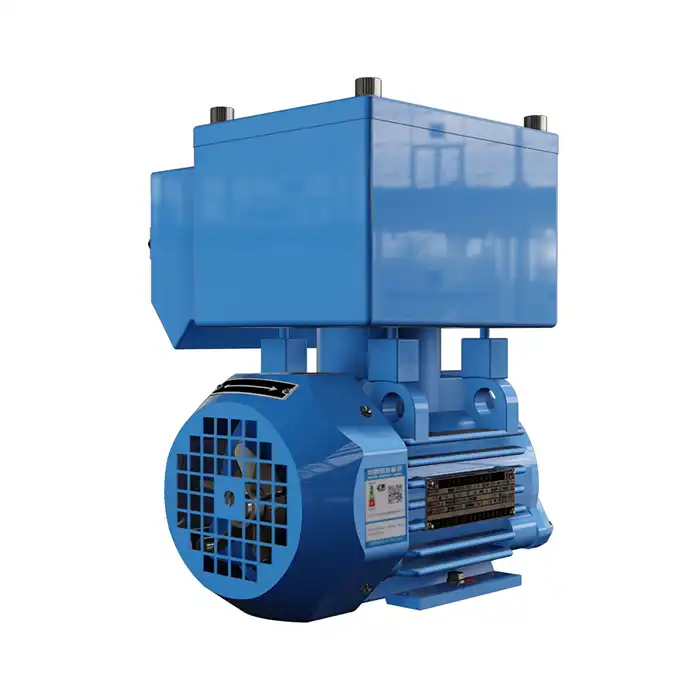




LV Induction Motors and Their Impact on Power Systems
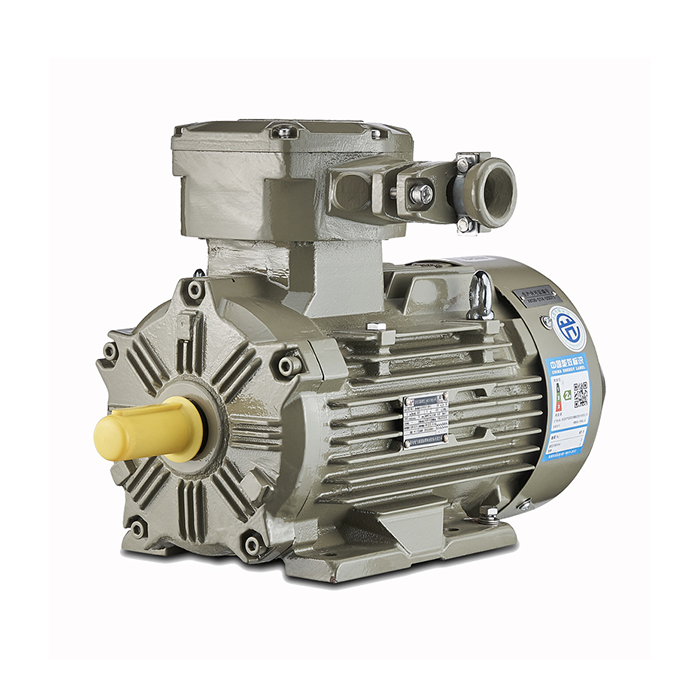
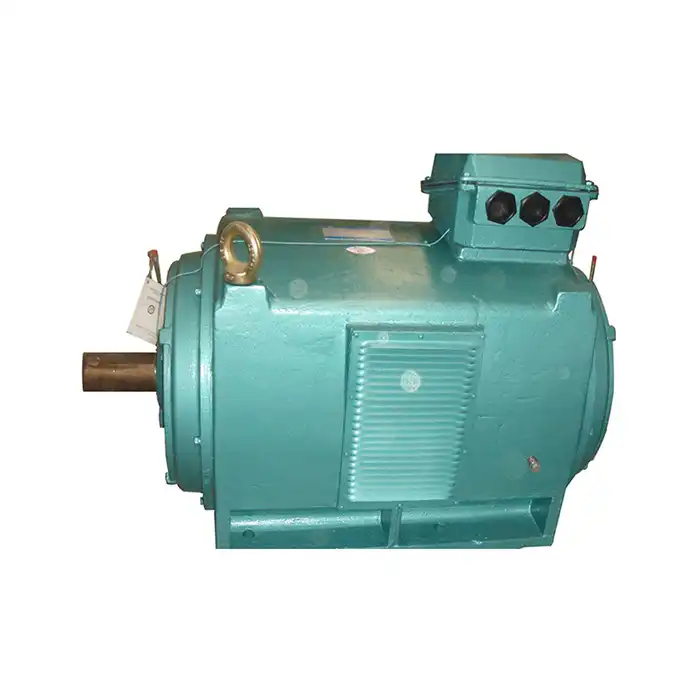
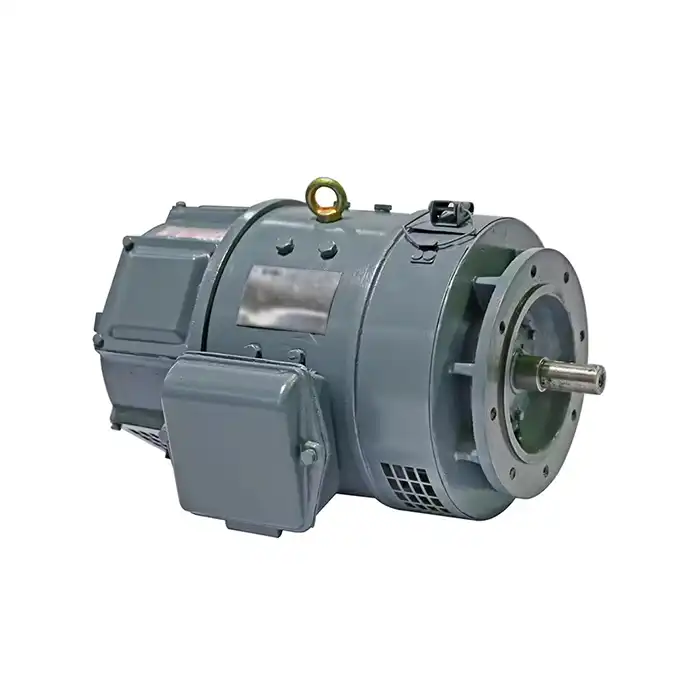
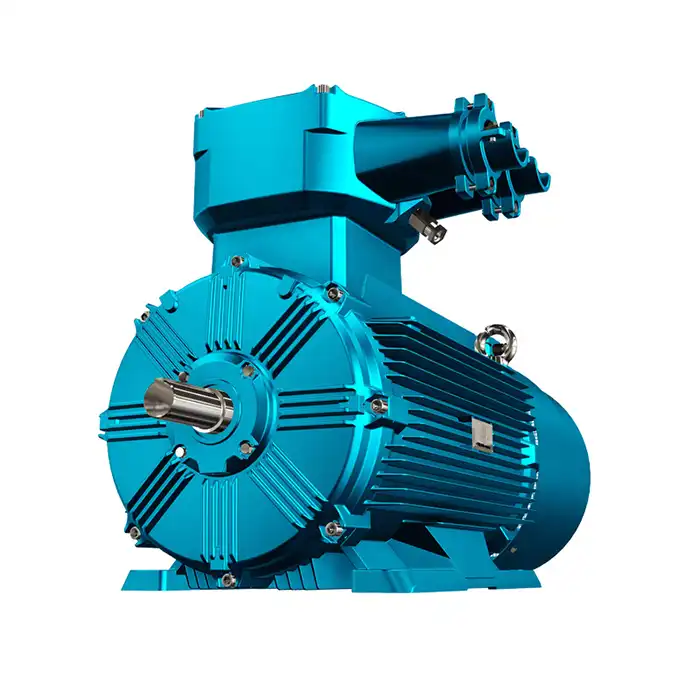
LV Induction Motors are a key technology that makes industries like manufacturing, HVAC, energy services, and process automation more productive. An LV Induction Motor uses electromagnetic principles to turn electrical energy into mechanical power. Typical voltage ranges for these motors are 380V to 660V, and their power outputs range from 0.75kW to 1000kW. These three-phase asynchronous motors have an effect on the security of the power system, the control of grid load, and the efficiency of operations, all of which have a direct effect on your bottom line. Knowing how these motors connect to the electrical system helps buying teams choose the best equipment, which saves money on energy costs and keeps system interruptions to a minimum.
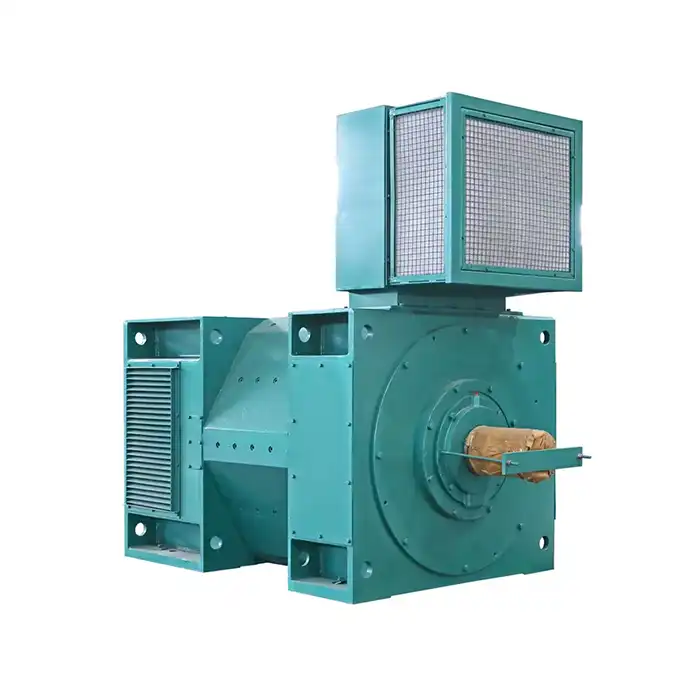
Series:YE3
Frame number: 80-450
Power range:0.75-1000kW
Protection level:IP55
Energy efficiency class: IE3
Voltage range: 380V,400V,415V,660V, etc.
Application:can be used in various fields of the national economy, such as machine tools,water pumps,fans,compressors,and can also be used in transportation, mixing, printing, agricultural machinery, food and other occasions that do not contain flammable, explosive or corrosive gases.
Certificate: international standard IEC60034-30 "Efficiency Classification of Single-speed Three-Phase Squirrel Cage Induction Motors".
Advantage:The high quality of the electric motor guarantees high operational reliability.
Others: SKF, NSK, FAG bearings can be replaced according to customer requirements.
Understanding LV Induction Motors and Their Working Principles
Core Components and Electromagnetic Operation
An induction motor has two main parts: the rotor, which turns, and the stationary stator, which holds the copper windings. A rotating magnetic field is made when three-phase alternating electricity runs through the stator windings. This field makes currents flow through the rotor's conductors, making its own magnetic field that combines with the stator field to create torque for spinning. The rotor always turns a little slower than the magnetic field's synchronous speed. This difference in speeds, called slip, is what makes power possible and sets asynchronous motors apart from synchronous ones.
The stator is made up of layered silicon steel sheets that stop eddy current losses. The current is carried by copper or aluminium windings. Core losses are kept to a minimum with high-grade silicon steel, which directly raises efficiency scores. These windings are wrapped in Class F insulation, which can withstand temperatures up to 155°C and extends their useful life even in harsh conditions.
Squirrel Cage vs. Wound Rotor Construction
Aluminium or copper bars are pressed into steel laminations to make squirrel cage rotors. End rings connect the bars together to make a cage-like frame. This design is very long-lasting, and the rotor unit itself doesn't need any upkeep. XCMOTOR makes designs for squirrel cages with die-cast aluminium frames that range in size from 80 to 450. These frames are both lightweight and strong.
Wound rotor motors have wire windings that are attached to slip rings. This lets external resistance be added during starting. Even though these motors have better starting torque control, the brushes and slip rings need to be serviced regularly. The reliability and lower lifecycle costs of squirrel cage design make it the best choice for most commercial uses.
Three-Phase Power and Voltage Specifications
Three-phase induction motors are the most common type used in industry because they give power smoothly, are small, and can start themselves. Standard voltage levels include 380V, 400V, 415V, and 660V, which meet the needs of power distribution standards in North America and other countries. Higher voltage choices lower the amount of current needed to produce the same amount of power, which reduces the need for bigger conductors and worries about voltage drop in long cable runs.
Our motors can run at speeds between 500 and 3000 RPM. For pumps, fans, and compressors, four-pole types (1500 RPM at 50Hz or 1800 RPM at 60Hz) are the most popular. Speed is directly related to the amount of magnetic poles and the supply frequency. This lets system makers know what the performance will be like.
Advantages and Efficiency of LV Induction Motors in Power Systems
Reliability and Maintenance Advantages
Induction motors are used in factories because they have been reliable in millions of setups around the world. In squirrel cage designs, there are no brushes, commutators, or slip rings, so there are no usual wear spots that happen in DC motors. This means that it can run continuously for years with little maintenance other than lubricating the bearings and checking the temperature.
Depending on what the customer wants, XCMOTOR uses high-quality SKF, NSK, or FAG bearings to make sure the motor runs smoothly under both horizontal and axial loads. These bearing brands offer longer service intervals, which shortens the time needed for upkeep and makes the equipment work better overall. Our IP55 grade protects against dust and water jets coming from any direction. It's good for food processing, water treatment, and outdoor sites that need to be tough on the elements.
When you use good manufacturing methods, you can be sure that your production lines will always work. Before it is shipped, each motor goes through a series of thorough tests that check its electrical performance, shaking levels, and heat behaviour. This attention to detail lowers the number of babies who die and the number of guarantee claims, which protects your investment.
IE3 Efficiency Class and Energy Savings
Efficiency class numbers show how much a motor loses when it's running at full load. When compared to older IE1 or IE2 designs, IE3 motors are more efficient and use less electricity because they meet IEC 60034-30 standards. The difference between efficiency classes may not seem like much—about 2 to 4 percentage points—but it adds up to big energy savings over the 15 to 20 years that a motor is in use.
If you change a 75kW motor that runs for 6,000 hours a year from IE2 (93% efficiency) to IE3 (95% efficiency), you will save about 9,500 kWh a year. With commercial energy rates of $0.08 per kWh on average, that one motor saves $760 a year. When you multiply this by dozens or hundreds of motors in a building, you can use lower energy bills to pay for changes to equipment that is more efficient.
Our motors are more efficient because they have a better magnetic circuit design, rotor bars that conduct electricity well, and tight manufacturing tolerances. Premium silicon steel laminations keep core losses low, and better cooling design keeps working temperatures low. Power factors between 0.80 and 0.89 reduce the amount of reactive power used, which lowers the amount of money that companies charge and increases the use of the power system's capability.
Speed Control Methods: VFDs and Soft Starters
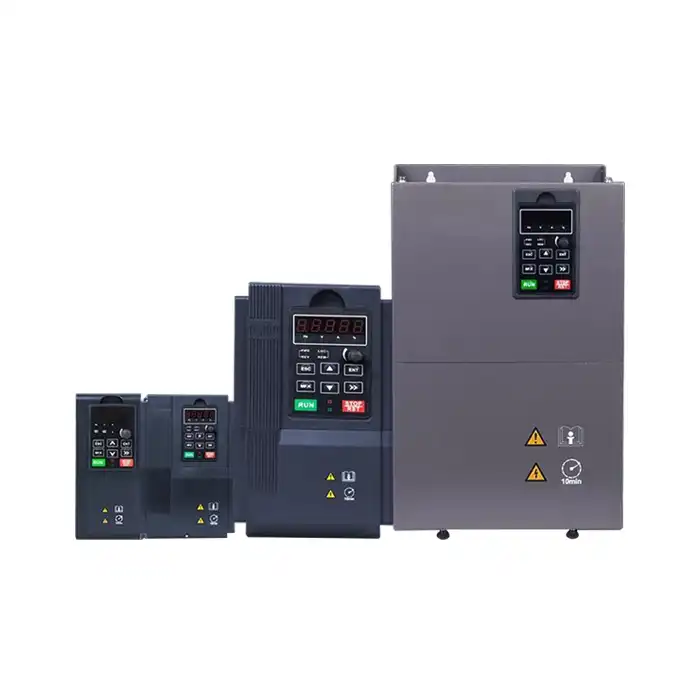
Motor control was changed forever by VFDs, which changed the source frequency and voltage to change the motor speed all the time. With VFDs, fan and pump systems can perfectly match output to demand, which gets rid of slowing losses and saves a lot of energy—often over 30%. These drives also have soft starters, which lowers the inrush current from 6 to 8 times the full load current to the rated current. This protects the electrical equipment upstream.
Soft starters are a cheaper option for situations where the starting current needs to be low but the speed needs to be controlled all the time. Soft starters lower the demand for electricity during starting by gradually raising voltage as the speed goes up. This keeps couplings, gears, and powered equipment from being overworked mechanically. By getting rid of the heat and mechanical shocks that come with across-the-line starting, both methods make motors last longer.
When selecting motors for VFD operation, insulation systems must be able to handle repeated voltage spikes caused by drive switches. If you choose to update to Class H insulation or Class F insulation, it protects the windings from drive-generated harmonics and voltage reflections that are typical in long wire installations.
Comparing LV Motors to High Voltage and DC Alternatives
Motors with a voltage above 1000V work best in big setups with more than 500kW of power, where a lower current makes the system more efficient and cuts down on cable costs. But high voltage equipment needs special switches, trained staff, and stricter safety rules, which makes things more difficult. For the vast majority of industrial uses, low voltage motors work well enough while making the electrical infrastructure and upkeep easier.
DC motors used to be the most common type of changing speed motor because they were easy to handle. This benefit is no longer there thanks to modern VFD technology, while induction motors are more reliable and don't need to have their brushes changed as often. At certain working points, synchronous motors are more efficient than induction motors, but they need stimulation systems and are not as simple.
The best places for induction motors to work are where they need to run at a fixed or variable speed and are not in a dangerous setting. In the automobile, aerospace, food processing, water treatment, and HVAC industries, this includes pumps, compressors, fans, conveyors, machine tools, mixers, and a huge number of other manufacturing processes.
Troubleshooting and Maintenance Best Practices for LV Induction Motors
Common Issues: Overheating, Vibration, and Noise
LV Induction Motor Overheating can happen for a number of reasons, such as too much current, not enough air flow, an uneven voltage, or insulation that is wearing down. Using integrated sensors or thermal imaging to keep an eye on the temperature of the windings can find problems before they break. Our technical paperwork says that motor derating is needed to keep thermal margins when ambient temperatures are above 40°C or when activity is above 1000m altitude. Bearing wear, shaft misalignment, base problems, or rotor unbalance can all be caused by too much shaking. Accelerometers used for vibration analysis can find problems with bearings months before they make noise.
This lets planned maintenance happen instead of having to be fixed quickly. Making sure the work is aligned correctly with dial markers or laser systems stops bearings and couplings from wearing out too quickly. Unusual noise is often a sign of electrical problems, such as phases that aren't balanced, connections that aren't tight, or damage to the rotor bar. A clear ringing at twice the line frequency means that the voltage is off by more than 2%, which means that the electrical system needs to be looked into. Grinding sounds mean that the bearing is wearing out and needs to be fixed right away. Rattling sounds could mean that the support is loose or that an internal part is moving.
Preventive Maintenance Schedules
Lubricating the bearings is the most important upkeep job for making the motor last longer. Permanently lubricated sealed bearings get rid of this need, but they are less flexible in tough settings. Re-greasable bearings need to be oiled every 2000 to 4000 hours of use, based on the temperature, load, and speed. Too much or too little grease does the same amount of damage by creating too much heat and damaging the seals.
Using a megohmmeter to test insulation resistance lets you find moisture getting in and insulation breaking down before it happens. Testing once a year sets up trending data; results below 1 megohm per kilovolt of nominal voltage mean that the problem needs to be looked into right away. Cleaning the outside, cooling fins, and input screens every three months keeps the cooling system from getting clogged, which speeds up thermal ageing.
To improve motor performance, you need to check the connections are tight, measure the balance of current across the phases, and compare the working current to the values on the motor's nameplate. Currents that are higher than the standard values by more than 10% are a sign of overloading or technical problems that need to be fixed. Infrared cameras are used for thermal scans to find hot spots in connections, windings, or bearings that can't be seen with the naked eye.
Professional Servicing and Condition Monitoring
Condition tracking devices regularly record vibration, temperature, and electrical factors, sending alerts to repair teams when problems start to appear. When compared to reactive methods, these systems make it possible for predictive maintenance strategies that cut unexpected downtime by 30 to 50 percent. Trending data shows trends of slow wear and tear, which lets fixes be planned for planned shutdowns instead of production stops.
Professional motor service centers have special tools that most plant repair shops don't have for dynamic balance, replacing bearings, testing windings, and testing load. Working with trained service providers makes sure that fixes meet the standards set by the original manufacturer. Rewind services can fix broken motors for a low cost, but they might not work as well if they don't use high-quality materials and methods.
LV Induction Motor Procurement: Choosing the Right Motor and Supplier
Key Selection Criteria for Industrial Applications
Motor selection for LV Induction Motor should match load requirements, as oversized motors reduce efficiency and power factor while undersized units risk overheating and failure. Frame size determines mounting dimensions and thermal capacity, with IEC-standard designs ensuring interchangeability across suppliers. Environmental conditions define IP protection levels and temperature ratings. Torque requirements vary by application, and proper matching ensures reliable starting, efficient operation, and long service life.
Evaluating Suppliers and Quality Assurance
Supplier evaluation should go beyond price to include technical support, delivery reliability, and after-sales service. Certifications like ISO 9001:2015 ensure consistent quality, while CE and other regional approvals confirm compliance with safety standards. Shaanxi Qihe Xicheng Electromechanical Equipment Co., Ltd. (XCMOTOR) offers 30-day returns, weekend support, and optimized logistics. Customization options such as voltage, shaft, mounting, and bearings further enhance application suitability with engineering collaboration.
Pricing Considerations and Total Cost of Ownership
Total cost of ownership extends far beyond purchase price, with energy consumption often 10–50 times higher than initial cost, making efficiency the key economic factor. Lifecycle cost analysis includes purchase, installation, energy, and maintenance. Premium-efficiency motors typically pay back within 1–3 years in continuous use. Delivery lead times and spare inventory planning also impact project costs and downtime risk management.
The Impact of LV Induction Motors on Modern Power Systems and Industry Trends
Power System Stability and Load Management
Induction motors significantly impact industrial power systems, affecting voltage stability, power quality, and demand charges. Soft starters, VFDs, and sequential starting help reduce voltage drops during startup. Power factor correction capacitors improve system efficiency but must be controlled to avoid overcompensation. Automatic capacitor banks optimize reactive power dynamically. Demand response strategies and VFD-controlled motors help reduce peak loads and enhance grid stability.
Integration with Automation and Smart Technologies
Industrial IoT-enabled motors transmit performance data to centralized systems, enabling predictive maintenance and energy optimization. Sensors monitoring temperature, vibration, and current detect faults early and trigger alerts. Industrial communication protocols like Modbus, Profibus, and Ethernet/IP support seamless integration with automation and remote control systems. Real-time analytics improve system-wide efficiency, while energy management platforms identify high-consumption equipment and support sustainability and HVAC optimization.
Emerging Innovations and Sustainable Solutions
Advances in materials such as high-conductivity aluminum alloys and improved magnetic steels help reduce motor losses and improve efficiency. Additive manufacturing enables optimized cooling structures and complex geometries, while design simulation tools enhance multi-physics optimization and accelerate development. Sustainability is emphasized through recyclability, with aluminum frames and rare-earth-free designs reducing environmental impact. Long-life products further lower replacement frequency and lifecycle footprint.
Conclusion
LV Induction Motors are still very important in industry because they are reliable, efficient, and can be used in a lot of different ways. To get the best total cost of ownership, choosing the right motors means combining technical specs, energy savings, and the supplier's abilities. Good repair practices increase the life of an asset, and keeping an eye on its state reduces unexpected downtime. Intelligent motor integration helps keep the power grid stable and manages energy efficiently. It also makes operations more flexible. As factories become more connected and environmentally friendly, three-phase asynchronous motors keep changing by using better materials, designing them more efficiently, and adding digital features. They do this while keeping the basic dependability that made them the market leader.
FAQ
1.What factors most significantly affect induction motor efficiency?
The electric design, the quality of the materials, and the accuracy of the manufacturing all play a big role in how well a motor works. High-quality silicon steel laminations cut down on core losses, and the right size of the conductors cuts down on resistance losses. When motors are running close to their maximum load, they are most efficient. When motors are running below 50% load, their efficiency drops significantly. When the voltage difference is more than 2%, it causes more waste and heat. Proper upkeep, such as greasing the bearings and keeping the cooling system clean, keeps it working well over time. IE3 class motors are 2 to 4 percentage points more efficient than IE2 designs, which means that in continuous-duty uses, energy costs go down in a meaningful way.
2.How should procurement teams select motors for specific industrial applications?
To start application analysis, you need to know how much power the driven equipment needs, how often it needs to be used, and what the weather conditions are. Match the power characteristics of the motor to the load levels to make sure that the motor can start without being too big. Look at the temperature, height, and security needs to figure out the right enclosure grade. Think about the control needs, such as a steady speed, an adjustable speed, or the need for exact positioning. Check the supplier's technical assistance, shipping reliability, and ability to make changes after the original price has been quoted. To get a true comparison of total costs, you should figure out lifecycle costs that include things like energy use, upkeep needs, and expected service life.
3.What maintenance practices most effectively prevent motor failures?
The most common way for a bearing to fail can be avoided by lubricating it regularly as directed by the maker. Keep an eye on the temperature and pressure of the bearings to find wear before it causes a catastrophic failure. Every year, insulation resistance tests find places where water is getting in and insulation is breaking down. Keep the cooling tubes clean so that air can flow freely over areas that remove heat. Make sure that the electrical connections stay tight and that the balance of power between the stages stays within the limits. Take care of any strange noise, sound, or warmth right away instead of waiting to look into it. Set up condition tracking systems for important applications to help with planned repair and reducing unplanned downtime.
Partner with XCMOTOR for Reliable Industrial Motor Solutions
XCMOTOR makes three-phase asynchronous motors that have been tested and proven to work in harsh industrial settings, such as those in manufacturing, HVAC, energy services, and process industries. Our IE3 efficiency motors, which range from 0.75kW to 1000kW, meet IEC 60034-30 worldwide standards and lower running costs. You can choose high-quality SKF, NSK, or FAG bearings, and the protection level IP55 is strong. You can also change the voltage settings from 380V to 660V. We support buying teams by delivering quickly, offering full technical help on weekends, and letting you return items within 30 days, protecting your investment. Get in touch with our technical staff at xcmotors@163.com to talk about your needs with a seasoned LV Induction Motor provider. You can find full specifications, performance data, and application advice at motorxc.com, which will help you choose the best tools for your power system.
References
1. Chapman, S. J. (2012). Electric Machinery Fundamentals (5th ed.). McGraw-Hill Education.
2. International Electrotechnical Commission. (2014). IEC 60034-30-1: Rotating Electrical Machines - Part 30-1: Efficiency Classes of Line Operated AC Motors.
3. Nasar, S. A., & Boldea, I. (2006). Electric Drives (2nd ed.). CRC Press.
4. Bose, B. K. (2002). Modern Power Electronics and AC Drives. Prentice Hall.
5. Thorsen, O. V., & Dalva, M. (1995). A Survey of Faults on Induction Motors in Offshore Oil Industry Applications. IEEE Transactions on Industry Applications, 31(5), 1049-1053.
6. U.S. Department of Energy. (2014). Improving Motor and Drive System Performance: A Sourcebook for Industry. Industrial Technologies Program.