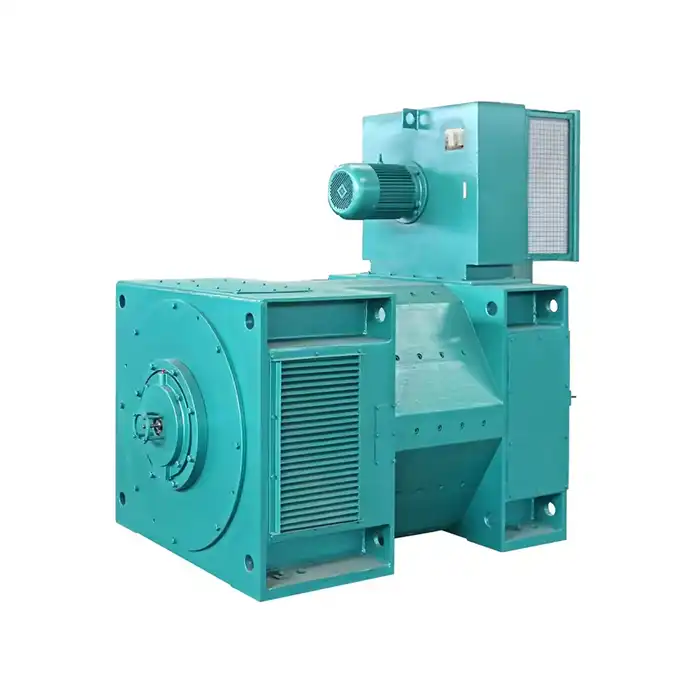




Explosion Proof Motors: Why are they important?
Electric motors can create sparks, arcs, or hot spots that can set flammable gas, vapor, or dust on fire. This is why it's important to have motors that can't explode. An explosion proof AC motor has a strong enclosure to contain an internal ignition and keep flames and hot gases from reaching the surrounding atmosphere. This is possible because the surface temperature of the motor stays below the ignition point of the dangerous substance. Thanks to this safety measure, it's less likely that mines, grain facilities, refineries, and chemical plants will catch fire, hurt someone, or shut down without warning. How do these motors work? What do US and international laws say about them? How do I choose and buy the right one?
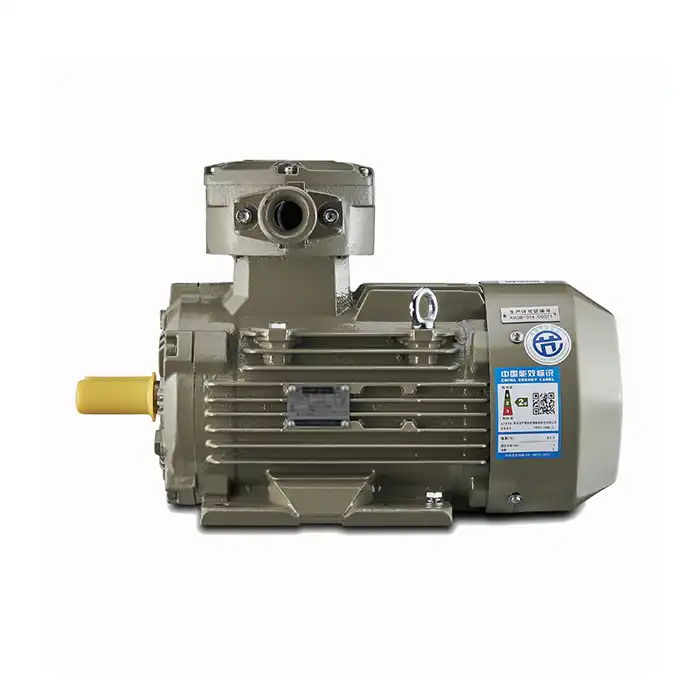
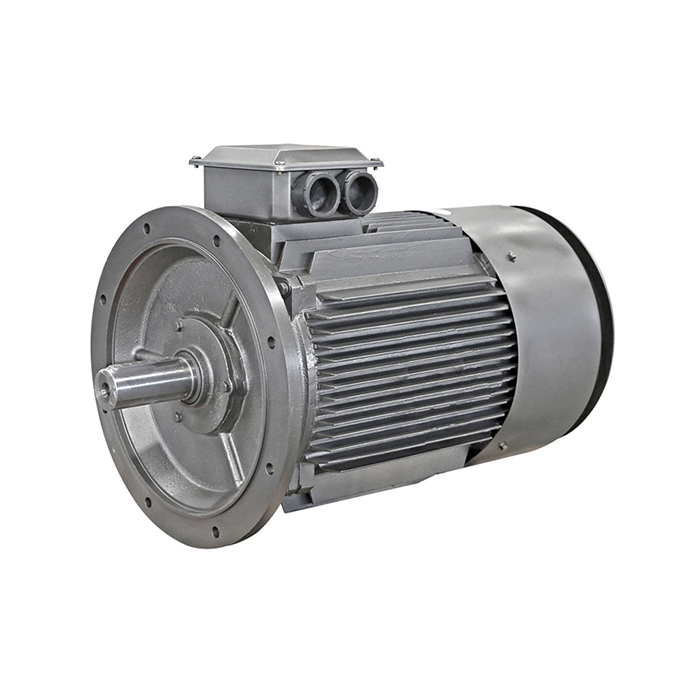
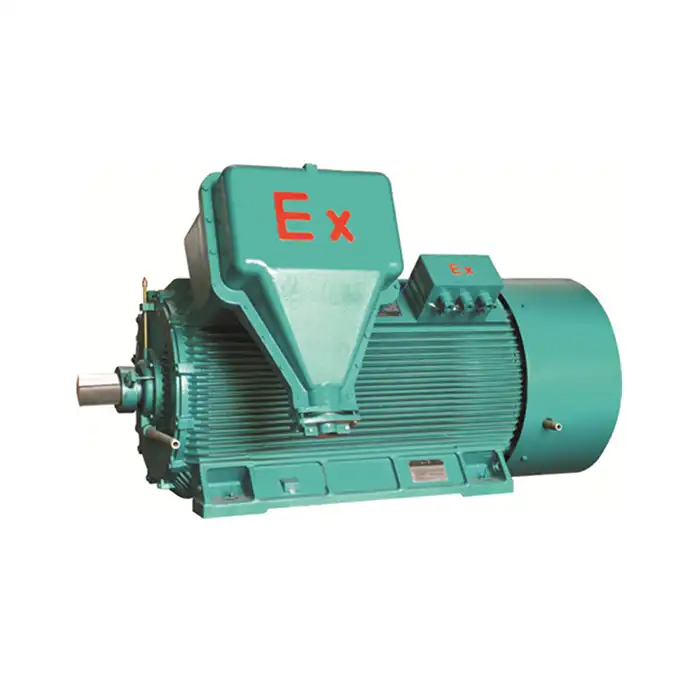
Series:YBX3
Voltage range:380V,660V,415V,380/660V,660/1140V
Power range:0.55-630 kW
Application:places where explosive gas mixtures exist in petroleum, chemical, mining, metallurgy, electric power, machinery and other industries.
Advantage: fully enclosed, self-fan cooling, squirrel cage type, high efficiency.
Explosion-proof mark: Ex d I Mb, Ex d IIB T4 Gb, Ex d IIC T4 Gb
Others: SKF, NSK, FAG bearings can be replaced according to customer requirements.
What Is an Explosion Proof AC Motor and How Does It Work?
How the Enclosure Contains Internal Ignition
An explosion proof ac motor uses electricity to move things in the same way that a regular induction motor does. What makes it different is how it was built. A gas explosion inside the housing can't break the frame or end shields, which are made of cast iron. Gas that is escaping is cooled below the point where it will catch fire before it gets to the air outside thanks to flame paths that were machined into the joints. The inside of this design has an ignition, but it doesn't stop all explosions and the gas inside doesn't stay out. Our Ex d motors are squirrel cage units that are fully enclosed. They are cooled by a self-fan and have copper windings. Just like the main housing, the terminal box and cable entries can't catch fire.
Temperature Classes From T1 to T6
It's not just sparks that matter. Top temperature of the motor is shown by a temperature class. T1 is 450°C, T2 is 300°C, T3 is 200°C, T4 is 135°C, T5 is 100°C, and T6 is 85°C. The class must stay below the temperature at which the gas starts to burn on its own. Up to 135°C, our markings for Ex d IIB T4 Gb and Ex d IIC T4 Gb are safe. Temperatures in the YBX3 series can be set to -20°C to +40°C and have an insulation class of F or H. You can also get temperature ranges that are longer. There are gasses on the site that need a lower class and can only catch fire at lower temperatures, so you should first look at that list.
How It Differs From Ordinary and TEFC Motors
The enclosure, the cooling, and the approval for use in dangerous areas are three things that people often get mixed up. TEFC talks about a setup that is completely enclosed and cooled by fans. The number IP55 means that something is safe from water and dust jets. Both of them don't show that a motor can work in a secret place. That can only be done with a known type of protection, a mark that goes with it, and a certificate that works for your market. Standard motors also don't have certified terminal boxes, flame-path joints, or surface temperatures that can be changed. Because our explosion proof AC motor uses self-fan cooling inside a flameproof enclosure, I list the cooling method, the ingress rating, and the explosion protection marking on a specification sheet as three separate lines.
Explosion Proof Motor Classifications and Safety Standards
Class, Division, and Zone Systems
The National Electrical Code (NFPA 70) is often used to mark areas on US sites as dangerous. Gasses and vapors that can catch fire are in Class I. Dust that can catch fire is in Class II, and fibers that can catch fire are in Class III. In Division 1, the risk is there even when everything is going well. It's only there when things aren't working right in Division 2. The Zone system, which is also recognized by the NEC, divides gas areas into Zones 0, 1, and 2. When we mark our Ex d IIB T4 Gb and Ex d IIC T4 Gb, it means the same level of safety as Zone 1. Before you pick out a motor, make sure you know what kind of protection you need for gas and dust.
ATEX, IECEx, UL, and CSA Certification
Each certification is linked to a certain area or set of rules. In the EU, it's called ATEX, and everyplace else, it's called IECEx. IECEx is based on the rules in IEC 60079. It is UL 674 that tests motors for North American dangerous places, while CSA tests equipment for Canada. These okays don't cancel each other out. Each of these groups has given their OK for our motors to be sold in China. The inspector or insurance company will decide what's okay if your US site needs a UL listing for Class and Division installations. Tell us what you need before placing your order, and we'll tell you what paperwork is required for each top flameproof motor factory in china.
Gas Groups, Mine Marking, and IP Ratings
IEC gas groups rank gasses by how easily a flame can pass through small openings. Ethene is in Group IIB, propane is in Group IIA, and hydrogen and acetylene are in Group IIC, which is the strictest group. They can work together, but not the other way around. An IIC motor can help an IIB motor. The Ex d I Mb in our range is for Group I mines that are filled with methane. That's all there is to IP55, IP56, and IP65. Just because something has an IP55 label doesn't mean it's safe for a dangerous area. I read the full grade and the certificate together because they need to match the site and the country where they are going.
Why Are Explosion Proof Motors Important for Industrial Safety?
Removing Ignition Sources From Hazardous Areas
That's all a fire needs: fuel, air, and a way to begin. The motor doesn't need to add the third gas if there is already fuel and air in a hidden area. A mix can catch fire from hot housings, sparks from the windings, or arcs at the terminals. Also, you should check for dust. The US Chemical Safety Board did a study in 2006 that found 681 accidents with flammable dust that killed 119 people and hurt 718 others. The accidents happened between 1980 and 2005. A certified explosion proof AC motor with engineered flame paths and controlled surface temperature eliminates the motor as a potential ignition source as long as it is installed and maintained properly.
Compliance, Insurance, and Inspection Duties
The NEC and OSHA's rules for dangerous places for electrical equipment set the standard in US general industry. The installation is then given the green light by the local government. As part of audits, insurers may also look at records of the equipment and drawings that show how the areas are grouped. It may take longer to start up a motor that doesn't have the right markings. That way, an inspector can quickly check the marking, temperature class, and gas group. The certificate, datasheet, and pictures of the nameplate should all be kept in the equipment file. Check that the explosion proof AC motor matches the purchase order before the nameplate gets to the base plate.
Downtime, Lifecycle Cost, and Replacement Planning
The cost of something is more than just the price you pay for it. A fire, getting hurt, or being shut down cost a lot more than the price difference between two motors. A motor can work in harsh conditions because its frames are made of cast iron, its joints are sealed, and its paint doesn't rust. Adding Class F or H insulation makes it better at keeping heat in. Service teams need one-for-one replacement so they don't have to redo work at the base. This is done by matching the frame size, flange, shaft extension, and marking. When work is stopped, repairs can be done faster if spare parts are kept in sync with your asset register. I suggest comparing the lifecycle cost, the availability of spare parts, and the documentation when replacing an explosion proof AC motor in addition to the price.
Explosion Proof AC Motor Applications by Industry
Oil, Gas, and Chemical Plants
There are pumps, compressors, and ventilation fans in petrochemical and oil plants that are close to hydrocarbon vapors. High temperatures, corrosive vapors, and solvents are all added to the process by chemical plants. This is where the gas group and temperature class decide the motor. Paint that doesn't rust helps keep the frame safe. Our explosion proof AC motor ranges in power from 0.55 kW to 630 kW and has 2, 4, 6, or 8 poles. 380 V, 415 V, 660 V, 380/660 V, and 660/1140 V are the options. There are times when pumps need steady duty and times when they may need more starting torque. If you need to use hydrogen, which is in group IIC, check that the datasheet says "Ex d IIC T4 Gb."
Mining, Metallurgy, and Power
Things that come from underground mines are methane, coal dust, water, vibration, and hits. In the same way that Ex d I Mb marks mine air as Group I, the cast iron frame can handle rough conditions. Check with your inspector to see if you also need local mine safety approvals to mine. Iron and steel plants and power plants use motors for fans, pumps, and conveyors. This is where mixtures of gasses can happen. Based on the load, pick the right motor. A fan needs a lot of inertia, a conveyor needs a lot of starting torque, and a pump needs steady duty. Please specify the duty cycle and starting method so that the explosion proof AC motor rating matches the load and not just the nameplate power.
Grain, Paint, Solvent, and Pharmaceutical Facilities
In grain elevators and flour mills, there is flammable dust. In paint and solvent plants, there are flammable vapors. Pharmaceutical production may use solvents and must follow hygiene and washdown rules. Our motors are safe in three different ways: IP55, IP56, and IP65. With IP65, dust can't get in. Ingress rating and dust-explosion protection, on the other hand, are not the same thing. The marks we list are for Ex d gas and Group I. Please let us know what kind of dust you work with and where you work if you are in an area with flammable dust. For places that get wet, you might need IP65 and a finish that doesn't rust. We'll make sure you know which configuration fits before you place your order.
How to Choose and Buy the Right Explosion Proof AC Motor
Match the Hazard, Marking, and Electrical Data
First, say what kind of substance it is and where it is: dust or gas, Class and Division or Zone, gas group, and temperature class. Mark it with Ex d IIB T4 Gb for IIB gasses, Ex d IIC T4 Gb for IIC gasses, and Ex d I Mb for mines when you're sure. You have to add up the voltage, duty, power (from 0.55 kW to 630 kW), and the number of poles. Please let us know right away if your network works at 60 Hz instead of 50 Hz. We'll look into our options before giving you a quote. When selecting a dustproof ac motor production plant, never settle for a rating that is less than what is required for the job; IIB equipment cannot replace IIC.
Check Mounting, Environment, and Accessories
There shouldn't be any changes needed for the new base to fit the old one. Tell us about the frame size, mounting type, flange, shaft extension, position of the terminal box, and rotation direction. If you can, include a picture of the old nameplate as well. The standard temperature range is -20°C to +40°C, but you can get ranges that are wider. The range of altitude is up to 1000 m, and it gets worse above that. You can get SKF, NSK, or FAG bearings if you ask. Tell us about any drive, brake, or sensor before you place your order. The reason for this is that the accessories need to match the approved design. After delivery, do not drill, machine, or paint over the flame paths. If you do this, the certification could be revoked.
Prepare an RFQ and Vet the Supplier
The back and forth that takes too long stops with a full RFQ. Outline the type of dangerous area, the certification needed, the temperature class, the gas group, the power, the voltage, the frequency, the speed, the mounting, the IP rating, the amount, the destination, and the delivery date. Then, ask the company that sells explosion-proof AC motors for datasheets, dimension drawings, certificates, test records, warranty terms, and shipping information. Check out the steps that were taken to make it: careful cutting, winding and insulation, putting it together and making sure it's balanced, testing, and final inspection. When you buy something from the company that makes it, test records and drawings are linked to the same company. You can now order the same model more than once. You can get technical help from XCMOTOR both before and after you buy something.
Conclusion
A motor that is explosion-proof won't start a fire when there is flammable gas, vapor, or dust nearby. An explosion proof AC motor has a built-in spark plug and a T class surface temperature limit inside a certified flameproof housing. Which one is best depends on the type of area, the gas group, the temperature class, and the kind of certification that is accepted in that area. This is because ATEX, IECEx, and UL approvals don't work in place of each other, and IP55 or TEFC approvals don't mean the product is safe on their own. This app manages the voltage, power, and accessories in plants that work with oil, chemicals, mines, and dust. Noncompliance and downtime are less likely to happen when there is careful maintenance, clear specifications, and supplier documents. They also help people think about how much something will cost in the long run, not just the price.
FAQ
1. What is an explosion proof ac motor?
An AC motor with a certified housing that has a built-in spark plug and keeps hot gasses and flames from starting fires in the air around it. In the same way, the temperature of its surface stays in a certain range.
2. Is a TEFC motor the same as an explosion proof motor?
That's not right. TEFC talks about a design that is completely enclosed and cooled by fans. For a dangerous area to be approved, you need a certified type of protection, a marking that goes with it, and a certificate that is valid in your area.
3. Which documents should I request?
Find out about the warranty terms, test records, installation instructions, wiring diagram, installation instructions, test results, and how to get a new one. If it says "Ex d IIB T4 Gb," it should match the nameplate and your area classification.
4. Can I modify the motor on site?
You shouldn't drill, machine, paint, or swap parts on flame paths without permission. If changes are made without permission, the certification may not be valid anymore. So, contact the supplier to get a repair that has been approved.
Request a Quote for the Right Explosion Proof AC Motor
XCMOTOR needs to know your power rating, voltage, temperature class, amount, destination, and any warning signs that the area is dangerous. As an explosion proof AC motor supplier, we look over your requirements and send you a quote for a model that works. As part of our service, we deliver for free, let you return items for 30 days, and offer help on Saturday and Sunday. You can email xcmotors@163.com or visit motorxc.com to find out more about a product.
References
1. IEC 60079-1, Explosive Atmospheres – Equipment Protection by Flameproof Enclosures "d", 2014
2. IEC 60079-0, Explosive Atmospheres – Equipment: General Requirements, 2017
3. IEC 60079-14, Explosive Atmospheres – Electrical Installations Design, Selection and Erection, 2013
4. NFPA 70, National Electrical Code, 2023
5. NFPA 497, Recommended Practice for the Classification of Flammable Liquids, Gases, or Vapors and of Hazardous (Classified) Locations for Electrical Installations in Chemical Process Areas, 2021
6. U.S. Chemical Safety and Hazard Investigation Board, Investigation Report: Combustible Dust Hazard Study, 2006