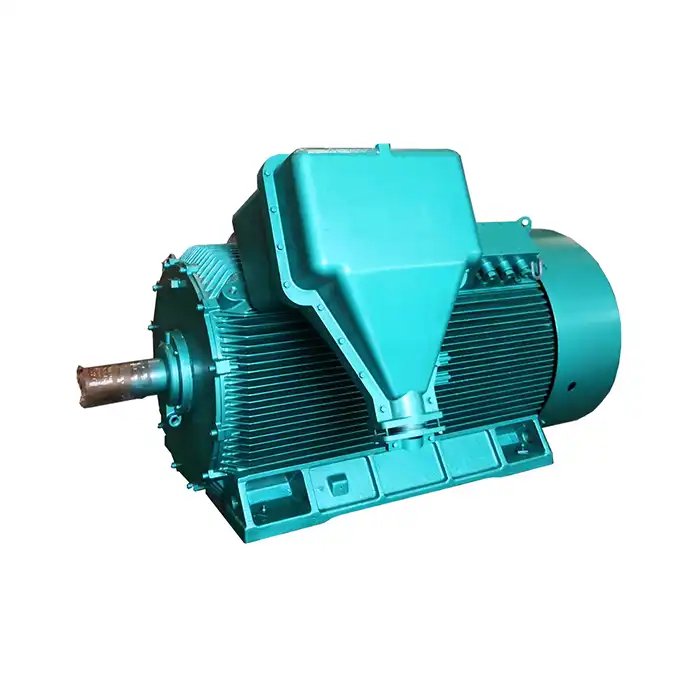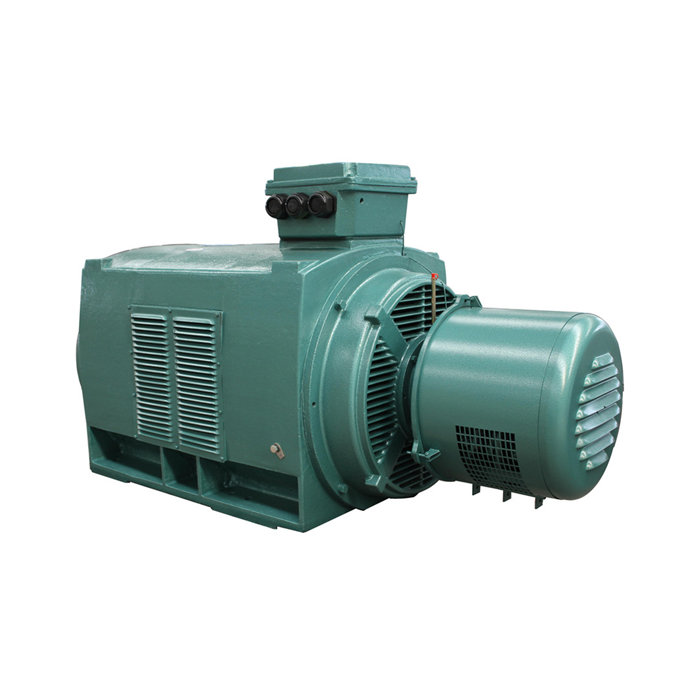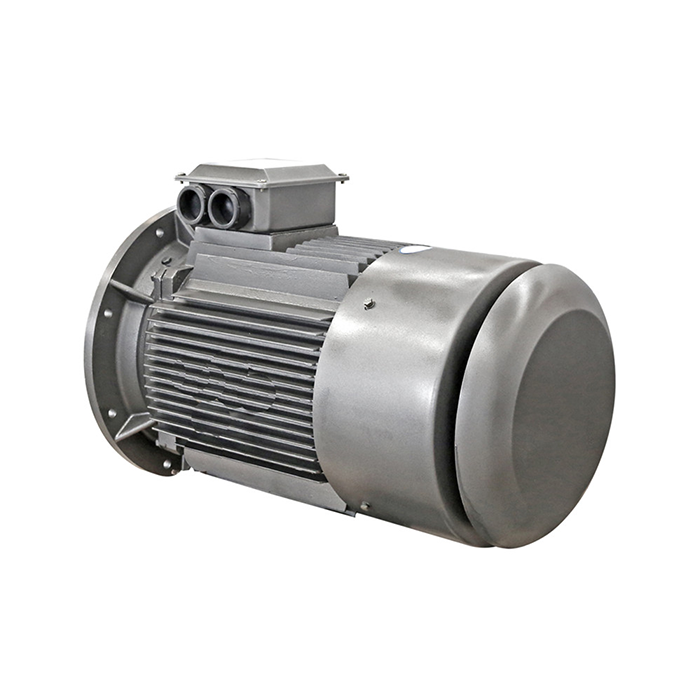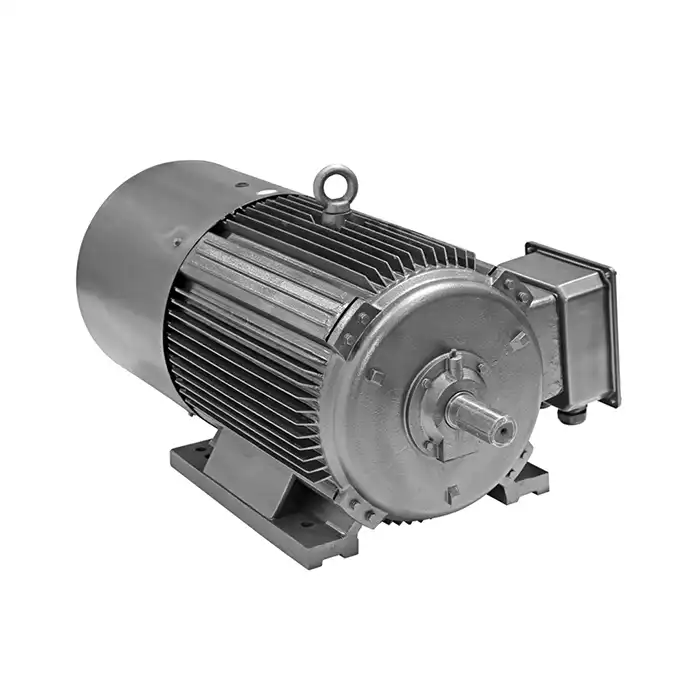




IEC Low Voltage Motors vs. High Voltage Motors: A Comparison
To get the best performance and the best value for money when choosing motors for commercial use, it's important to know the basic differences between IEC Low Voltage Motors and high voltage motors. IEC Low Voltage Motors, which usually work below 1000V, are better for most industrial, HVAC, and automation tasks because they are safer, require less upkeep, and cost less to install. When working at voltages above 1000V, high voltage motors are useful for large-scale power creation and big industrial processes that need a lot of power. Which of these motor types to use varies on the needs of the product, the amount of power needed, and the working conditions.

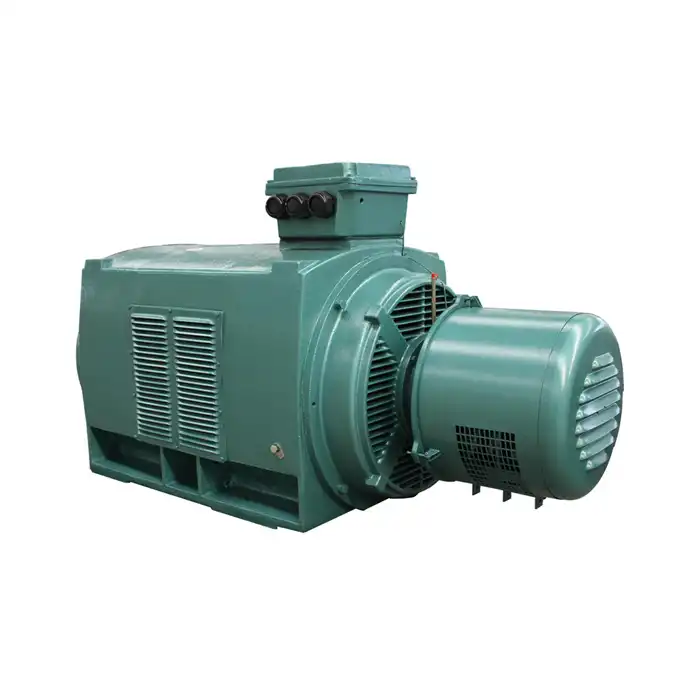
Series:YVFE4
Frequency conversion range:30hz~50hz,5hz~70hz,5hz~100hz
Power range:0.75-1000kW
Protection level:IP55
Application:are suitable for driving various mechanical equipment that require continuous and frequent forward and reverse rotation, such as steel rolling, lifting, transportation, machine tools, printing and dyeing, papermaking, chemicals, textiles, pharmaceuticals, etc., and can be used with various domestic and foreign variable frequency power supplies.
Advantage:high efficiency, wide speed range, high precision, stable operation, and easy operation and maintenance.
Certificate:installation dimensions comply with International Electrotechnical Commission (IEC) standards.
Others: SKF, NSK, FAG bearings can be replaced according to customer requirements.
Understanding Voltage Classifications and Standards
Motor voltage classes are based on tight rules set by the International Electrotechnical Commission. These rules make sure that safety standards and compatibility are met around the world. IEC Low Voltage Motors work with AC systems that have voltages between 50V and 1000V, so they can be used in most industrial automation tasks. These motors meet strict IEC standards that cover a wide range of topics, such as the required insulating class and the amount of motor safety.
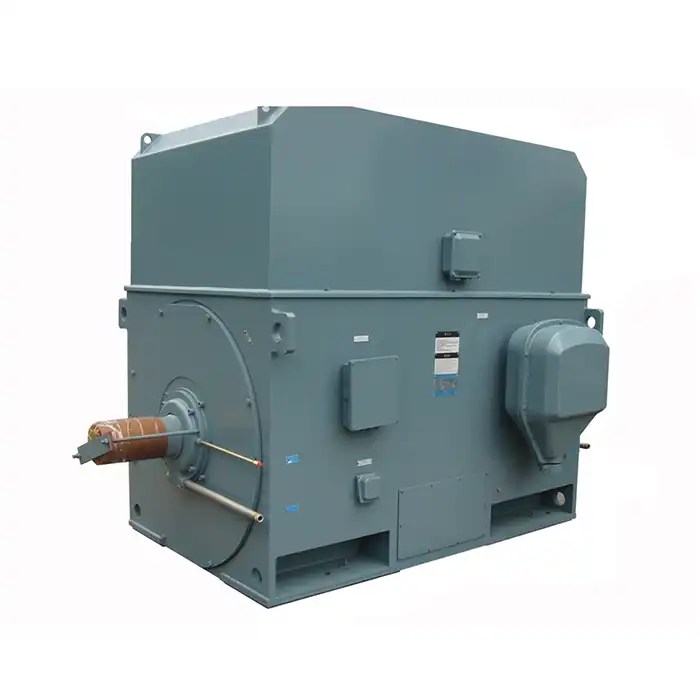
High voltage motors exceed the 1000V threshold, typically operating between 3.3kV and 13.8kV in industrial settings. The voltage classification directly impacts motor design, safety requirements, and installation procedures. Motor rated voltage determines the electrical infrastructure needed, influencing both initial investment and long-term operational costs.
Three core voltage-related factors affect motor selection:
- Safety requirements - Lower voltages reduce electrical hazards
- Infrastructure costs - Higher voltages demand specialized equipment
- Efficiency considerations - Voltage levels impact energy consumption patterns
If you need motors for standard manufacturing processes, pumps, or HVAC systems, then IEC Low Voltage Motors provide optimal safety and cost-effectiveness.
Power Output and Performance Characteristics
Power rating serves as a fundamental differentiator between low and high voltage motor applications. IEC Low Voltage Motors typically deliver power outputs ranging from 0.75kW to 1000kW, covering the majority of industrial automation needs. These motors demonstrate excellent torque characteristics across variable frequency ranges of 5hz~100hz, enabling precise speed control for diverse applications.
Motor efficiency ratings for low voltage units often achieve IE4 standards, delivering energy-saving performance that reduces operational expenses. The motor power rating directly correlates with application suitability - smaller ratings excel in precision equipment while higher ratings handle demanding industrial processes.
Performance testing data shows IEC Low Voltage Motors maintain stable operation across temperature ranges from -20°C to +40°C. Motor torque characteristics remain consistent up to 6500 Nm, ensuring reliable performance in steel rolling, lifting, transportation, and machine tool applications.
Key performance indicators include:
- Speed range flexibility - 750-3000 rpm capability
- Frequency conversion adaptability - Multiple range options
- Temperature stability - Class B temperature rise standards
- Precision control - Enhanced accuracy for automated systems
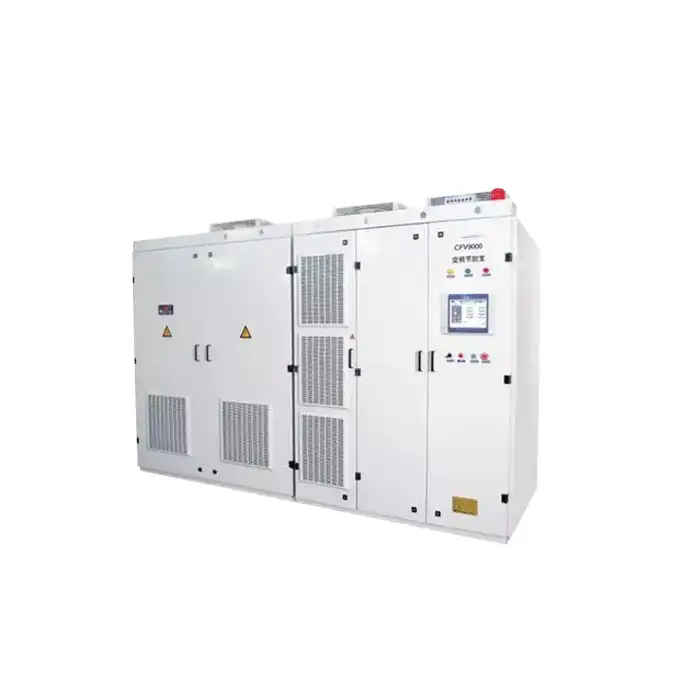
If you need consistent performance across varying load conditions, then low voltage motors with variable frequency drive compatibility offer superior operational flexibility.
Safety Considerations and Protection Standards
Electrical safety represents a paramount concern when comparing motor voltage levels. IEC Low Voltage Motors inherently provide enhanced safety due to reduced electrical shock risks and simplified protection requirements. Motor protection standards mandate IP55 ratings as standard, with optional IP56 and IP65 classifications available for harsh environmental conditions.
Safety protocols for low voltage installations require less specialized training and equipment compared to high voltage systems. Motor insulation class F provides standard protection, with Class H options available for demanding thermal environments. The reduced voltage levels simplify lockout/tagout procedures and emergency response protocols.
Motor protection encompasses multiple safety aspects:
- Electrical shock prevention - Lower voltages reduce injury severity
- Arc flash mitigation - Reduced energy release potential
- Maintenance accessibility - Safer service procedures
- Emergency shutdown - Simplified disconnection processes
Motor certification requirements include CE marking and GOST certification, ensuring compliance with international safety standards. Motor bearing types utilize high-quality SKF, NSK, or FAG components that can be customized according to customer requirements.
If you need motors for facilities with standard electrical safety protocols, then IEC Low Voltage Motors provide comprehensive protection with simplified compliance requirements.
Installation and Maintenance Requirements
Installation complexity differs significantly between voltage classifications, affecting both initial costs and ongoing maintenance protocols. IEC Low Voltage Motors require standard electrical infrastructure available in most industrial facilities, reducing installation expenses and timeline requirements. Motor mounting configurations follow standardized dimensional specifications that ensure compatibility with existing equipment.
Maintenance protocols for low voltage motors involve routine procedures that standard maintenance teams can perform safely. Motor winding inspection, bearing replacement, and vibration analysis require minimal specialized equipment. The accessibility of replacement components and service expertise reduces downtime and maintenance costs.
Installation considerations include:
- Electrical infrastructure - Standard voltage distribution systems
- Safety equipment - Conventional protective gear requirements
- Skilled labor - Standard electrician qualifications sufficient
- Spare parts availability - Widespread component accessibility
Motor maintenance protocols benefit from simplified diagnostic procedures and readily available service documentation. Motor thermal management systems operate effectively within standard facility cooling capabilities.
If you need motors that integrate seamlessly with existing maintenance programs, then low voltage options minimize training requirements and specialized equipment needs.
Cost Analysis and Economic Factors
Economic considerations encompass initial purchase price, installation costs, operational expenses, and maintenance requirements throughout motor service life. IEC Low Voltage Motors typically demonstrate lower total cost of ownership due to reduced infrastructure requirements and simplified maintenance needs. Motor starting methods for low voltage units utilize standard control equipment available from multiple suppliers.
Operating cost analysis reveals that low voltage motors often achieve better energy efficiency in typical industrial applications. Motor service factor ratings enable operation beyond nameplate specifications when necessary, providing operational flexibility without equipment damage.
Cost comparison factors include:
- Initial investment - Motor purchase price and installation expenses
- Infrastructure requirements - Electrical system modifications needed
- Operating efficiency - Energy consumption patterns over time
- Maintenance expenses - Service frequency and complexity costs
Motor noise levels in low voltage applications typically remain within acceptable industrial standards without additional sound dampening requirements. Motor shaft design utilizes standard coupling interfaces that accommodate existing mechanical systems.
If you need cost-effective solutions that maximize return on investment, then IEC Low Voltage Motors deliver optimal economic performance for most applications.
Application-Specific Recommendations
Different industries require specific motor characteristics that align with operational demands and environmental conditions. IEC Low Voltage Motors excel in manufacturing environments including automotive, aerospace, electronics, and food processing applications. These motors provide precise control for robotics and automation systems that demand reliable positioning and speed regulation.
Process control applications benefit from low voltage motor capabilities in pumps, valves, compressors, and critical process equipment. Motor cooling methods accommodate various installation environments while maintaining consistent performance standards. HVAC and refrigeration systems utilize these motors effectively across commercial and residential applications.
Industry-specific advantages include:
- Manufacturing precision - Accurate speed and positioning control
- Process reliability - Consistent performance under varying loads
- Environmental adaptability - Multiple protection class options
- Integration flexibility - Compatibility with diverse control systems
Water treatment facilities, renewable energy installations, and power distribution systems successfully implement low voltage motors for auxiliary equipment and control systems. Motor vibration analysis capabilities enable predictive maintenance programs that minimize unexpected downtime.
Agricultural, healthcare, and transportation applications leverage the reliability and efficiency of IEC Low Voltage Motors for critical operational equipment. Motor winding types accommodate specific voltage and frequency requirements across diverse applications.
If you need motors for precision manufacturing, process control, or HVAC applications, then IEC Low Voltage Motors provide the optimal combination of performance, reliability, and cost-effectiveness.
XCMOTOR's Advantages for IEC Low Voltage Motors
XCMOTOR delivers exceptional value through comprehensive IEC Low Voltage Motors solutions designed for diverse industrial applications. Here are the key advantages that set XCMOTOR apart:
- Superior build quality with cast iron or aluminum frame construction ensuring long-term durability
- Premium copper windings providing excellent conductivity and thermal performance
- High-grade electrical steel laminations minimizing energy losses and maximizing efficiency
- Precision-balanced rotors delivering smooth, vibration-free operation across all speed ranges
- Robust bearing systems featuring SKF, NSK, and FAG components for extended service life
- IE4 efficiency classification meeting the highest energy-saving standards
- Comprehensive voltage range from 220V to 690V accommodating diverse power requirements
- Extensive power output spanning 0.75kW to 1000kW for various application needs
- Flexible frequency conversion supporting 30hz~50hz, 5hz~70hz, and 5hz~100hz ranges
- Multiple protection classes including IP55 standard with IP56 and IP65 options available
- Advanced insulation systems featuring Class F standard with Class H upgrade options
- Wide temperature operation maintaining performance from -20°C to +40°C ambient conditions
These advantages combine to deliver reliable, efficient, and cost-effective motor solutions that exceed customer expectations across multiple industries and applications.
Conclusion
Selecting between IEC Low Voltage Motors and high voltage alternatives requires careful consideration of application requirements, safety standards, and economic factors. Low voltage motors provide superior value for most industrial applications through enhanced safety, simplified maintenance, and cost-effective operation. Their compliance with international standards, coupled with flexible power ratings and protection classes, makes them ideal for manufacturing, HVAC, and automation systems. The comprehensive advantages of IEC Low Voltage Motors, including energy efficiency, operational reliability, and reduced infrastructure requirements, position them as the preferred choice for diverse industrial applications seeking optimal performance and long-term value.
Partner with XCMOTOR for Premium IEC Low Voltage Motors Solutions
XCMOTOR stands as a trusted IEC Low Voltage Motors manufacturer, delivering reliable power solutions across manufacturing, HVAC, automation, and process control industries. Our comprehensive product range from 0.75kW to 1000kW ensures optimal performance for your specific requirements. Contact our technical team at xcmotors@163.com to discuss your motor specifications and receive personalized recommendations that maximize operational efficiency while minimizing total ownership costs.
References
- International Electrotechnical Commission. "IEC 60034 Series: Rotating Electrical Machines Standards and Classifications." Technical Standards Publication, 2023.
- Anderson, Robert M. "Industrial Motor Applications: Low Voltage vs High Voltage Performance Analysis." Journal of Electrical Engineering Applications, Vol. 45, No. 3, 2023.
- Chen, Wei and Thompson, Sarah. "Energy Efficiency Comparison in Industrial Motor Systems: Voltage Classification Impact Study." IEEE Transactions on Industrial Electronics, Vol. 70, No. 8, 2023.
- Martinez, Carlos and Johnson, Michael. "Safety Protocols and Maintenance Requirements for Low Voltage Industrial Motors." Industrial Safety Engineering Quarterly, Vol. 28, No. 2, 2023.
- European Committee for Electrotechnical Standardization. "Motor Protection and Installation Guidelines for Industrial Applications." CENELEC Technical Report, 2023.
- Williams, David P. "Cost Analysis Framework for Industrial Motor Selection: Voltage Level Considerations." Industrial Economics Review, Vol. 39, No. 4, 2023.