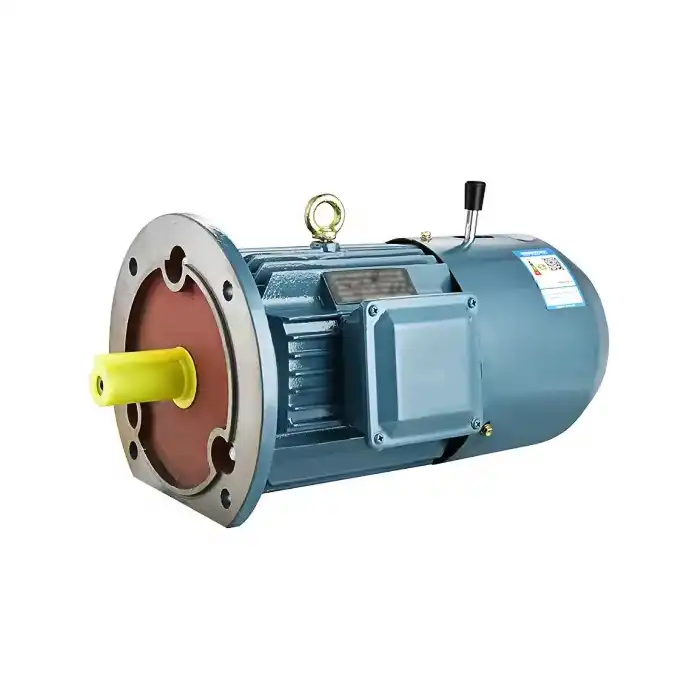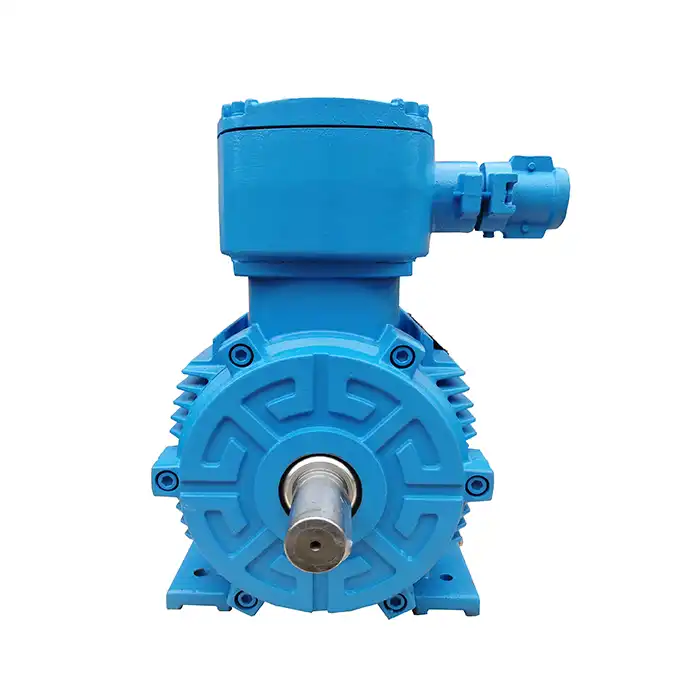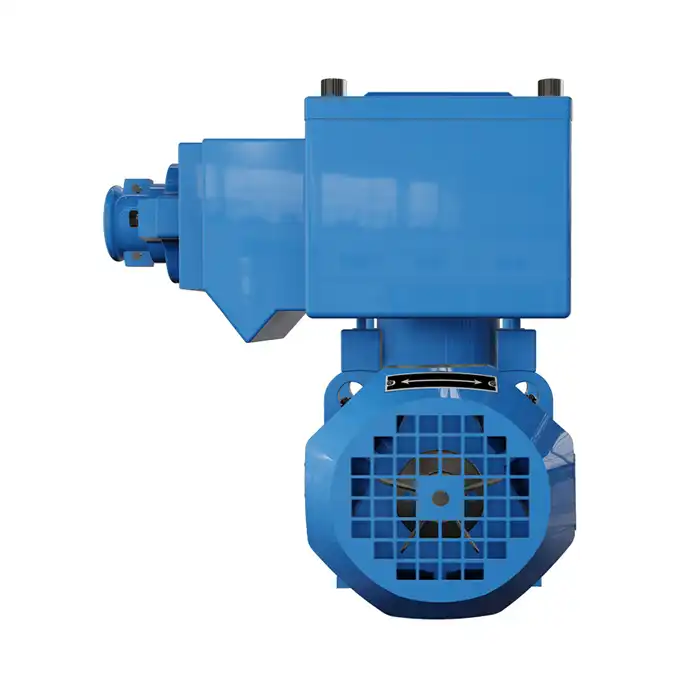




How Does IC611 Cooling Work in a High-Voltage Increased-Safety Motor?
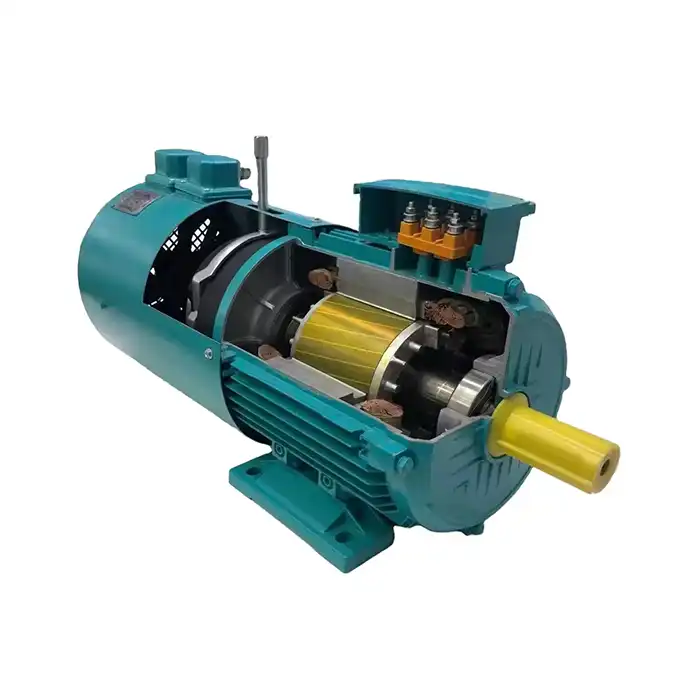
It is made up of two separate air circuits that work together as a closed loop in an IC611 high-voltage increased-safety motor. Fans on the motor shaft move air inside the motor through the stator and rotor, where it gets hot. After going through the motor, the warm air goes through an air-to-air heat exchanger. The heat is pushed out into the air around it by a second flow of air from an outside fan. The two streams of air never mix, so dust, moisture, and process gas don't get into the motor's interior. The insulation stays safe and the motor stays within its certified temperature class when the temperature stays steady.
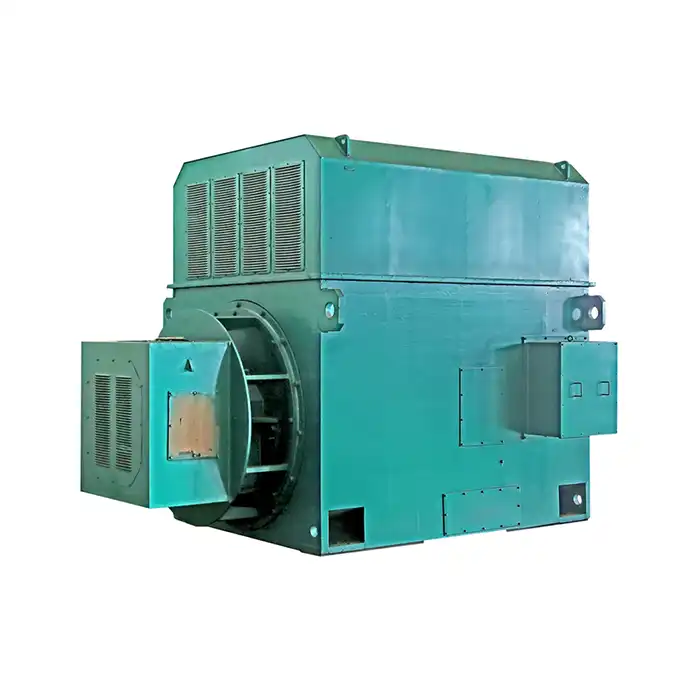
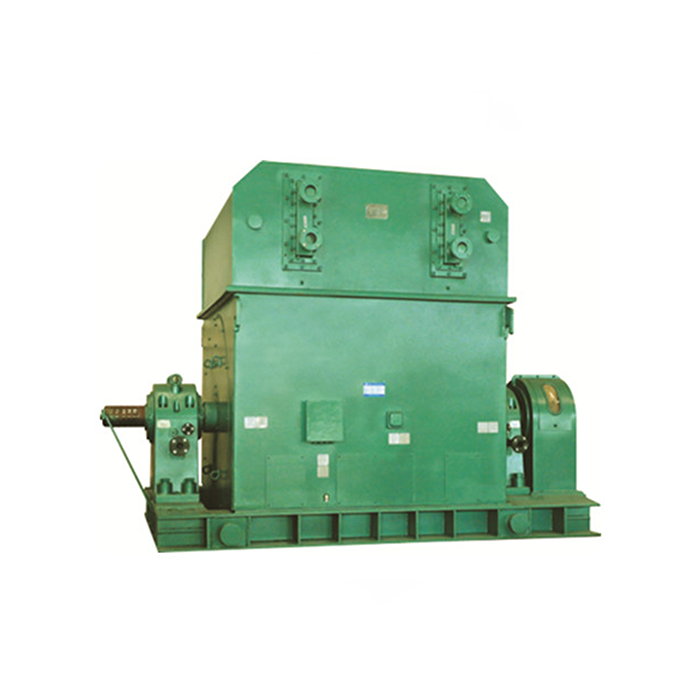
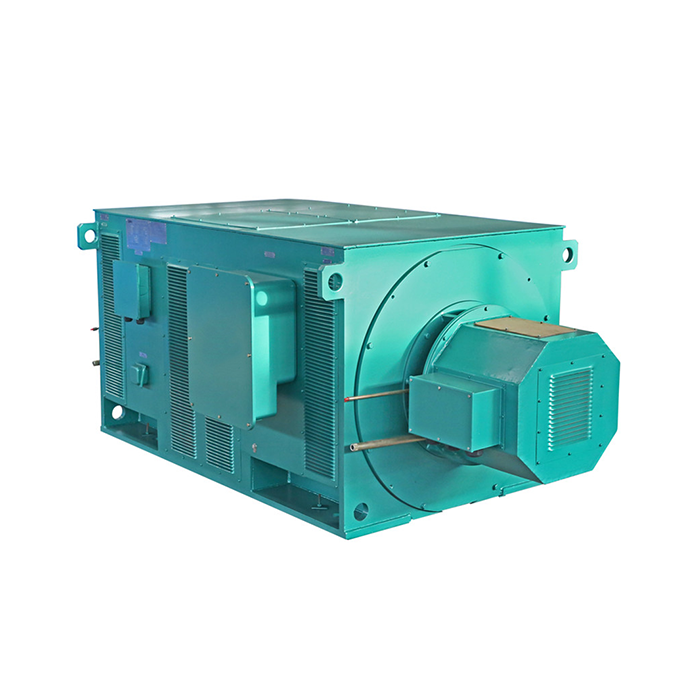
Series:YXKK
Protection level:IP54
Voltage range:3000V±5%,3300V±5%,6000V±5%,6600V±5%,10000V±5%,11000V±5%
Power range:200-3150 kW
Application:fans, water pumps, compressors, crushers, cutting machine tools, transportation machinery, etc.
Advantage:high efficiency and energy saving, low noise, small vibration, long service life, easy installation and maintenance.
Standard: This series of products complies with JB/T 12730 and JB/T 12729 standards.
Others: SKF, NSK, FAG bearings can be replaced according to customer requirements.
If you need to choose between a 6.6 kV or 10 kV high-voltage increased-safety motor, this guide was written for you. As a part of Shaanxi Qihe Xicheng Electromechanical Equipment Co.,Ltd., XCMOTOR sells power equipment and helps customers with technical questions before and after they buy it. I'm going to talk about the questions people ask when they are comparing cooling designs.
How IC611 Cooling Works Inside a High-Voltage Increased-Safety Motor
What IC611 Means in the IEC Cooling Code
Each way of cooling is given a short code by IEC 60034-6. International Cooling is what "IC" stands for in IC611. The "6" means that there is a heat exchanger on top of the machine that cools itself with air from the room. The two "1"s show that the air circuits inside and outside both move by self-circulation. Because the motor shaft drives the fans, there is no need for a separate fan motor. Since air cools both circuits, the letter A is left out of the short form. As a result, there is an air-to-air heat exchanger inside the whole machine. Check the datasheet and outline drawing of any high-voltage increased-safety motor you want to buy to see where the fans are located and how the air flows.
The Step-by-Step Heat Path
There are five steps to the IC611 motor cooling principle. There are first losses in the winding, rotor, core, and bearings that are turned into heat. Second, the fan inside moves air that is enclosed over those parts, warming the air. Third, the heat exchanger is filled with warm air. Fourth, an outside fan moves air from the outside through the other side of the heat exchanger. The heat is carried away by the air. Fifth, the cooled air inside the motor goes back to it, and the process starts all over again. There is a metal wall between the two flows of air, so only heat can pass through it. When you get your high-voltage increased-safety motor, it should come with a labeled drawing that shows the stator, rotor, fans, exchanger, and both flow directions.
Where the Heat Comes From
There are several places where heat can escape. With more load current, the stator and rotor lose more copper. The magnetic field in the core is what makes the iron fall out. A smaller amount is lost due to swaying loads, and friction heats the bearings. These losses are close together in a 6.6 kV or 10 kV frame. The sealed box doesn't have any open vents, so the heat exchanger needs to take the load off of it. If the exchanger is dirty or the flow of air from outside drops, warmer air from inside comes back in, and the temperature of the winding rises. The reason why cooling performance and temperature rise show up together in the test report of every high-voltage increased-safety motor can be found at that link.
Temperature Control and Hazardous-Area Safety in Ex e Motors
How Cooling Links to Temperature Class and Insulation Life
IEC 60079-7 talks about increased safety protection, which is meant to keep arcs, sparks, and hot surfaces from happening during normal use. The best surface temperature is set by the temperature class. T1 is 450°C, T2 is 300°C, T3 is 200°C, T4 is 135°C, T5 is 100°C, and T6 is 85°C. That the class is below the temperature at which the gas present will catch fire. The standard also includes a tE time for machines that spin. This is the maximum amount of time that a locked rotor can run before the winding gets too hot and the safety device trips. Heat can also wear down insulation. As a general rule, the life of insulation cuts in half for every 10°C of extra temperature that stays there for a long time. Not the cooling code, but the certificate of your high-voltage increased-safety motor factory direct will tell you what class it is.
Why Enclosed Air-to-Air Cooling Suits Hazardous Areas
An open-ventilated motor pulls air from the room through its coils. If there is a flammable gas, vapor, or dust in the air, it will carry contaminants right to the insulation. When you design an enclosed IC611, the air inside stays in its own loop. This means that the winding comes into contact with less dust, moisture, and corrosive gas. The Exe goal of limiting hot surfaces is also helped by stable temperature. Chemical plants, refineries, oil and gas facilities, gas processing stations, and some mining areas are common places for this to happen. Check the zone, gas or dust group, temperature class, equipment protection level (EPL), IP rating, and ambient temperature before making your choice. All of those checks still need to be done on a high-voltage increased-safety motor that has IC611 cooling.
Sensors That Watch the Cooling System
Since a blocked exchanger doesn't usually make itself known, monitoring is important. RTDs in the stator winding, bearing temperature sensors, vibration monitoring, and overload protection are all common ways to protect a high-voltage motor. As well, some projects check the airflow or the temperature of the exchanger. The winding temperature is going up at steady load points, which means less cooling. Warm bearings with normal winding point to a problem with the bearings or the oil. Trends are more telling than single readings, so I recommend keeping track of values on the day they are first used as a starting point. Find out from the supplier which sensors are included with the high-voltage increased-safety motor and which ones can be added as extras. Then, use that list to match your control system and project requirements.
Comparing IC611 With Other Cooling Methods and Selecting the Right Motor
IC611 Compared With Open, IC616, and Air-to-Water Cooling
Motors that are open and ventilated let air from the room flow through the windings and protect against dirt and gas less well. For the external air circuit, IC616 uses a separate fan that is mounted on the machine. That helps when the speed of the shaft changes, like with a variable-speed drive, but it comes with extra wiring, a fan motor, and extra power. Most of the time, air-to-water designs can fit more cooling into a smaller frame, but they still need water pipes, quality control for the water, and leak checks. Because the IC611 doesn't need a water line or a separate fan supply, less work needs to be done on the job site. In exchange, the frame has a bigger exchanger, and the airflow changes depending on the speed of the shaft. Match that trade-off to your site for a high-voltage increased-safety motor.
Cooling Class Versus Explosion-Protection Type
These two labels tell us different things. The way heat leaves the motor is shown in IC611. Under IEC 60079-7, Exe e shows how the motor stays away from sources of ignition. Ex d is a different method called the flameproof enclosure. It stops sparks and hot spots but not an explosion inside. Because a motor can be both IC611 and Ex e at the same time, the datasheet needs both entries. The National Electrical Code (NFPA 70) sets the rules for installations in the United States. Find out early on from the authority that has control whether IECEx or ATEX documents meet the needs of the site. This one step keeps things from going wrong when a high-voltage increased-safety motor is approved.
Data to Collect Before Selecting a High-Voltage Increased-Safety Motor
The driven equipment is the first thing that is chosen. Get the speed, power, voltage, torque, inertia, duty cycle, and number of starts per hour. Then write down the temperature, height, voltage changes, and any cooling derating instructions given by the manufacturer. Take care of the voltage. As voltage goes up, so does torque. At 110% voltage, torque is about 121%, and starting current also goes up. I first compare your grid to the YAKK series' six levels, which are 3000 V, 3300 V, 6000 V, 6600 V, 10000 V, and 11000 V. Each level has a ±5% tolerance. List the type of gas, the temperature, the IP rating, the starting method, the sensors, and any drawings or test reports that are needed.
Maintaining and Sourcing a High-Voltage Increased-Safety Motor
Routine Maintenance That Protects Cooling and Certification
When you take care of an IC611 motor, you protect both the airflow and the Ex e level of protection. Check the surfaces of the heat exchanger, the fan covers, the ventilation holes, the terminal boxes, the cable glands, the earthing connections, and any signs of corrosion or overheating. Set how often to clean based on things like dust, oil mist, salt, and process residue at the site, and make changes as directed by the maker. Follow the rules for isolation and work permits. Only use spare parts that have been approved, and don't make any changes that could make the certificate invalid. Trends in temperature and vibration can show that airflow is decreasing or bearings are wearing out before they break. Keep the records because they will come in handy when you are auditing and fixing problems with a high-voltage increased-safety motor.
Common Cooling Problems and How to Avoid Them
Most problems with cooling are caused by how the motor was installed, not the motor itself. When there isn't enough space around the fan or exchanger, airflow is limited and hot air flows back around. A closed motor room or being at a high altitude can lower the thermal margin below what was assumed on the nameplate. A lot of starts, slow speeds, and loads with a lot of inertia all add heat that continuous-load calculations don't take into account. Fans, sensors, or replacement parts that haven't been approved can mess up airflow and certification. A layout check against the outline drawing, a derating review, approved spares, and written Ex maintenance procedures are some of the things I think should be done. There is more height and weight with the exchanger, so plan where to move and lift the high-voltage increased-safety motor before it leaves the factory.
Lifecycle Cost Beyond the Purchase Price
Price alone only shows part of the story. Some of the motor's power goes to shaft-driven fans, but good heat removal keeps the insulation safe, cuts down on thermal trips, and stops that weren't planned. The IC611 doesn't change the motor's other ratings, so check the power factor, how the load acts, and how well it starts on their own. Aside from the cost of installation, the IC611 doesn't need any water pipes or site work. Include the cost of cleaning, spare parts, downtime, expected service life, and the time it takes to get a new one. Before you place an order for a high-voltage increased-safety motor, talk about a custom IC611 design if the standard layout doesn't work with the site's noise or space requirements.
YAKK Series Specifications at a Glance
Our YAKK high voltage increased safety motor can handle speeds between 500 and 3000 rpm and 200 to 3550 kW. Protection is IP55 or IP56, and higher ratings can be asked for. Insulation is Class F, and Class H can be added if needed. Cooling is IC611. The basic design includes a cast iron frame, a precisely balanced rotor, a terminal box for safe connections, and stronger insulation for the windings. Bearing brands can be changed to meet the needs of each customer. The series is based on GB 10068, and its benefits include low noise, low vibration, reliable operation, and ease of use and maintenance. Fans, compressors, water pumps, crushers, cutting tools, and transportation tools are all common uses. Oil and gas, chemical and petrochemical, mining, pulp and paper, and water treatment sites can all benefit from this high-voltage increased-safety motor.
Documents and Tests to Request From Any Supplier
For more safety, our papers list IEC 60079-0 and IEC 60079-7, ATEX and IECEx certification for areas with explosives, and ISO 9001:2015 for quality management. I think you should compare the scope of each certificate to your rating. We test all of our motors with and without load, and we also look at their vibrations. No matter which supplier you choose, make sure you get type test reports, per-unit factory test records, temperature-rise and vibration data, outline drawings with lifting points, a list of spare parts, and warranty terms. Match each piece of paper to the serial number on the motor. That match clears up any questions about the consistency of the batch and gives your technical team proof for the approval file.
Conclusion
A high-voltage increased-safety motor stays within its temperature range with IC611 cooling. This is done by an air-to-air heat exchanger moving heat from a sealed internal air loop to an outside air stream. The code is based on IEC 60034-6 and doesn't say anything about explosion safety. That's the job of Ex e and IEC 60079-7. The removal of heat affects the temperature class and life of the insulation by controlling the temperature of the winding and the surface. IC611 doesn't need water pipes or a separate fan supply like open, IC616, and air-to-water designs do. Instead, it depends on the speed of the shaft and how clean the exchanger is. When choosing a sound system, you should think about things like duty, voltage, ambient conditions, certificates, and lifecycle cost. Proper installation and maintenance will also keep the airflow going.
FAQ
1. Is IC611 an explosion-protection type?
No, the number IC611 means "cooling." The type of protection is shown by Ex e or Ex d. This means that a high-voltage increased-safety motor needs both entries on its paperwork. Check the certificate to make sure.
2. Does an IC611 motor need cooling water?
There is no need for water pipes in the IC611 because it uses air on both sides of the heat exchanger. Clean and clear the area around the exchanger and fan so that air can flow.
3. Can a 6.6 kV or 10 kV motor use IC611?
When IC611 is used to cool the YAKK series, it has ratings for both 6600 V and 10000 V. Check with us about the exact rating and certificate scope.
4. What should I send for a quotation?
Send information about the driven equipment, the type of hazardous area it is in, the voltage, the power, the speed, the way it starts, and where it needs to be delivered. Write down the certificates you need, like IECEx or ATEX.
Request a High-Voltage Increased-Safety Motor Recommendation From XCMOTOR
To XCMOTOR at xcmotors@163.com, send your datasheet, classification for hazardous areas, voltage, power, speed, starting method, and delivery address. When you buy a high-voltage increased-safety motor from us, we talk to you about the IC611's cooling needs, certificate needs, and mounting details. Original parts are available at XCMOTOR, and they offer free delivery and support on Saturdays and Sundays. For more information on the product, go to motorxc.com.
References
1. IEC 60034-6: Rotating Electrical Machines – Part 6: Methods of Cooling (IC Code), 1991
2. IEC 60079-7: Explosive Atmospheres – Part 7: Equipment Protection by Increased Safety "e", 2015
3. IEC 60079-0: Explosive Atmospheres – Part 0: Equipment – General Requirements, 2017
4. IEC 60034-1: Rotating Electrical Machines – Part 1: Rating and Performance, 2022
5. NFPA 70: National Electrical Code, 2023
6. IEC 60034-14: Rotating Electrical Machines – Part 14: Mechanical Vibration of Certain Machines with Shaft Heights 56 mm and Higher, 2018