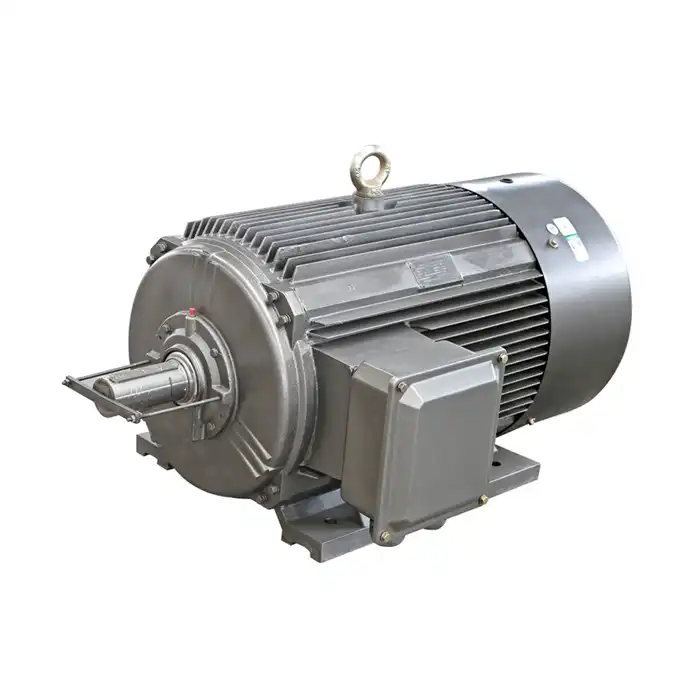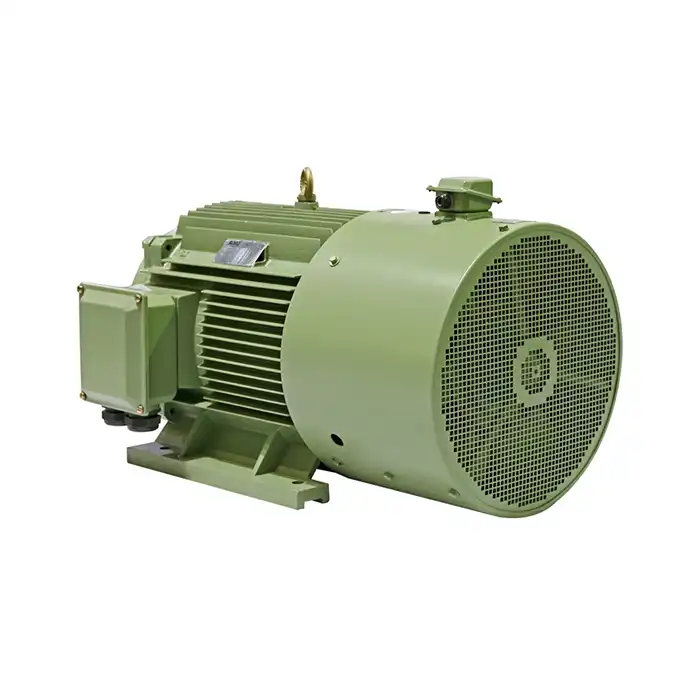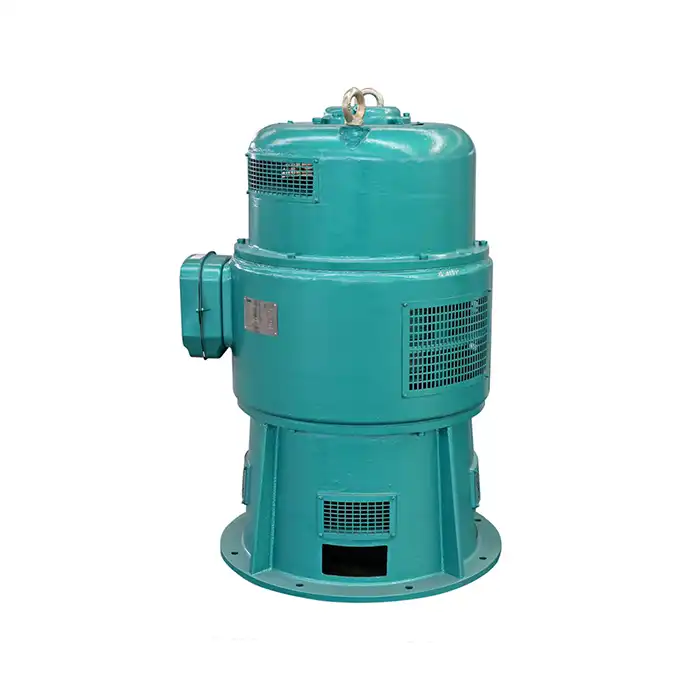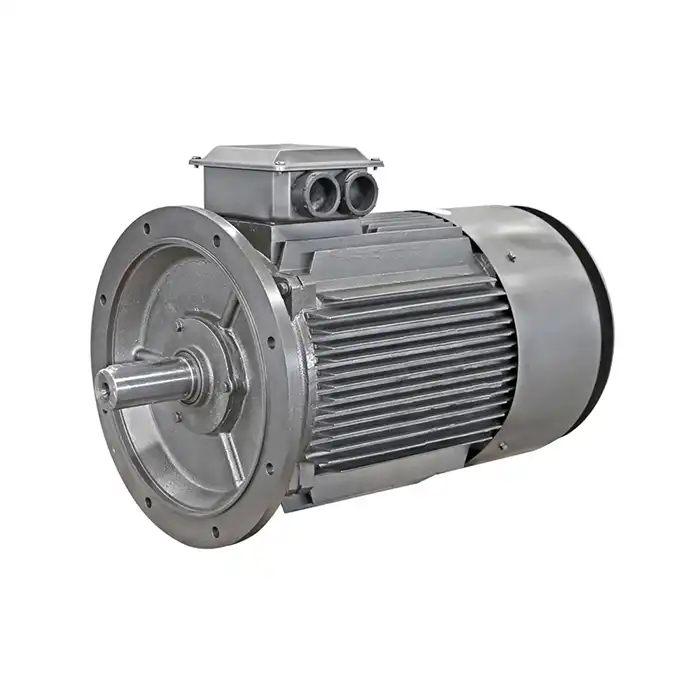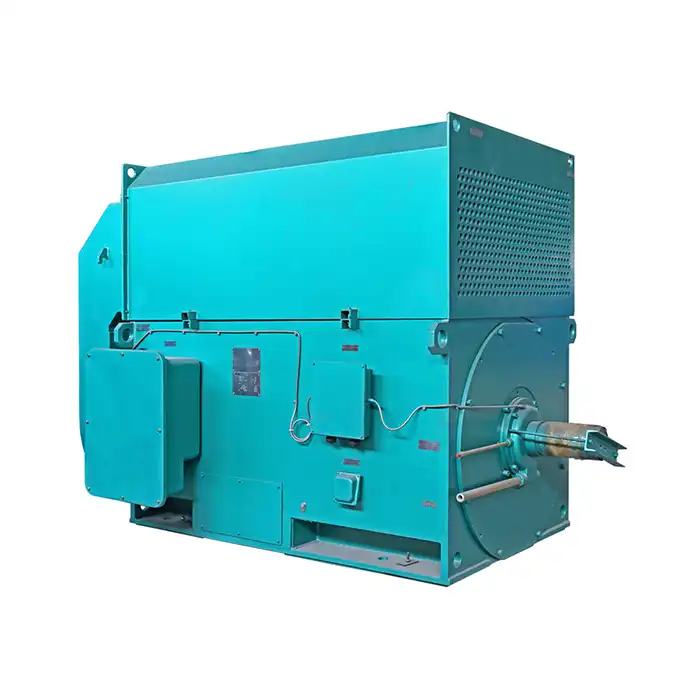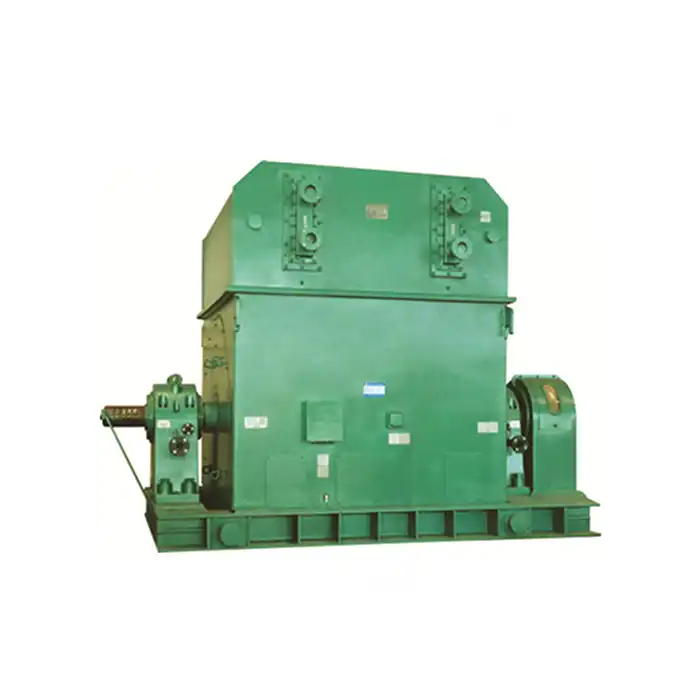




How Does an IE 5 Motor Work?
If you want to upgrade your industrial tools, knowing how an IE 5 motor works can change the choices you make about what to buy. These very high-efficiency motors use Synchronous Reluctance Motor (SynRM) technology, which combines the performance of a permanent magnet motor with the ease of use of an induction motor. The IE 5 motor doesn't use rare earth magnets. Instead, it uses magnetic reluctance to make the rotor line up with the magnetic field of the stator. With variable frequency drives that exactly control motor speed and torque, this design doesn't use magnets and has efficiency rates of up to 96.5%. This is made possible by electromagnetic interactions that are optimised.
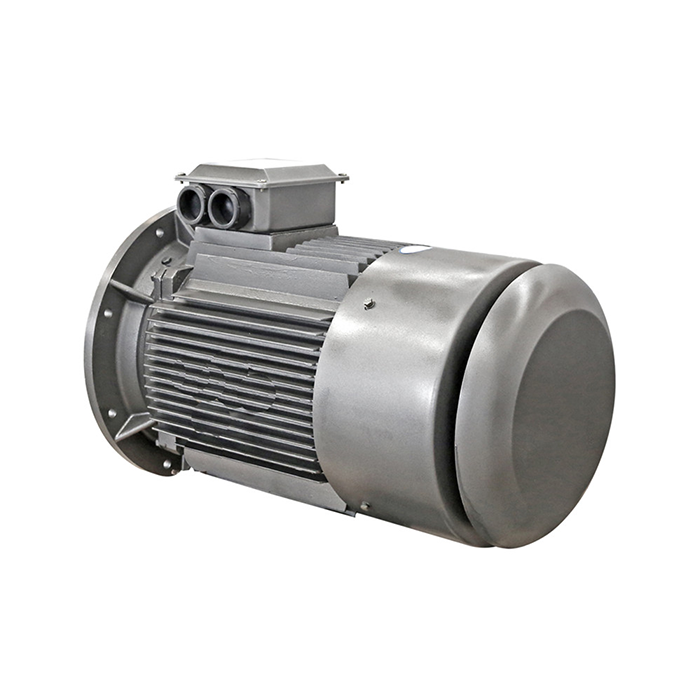
Series:YE5
Frame number: 80-450
Power range:0.75-1000kW
Protection level:IP55
Energy efficiency class: IE5
Voltage range: 380V,400V,415V, 660V,etc.
Application:can be used in various fields of the national economy, such as machine tools,water pumps,fans,compressors,and can also be used in transportation, mixing, printing, agricultural machinery, food and other occasions that do not contain flammable, explosive or corrosive gases.
Certificate: international standard IEC60034-30 "Efficiency Classification of Single-speed Three-Phase Squirrel Cage Induction Motors".
Advantage:The high quality of the electric motor guarantees high operational reliability.
Others: SKF, NSK, FAG bearings can be replaced according to customer requirements.
What Is an IE 5 Motor? Understanding the Basics
Defining Super-Premium Efficiency Standards
IEC 60034-30 rules set up the International Efficiency (IE) system, and the IE 5 motor rating is the top level. In many industrial settings, IE3 motors became the standard, and IE4 motors pushed the limits even more. But super-premium efficiency motors achieve energy conversion rates that have never been seen before. This classification isn't just a small step forward; it's a reflection of major changes in how motors turn electrical energy into mechanical work, setting new standards for businesses around the world.
Core Technology Behind Superior Performance
Most of the super-high efficiency motors on the market today are powered by SynRM technology. Induction motors usually make current flow through the rotor. This design, on the other hand, uses carefully designed rotor shapes with a mix of magnetic and non-magnetic materials. When the stator makes a spinning magnetic field, the rotor automatically goes in the direction with the least magnetic resistance. This makes torque without induced currents that waste energy. This idea gets rid of the spinning copper losses that are a problem with other systems.
This rotor design works well with more advanced stator winding setups. At XCMOTOR, we use precise winding methods that make the most of copper while reducing resistance in the making process. Each layer of the winding is carefully insulated with Class F materials (Class H materials are also available for harsh settings), which makes sure that the temperature stays stable during continuous operation. The top electrical steel types used in the stator laminations cut down on hysteresis and eddy current losses, which makes the whole system more efficient.
Integration With Electronic Drive Systems
Variable frequency drives (VFDs) are needed for super-premium efficiency motors to work as well as they are supposed to. This pairing isn't a limiting; it's a way to get the best results. The VFD constantly changes the voltage and frequency to match the load's needs. This keeps energy from being wasted that comes with fixed-speed processes. When the demand for your compressor or pump changes during production cycles, the motor-drive combination adapts right away, keeping the unit running at its best throughout the entire working range.
The complicated magnetic reactions inside the motor are controlled by modern VFD algorithms that were made to work with SynRM. These controllers keep an eye on the position of the rotor using sensors or estimate methods that don't use sensors. This makes sure that the stator field always gives the best force. The motor runs smoothly from 500 to 3000 rpm, and its power factor is higher than 0.9, even when only partially loaded, which is a problem for older motors.
Energy Savings and Industrial Benefits of IE 5 Motors
Quantifying Efficiency Improvements
The difference in efficiency between motor classes directly leads to cost saves. This is very clear when you look at a standard 110 kW motor that runs all the time at 1500 rpm and costs 10¢ per kWh of power. At 94% efficiency, an IE3 motor loses about 7 kW of power all the time, which costs about $6,132 a year in wasted energy. At 96.5% efficiency, an IE 5 motor cuts losses to just 4 kW, which saves about $2,628 a year. That one motor saves almost $40,000 in power costs over its 15-year life.
When these numbers are used across sites, they become even more useful. When compared to older IE2 or IE3 setups, factories that use dozens or hundreds of motors for pumps, fans, compressors, and material handling systems can cut their total energy use by 20 to 40 percent. When you think about how much energy temperature control uses, the energy saves add up. Motors that run cooler lower HVAC loads, which creates extra efficiency gains.
Wide Industrial Applicability
Super-premium economy motors are great in many areas. In process control, they power pumps that move fluids through treatment plants, keeping exact flow rates and wasting as little energy as possible. Efficiency and controllability are especially helpful in water cleaning operations, where flow needs change throughout the day based on how the water is used.
HVAC systems are another important area of use. Fans and blowers are used for thousands of hours a year in commercial and industrial buildings. Putting super-high-efficiency motors and intelligent drives into these systems lowers energy costs and makes climate control more accurate. The less heat that is made by motor losses also makes cooling systems' jobs easier.
Manufacturing environments from automotive assembly to food processing utilize these motors in machine tools, conveyor systems, and robotic automation. Quality building guarantees high operational reliability, which means that output never stops for no reason. At XCMOTOR, our motors are tested thoroughly at every step of the manufacturing process, from the precise die-casting of the rotor parts to the final performance verification under a range of load conditions.
Maintenance and Longevity Advantages
Lower working temperatures directly make motors last longer. Too much heat breaks down insulation, speeds up the wear on bearings, and stresses out structural parts. Because they have fewer internal losses, super-premium efficiency motors produce less waste heat. This means that the windings stay cooler even during high duty cycles. Compared to less efficient options, this temperature edge can add 30 to 50 percent to the service life.
Maintenance times are greatly improved by bearing technology. XCMOTOR has SKF, NSK, and FAG bearings that can be customised to fit the needs of the application. These bearings ensure smooth operation and longer periods of time between cleaning. The improved bearing designs handle radial and vertical loads across the speed range of the motor with less friction loss. Motors can run reliably for 10 to 15 years with little or no upkeep if the right bearings are chosen and kept up.
Routine maintenance tasks are still easy to do. Inspections should be done on a regular basis to check the state of the bearings by analysing vibrations, check the resistance of the winding insulation, and make sure that cooling air paths are not blocked. All of our products have an IP55 rating, which means they are protected against dust and water in normal workplace settings. Higher ratings are available for harsh circumstances, though. Professional OEM service makes motors last longer, and XCMOTOR offers specialised help on both Saturday and Sunday to keep operations running as smoothly as possible.
IE 5 Motor vs IE 4 Motor: A Detailed Comparison for Decision Makers
Efficiency and Performance Metrics
The increase in efficiency from IE4 to super-premium is not as big as increases in earlier classes, but at industry scales, the total energy saves are still very big. An IE 4 motor might be 95.5% efficient while an IE 5 motor is 96.5% efficient, which seems like a small change of only 1%. But that gap means that losses have gone down by 17%, which means that costs have been saved over time.
The noise and shaking levels get better with super-premium designs. When rotor bars and end rings are taken out of an induction motor, electromagnetic noise is taken away as well. Precision making makes sure that rotor parts are balanced, which reduces vibrations across the entire speed range. These changes make workplaces quieter and more comfortable, and they also make related equipment like gears and driven machinery less stressed.
Cost-Benefit Analysis for Procurement
When bought for the first time, super-premium efficiency motors usually cost 15–25% more than IE4 options. When budgets are looked at, this extra brings up good points. Lifecycle economics, on the other hand, strongly favour the bigger investment up front. Using the 110 kW example from earlier, the price difference could be $2,000 to $3,000. However, the $2,628 in yearly energy savings will pay for the difference in 13 to 15 months.
After the payback time, motors continue to save money every year for as long as they are in use. Using a conservative 12-year operational time (many motors last longer than 15 years), the saves add up to $31,536 for that single unit. This doesn't take into account the fact that lower thermal stress could mean lower maintenance costs or that utility companies and government programs that encourage energy conservation could offer benefits.
Environmental Compliance and Sustainability
More and more, regulatory settings require higher standards of speed. The United States, the European Union, and other markets have put in place or set deadlines for new installations and big retrofits that need to be very efficient. Adopting these motors ahead of time puts your business ahead of the curve when it comes to regulations, so you won't have to make changes when it's not handy.
Motor economy improvements help companies meet their environmental goals in a measurable way. Scope 2 greenhouse gas emissions from bought energy go down straight when people use less electricity. By changing 50 motors with ones that are 75 kW on average, a facility could cut its CO2 emissions by 200 to 300 metric tonnes per year, making real progress toward its carbon reduction goals. These environmental benefits have a bigger effect on how stakeholders see things and can help businesses get green financing with better terms.
Application-Specific Selection Guidance
There are different needs for different industry uses. Continuous-duty uses, such as water pumps and air engines, get the most out of the benefits of efficiency gains from running all the time. VFD matching is helpful for variable-torque loads like fans and rotary pumps because it lets them slow down when demand is low, which equals the energy savings according to affinity laws.
Constant-torque uses like extruders, conveyors, and positive displacement pumps also benefit a lot, though the ways they save energy are different. In these situations, the torque needs are the same at all speeds, so efficiency changes directly lead to less power use without the exponential gains that happen in situations with changing torque. XCMOTOR's power range, which goes from 0.75 kW to 1000 kW, makes sure that the right size motor is used for almost any business need.
Navigating the IE 5 Motor Procurement Process
Evaluating Supplier Capabilities
Assessing suppliers is the first step in a successful buying process for IE 5 motor. In addition to the product specs, you should also look at the professional help, warranty coverage, and infrastructure for service after the sale. Suppliers should demonstrate expertise in application engineering so that they can help you match the features of a motor to your unique needs. At XCMOTOR, we offer personalised consultation services that look at your working factors, such as job cycles, load profiles, and environmental conditions, to suggest the best combinations.
Warranty terms show that the company that made the product is confident in its quality. Full coverage should include both material flaws and performance promises, making sure that motors meet the efficiency and dependability standards that are rated. Carefully read over the warranty's exclusions and make sure you know what kind of upkeep is needed to keep the policy current. Because we care about quality, we do thorough quality checks at every stage of production. This gives us the confidence to stand behind our goods.
Verification of certification compliance is still very important. Super-high-efficiency motors should have paperwork showing that they meet IEC 60034-30 standards, as well as any regional approvals that are needed, such as a CE mark. The motors made by XCMOTOR are also GOST-certified for areas that need them. These licenses aren't just pieces of paper; they show that efficiency has been proven through independent testing.
Understanding Pricing Dynamics
Prices for motors are affected by factors in the global supply chain. The price of electrical steel changes with the price of other commodities, and lack of semiconductors can affect the price and supply of VFDs. The price of copper has a direct effect on the cost of winding, especially for bigger frames. These material costs make up big chunks of manufacturing costs, which is why prices change over time.
Logistics and After-Sales Considerations
Bulk purchasing for multi-motor projects improves pricing, standardisation, and simplifies spare parts management and maintenance training. Strong after-sales infrastructure is critical for uptime, with rapid technical support and readily available components reducing downtime. Our support team operates on weekends and maintains key spare parts like bearings. Service contracts and routine inspections, including vibration and thermal monitoring, help detect issues early.
Future Trends and Innovations in IE 5 Motor Technology
Smart Motor Integration and Industry 4.0
Smart motor integration with Industrial IoT enables real-time monitoring of temperature, vibration, power use, and operating hours via embedded sensors. Data is transmitted to central systems for predictive maintenance, shifting from time-based to condition-based strategies. Machine learning detects early faults, while Industry 4.0 connectivity enables system-wide optimization, load balancing, and energy shifting during peak pricing periods to reduce operating costs.
Advancing Materials and Design Optimization
Materials science keeps pushing the limits of how efficient things can be. Scientists are working on making electrical steels that have better magnetic qualities and lower core losses. These materials keep their mechanical strength while lowering no-load losses even more. Better shielding systems can handle higher temperatures, which lets more power fit into smaller frames.
Every part of a motor is optimised by computer design tools that use finite element analysis and computational fluid dynamics. Engineers simulate the spread of electromagnetic fields to cut down on losses, model the behaviour of heat to make cooling more effective, and look at structure stresses to find ways to reduce weight without lowering durability. With these virtual design changes, performance levels that can't be reached with standard trial-and-error methods are reached.
Market Drivers Accelerating Adoption
Regulatory requirements set base levels of efficiency that are rising around the world. Motor efficiency standards for IE 5 motor are updated every so often by the US Department of Energy, and super-high standards are pushed by European Union guidelines. These rules take away less efficient options from the market, which speeds up the usage rates no matter what each facility prefers.As energy costs rise, the benefits of being more efficient become clearer. Industrial energy rates have been slowly going up, especially during times of high demand. As energy prices rise, each percentage point of efficiency gain leads to a proportionally larger savings. This shortens payback times and makes business cases for motor changes stronger. Corporate pledges to sustainability build internal drivers that go beyond following the rules.
Conclusion
When you know how super-premium efficiency motors work, you can see why they are a good investment for businesses. When you combine SynRM technology, precise manufacturing, and clever drive integration, you get levels of efficiency that were not possible with older motor generations. Cutting down on losses saves energy, which means quick return times and big cost savings over the life of the product. The environmental benefits are in line with sustainability goals and government rules. These motors will become even more important to competitive industrial processes as material science and smart technology integration keep getting better. If procurement workers use these solutions, their businesses will be set up for long-term success with lower energy costs, better dependability, and compliance with regulations.
FAQ
1.What Makes IE 5 Motors More Efficient Than Previous Classes?
SynRM technology, which gets rid of the rotor copper losses that plague induction designs, makes super-premium efficiency motors work better. The magnet-free rotor design doesn't use induced currents but instead uses carefully designed magnetic reluctance routes, which wastes a lot less energy. Advanced stator winding designs cut down on resistance losses, and high-quality electrical steel laminations do the same for core losses. When paired with variable frequency drives that are designed to work with SynRM, these motors stay very efficient over a wide range of working conditions. All of these design improvements add up to 96.5% efficiency, which means that more energy input is turned into useful motor work while less waste heat is produced.
2.Can I Retrofit IE 5 Motors Into Existing Equipment?
Retrofitting options depend on a number of things. To work at their best, super-premium efficiency motors need VFD control, so setups must include drive systems if they aren't already there. The sizes of the parts usually match normal IEC frame sizes, which makes mechanical fitting easier. But the motor-drive package might need changes to the electrical system, the control wires, and the way the motor is cooled. XCMOTOR's motors come in a range of voltages and power levels, from 0.75 kW to 1000 kW and 380V to 415V and 660V. This means they can be used in a variety of upgrade situations. Application engineering advice figures out what changes need to be made and makes sure they can be successfully integrated with current equipment.
3.How Do Maintenance Requirements Differ From Standard Motors?
Compared to older versions, super-premium efficiency motors are easier to maintain. Less internal loss leads to lower working temperatures, which lowers thermal stress on insulation and bearings and extends the time between repair intervals. Because they don't have rotor bars, they don't have any possible breakdown places like induction motors do. As part of routine maintenance, bearing condition tracking, insulation resistance testing, and making sure cooling paths are clear are the major tasks. Premium bearings from SKF, NSK, or FAG last longer between cleaning cycles and work reliably. In normal industrial settings, the IP55 security level stops contamination from getting in. Overall repair costs go down because parts last longer and break down less often.
Partner With a Trusted IE 5 Motor Supplier for Your Industrial Needs
XCMOTOR offers complete super-high efficiency motor solutions backed by technical know-how and quick customer service. As a reliable IE 5 motor supplier, we provide advanced motor options designed to meet demanding industrial requirements. Our product line includes 0.75 kW to 1000 kW power supplies with a range of voltage options to meet the needs of industrial, HVAC, energy, and other specific uses. After going through strict quality control, you can be sure that each motor will work as expected. We get our parts from reliable bearing makers and offer customisation choices that are made to fit the needs of your application. Shaanxi Qihe Xicheng Electromechanical Equipment Co., Ltd. offers a wide range of power equipment, delivers quickly and for free, and lets you buy without restrictions for 30 days to protect your investment. Contact our team at xcmotors@163.com today.
References
1. International Electrotechnical Commission. (2022). "IEC 60034-30-1: Rotating Electrical Machines – Part 30-1: Efficiency Classes of Line-Operated AC Motors." IEC Standards Publication.
2. de Almeida, A.T., Ferreira, F.J.T.E., & Fong, J. (2021). "Standards for Super-Premium Efficiency Class for Electric Motors." IEEE Transactions on Industry Applications, 57(4), 3826-3836.
3. ABB Motors and Generators. (2020). "Synchronous Reluctance Motor Technology: Principles, Performance, and Applications." Technical Guide for Industrial Applications.
4. United States Department of Energy. (2021). "Motor Systems Tip Sheet: Determining Electric Motor Load and Efficiency." Advanced Manufacturing Office Technical Bulletin.
5. European Commission Joint Research Centre. (2019). "Ecodesign and Energy Labeling for Electric Motors and Variable Speed Drives." Technical Study on Energy Efficiency Requirements.
6. Boldea, I., & Nasar, S.A. (2023). "The Induction Machines Design Handbook, Third Edition: Synchronous Reluctance Motors and Efficiency Optimization." CRC Press Engineering Publications.