




Getting More Output from a YE3 112M 2: Efficiency Factors
To achieve higher output from a YE3 112M 2 you have to cut losses, not push the shaft beyond its rating. Before you make any plans, make sure you verify the nameplate on this two-pole, IE3 three-phase motor. It normally reads 4 kW. Ye3 112m 2 provides consistent power when the supply voltage, alignment, bearing condition, cooling and load are all correct. This tutorial covers how to get mechanical power reliably at reduced cost and with less heat. This involves looking at the specs, the key elements affecting efficiency, how to install and measure, alternative replacement choices and questions to ask your provider.
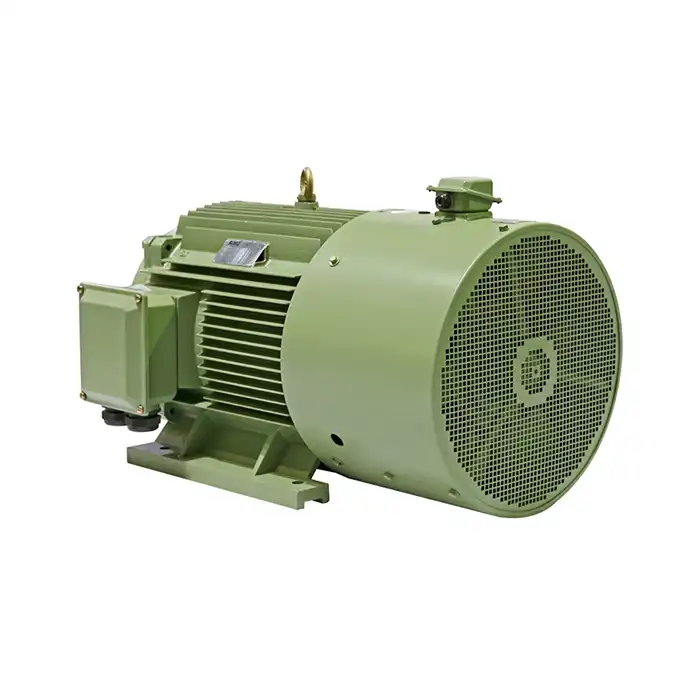
Series:YVFE3
Frequency conversion range:30hz~50hz,5hz~70hz,5hz~100hz
Power range:0.75-1000kW
Protection level:IP55
Application:are suitable for driving various mechanical equipment that require continuous and frequent forward and reverse rotation, such as steel rolling, lifting, transportation, machine tools, printing and dyeing, papermaking, chemicals, textiles, pharmaceuticals, etc., and can be used with various domestic and foreign variable frequency power supplies.
Advantage:high efficiency, wide speed range, high precision, stable operation, and easy operation and maintenance.
Certificate:installation dimensions comply with International Electrotechnical Commission (IEC) standards.
Others: SKF, NSK, FAG bearings can be replaced according to customer requirements.
Confirm the Specifications Before You Change Anything
Decode the Model Name
The name tells us a lot. The series is YE3 , excellent efficiency . The frame size is 112M ( meaning 112 mm shaft center height ) . " 2 " denotes two poles . It also features greater frame sizes (80 to 450), IP55 protection, class F insulation, S1 continuous duty and operating temperatures of -15°C to +40°C. You have a choice of 380V, 400V, 415V or 660V. A ye3 112m 2 is often rated at 4 kw or roughly 5.4 hp. Power and speed might vary from brand to brand, so be sure to check the nameplate and datasheet. Also the series is in accordance with IEC 60034-30 in terms of efficiency.
Work Out Rated Torque and Speed
On a 50-Hz supply, a two-pole motor may attain a synchronous speed of 3000 r/min. But slip reduces this to about 2900 revs per minute. Torque = Rated Power in Kw / Speed in r/min That's ~ 13.2 N-m for 4 kw at 2900 rpm. Now compare that figure to the load on your spindle, fan or conveyor and then compare it to the torque your machine requires to start up. Synchronous speed is up to 3600 r/min at 60 Hz, thus consumers in the US should check the frequency and voltage winding before ordering. This is in the ye3 112m 2 data sheet.
Check Mounting and Shaft Fit
You can't be sure of a drop-in fit just because the frame numbers match. According to IEC standards, this frame's shaft should have a diameter of 28 mm. However, the approved drawing still needs to show details about the keyway, shaft length, flange, and foot holes. Tell the supplier what kind of mounting you need, and make sure they know where the terminal box is and which way it turns. When repair shops order a ye3 112m 2 to replace a 4kw motor, they should measure the old shaft and key. OEM teams should also compare the drawing to their machine interface. It's much cheaper to look over a few drawings than to buy a motor that doesn't fit when it gets there.
Efficiency Factors That Change Real-World Output
Know Where the Losses Come From
Every motor turns some of the power it gets into heat. Copper losses in the stator and rotor go up as the square of the current. Core losses come from the silicon steel laminations. Stray-load losses happen when the motor is loaded, and friction and windage losses come from the bearings and cooling fan. Since two-pole motors spin faster, friction and windage play a bigger role than in motors that spin more slowly. To cut down on these losses, the ye3 112m 2 has copper windings and high-grade silicon steel laminations. However, no motor can fix losses that start in the supply or the machine being driven. The efficiency of a motor is its output power divided by the input power of electricity.
Watch Supply Quality and Voltage Balance
Unbalanced voltage, harmonics, and frequency drift all stop the output from being useful. When voltage unbalance goes above 1%, NEMA MG 1 says to derate the motor because it creates negative-sequence currents that heat the windings. Copper losses go up when voltage is low, even if the load stays the same. Take a reading of all three phase voltages at the terminals while the machine is running before you blame the motor. The ye3 112m 2 is powered by a drive. Check the cable length and filter needs because fast switching edges put a lot of stress on the insulation. It's often cheaper to fix the supply than to buy a new motor. Write down the readings so that you can check them again after the repair.
Manage Heat, Load, and Environment
It is a general rule that for every 10°C above the insulation limit, the insulation life is cut in half. The ye3 112m 2 has Class F insulation, which is rated at 155°C, and IP55 protection, which covers water and dust jets. However, hot rooms and fan covers that get blocked are still problems. Load level is also important. Induction motors work most efficiently when they are between 50 and 100% of their rated load. When they are not working at all, or "idling," their efficiency goes down. Make sure the motor is the right size for the job, clean the fan cover often, and keep the motor away from gasses that are flammable, explosive, or corrosive.
Installation, Operation, and Measurement
Align, Lubricate, and Keep Air Moving
Out of place parts put extra stress on the bearings, which shows up as heat and vibration. Loosen each foot bolt and watch for movement to check the soft foot first. Then, use a dial indicator or laser tool to line up the shafts. Check the tension of the coupling or belt, grease the bearings as directed in the manual, and keep the fan cover clear so air can get to the frame. If you ask, XCMOTOR can send the ye3 112m 2 with a different brand of bearings, which is helpful for shops that only use one. When you have a fast two-pole rotor, alignment is even more important. Then tighten the bolts again and check again.
Match the Starter to the Load
It's easiest to use a direct-on-line starter, but it draws a lot of current when it first starts up. For machines that are driven by belts or conveyors, a soft starter limits that surge. With a variable frequency drive, you can change the speed. The affinity laws for centrifugal pumps and fans say that power drops with the cube of speed. This means that a 20% drop in speed should cut power use in half. Check the cooling when the speed is low, since the fan on the shaft moves less air when the speed is low. Set the drive's current limit to the values listed on the label, and make sure the drive works with the ye3 112m 2 before installing it.
Build a Baseline and Measure the Gain
Improvement claims require facts. Record voltage for each phase. Record current, power factor, input kw, surface temperature, vibration, number of hours process ran and output. A clamp meter on one phase doesn't reveal the complete picture as clearly as a three-phase power analyzer. Watch the temperature & vibration patterns. A gradual increase might suggest that the machine is overworked, out of alignment, bearings are wearing out or that it’s not receiving enough air flow. Read each ye3 112m 2 on a separate page. Repeat with same load after each repair. According to the IEA in 2011, systems with electric motors used 43 to 46 per cent of the world’s power. That implies tiny gains may compound over time.
Follow a Five-Step Improvement Plan
I believe a basic work order would work best. Select an objective that can be measured, such as reduced input kW, reduced temperature, or reduced vibration. Second, collect data on electrical, thermal and maintenance problems under normal and peak load conditions. Thirdly, solve the greatest issue, which might be unequal voltage, an alignment problem, a cooling obstruction, the improper drive settings or a lack of lubricant. Step 4: Measure again. Fifth, document the authorized arrangement so it may be replicated and purchased again in the future. If the data says the motor is too tiny for the work, a ye3 112m 2 that is the proper size may cost less than months of being able to get by. Save the document containing the test records and the drawing of the motor.
Compare Options Before You Buy
Choose Between Two Poles and Four Poles
This works effectively in spindles, fans and pumps that demand high speed in a tiny package. A two-pole motor running at 50 Hz is about 2900 r/min. A four-pole motor for the same power will revolve roughly 1450 rpm, has higher torque at the shaft and is generally quieter. Select the number of poles according to the speed required by your driven equipment. Then check to determine whether a gearbox or belt ratio is causing loss. Any machine that requires a rapid shaft speed without a speed-up step should utilize a 4 kW 2 pole IE3 motor such as the ye3 112m 2. If you require low speed torque , look at frames with 4 poles in the same range .
Read the YE3 Name Against the IE3 Class
The Chinese name for this motor series is YE3, while the international name for this class is IE3 and is found in IEC 60034-30-1. The series is classified by XCMOTOR as IE3 (Premium Efficiency), which is in line with IEC 60034-30. Do not rely on a label; instead, ask any supplier to show test data for efficiency on the datasheet. Also, look for test methods that are based on IEC 60034-2-1. Buyers in the US should also check to see what local rules apply to the installation when it comes to efficiency or labeling. You can put these numbers next to any other quote on the ye3 112m 2 datasheet. Written information keeps everyone safe in case there is a question later on.
Check Frame Material and Replacement Fit
Precision die-casting makes the ye3 112m 2's frame out of cast iron, which makes it stronger and better at getting rid of heat. Since cast iron is heavier than aluminum, make sure you know how to handle and mount it on your machine. When looking for a new one, compare the old one's frame, power, speed, voltage, frequency, shaft size, mounting, protection rating, and duty type to the new one's. XCMOTOR says that the YE3 series is shape- and mounting-compatible with the Y and Y2 series motors. This means that a swap usually doesn't require any base changes, but check the drawings to be sure. Having the same power by itself never makes a fit. Before you order a sample, ask for the dimensional drawing.
Choose a Supplier That Answers Technical Questions
What a Supplier Should Hand You
A motor is more than simply a name. A reputable provider will offer you a datasheet, a dimensional drawing, a wiring schematic, performance statistics, test records, and instructions on how to install the device. Each ye3 112m 2 is meticulously die-casted by XCMOTOR and then tested to ensure that the coils are of the same size and form. The series is CE, ISO 9001:2015 and GOST certified. Efficiency class according to IEC 60034-30. XCMOTOR has free delivery on all purchases, a 30-day refund policy, and Saturday/Sunday assistance. They also have authentic parts from popular brands. Ask for them before you purchase to make sure the papers operate with the equipment.
Build a Clear RFQ
A well-written RFQ helps prevent quote conflicts and improper shipments. Add below 3 groups of information:
- Electrical data: Rated power, voltage (380V, 400V, 415V or 660V), frequency, rated speed, guarantyd efficiency, insulation class, job type, environmental range. Add supply frequency, 50 Hz or 60 Hz. If you are going to use the motor with a variable frequency drive please let us know as it modifies the winding and insulation tests the supplier carries out on your ye3 112m 2 purchase.
- Mechanical Data: State mounting arrangement, shaft diameter and length, keyway size, flange type if required, terminal box location, direction of rotation and protection rating. Please provide images or dimensions of your old motor for a replacement, since a matching frame number may still disguise changes in shaft length, flange, or foot-hole spacing.
- Commercial data Specify quantity, delivery date, destination, packing requirements, needed documentation (eg CE or ISO 9001:2015 copies) and warranty expectations. Add your yearly volume and any mixed model demands. Ask if you like a sample first then a bigger purchase so the provider can arrange stock and manufacturing time.
With this information, the provider may respond just once to certify compatibility.
Judge a Quote on Total Cost
You can't only compare quotations on price. You have to look at technical match, documentation, lead time, warranty, and service. The US Department of Energy argues that the largest component of the lifetime cost of a motor is generally the energy. That implies that a motor that is recognized to be efficient and to have minimum down time will normally cost less throughout the life of the motor. Find out about minimum order quantity, sample units for fit testing, mixed model orders and packaging information like as carton size and gross weight so you can plan your freight. Ask each bidder to explain how the ye3 112m 2 will be structured and how it will be delivered. Tackle each offer one at a time.
Conclusion
How much load is on a ye3 112m 2 does not matter. It is more beneficial when the system surrounding it is proper. Power, speed, voltage, and mounting are validated by nameplate and datasheet. The engine can only go so near before it dies. How close depends on voltage balance, alignment, lubrication, cooling, load level, and starter or motor settings. Baseline measurements tell you whether a modification reduced the amount of electricity, heat or vibration coming in. The decision is influenced by the number of poles, the frame material and the fit of the replacement. The entire cost and supplier paperwork are also significant.
FAQ
1. What is the typical rated power of a YE3 112M 2 motor?
Most of the time, the 112M two-pole frame is listed at 4 kW, which is about 5.4 hp, and has a rated speed of about 2900 r/min at 50 Hz. Before you size a breaker, cable, or starter, check the nameplate and datasheet to make sure the numbers are correct.
2. Can a YE3 112M 2 run on a variable frequency drive?
A lot of people buy this kind of motor to power drives for fans and pumps. First, make sure it works with XCMOTOR. Then, set the drive to its nameplate values and make sure it stays cool at low speed. The current limit on the drive should match the rated current on the motor.
3. How do I confirm a replacement will fit?
Look at the new drawing and compare it to the old one. The new drawing shows the frame, power, speed, voltage, frequency, shaft diameter, keyway, mounting, and protection rating. Send those details to XCMOTOR so they can look them over, because even small changes there can stop an installation.
4. Which certifications apply?
The series has certificates from CE, ISO 9001:2015, and GOST, and it is categorized according to IEC 60034-30 for efficiency. Get copies along with your quote.
Request a YE3 112M 2 Quotation from XCMOTOR
Send XCMOTOR your power, voltage, frequency, mounting arrangement, quantity, and where you want the motor sent to xcmotors@163.com. Our team will get back to you with a datasheet, dimensional drawing, lead time, and quote. As a supplier for the ye3 112m 2, we offer original parts from well-known brands, free shipping on all orders, returns for 30 days, and support on Saturdays and Sundays. To learn more about the ye3 112m 2, go to motorxc.com.
References
1. IEC 60034-30-1: Rotating Electrical Machines – Efficiency Classes of Line Operated AC Motors (IE Code), International Electrotechnical Commission, 2014
2. IEC 60034-2-1: Rotating Electrical Machines – Standard Methods for Determining Losses and Efficiency from Tests, International Electrotechnical Commission, 2014
3. Improving Motor and Drive System Performance: A Sourcebook for Industry, U.S. Department of Energy, 2014
4. Premium Efficiency Motor Selection and Application Guide: A Handbook for Industry, U.S. Department of Energy, 2014
5. NEMA MG 1: Motors and Generators, National Electrical Manufacturers Association, 2016
6. Energy-Efficiency Policy Opportunities for Electric Motor-Driven Systems, International Energy Agency, 2011
YOU MAY LIKE
 VIEW MOREYPKK series high voltage frequency asynchronous motor
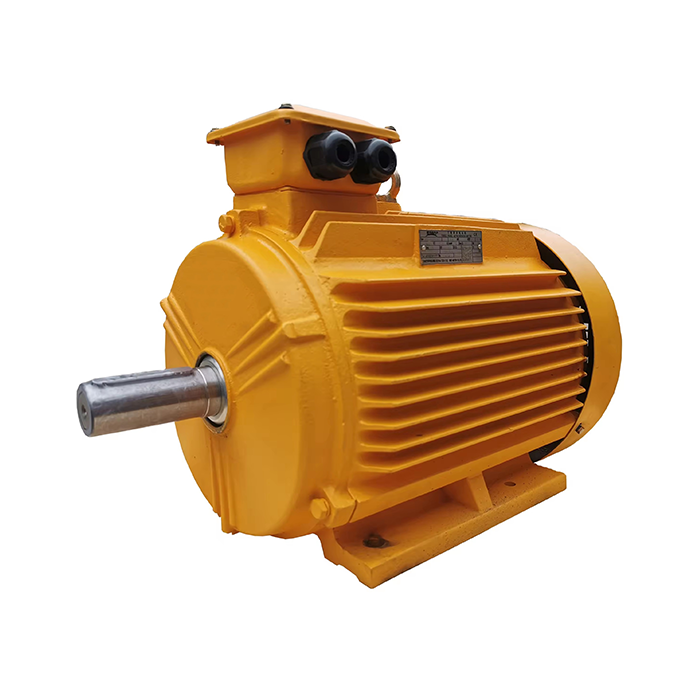 VIEW MOREYE4 high efficient three-phase asynchronous motor
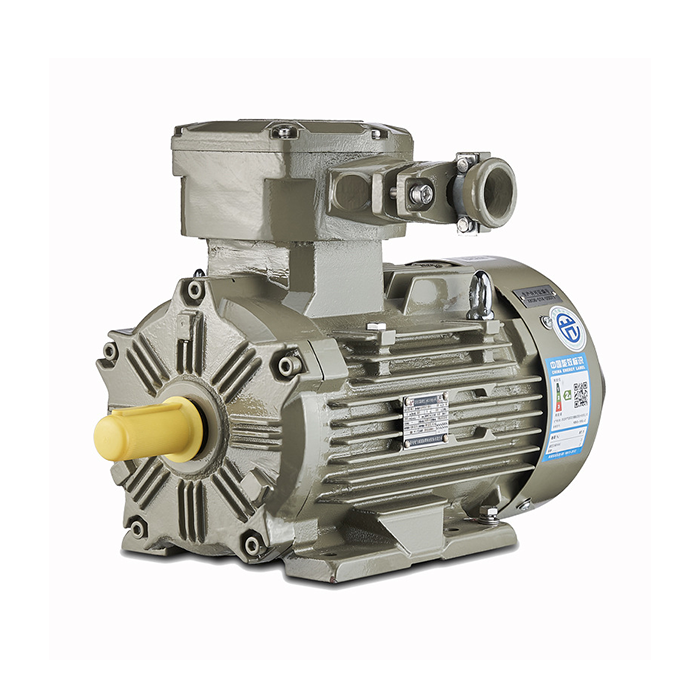 VIEW MOREYBX3 series low voltage explosion-proof motor
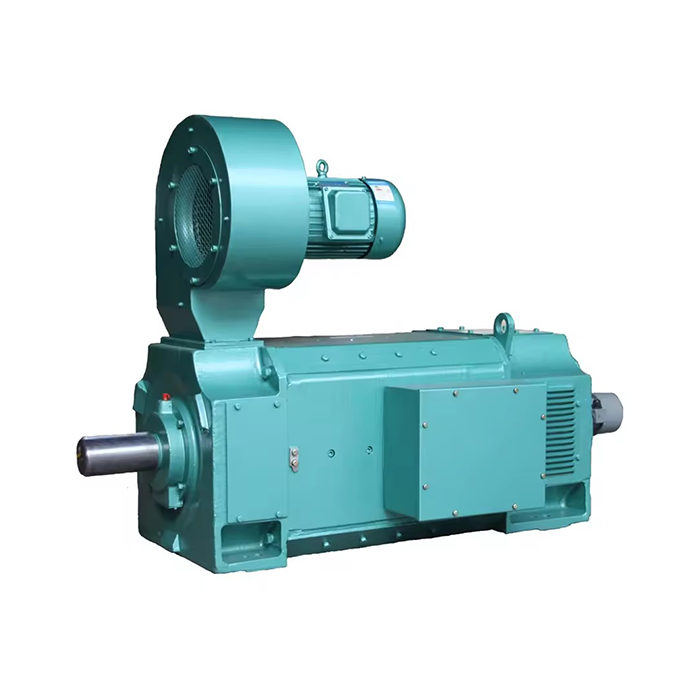 VIEW MORE400v dc motor
 VIEW MORE72 inch butterfly valve
 VIEW MOREie 5 motor
 VIEW MOREac wound rotor motor
 VIEW MOREunbalance vibration motor