



DC Motor Basics: Speed Control, Torque, Commutation
A dc motor converts direct current into rotation, and three theories describe its behaviour. Speed control is the regulation of the speed at which the shaft rotates and is mostly done by varying armature voltage and field strength. Torque is the twisting force on the shaft. Torque increases with armature current and magnetic flux. The commutator and brushes reverse the direction of current in the armature windings as the rotor revolves, so the torque is always in one direction. These three concepts help you read a nameplate, size a drive, and identify errors early. This guide describes each notion in clear terms and illustrates how XCMOTOR uses them in its Z2, Z4 and Z series.
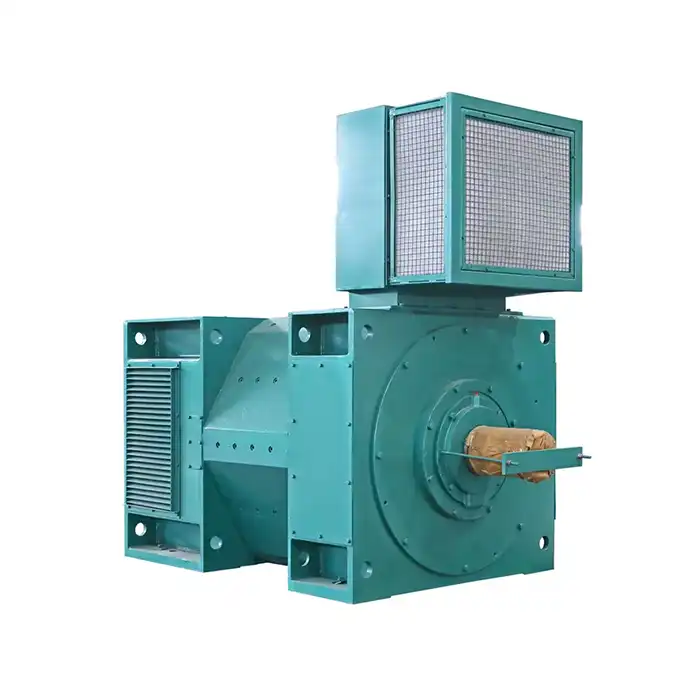
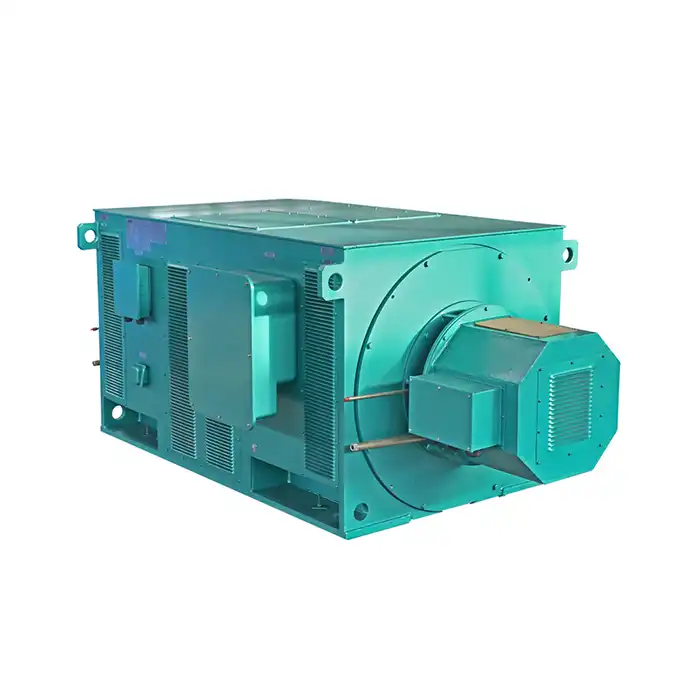
ZSeries:Z
Application:Metallurgical industrial rolling mills, metal cutting machine tools, papermaking, dyeing and weaving, instant brushing, cement, plastic extrusion machinery.
Power range:59-1600kW
Standard: JB/T9577-1999
What a DC Motor Is and How It Works
How a DC Motor Turns Current Into Motion
A DC motor operates because a current-carrying conductor in a magnetic field feels a force. The stator generates the magnetic field. The armature (or rotor) has windings via which electricity flows through the commutator and brushes. Each winding feels a push, and the pushes sum to rotation. The spinning armature creates a voltage opposing the supply voltage, known as back EMF. The fundamental equation is V = I × R + E, where V is the supply voltage, I is the current, R is the armature resistance, and E is the back EMF. At standstill E is zero, so beginning current is large. That is why drives restrict the current at launch.
Main Parts Inside a DC Motor
All DC motors have certain common components. The field poles and winding are secured in a stator frame. The armature stack has copper windings arranged in slots. The commutator consists of insulated copper segments which are mounted on the shaft and make contact with the brushes. Bearings support the shaft. A cooling fan or separate blower circulates air through the frame. Optional encoders or resolvers provide speed feedback. Our Z2, Z4 and Z series commutators employ electrolytic tough pitch copper with insulation resistance exceeding 100 MΩ at 500 V DC and hardness of 80-120 HV for an excellent brush contact. When I compare motors I look at those first, since they each effect heat, noise and service life.
Where Engineers Use DC Motors
DC motors are used when operators want seamless speed change and excellent torque at low speeds. Our product pages are dedicated to printing equipment, papermaking and pulp lines, textile dyeing and weaving machinery, plastic extrusion, cement plants, metal cutting machine tools and metallurgical rolling mills. The motor must maintain speed as the load varies, since printing and paper-making lines require a consistent web tension. Rolling mills need great overload capacity. Our high power Z series provides up to 200% for reversing roughing mill workload. The machine tools require speed regulation from 50 to 2000 RPM with smooth control. If the machine already has a DC drive and a DC bus, then a new motor may be used that matches the existing drive.
DC Motor Torque and Speed Control
How Torque Follows Armature Current
Torque in a DC motor relies on armature current and magnetic flux. If the flux is constant then the torque is directly proportional to the current. A bigger load draws more current, which is why overload ratings and temperature limits are important. Datasheets separate start, continuous, peak and stall torque. The starting torque is sufficient to overcome the inertia of the machine. Continuous torque is the torque the motor generates at rated temperature increase. The Z2 and Z4 series have 1.5 times the rated torque under normal load for peak loads. A Z series motor has series-connected armature and field windings that provide strong starting torque for heavy machines. For size, I compute the load torque by taking force times radius and adding friction and acceleration.
How Voltage and Field Strength Set Speed
The same equation gives speed in a DC motor. Back EMF increases with speed and flux, therefore the shaft settles at the point where back EMF plus resistive drop equals supply voltage. Constant-torque duty is to increase armature voltage to increase speed to base speed with full torque available. Constant-power duty involves weakening the field to increase speed beyond base speed, but this decreases available torque. Our Z4 series has 20:1 speed regulation under constant-torque duty and 4:1 under constant-power duty. There is plenty of space with a 20:1 range, between the low speed for threading and high production speed. Armature resistance control also works, but it dissipates the excess power as heat, therefore I prefer voltage control using a converter.
Feedback, Drives, and Speed Regulation
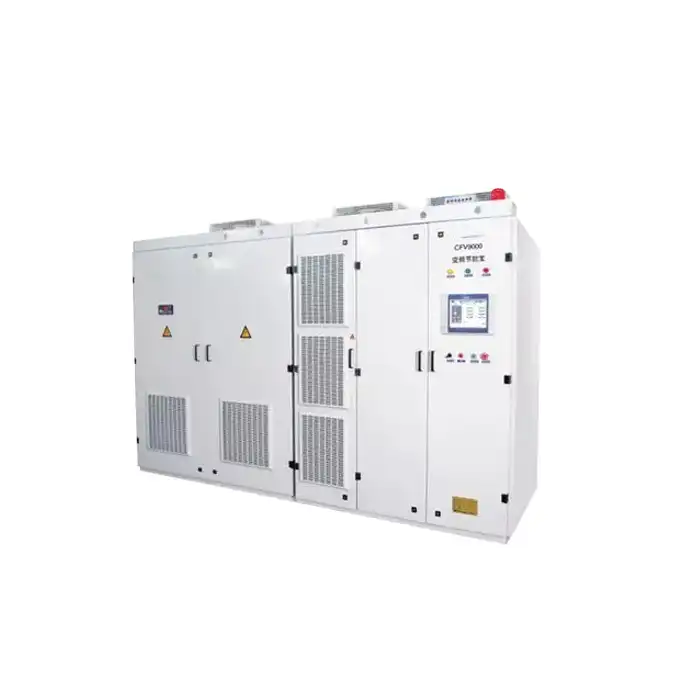
Open-loop control applies voltage to a DC motor, allowing some speed drift with load variation. Closed-loop control compares a speed signal from a tachometer or encoder to the setpoint and adjusts the drive, which keeps speed consistent under varying load, friction and temperature. With our Z series individually stimulated motors with digital DC speed controllers, speed regulation is less than 2%. If you need positioning we can additionally fit encoders or resolvers. Z4 and Z Series motors are powered by a DC unit supply or static rectifier source, thus they are compatible with both older and modern driving equipment. Buyers should verify the drive type and armature voltage before purchase since Z4 voltage possibilities are 160V and 440V.
DC Motor Commutation and Common Problems
How the Commutator and Brushes Switch Current
Commutation is the passing of current from one armature coil to another as the coils cross the field poles. Carbon brushes are pressed onto commutator segments. As the coil goes from one pole to another, the commutator reverses the current, thus the torque is always in the same direction. If the switching is late or the contact is bad, it produces torque ripples and sparks. Brushless motors execute this switching electronically instead. This saves brush wear, but increases control expense. For a brushed DC motor, the surface polish and bar alignment define the cleanliness of the switching. We manufacture commutator surfaces to Ra 0.4 μm using CNC and keep bar-to-bar variation to 0.005 mm.
Sparking, Wear, and Other Common Faults
Many consumers ask me whether the sparking in a DC motor is a safety problem. A little mild sparking is usual in a brushed machine but severe sparking indicates a malfunction. Common reasons include worn or stuck brushes, low brush spring pressure, rough or out of round commutator, overload and misalignment. Dust and bad airflow make it worse. Hazardous places must have an appropriate enclosure to prevent sparks from igniting flammable dust or vapours. We can provide explosion resistant enclosures to ATEX and IECEx requirements. Our conventional Z4 and Z series motors are suitable for dry, clean indoor applications. Commutator runout is less than 0.008 mm even after 10,000 hours on high power units, helping to preserve a consistent contact.
Maintenance and Troubleshooting Checks
Monthly inspections of the same things will find out many flaws early. I look at brush length, and spring pressure, and commutator colour and surface, and bearing noise, and terminal tightness, and insulation resistance, and cooling air flow. Overheating is frequently due to overload, repeated stalls, limited ventilation, friction, misalignment or a motor too undersized for the workload. To reverse a brushed DC motor only change the leads, either the armature or the field, but never both. Record current, temperature and vibration. Slow drifts are warnings of wear before collapse. Our Z4 and Z series motors are also F-class insulated (155 °C) and are more heat resistant than the earlier B-class systems.
Choosing a DC Motor for B2B and OEM Projects
Define Duty Cycle, Load, and Environment First
Before I start to compare DC motor catalogues I make a note of the duty cycle, load torque, speed range, ambient temperature, humidity, vibration and available supply voltage. Continuous duty and short-peak duty need different size. Then the environment signals protection, cooling. Self-fan cooling (IC0141) is for dry, clean areas. Forced air (IC06 or IC17) maintains temperature under continuous high load. Water cooling (ICW37A8) is offered for severe job. Our portfolio offers protection levels from IP21 to IP23. Insulation is too important: Z2 is B class, Z4 and the Z series are F class and high power units are vacuum pressure impregnated with Class H resin systems. Writing a brief standard will speed up the quoting.
Standard Motors or Custom Builds
A typical DC motor will save lead time and cost. We offer our regular configurations at 15 days with all goods delivered free of charge. Custom construction fits if the machine has fixed space, specific shaft or existing DC bus. We adapt frame sizes, shaft extensions and keyways, voltage and speed combinations, orientation of terminal box, bearing brand, cooling technique, protection class and encoder installation. Custom mods usually add an additional 2-3 weeks to the typical timeline. Our R&D team takes into account your load profile and surroundings before they offer a series and model. If you construct machines in bulk I recommend purchasing a sample first and testing it in the final machine before ordering a bigger quantity.
Match the Motor to the Drive and the Machine
Motor and drive are a single system. Check the armature voltage, field supply and current limit on the existing drive. We have 110, 160, 220, 400 and 440 V DC voltage choices and up to 750 V DC on high power units so a replacement can typically be found to fit an existing DC bus. A stopped DC motor consumes a lot more than rated current, therefore check that the drive can withstand starting and stall current. There are drives that will allow you to reverse duty. Test for speed, torque, current, temperature, noise, vibration, overload, reversal and endurance before going into production. We do our own type testing including a 72 hour endurance run at 110% rated load.
XCMOTOR DC Motor Range and Quality Checks
Z2, Z4, and Z Series at a Glance
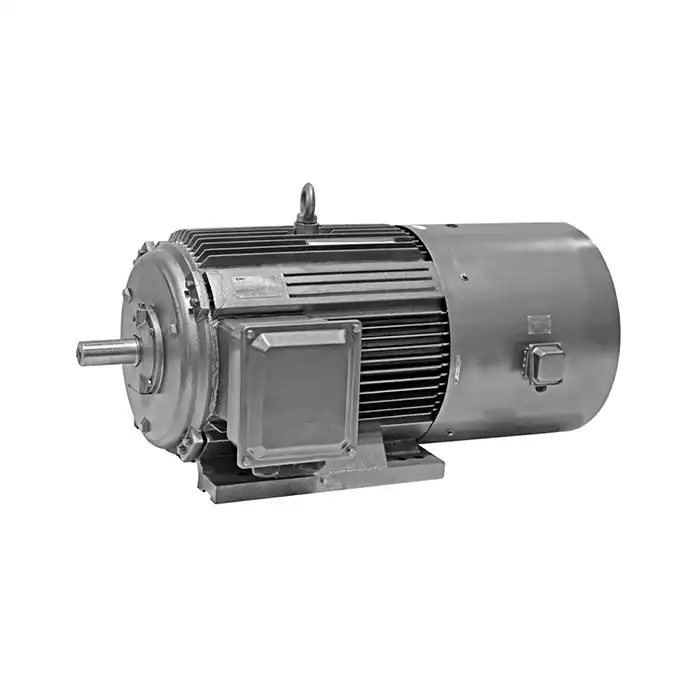
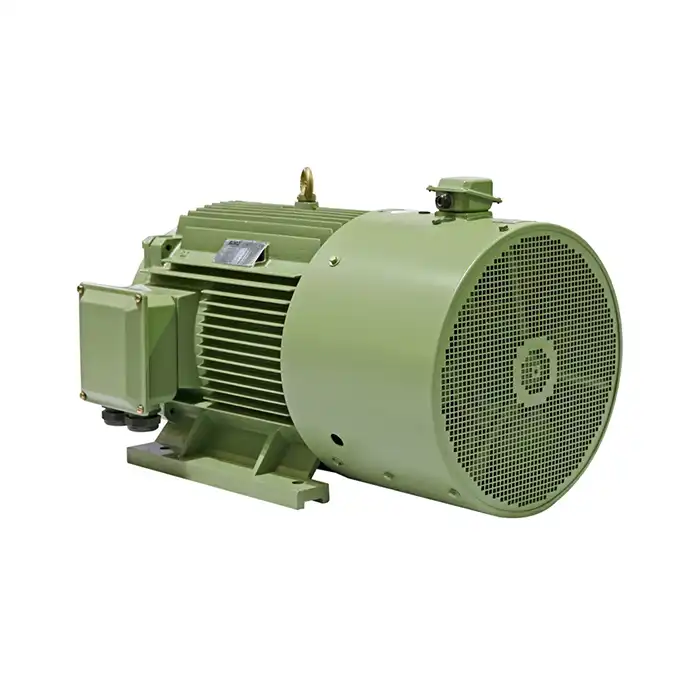
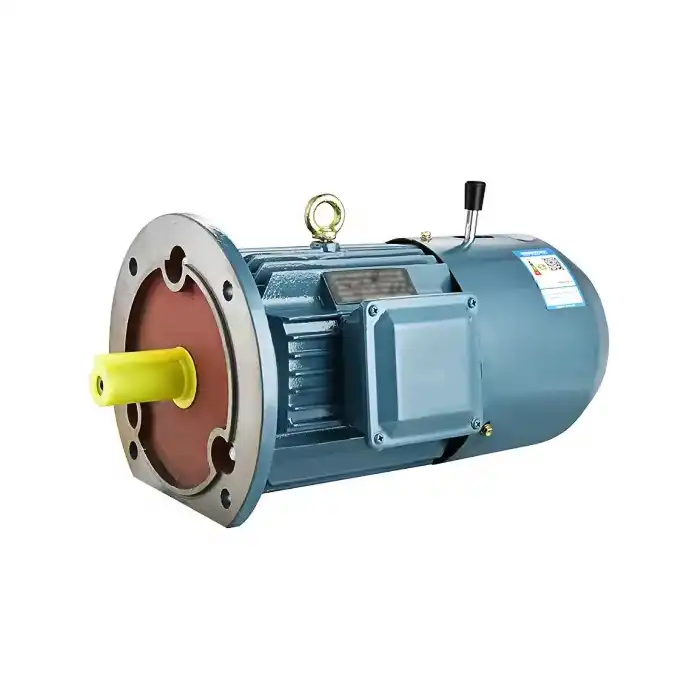
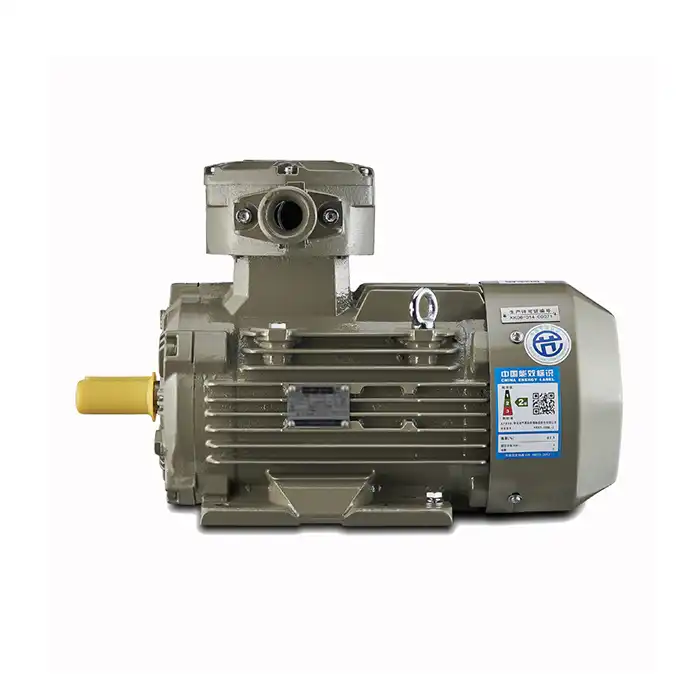
We manufacture 3 series of DC motors at XCMOTOR. The Z2 series is a compact general purpose motor, frames 11-112, 0.8 to 200 kW, 110 or 220 V DC, speeds 600 to 3000 r/min, B-class insulation, shunt excited. The Z4 series is our fourth generation line, ranging from 1.5 kW to 600 kW in frames 100 through 450 with F-class insulation and a constant-torque range of 20:1. The Z series medium with shunt, compound or separate excitation covers 59 to 1600 kW for high demanding operations. These three platforms correspond to the product pages for 15kw dc motor listings, 20 hp dc motor listings, 200 hp dc motor listings, 400v dc motor listings and 1000 kw dc motor listings.
Commutator, Balancing, and Testing at Our Factory
Quality control begins with the arrival of silicon steel and copper alloy, which we check against mill certificates. Computer controlled winding systems determine the slot fill, and each unit is checked for winding correctness and magnetic field balance. Rotors are balanced to ISO 1940 Grade G2.5 (G6.3 for the 200 hp class) in two planes, keeping vibration below 2.8 mm/s at rated speed. Each DC motor is tested for insulation resistance, heat, no load, full load, overspeed and high potential testing at 2 times rated voltage + 1000 V AC for 60 seconds. Type testing is carried out according to IEC 60034-1. Our credentials include CCC, CE and ISO9001 quality system certification.
Support, Delivery, and Spare Parts
XCMOTOR has over 20 years of expertise in power equipment solutions and we only employ components from renowned brand partners. We send all items free of charge and our staff handles sea, land, air or multimodal transport with export documentation. Buyers have a 30 day open buy period with return rights and high power units are fully refundable. We provide technical help seven days a week including Saturday and Sunday, ranging from pre-sales enquiries to after-sales service. We guarantee the availability of replacement parts for high-power systems for 15 years or more from the date of delivery. This long-term parts support is important to OEM and plant teams that need to maintain equipment throughout its service life.
Conclusion
A DC motor produces torque from armature current and magnetic flux, and it sets speed through armature voltage and field strength. Back EMF links these ideas, which explains high starting current and why drives limit it. Commutation keeps torque in one direction, and commutator finish, brush condition, and alignment decide how cleanly it works. Closed-loop feedback holds speed under changing load. For buyers, the practical choices come down to duty cycle, environment, insulation, cooling, drive compatibility, and whether a standard or custom build fits the machine. Testing a sample in the final application confirms the choice before volume orders. The Z2, Z4, and Z series cover different power ranges and speed-regulation needs.
FAQ
1. What is the difference between a DC motor and an AC motor?
A DC motor changes speed smoothly through armature voltage or field control and gives good torque at low speed. An AC motor usually needs a frequency drive for the same speed range. If a machine already has a DC drive, keeping DC often avoids replacing it.
2. How do I reverse a DC motor?
Swap the armature leads or the field leads, not both. Swapping both leaves the rotation unchanged. Reversal in our motors carries no demagnetization risk.
3. Why does a DC motor spark?
Light sparking is normal. Heavy sparking points to worn brushes, low spring pressure, a rough commutator, overload, or misalignment. Check these items first.
4. What details do you need to quote a DC motor?
Send voltage, power or torque, speed range, duty cycle, dimensions, shaft drawing, environment, cooling preference, feedback needs, quantity, drive type, and delivery region. We recommend a series and model from that information.
Request a DC Motor Recommendation or OEM/ODM Quotation from XCMOTOR
Send your voltage, speed range, torque, duty cycle, and drawings to XCMOTOR at xcmotors@163.com, and our team will recommend a suitable dc motor or prepare an OEM/ODM quotation. As a dc motor manufacturer with more than 20 years of experience, we offer free delivery, a 30-day open purchase period, original components, and seven-day technical support. For details, please refer to the website: motorxc.com.
References
Electric Machinery Fundamentals, 5th Edition, McGraw-Hill, 2011
Fitzgerald and Kingsley's Electric Machinery, 7th Edition, McGraw-Hill Education, 2013
IEC 60034-1: Rotating Electrical Machines, Part 1: Rating and Performance, International Electrotechnical Commission, 2017
ISO 21940-11: Mechanical Vibration, Rotor Balancing, Part 11: Procedures and Tolerances for Rotors with Rigid Behaviour, International Organization for Standardization, 2016
Power Electronics: Converters, Applications, and Design, 3rd Edition, Wiley, 2003
Analysis of Electric Machinery and Drive Systems, 3rd Edition, Wiley-IEEE Press, 2013