



Electric Motor Water Cooling: How IC611 Removes Heat
When a high-voltage motor is running full load in a steel mill or mine, heat is the enemy. The IC611 cooling technique described by IEC 60034-6 is a water cooled jacket system where coolant flows through an exterior casing. A water cooled motor has a direct channel to shed that heat before temperatures increase into the danger zone. In this essay I lay down precisely how IC611 works, why it outperforms fan based solutions in dusty or confined locations and what to look for when purchasing a water cooled motor for heavy industrial operation.

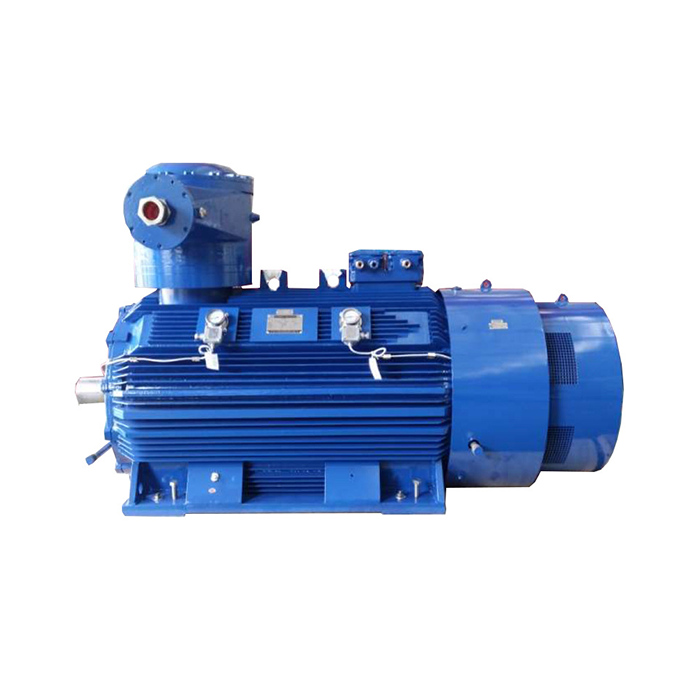
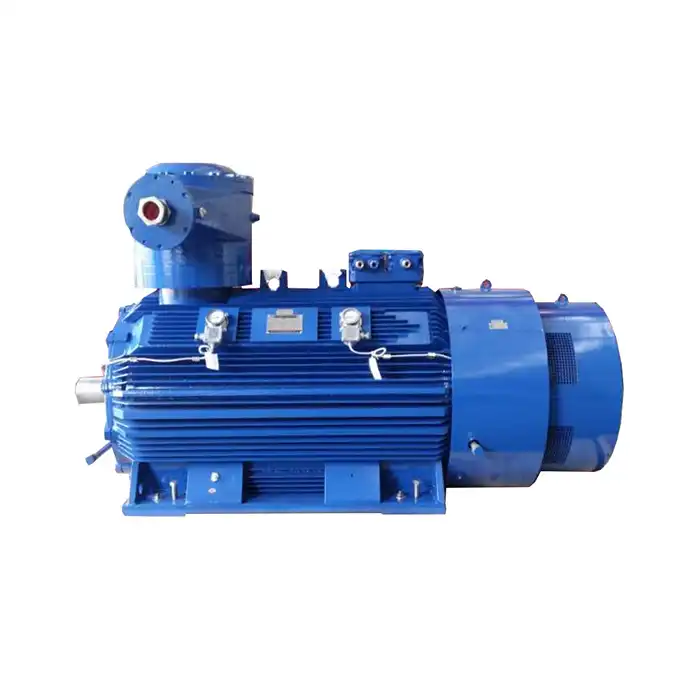
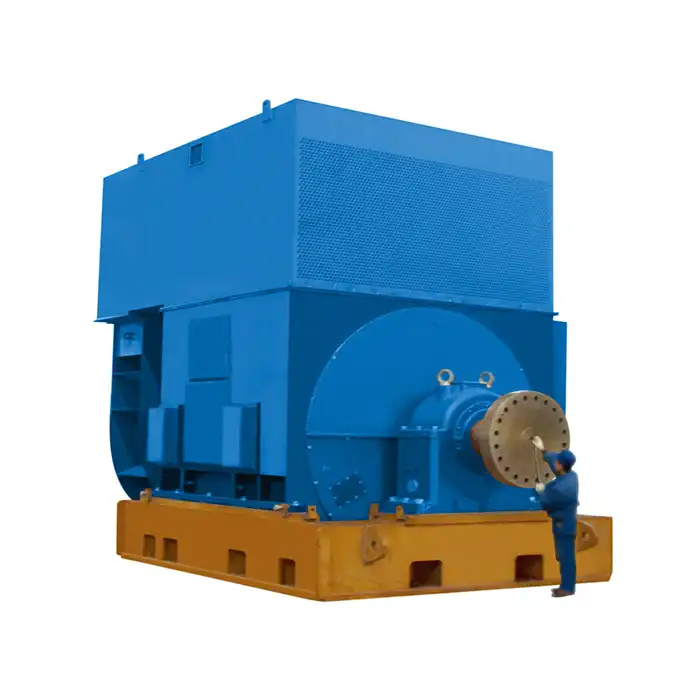
Series:YKS
Protection level:IP54
Voltage range:3000V±5%,3300V±5%,6000V±5%,6600V±5%,10000V±5%,11000V±5%
Power range:220-6300 kW
Application:fans, water pumps, compressors, crushers, cutting machine tools, transportation machinery, etc.
Advantage:low noise, low vibration, long service life, easy installation and maintenance.
Standard: This series of products complies withGB/T 1032 and GB/T 13957 standards.
Others: SKF, NSK, FAG bearings can be replaced according to customer requirements.
Understanding Water Cooled Motors and Heat Removal Principles
Where Motor Heat Comes From
Each electric motor converts electrical energy into mechanical work. But part of it is always wasted as heat. The two primary causes of copper loss are I 2 R heating in the windings and eddy currents and hysteresis in the lamination stack. 220 kW of losses isn’t too awful, but at 3,000 kW or 6,300 kW, they create enough heat to melt insulation in minutes if cooling were to fail. This is the real reason why steel, mining and power businesses require a properly built water cooled motor.
How the IC611 Circuit Works
IC611 talks about a closed main circuit. Water coolant runs through a jacket that goes around the frame of the rotor. The windings send heat through the frame wall and into the water, which then takes it to a heat exchanger outside the frame. The inside of the motor stays shut, so no outside air can get in and dust can't get on the windings. The closed-loop design is what sets IC611 apart from open-circuit air cooling (IC01), in which fan-drawn air captures every particle in the plant's air.
Why Sealed Cooling Matters in Heavy Industry
A rolling mill bay or an underground crusher chamber is full of metal chips, abrasive dust, and fumes that eat away at metal. A motor that is cooled by air quickly breaks down in that setting. The IC611 jacket keeps the electrical parts completely separate from any outside contamination. This sealed circuit is paired with an IP54 cover in the YKS line. The outer case prevents dust and water splashes, so the electric motor water cooling motor can work in places where a regular open-drip motor would break within weeks.
Benefits of Using IC611 Water Cooling for Electric Motors
Lower Operating Temperatures, Longer Insulation Life
The Arrhenius rule says that electrical insulation wears out: for every 10 °C rise in winding temperature, insulation life is cut in half. The IC611 keeps the temperatures of the windings much lower than what axial fans can do at the same power levels, which directly extends the time between services. That change in temperature means that a 2,000 kW blower motor that runs 8,000 hours a year will last for many more years.
Noise Reduction That Matters on the Floor
Here are the main sound benefits of IC611 in the YKS design:
- The stator and rotor use a skewed-pole, unequal-slot-pitch geometry that cuts electromagnetic noise by 8–10 dB versus a standard motor.
- The axial cooling fans operate 15 dB quieter than conventional forced-ventilation fans.
- High-precision rolling bearings with sealed end caps keep mechanical noise below 85 dB under no-load conditions.
- Total vibration velocity is held to ≤ 2.5 mm/s through G1.0-grade double-sided dynamic balancing.
Higher Power Density in the Same Frame
The YKS frame can hold more active copper and iron without getting too hot because water absorbs heat much better than air (about 3,500 W/m³·K vs. 25–250 W/m³·K for natural convection). The YKS 800-frame can reach 6,300 kW. Power density is 20–25% higher than normal high-voltage motors for the same frame size. This means that there are fewer parallel units, less bus work, and a lower chance of a system-level failure.
IC611 vs. Traditional Cooling: Performance and Application Comparisons
Air Cooling Limitations at High Power
external fans and ducting, which adds mechanical complexity and potential sites of failure. In dusty or chemically aggressive locations, air filters clog, airflow decreases off, and winding temperatures creep higher. A water cooled motor prevents that series of events since the principal heat channel never contacts plant air.
Oil Cooling Trade-offs
Oil-mist and oil-spray systems have better heat transmission than air, but they have a danger of contamination: seal failure might allow oil to migrate into winding insulation or bearing housings. With IC611 water jackets, there is no such danger since the coolant is completely external to the electromagnetic region of the motor.
Where IC611 Earns Its Place
The YKS series has shown its worth in a wide variety of heavy-duty applications:
- Steel rolling mills Main drive motors 3,000 – 6,300 kW rated torques of 19,000 – 100,000 N·m are continually available without thermal excursions.
- Mine shaft hoists & crushers The IP54 casing is designed for high-dust conditions; failure downtime is kept to 0.2 % per year.
- Petrochemical compressors and pumps Tight noise limitations and zero-ingress cooling safeguard people and sensitive process instruments.
- Power plant circulating water pumps – Medium-power types 500–2,000 kW match pump shaft speeds directly, thus there is no intermediary gearbox.
The common criterion of these sectors is that the motor cannot be stopped suddenly. IC611 water cooling satisfies that need by providing broad thermal margins even during protracted overloads.
Maintenance and Troubleshooting Tips for Water Cooled Motors with IC611
Routine Inspection Points
A water cooled motor will run at optimal efficiency and need frequent maintenance. During the first week of start-up, check the coolant flow rate and intake temperature once a week. After a month check once a month to see if stable standard readings are being produced . The design delta is commonly 5–10 °C over the inlet temperature. Make sure output temperature remains within specified range. Watch for an increase in the trend, since an increase suggests a route is partially closed before it gets too severe.
Preventing Clogging and Corrosion
The YKS cooler core is composed of aluminum alloy that will not corrode and has a sealing construction that is watertight. The long-term reliability is, however, water quality dependent. Maintain the pH of the circulating water between 7 and 8.5, hardness less than 200 ppm and add an authorized corrosion inhibitor to it. Flush the jacket and inspect the end-cap gaskets annually. Soft deposits accumulate gradually. By catching them during the annual flush, you keep the flow from slowing down, which triggers overheating warnings.
Bearing and Seal Service
YKS motors are equipped with SKF, NSK and FAG bearings that are loaded with durable grease so that they may operate at maximum speed for 20,000 hours without the need for oiling. Use the grade of oil it specifies to . Follow the spacing on the nameplate of the motor . When you combine greases that aren’t compatible, it breaks down the soap structure and causes wear to happen quicker. Inspect shaft seals for evidence of coolant leakage each time an electric motor water cooling bearing is serviced. An early warning of a little patch on the seal land is something you should react to immediately.
Procurement Guide: Selecting and Buying IC611 Water Cooled Motors
Matching Voltage and Power to Your Application
The YKS series voltage levels are 3,000 V, 3,300 V, 6,000 V, 6,600 V, 10,000 V and 11,000 V (±5% each). Power ratings from 220 kW to 6,300 kW and pole numbers from 2 to 16. Before you submit a request, you need know the bus voltage tolerance of the motor terminals, the required shaft speed, the load torque profile and the available flow and temperature of the cooling water. Providing those four pieces of information greatly shortens the quoting cycle and minimizes the chance of purchasing a motor that requires field changes at startup.
Certifications and Standards to Verify
All YKS motors are supplied with GB/T 1032 and GB/T 13957 required documentation. You may get CCC, CE, UL, GOST, ISO 9001 and CQC certifications. Inquiry stage. What permissions do you need for your project? Regional clearance influences wait times, thus contacting early prevents last-minute delays.
Lead Times and Bearing Selection
Standard configurations are sent out in two to three weeks. That time is increased to 4–6 weeks if you need a custom voltage, a frame that isn't standard, or a certain brand of bearings. You can choose between SKF, NSK, and FAG bearings based on what the customer wants, and the base design will not change. XCMOTOR provides agreed-upon spare-parts packages and stocking agreements for projects that need to keep extra parts on hand.
Conclusion
The main problem with high-power industrial motors is that they produce too much heat and don't have enough room to cool down. Open-air ventilation doesn't work well in these conditions. IC611 water cooled motor fixes this problem. The YKS series has a motor that can handle voltages from 3 kV to 11 kV, covers 220–6,300 kW, and is protected against dust with IP54 rating. It gives heavy-industry equipment managers what they need most: a motor that runs when it's supposed to. It does this by making 8–15 dB less noise than standard motors and using bearing brands that are right for the job.
FAQ
1.How often should I inspect the cooling jacket on a water cooled motor?
For the first month, check the flow of coolant and the temperature of the inlet once a week. Once a solid standard has been set, visual and flow-rate checks once a month are enough. Once a year, flush and check the inside of the jacket.
2.Can the YKS water cooled motor replace my existing motor without shaft modifications?
When you send an inquiry, include the frame size, shaft diameter, and bolt pattern of the motor you already have. XCMOTOR engineers look at the size information and either confirm that the parts can be directly swapped out or make a note of what adapters are needed for the installation. Most common frame sizes are in line with what the IEC and GB say.
3.What water quality does IC611 require?
Keep the pH between 7 and 8.5, the total hardness below 200 ppm, and a rust agent that doesn't foam in the water. Deionized water that doesn't have an inhibitor is too rough for aluminum alloy surfaces and shouldn't be used by itself.
4.How long do the bearings last?
SKF, NSK, and FAG rolling bearings in YKS motors are rated to last about 20,000 hours at full speed and load before they need to be re-greased. The actual service life relies on the type of work, the temperature of the environment, and how well the grease is maintained.
5.Is IC611 cooling suitable for outdoor installations?
Yes. The YKS series IP55 version protects against low-pressure water jets coming from any direction, so it can be used outside or in some shaded areas. Tell them IP55 when you place your order.
Get a Quote for Your Water Cooled Motor Project — Contact XCMOTOR
Steel plants, mines, and power plants all over the world rely on XCMOTOR for water cooled motor solutions. There are 220–6,300 kW in the YKS series, with 3–11 kV voltage options, IP54 protection, and certified SKF, NSK, or FAG bearings. Customized units take 4–6 weeks to ship, while standard units take 2–3 weeks. To speak with a water cooled motor maker who has stock and offers full technical help before and after delivery, send your application data (load, voltage, environment) to xcmotors@163.com or go to motorxc.com.
References
1. IEC 60034-6: Rotating Electrical Machines — Part 6: Methods of Cooling (IC Code). International Electrotechnical Commission, 2010.
2. Mellor, P. H., Roberts, D., & Turner, D. R. "Lumped parameter thermal model for electrical machines of TEFC design." IEE Proceedings B — Electric Power Applications, 1991.
3. Boglietti, A., Cavagnino, A., Staton, D., Shanel, M., Mueller, M., & Mejuto, C. "Evolution and modern approaches for thermal analysis of electrical machines." IEEE Transactions on Industrial Electronics, 2009.
4. Staton, D. A., Boglietti, A., & Cavagnino, A. "Solving the more difficult aspects of electric motor thermal analysis in small and medium size industrial induction motors." IEEE Transactions on Energy Conversion, 2005.
5. GB/T 13957-2008: Large AC High-Voltage Motors — General Technical Requirements. Standardization Administration of China, 2008.
6. Chapman, S. J. Electric Machinery Fundamentals, 5th ed. McGraw-Hill Education, 2012.