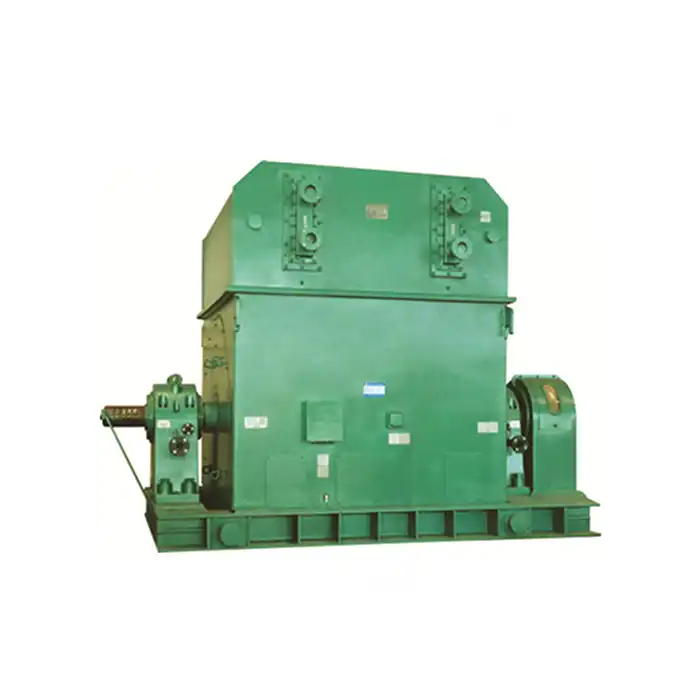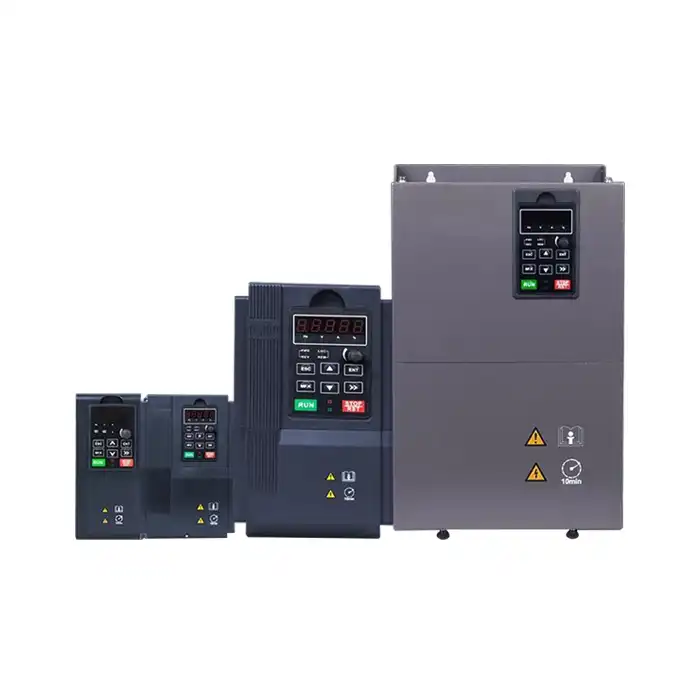




Ball Mill Motors: TDMK Synchronous vs Induction
When selecting a ball mill motor for cement or mining operations, the choice between TDMK synchronous and induction types directly affects energy consumption, grid stability, and long-term operating costs. This guide breaks down both motor types from a technical and procurement standpoint, so project managers and OEM engineers can make well-informed decisions backed by real specifications.
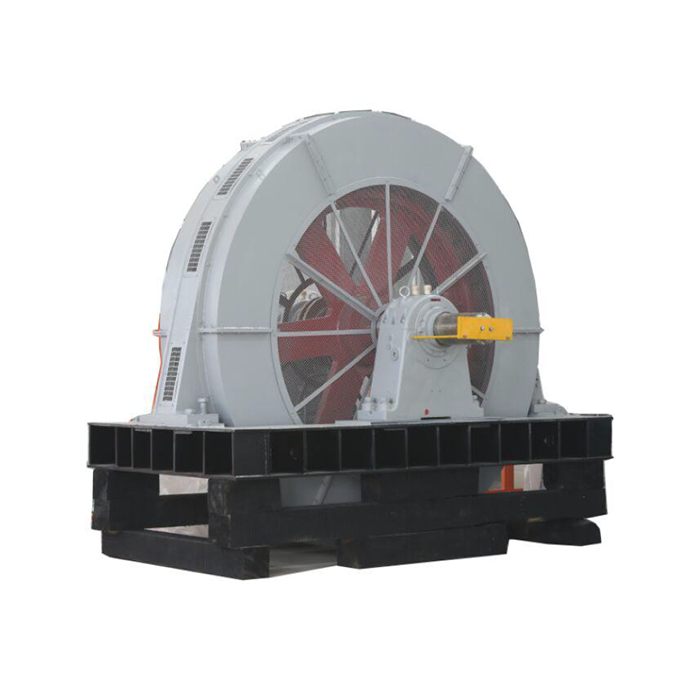
Series:TDMK
Voltage range:3000V±5%,3300V±5%,6000V±5%,6600V±5%,10000V±5%,
Power range:400-2000 kW
Application:Mining, cement.
Advantage:large starting torque.
Others: SKF, NSK, FAG bearings can be replaced according to customer requirements.
Understanding Ball Mill Motors: TDMK Synchronous vs Induction
What Does a Ball Mill Motor Actually Do?
A motor inside a ball mill turns a cylinder-shaped shell that is full of grinding media. The motor has to have a lot of torque when it starts up, keep its speed steady even when the load changes, and run nonstop for long periods of time. The ball mill motor has to work in some of the harshest electrical and mechanical situations found in industrial power systems. This is the case in cement plants and material processing plants.
The Two Main Motor Types
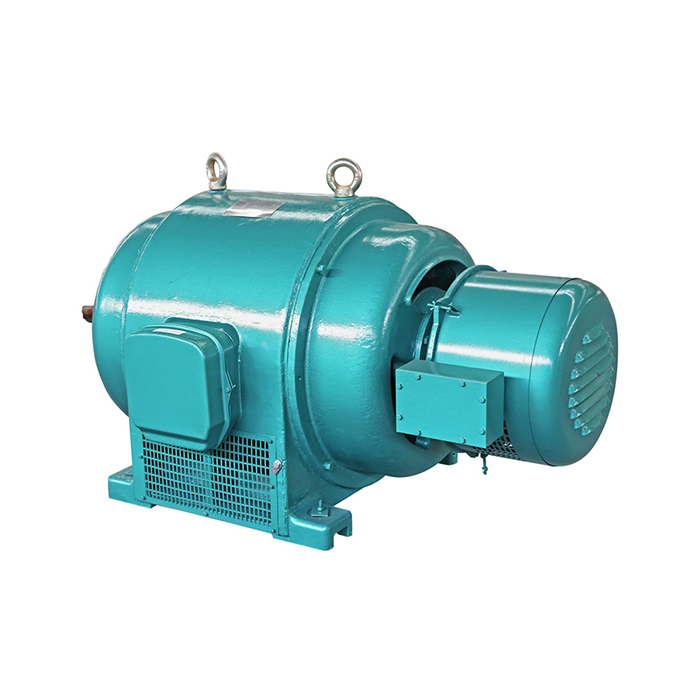
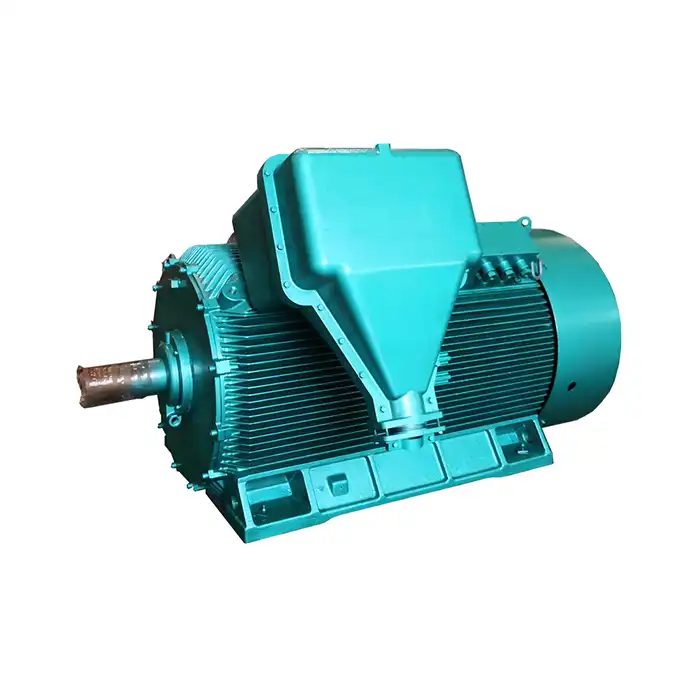
TDMK synchronous motors are horizontal, three-phase machines with sharp poles that are made to drive ball mills at low speeds and high torques. They work at synchronous speed, which means that the speed of the rotor fits the speed of the spinning magnetic field perfectly. Induction motors, on the other hand, use electromagnetic induction and always run a little slower than synchronous speed. Each type works best for a different set of situations, depending on the load and the needs of the grid.
Why Motor Selection Matters for Grinding Operations?
If you pick the wrong ball mill motor, the voltage on the grid will change when the mill starts up, too much heat will build up, the bearings will fail early, and electricity will be wasted. According to the International Energy Agency, 60–70% of variable costs in cement production are related to energy. An improperly matched motor increases these losses over thousands of hours of operation each year.
Technical Comparison: TDMK Synchronous vs Induction Motors for Ball Mills
Power, Torque, and Speed Specifications
For ball mills, TDMK synchronous motors usually have a power range of 400–2,000 kW and can work at 3,000V, 3,300V, 6,000V, 6,600V, and 10,000V (each ±5%). The speed ratings range from 150 rpm to 500 rpm, which is the right speed for large grinding mills that need slow rotation without the need for a gearbox in many cases. Starting torque is 220% to 280% of rated torque, which is very important for getting a fully loaded mill moving again.
Efficiency and Power Factor Behavior
Power factor for TDMK synchronous motors stays between 0.85 and 0.92, and stimulation current can be changed to get power factor close to unity or even ahead. This helps fix the plant's fluctuating power loads. Even though induction motors are easier to use, they require lagging reactive current, which builds up across multiple drives and can cause power factor penalties from utility companies. This difference adds up on regular electricity costs for places that use a lot of big grinding drives at the same time.
Maintenance and Cooling Considerations
Both types of motors need to be properly cooled and have their bearings maintained. When TDMK synchronous motors are running all the time, they have a built-in thermal margin thanks to their Class F insulation and Class B temperature rise standards. A deep groove ball bearing is the standard type of bearing, but SKF, NSK, or FAG bearings can be used instead (customer choice). In squirrel-cage induction motors, there are no brushes or slip rings, which makes maintenance easier. However, brush gear service is needed for wound-rotor induction motors that are used for soft-starting.
How to Choose the Right Ball Mill Motor: Decision Support for B2B Buyers
F-1 Screening: Operating Environment and Grid Constraints
Before specifying a motor type, procurement teams should document grid voltage level (6 kV or 10 kV), allowable voltage dip during motor starting, and whether the plant DCS uses Modbus or Profibus protocols. Projects where starting current must stay below utility limits typically favor synchronous motors with field-controlled starting or wound-rotor induction motors with external resistance starters. IP20 protection class suits enclosed machine rooms; outdoor or dusty environments require additional enclosure planning.
F-2 Demand Matching: Aligning Motor Specs to Mill Load Curves
Once grid constraints are confirmed, match the ball mill motor to the actual load torque curve. A raw material grinding mill in a cement plant starts under partial load and ramps to full load over several minutes. The motor's starting torque of 220%–280% rated must exceed the mill's breakaway torque with a reasonable margin. For mills exceeding 1,000 kW, TDMK synchronous motors give operators the ability to tune excitation during startup, which reduces inrush current and protects plant transformers.
Evaluating Total Cost of Ownership
Upfront price is only one part of the procurement decision. Here are the cost categories that experienced EPC project managers consistently track:
- Purchase price: TDMK synchronous motors carry a higher initial cost than equivalent induction motors due to the excitation system and salient-pole rotor construction.
- Energy cost over 10 years: With power factor correction built into the synchronous motor's operation, reactive power charges decrease meaningfully over a multi-year horizon.
- Maintenance cost: Brush gear and exciter maintenance on synchronous motors add periodic labor costs, while squirrel-cage induction motors have lower routine maintenance requirements.
- Downtime risk: Bearing quality directly affects unplanned downtime. Specifying SKF, NSK, or FAG bearings from the order stage reduces the probability of early bearing failure in abrasive environments.
These cost categories, taken together, often show that synchronous motors pay back the price premium within three to five years in high-utilization grinding applications. Procurement teams that present total cost of ownership analysis to plant owners tend to win faster approval than those focusing on purchase price alone.
Energy Performance and Operational Optimization of Ball Mill Motors
Common Performance Bottlenecks
Three main things cause large grinding drives to lose efficiency: reactive power draw that is too high, thermal stress from not enough cooling, and mechanical losses from bearings that are out of alignment or worn out. When a cement plant has more than one grinding circuit, reactive power from induction motors can lower the monthly power factor below 0.85, which leads to extra charges from the utility company. When the power factor is 0.80, a 2,000 kW induction motor seems to use about 2,500 kVA of power. When the power factor is 0.92, the same machine seems to use about 2,180 kVA of power.
Practical Optimization Steps
There are several tried-and-true ways for operators to make the ball mill motor work better. First, make sure that the motor voltage matches the supply voltage at the motor contacts, not just the number on the plate. Voltage tolerances of ±5% are built into XCMOTOR's TDMK motor standards. However, supply variations outside of that range raise the temperature of the stator windings and shorten the life of the insulation. Second, set up a program for bearing inspections that is based on working hours instead of calendar time. This is especially important in dusty places like cement or mineral processing plants. Third, check the DCS communication parameters before starting up the mill to avoid protocol mismatches that could lead to false fault trips.
What Field Data Shows?
From plant-level energy reports released by cement industry expert associations, we know that when cement plants moved from wound-rotor induction motors to TDMK synchronous motors on raw mill drives, they used 4–6 kWh less of electricity per ton of material processed. Over a year of continuous operation at a throughput of 300,000 tons per year, that number shows a big drop in electricity costs.
Procurement Guide: Buying Ball Mill Motors for Global B2B Clients
Sourcing Channels and Customization Options
When looking for a ball mill motor abroad, industrial buyers should give preference to makers that can provide documentation of the factory acceptance test (FAT), allow third-party inspections, and fully track electrical materials. When you buy directly from the manufacturer, you usually have more customization options, like choosing the voltage class, replacing the bearing brand, and orienting the terminal box. XCMOTOR sells ball mill motors with power values between 400 and 2,000 kW and all five voltage levels. Customers can choose between SKF, NSK, or FAG bearings.
Certifications and Quality Assurance
When writing technical specs for foreign bids, procurement teams should make sure that the motor provider has ISO 9001:2015, CE, and CCC certifications. All three of these certificates cover quality management systems, getting into the European market, and meeting China's strict product standards. XCMOTOR has all three, which makes it easier to meet the documentation needs of EPC projects with stakeholders from different countries.
After-Sales Support
For buyers who are in charge of running a plant for more than one year, warranty terms, the availability of spare parts, and the time it takes to answer technical questions are just as important as motor specs. XCMOTOR offers committed help seven days a week, even on weekends. You can return items within 30 days, and all orders are delivered for free. Tech questions can be sent to xcmotors@163.com or through motorxc.com's product pages.
Conclusion
You can choose between a TDMK synchronous and an induction ball mill motor based on your plant's power grid limitations, the amount of torque needed at startup, and how much you expect the equipment to cost in total over its lifetime. TDMK synchronous motors have better control over the power factor and a high starting torque, making them ideal for big grinding jobs in mines and cement plants. When those things are most important, induction motors offer mechanical simplicity and a lower initial investment. When properly specified and kept with good bearings and the right voltage matching, both kinds can grind reliably for years.
FAQ
1. What is the typical starting torque for a TDMK ball mill motor?
This high starting torque is needed to overcome the grinding mill's static inertia when it is full and keep it from speeding up for too long, which puts stress on the supply grid.
2. What voltage classes are available for large grinding mill motors?
Ball mill motors from XCMOTOR are offered in a variety of voltages, each with a 5% tolerance: 3,000V, 3,300V, 6,000V, 6,600V, and 10,000V. This range includes the most common medium-voltage standards used in Asia, the Middle East, and North America in cement and mining plants.
3. Can the bearing brand be specified at the time of order?
Yes, XCMOTOR lets customers choose SKF, NSK, or FAG bearings instead of the standard deep groove ball bearing configuration.
4. Is a TDMK synchronous motor suitable for dusty cement plant environments?
The usual level of protection is IP20, which works well in machine rooms that are closed off. For installations in places with a lot of dust, buyers should talk to the XCMOTOR engineering team during the specification phase about other enclosure or filtering options.
5. How does insulation class affect motor service life in continuous grinding operations?
A thermal margin of about 25°C above the Class B limit is provided by Class F insulation with Class B temperature rise. This extra space makes the insulation on the winding last a lot longer in places where yearly changes in temperature or movement for cooling happen.
Ready to Specify the Right Ball Mill Motor? Contact XCMOTOR Today
XCMOTOR sells ball mill motors with power ranges from 400 kW to 2,000 kW and five voltage classes. The bearings can be customized, and the company provides all the necessary licensing paperwork. Our tech team is available seven days a week to help you with the buying and setting up process. Motorxc.com or xcmotors@163.com are both good ways to get a price from a reliable ball mill motor provider that has ISO 9001:2015, CE, and CCC credentials.
References
1. International Energy Agency. Cement Technology Roadmap: Carbon Emissions Reductions up to 2050. IEA Publications, 2018.
2. Boldea, Ion, and Syed A. Nasar. The Induction Machine Handbook. CRC Press, 2002.
3. Kundur, Prabha. Power System Stability and Control. McGraw-Hill, 1994.
4. IEEE Industry Applications Society. "Starting and Running Performance of Large Synchronous Motors." IEEE Transactions on Industry Applications, 2015.
5. Waide, Paul, and Conrad U. Brunner. Energy-Efficiency Policy Opportunities for Electric Motor-Driven Systems. International Energy Agency Working Paper, 2011.
6. Birolini, Alessandro. Reliability Engineering: Theory and Practice. Springer, 2017.