



DC Motors for Industrial Applications: Selection Checklist
Choosing the right dc motor for an industrial machine is one of those decisions that looks straightforward on paper but gets complicated fast once you factor in speed range, torque curves, insulation ratings, and compatibility with your existing control system. I've put together this checklist to walk you through every stage — from understanding what separates one motor type from another, to knowing exactly what to ask a supplier before you sign a purchase order.
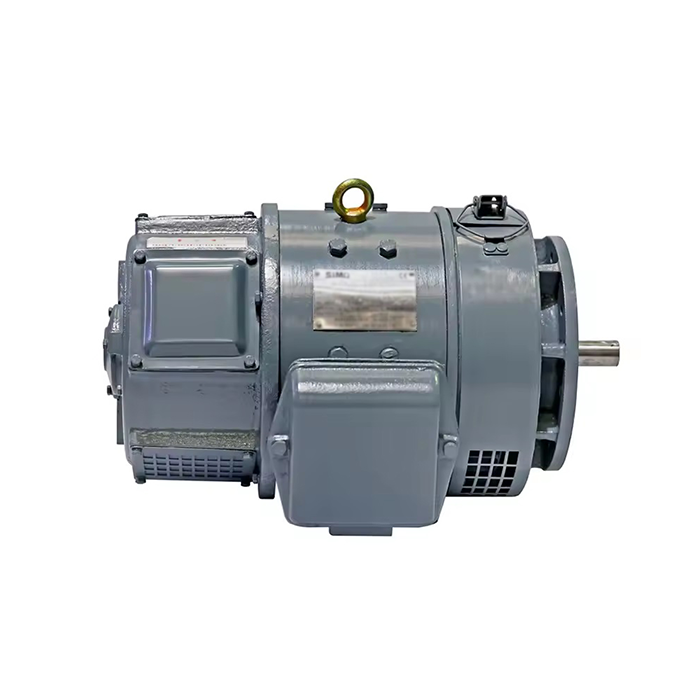
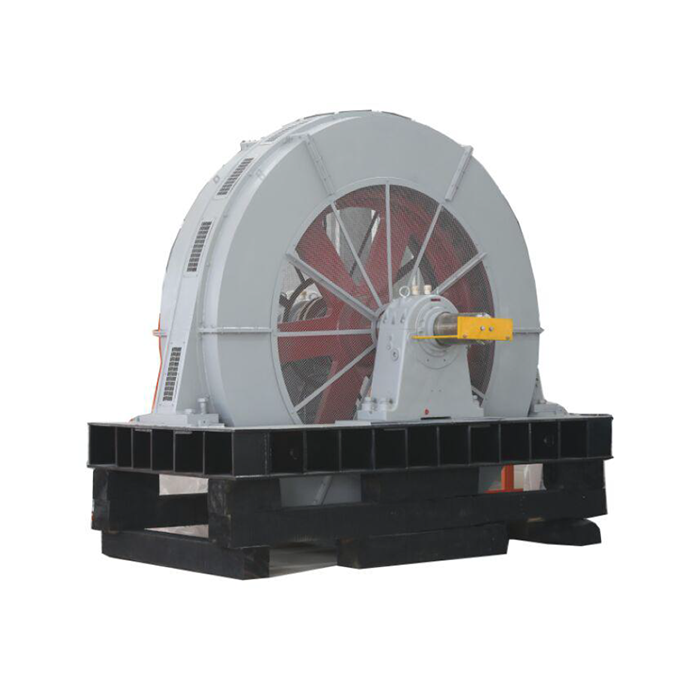
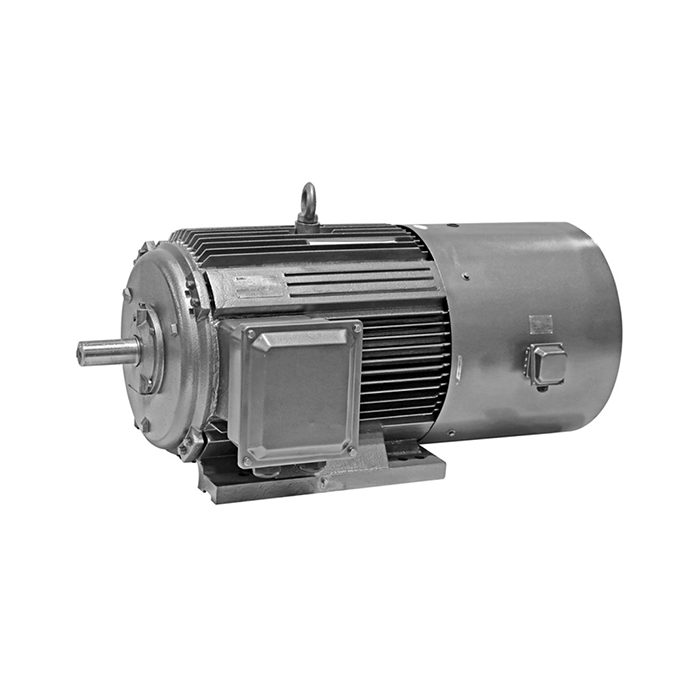
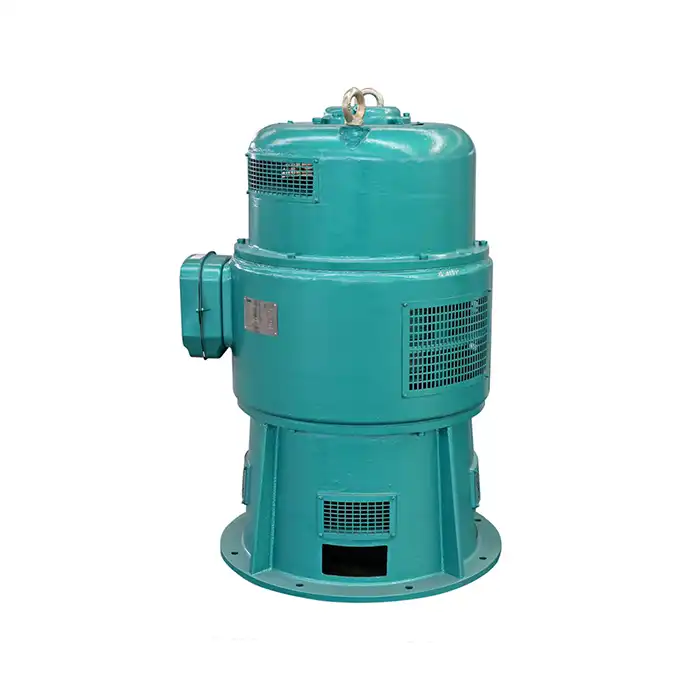
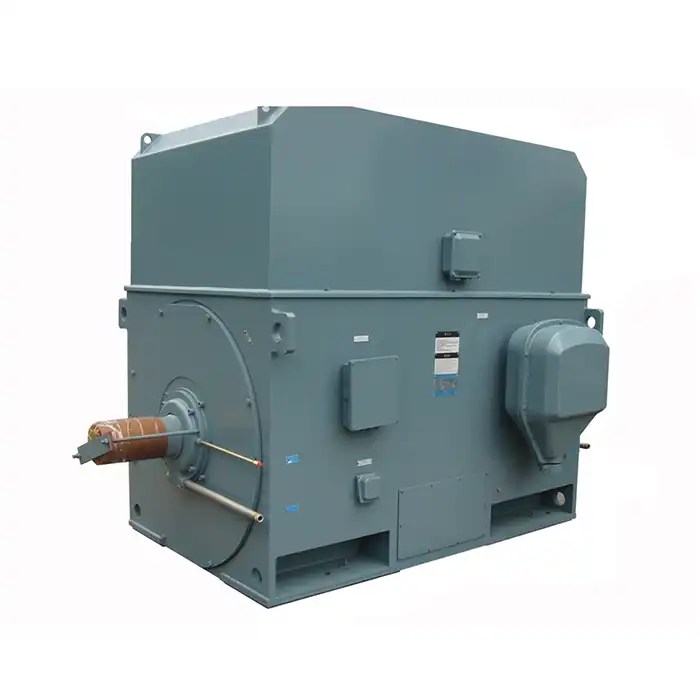
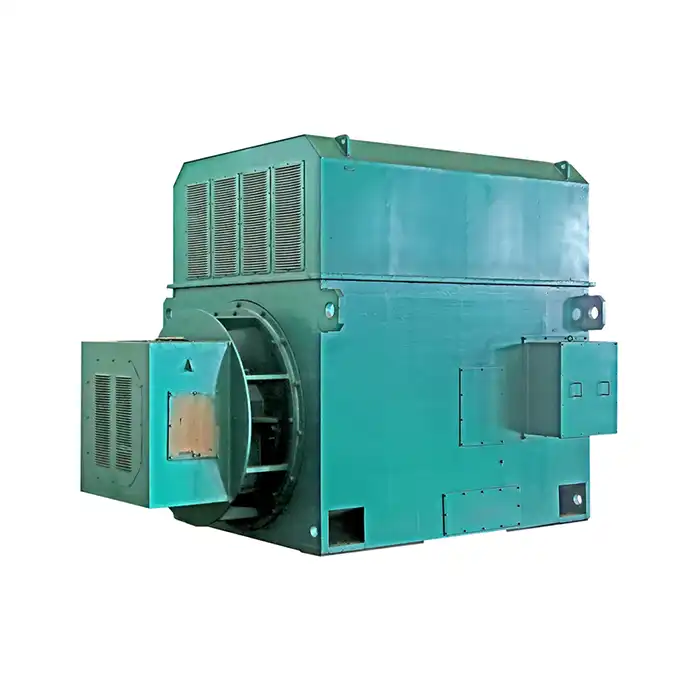
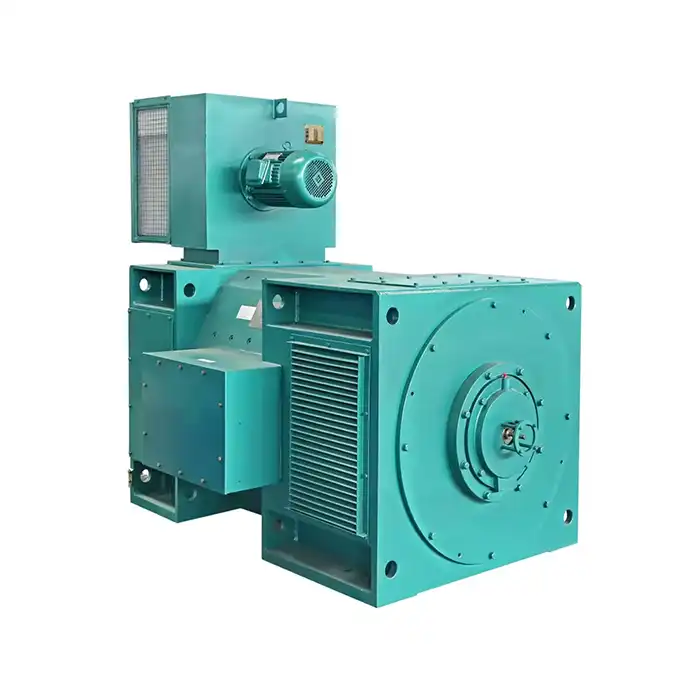
Series:Z2
Frame number: 11-112
Application:Z2 series motors are small DC motors for general industrial use and can be used in metal cutting machine tools, papermaking, dyeing and weaving, printing, cement, etc. The generator can be used as power source, lighting or other constant voltage power supply.
Power range:0.8-200kW
Voltage range: 110V,220V, etc.
Certificate: standard JB1104-68 .
Advantage:Suitable for outdoor use and strong corrosion resistance.
Others: SKF, NSK, FAG bearings can be replaced according to customer requirements.
Understanding DC Motors: Key Concepts and Types
Before you buy a dc motor, it's helpful to know how they work and why their internal structure is important in real-life industrial settings.
How a Brushed DC Motor Works?
Electricity flows through a brushed dc motor's carbon brushes, which stay in place and press against a spinning commutator. The commutator changes the direction of the current in the armature windings at just the right time. This makes the force constant. Because of this mechanical change, it is very important that the commutator has a smooth surface and accurate measurements from bar to bar. Brush bounce, uneven current transfer, and spark loss are all problems that happen when the bar-to-bar deviation on the commutator is more than 0.005 mm. These problems make the motor last less time.
Common Industrial DC Motor Types
They are series-wound, shunt-wound, compound-wound, and separately excited. These are the four main configurations used in heavy industry. In the fractional-horsepower range, permanent magnet motors are more common. Printers and paper lines often use shunt-wound motors because they keep their speed pretty steady even when the load changes. Separately excited dc motors give the best speed control when a digital controller needs to keep rpm within a few percent of the full load range.
Key Components That Affect Reliability
The brushes, hinges, armature windings, and field windings all work together. When two dc motors have the same nameplate rating, the more precise one will last longer. This is true even if they have the same nameplate rating. This is because the more precise one has SKF or NSK bearings with total indicated runout less than 0.005 mm and electrolytic tough-pitch copper commutator segments.
Core Criteria for Selecting DC Motors in Industrial Applications
With a structured checklist, you can make a short list of any motor once you know the basics.
Performance Metrics to Verify First
The four most important numbers are the base speed (r/min), the rate of power (kW or hp), and the rate of torque (N·m). For printing and paper equipment that needs to be able to quickly speed up and slow down, a speed control ratio of at least 20:1 in constant-torque duty is a good place to start. An excess capacity of 1.5 times the maximum torque can handle most cases with a high peak load. For heavy jobs like turning, you might need a 200% overload capacity.
Matching Insulation Class to Operating Temperature
Don't skip over insulation class. Classes B and C are rated to 130 °C and work in light-duty indoor settings. However, they may not last as long if the outdoor temperature is high or the job is constant. Many commercial 20hp dc motor that use SCR or IGBT drives have a large thermal safety cushion at Class F (155 °C). When vacuum pressure impregnation is used to put Class H glue systems in place, they work well for high-power units that are on all the time.
Voltage and Drive Compatibility
A new dc motor must have the same armature voltage as the old one if you want to use it. Most of the time, 110 V, 160 V, 220 V, 400 V, or 440 V DC are used in industry. See what the motor's grade says to find out if an SCR will work or if it needs a separate DC unit. They can make too much ripple current if these don't match up properly, which wears down the commutator faster.
Comparative Insights: Choosing the Right Motor Among Alternatives
There are a lot of experts who don't know if they should get a new dc motor or change the machine to run on AC. Clear your mind and look at the trade-offs.
DC vs. AC Motors for Speed-Sensitive Machines
Dc motors are still useful in machines that already have a good DC bus infrastructure and need a speed range of 20:1 or more without adding an encoder feedback loop. AC systems with variable frequency drives (VFDs) have gotten a lot better. Usually, a printing press or paper machine needs new drives, new wires, and sometimes a whole new look at how it works to go from DC to AC. For starters, this costs more than a straight DC substitute.
DC Motors vs. Servo and Stepper Motors
The most accurate way to position something is with a servo motor, but they cost more and need a closed-loop controller. Stepper motors can track at slow speeds, but they lose power quickly as the speed goes up. It is best to use a well-specified dc motor for continuous-duty jobs like roll drives, conveyors, and lift hoist drives, where high torque and smooth acceleration are more important than small steps.
Procurement Considerations: How to Buy the Right DC Motor
No matter how well a motor works scientifically, it won't pass the buying test if it can't be brought on time or doesn't come with any help after the sale.
What to Look for in a Supplier
These are the parts of the supply line that buying managers always say are important when making choices:- Getting OEM-grade parts: The company that makes motors should buy parts from well-known brands like CHANGSHA, ABB, Siemens, Wolong, NEC, SIMO, and XEMC. Also, they should look at the mill certificates of the copper alloy and silicon steel that are coming in.
When a dc motor leaves the plant, it should have a dynamic balance certificate, a report on its insulation resistance, and a performance curve for both no-load and full-load. It should also have high-potential test results at 2× maximum voltage plus 1000 V AC for 60 seconds.
For normal setups, the lead time for delivery is 15 days. For custom power classes, the lead time is 4–6 weeks.- Support seven days a week, including weekends, and guarantyd spare parts available for at least 15 years after delivery are important for companies that make things all the time.
- OEM-grade component sourcing — the motor manufacturer should draw components from verified brands (ABB, Siemens, Wolong, NEC, SIMO, XEMC, CHANGSHA), with incoming silicon steel and copper alloy verified against mill certificates.
- Factory test documentation — every dc motor should leave the factory with an insulation resistance report, a no-load and full-load performance curve, high-potential test results at 2× rated voltage plus 1000 V AC for 60 seconds, and a dynamic balance certificate.
- Delivery lead time — standard configurations should be available within 15 days; custom power classes within 4–6 weeks.
- After-sales coverage — seven-day support (including weekends) and guaranteed spare parts availability for at least 15 years post-delivery matter for facilities running continuous production.
Because of these rules, distributors who sell motors that aren't marked and can't be tracked will no longer be able to do business. I would add one more thing: make sure the supplier can make nameplates in both Chinese and English if the motor will be serviced by teams of people who speak more than one language or if it will be sent through international supply chains.
You can be sure that engineering managers and plant inspectors will look at a paper record if the provider has ISO 9001:2015 certification, CCC and CE marks, UL and GOST foreign certifications, and production tracking built into SAP. Customizing the frame size, shaft length, voltage options, cooling options, and explosion-proof enclosures to ATEX/IECEx levels lowers the project risk even more when a normal catalog motor doesn't work in a certain spot.
Maintenance Best Practices to Maximize DC Motor Lifespan
Even the best dc motor will break down faster than it should if repair isn't planned ahead of time.
Routine Inspection Schedule
Check the length of the brush and the pressure on the pad every 500 to 1,000 hours. Get new brushes before they wear down to the length that the manufacturer says is the bare minimum. It's possible for the spring pressure to drop and damage the commutator if you let the brushes wear down past that point. Clean the surface of the commutator with a cloth that doesn't have lint on it. You should never use rough compounds on a surface that doesn't have clear pits in it.
Addressing Overheating and Excessive Noise
There are three main reasons why things get too hot: air that isn't moving properly, the wrong cooling mode for the duty cycle, or a motor that is too small and is always being overworked. This dc motor was made to handle heavy loads all the time, but if you don't run the fan, it will get too hot in just a few hours. If the commutator end makes too much noise, it's likely that the brushes are not lined up correctly or that the surface of the commutator needs to be turned.
Predictive Maintenance Tools
It is suggested that insulation resistance trends, vibration analysis (with values below 2.8 mm/s as per VDI 2056), and thermal imaging of the commutator end all be done at the same time to find most early failures before they cause unplanneddowntime. Once a week, these numbers are written down so that maintenance teams can plan to fix brushes, bearings, or restart before something breaks and stops the line.
Conclusion
Selecting the right z series dc motor comes down to matching speed regulation ratio, insulation class, commutator precision, voltage compatibility, and cooling mode to the actual duty cycle — and then sourcing from a supplier who can prove every claim with test documentation. XCMOTOR's Z2, Z4, and Z series cover 0.8 kW to 1600 kW with speed regulation up to 20:1, Class F/H insulation, and commutator bar-to-bar deviation controlled within 0.005 mm. Standard lead time is 15 days; spare parts are guaranteed for 15+ years. Visit motorxc.com for full specifications.
FAQ
1. What speed regulation ratio should I specify for a printing machine dc motor?
It's also a good idea to buy from a company that can test everything they say. With XCMOTOR's Z2, Z4, and Z lines, you can choose from 0.8 kW to 1600 kW, change speeds up to 20:1, get Class F/H insulation, and fine-tune the commutator bar-to-bar variation to 0.005 mm. Most parts can be made in 15 days and come with a warranty that lasts at least 15 years. To find out everything, visit motorxc.com.
2. Can a Z4 or Z series dc motor run directly from an SCR drive?
For constant-torque service, printing and paper equipment needs to have a ratio of at least 20:1. When it comes to the Z4 series dc motor, the constant-torque regulation is exact (20:1), and the constant-power regulation is 4:1. The full speed range that most web-press and coating-line drives need is here.
3. What insulation class do I need for 24/7 continuous-duty operation?
Class F, which is set to 155 °C, is the coolest level I would suggest for business uses that need to be up and running all the time. The vacuum pressure impregnation with Class H resin systems used in the Z line of high-power dc motors makes them more thermally stable for constant rolling mill or hoist duty.
4. How do I verify commutator quality before accepting delivery?
Ask for the factory test report that lists the Ra surface finish (it should be 0.4 μm), the bar-to-bar height deviation (it should be 0.005 mm), and the insulation resistance (it should be 100 MΩ at 500 V DC). We can tell how well the commutator was machined and how long the brush will last by all three of these numbers.
Get DC Motor Specifications and Pricing from XCMOTOR
Industrial dc motors from XCMOTOR (Shanxi Qihe Xicheng Electromechanical Equipment Co., Ltd.) have been made in the Z2, Z4, and Z series for more than 20 years. It is clear that XCMOTOR only makes and sells dc motors. They ship for free, let you return items for 30 days, and have customer service available seven days a week. Go to motorxc.com right now to get a price or email xcmotors@163.com with your motor brand information or application needs.
References
1. Chapman, S. J. Electric Machinery Fundamentals. McGraw-Hill Education, 2011.
2. Mohan, N., Undeland, T. M., & Robbins, W. P. Power Electronics: Converters, Applications, and Design. John Wiley & Sons, 2002.
3. Fitzgerald, A. E., Kingsley, C., & Umans, S. D. Electric Machinery. McGraw-Hill, 2003.
4. IEC. IEC 60034-1: Rotating Electrical Machines — Part 1: Rating and Performance. International Electrotechnical Commission, 2017.
5. Boldea, I., & Nasar, S. A. Electric Drives. CRC Press, 2005.
6. Hughes, A., & Drury, B. Electric Motors and Drives: Fundamentals, Types and Applications. Newnes, 2013.