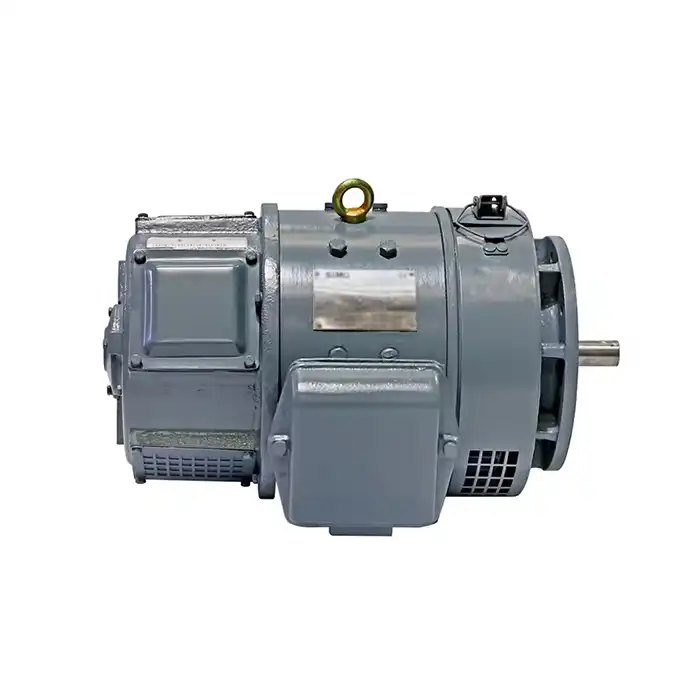




4160V NEMA vs IEC Medium Voltage Motors
When engineers and procurement teams specify a 4160V motor for oil sands extraction, copper mining, or upstream drilling equipment, the first question they face is straightforward but consequential: NEMA or IEC? The answer shapes every downstream decision—from switchgear sizing and VFD compatibility to UL/CSA certification and total cost of ownership. This guide walks through the real technical and commercial differences between the two standards, so OEM engineers and EPC project managers can make a grounded, defensible specification choice.
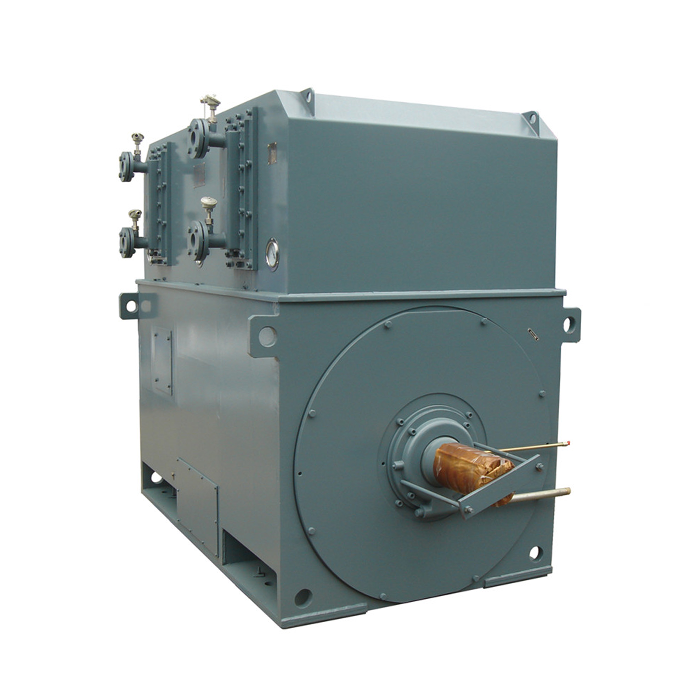
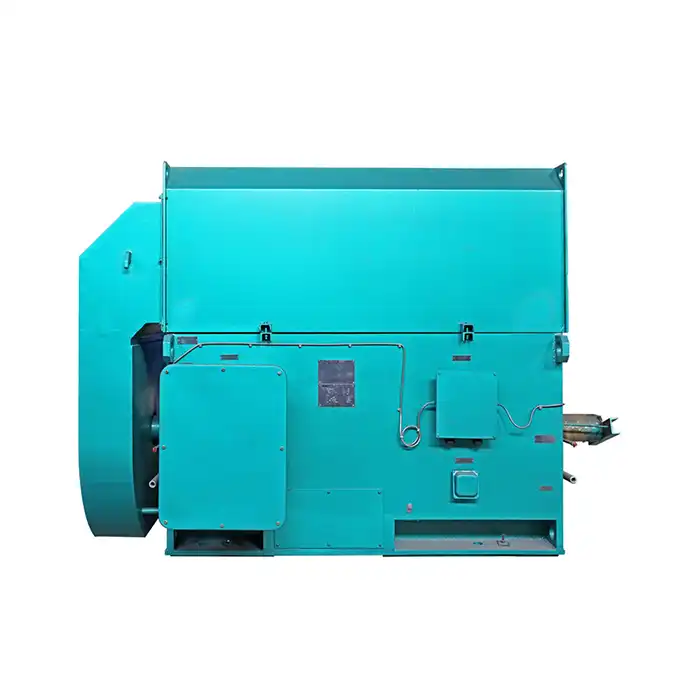
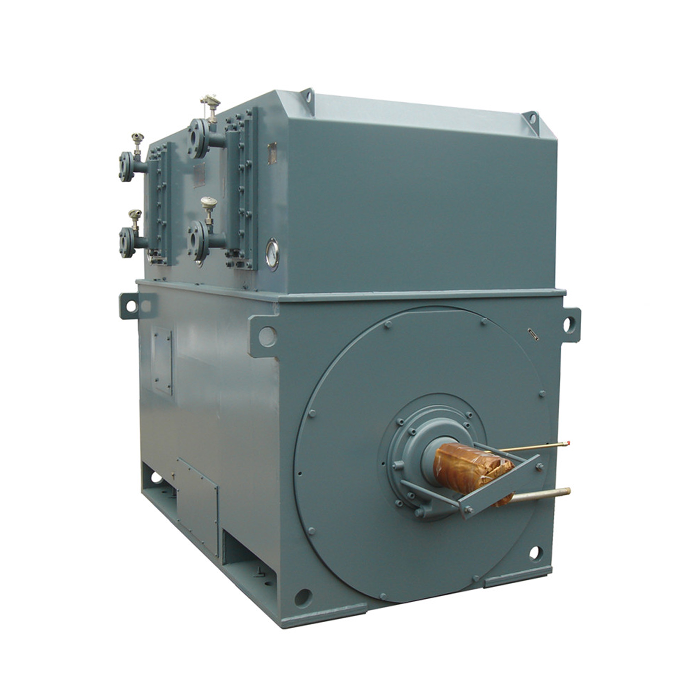
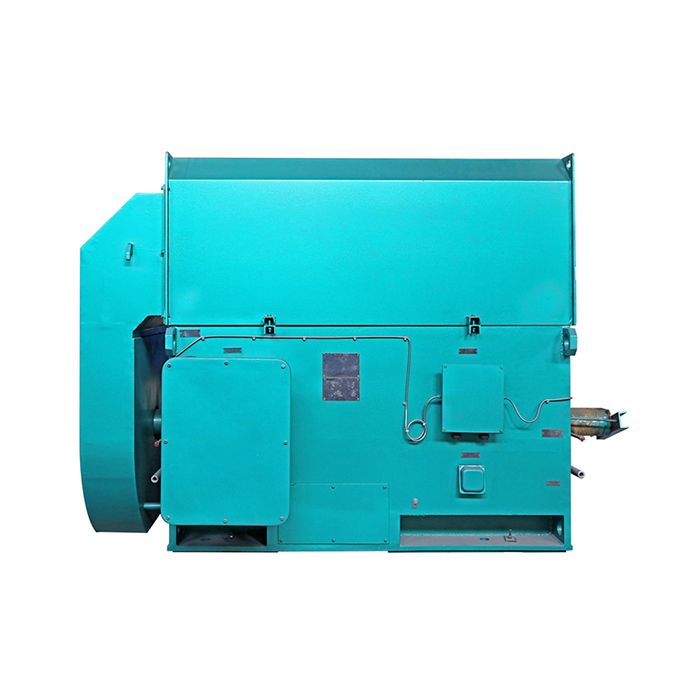
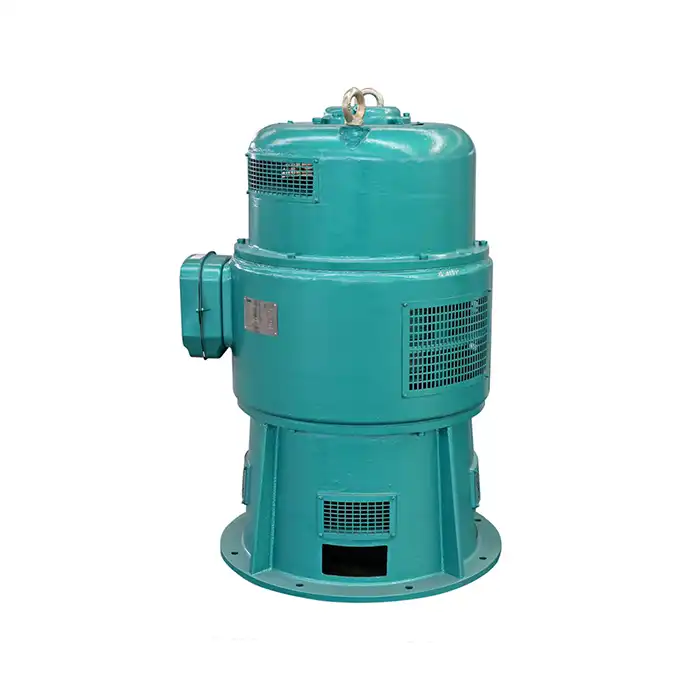
Series:YKS
Protection level:IP54
Voltage range:3000V±5%,3300V±5%,6000V±5%,6600V±5%,10000V±5%,11000V±5%
Power range:220-6300 kW
Application:fans, water pumps, compressors, crushers, cutting machine tools, transportation machinery, etc.
Advantage:low noise, low vibration, long service life, easy installation and maintenance.
Standard: This series of products complies withGB/T 1032 and GB/T 13957 standards.
Others: SKF, NSK, FAG bearings can be replaced according to customer requirements.
Understanding 4160V Medium Voltage Motors: NEMA vs IEC Standards
What Defines a 4160V Motor?
The most common medium voltage level in North American 60 Hz distribution systems is 4,160 volts, which is what a 4160v motor runs on. It's used in places like pumping stations, compressor trains, mine hoists, and drilling drawworks where using low voltage would require cables that are too big to be useful. The 4160V level is in the medium-voltage range, which is usually between 1 kV and 15 kV. It is different from the IEC-preferred voltages of 6 kV, 6.6 kV, and 11 kV, which are used in Europe, Latin America, and most export markets.
NEMA vs IEC Design Philosophy
Motors in North America must be built according to NEMA (National Electrical Manufacturers Association) guidelines. IEC (International Electrotechnical Commission) standards use metric frames, designate torque classes differently, and aim for 50 Hz grids at voltages like 6 kV or 11 kV. They also set frame dimensions in inches and design letters (B, C, D) for torque curves. These standards require 60 Hz operation at voltages like 4,160 V. For a 4160v motor going to an oil sands plant in Canada or a copper mine in Mexico, NEMA compliance is the minimum requirement and not an extra that can be added.
Frame Dimensions and Mounting Compatibility
The bolt patterns and shaft heights for NEMA frames are spelled out in NEMA MG 1. The IEC 60034-7 metric shape is used for IEC frames. Field technicians know that putting different standards on the same bedplate causes alignment problems. For example, if your OEM equipment was built around a NEMA 586/7TS frame, switching to an IEC version requires adapter plates and re-alignment, which adds cost and downtime that is hard for any project timeline to handle.
Performance and Efficiency: NEMA vs IEC 4160V Motor Comparison
Efficiency Class Alignment
Both NEMA Premium efficiency and IEC IE3 require motors with more than 200 HP to have full-load efficiencies of at least 95–96%. Under the EISA 2007 framework, North American regulators, such as the U.S. Department of Energy, require NEMA Premium for most general-purpose motors with more than 1 HP. Because of this, choosing a 4160v motor that meets NEMA Premium / IE3 standards is both the law and the smart thing to do for a 20-year service life.
VFD Compatibility Considerations
When medium-voltage motors are paired with variable frequency drives, fast-switching IGBT waveforms put stress on the windings. Part 31 of NEMA MG 1 spells out the insulation withstand requirements for inverter-duty motors. For IEC-rated machines, IEC 60034-17 covers the same ground. No matter what standard the frame is based on, a 4160v motor meant for variable-speed pump or fan service—common in water injection and gas compression—must have clear inverter-duty insulation values. There is a common and expensive mistake in the field that leads to hiring reports: skipping this standard.
Maintenance and Serviceability
A dense service network in North America backs up NEMA motors. Standardized sizes are used for bearing housings, end shields, and replacement windings that are kept in stock by independent motor repair shops. Even though IEC motors are used all over the world, they need metric tools and parts that are harder to find in remote North American field sites. There is no way for a 4160v motor running a mud pump on a drilling rig to wait three weeks for an imported bearing cartridge. NEMA standardization directly lowers that risk.
Procurement Considerations: How to Choose Between 4160V NEMA and IEC Motors
Regional Grid and Certification Requirements
UL and CSA approvals are required for all projects in North America; they are not traits that set one project apart from another. In a Canadian mine or a U.S. oil refinery, a 4160v motor that doesn't have a valid UL or CSA mark won't pass the electrical inspection that must be done before it can be turned on. When engineering vise presidents look over final vendor submittals, they always mark any missing certification paperwork as a deal-breaker, no matter how much it costs.
Total Cost of Ownership Analysis
The price you paid is shown on one line. Energy costs (mostly over 10 years), planned maintenance (bearing replacement every 3–5 years; SKF, NSK, or FAG bearings can be ordered), unexpected downtime costs, and end-of-life redo costs are all part of a realistic TCO model for a 4160v motor that runs 8,000 hours a year at 1,000 HP. When used in a NEMA service environment, a motor that costs 35% less but has a non-standard IEC frame can easily cost more than the premium-branded NEMA choice during the first major repair cycle.
Lead Time and Supply Chain Strategy
Buying processes for OEMs in Mexico and Canada usually last between 10 and 16 weeks. By "co-loading" a 4160v motor order with a consolidation shipment through a local distributor, the effective lead time can be cut down and the cost of freight per unit can be lowered. XCMOTOR works with local agents in Canada and Mexico to support this model. This way, project timelines are kept without having to meet full container minimums for every order.
Technical Insights: Wiring, Installation, and Operational Best Practices
Wiring Differences and Safety Standards
According to NEMA MG 1, terminal boxes mark leads as T1, T2, or T3 for three-phase leads. IEC motors, on the other hand, use U, V, or W labels according to IEC 60034-8. Before making terminations, a commissioning engineer who is connecting a 4160v motor in the field must check which convention the motor sign follows. Labeling something wrong at 4,160 V is a major safety issue, not a small paperwork mistake.
Torque Characteristics and Load Matching
For most pump, fan, and compressor loads, NEMA Design B is the best choice. It has low slip, normal starting torque, and normal starting current. For loaded conveyor starts, NEMA Design C gives you more starting torque. Design C or a unique torque curve may be asked for by crushing machinery and drilling drawworks. If you match a 4160v motor to a mud pump application properly, the locked-rotor torque should be at 150% of full-load torque. This is enough to start the pump when it's only partly loaded without tripping the switchgear.
Field Case Example: Oil Sands Pump Drive
Old pump motors were replaced by NEMA-frame 4160v motors with 800 HP, inverter-duty insulation class F with B-rise, IP54 enclosure, and SKF bearings by an oil sands operator in North America. The field team said that standard NEMA frame sizes made it possible to replace the frame directly, without having to change the bedplate. At 90 days, scheduled vibration readings showed levels that were within the acceptable limits set by ISO 10816-3. This proved that low-vibration motor construction directly leads to less structural fatigue on skid-mounted pump sets.
Future Trends and Technologies Impacting 4160V Medium Voltage Motors
Tightening Efficiency Regulations
Minimum efficiency standards for industrial motors are still being raised by the U.S. DOE and Natural Resources Canada. In the next few years, new rules are likely to make IE4 (Super Premium) required for motors with more than 200 HP. If a procurement team wants to buy a 4160v motor today, they should make sure that the provider they choose can meet IE4 standards for future orders without having to rethink all of the switchgear and drive connections.
Digital Monitoring and Predictive Maintenance
By putting vibration monitors, thermal imaging ports, and partial-discharge detectors in motor cases, plant historians can see how things are breaking down before they break. Most of the time, the cost of a predictive maintenance sensor package is covered in one avoided unplanned shutdown for a 4160v motor on a critical compression train. The YKS series motors from XCMOTOR are made with test places that can be easily reached and work with third-party condition-monitoring gear.
Supply Chain Flexibility
Uncertainty about tariffs and changes in ocean freight rates have made OEM procurement teams look for suppliers who can combine orders, offer bonded inventory, and offer flexible delivery windows. All of XCMOTOR's goods are delivered for free, you have 30 days to return them, and they offer technical help on Saturday and Sunday. These are useful supply chain features that come in handy when a project deadline slips and a 4160v motor order needs to be changed quickly.
Conclusion
It's not a matter of preference between NEMA and IEC for a 4160v motor application; it's about making sure that the motor's electrical, mechanical, and certification requirements match the grid standard, the mechanical interface, and the rules that apply to where the equipment will be used. For starters, oil, gas, and mining OEMs in North America need NEMA frames, 60 Hz ratings, UL/CSA marks, and NEMA Premium efficiency. The XCMOTOR YKS line meets those needs and also provides IP54 protection, power ranges from 220 kW to 6,300 kW, and choices for bearings made by SKF, NSK, or FAG. If you get the specifications right in the RFQ stage, you won't have to do any expensive changes during testing.
Frequently Asked Questions
1. Is a 4160V motor the same as a 4 kV motor?
Yes. "4160V motor" and "4 kV motor" refer to the same voltage class. The precise nominal voltage is 4,160 V, which falls within the medium-voltage range. North American distribution systems use this level extensively in industrial facilities.
2. Can I use an IEC-rated motor on a 4160V 60 Hz system?
Only if the motor is explicitly wound and rated for 4,160 V at 60 Hz. Standard IEC motors are rated for 6 kV or 6.6 kV at 50 Hz. Using a 6 kV IEC motor on a 4,160 V 60 Hz bus without re-rating is an engineering error, not a substitution.
3. What certifications are required for a 4160V motor in Canada?
CSA certification is the primary requirement for Canadian installations. UL listing is accepted in many Canadian jurisdictions under the CSA/UL harmonization program. Verify the specific provincial electrical code requirement before finalizing specifications.
4. What is the typical lead time for a 4160V motor order?
Standard production lead times run 8–14 weeks depending on power rating and enclosure type. XCMOTOR's co-loading model with Canadian and Mexican distributors can reduce effective delivery time for consolidation orders.
5. What protection class should I specify for outdoor mining applications?
IP54 is the minimum standard for outdoor or dust-exposed environments. The XCMOTOR YKS series carries IP54/IP55 protection, suitable for open-pit mining, oil sands processing, and similar harsh-environment applications.
Get a Competitive Quote on 4160V Motor Supply — Contact XCMOTOR Today
XCMOTOR (Shaanxi Qihe Xicheng Electromechanical Equipment Co., Ltd.) sells the YKS series 4160v motor, which has NEMA-compatible frames, IP54 protection, and power levels between 220 kW and 6,300 kW. The paperwork is ready for UL/CSA. We deliver for free, let you return items for 30 days, and offer technical support on the weekends. We ship to North America and Latin America through well-known agents in those areas because we are a reliable source for 4160v motors. You can get a price right away by sending your RFQ or technical specs to xcmotors@163.com or going to motorxc.com.
References
1. National Electrical Manufacturers Association. NEMA MG 1: Motors and Generators. NEMA, 2021.
2. International Electrotechnical Commission. IEC 60034-1: Rotating Electrical Machines — Part 1: Rating and Performance. IEC, 2022.
3. U.S. Department of Energy, Office of Energy Efficiency and Renewable Energy. Improving Motor and Drive System Performance: A Sourcebook for Industry. DOE, 2014.
4. IEEE Industry Applications Society. IEEE Std 841: IEEE Standard for Petroleum and Chemical Industry — Premium-Efficiency, Severe-Duty, Totally Enclosed Fan-Cooled (TEFC) Squirrel Cage Induction Motors. IEEE, 2009.
5. Canadian Standards Association. CSA C22.2 No. 100: Motors and Generators. CSA Group, 2020.
6. Electric Power Research Institute. Assessment of Achievable Potential from Energy Efficiency and Demand Response Programs in the U.S. (2010–2030). EPRI, 2009.