



What Determines Electric Motor Lifespan?
Electric motor lifespan depends on a combination of factors that procurement professionals and OEM engineers must account for from the moment of specification. In my experience working with industrial buyers, the motors that last longest are those selected for the right duty, installed correctly, and kept on a disciplined ac motor maintenance schedule. Research from the Electric Power Research Institute (EPRI) indicates that roughly 30% of industrial motor failures are linked to inadequate lubrication, and another 30% to bearing fatigue — both preventable with consistent maintenance routines. Getting these fundamentals right is how you protect capital assets and keep production running.
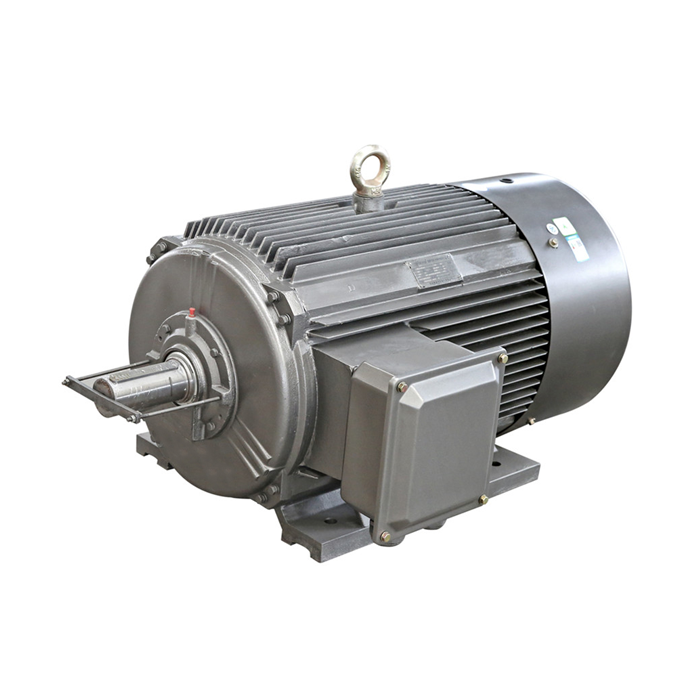
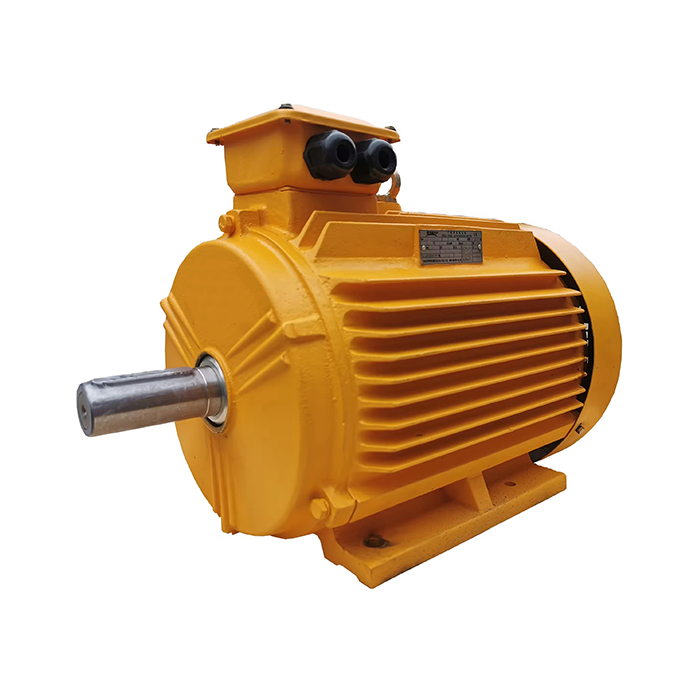
Series:YE3
Frame number: 80-450
Power range:0.75-1000kW
Protection level:IP55
Energy efficiency class: IE3
Voltage range: 380V,400V,415V,660V, etc.
Application:can be used in various fields of the national economy, such as machine tools,water pumps,fans,compressors,and can also be used in transportation, mixing, printing, agricultural machinery, food and other occasions that do not contain flammable, explosive or corrosive gases.
Certificate: international standard IEC60034-30 "Efficiency Classification of Single-speed Three-Phase Squirrel Cage Induction Motors".
Advantage:The high quality of the electric motor guarantees high operational reliability.
Others: SKF, NSK, FAG bearings can be replaced according to customer requirements.
Key Factors That Determine Electric Motor Lifespan
It's not chance how long a motor lasts. It behaves in expected ways that depend on the motor's design, how it is used, and how well it is maintained over time.
Operating Environment and Thermal Stress
The weather is one of the most basic things that can shorten the life of wound insulation. The IEC 60034 rules use the Arrhenius rule a lot. It says that insulation life is cut in half for every 10 °C rise above the standard insulation class temperature. As long as the cooling system is clean and not clogged, Class F insulation, which can handle temperatures up to 155 °C, cools things down.
Load Conditions and Mechanical Stress
Choosing the right IP protection is just as important as choosing the right efficiency class when the environment is wet or corrosive.
Build Quality and Material Selection
If you use certified electrical steel, precision-wound coils, and high-quality bearings from SKF, NSK, or FAG, your motor will last longer than one made with materials that aren't certified. The rate of wear can be slowed down by keeping the center of the shaft within 0.01 mm, balancing it to G2.5, and putting vacuum pressure on the windings (VPI). When everything is used the same way, the difference between a 15-year service life and a 7-year service life is not small.
The Role of Preventive AC Motor Maintenance in Extending Lifespan
In industrial settings, one of the most expensive habits is to wait for a motor to break down before doing anything. Small problems don't turn into production stops when you use an organized preventive method.
Building a Realistic Maintenance Schedule
A useful mining motor schedule covers four areas: lubrication schedules that are based on the size and speed of the bearings, winding insulation resistance checks using a megohmmeter at least once a year, vibration readings compared to a baseline, and cooling system inspections to remove dust and blockages. Both NEMA MG-1 and IEC 60034 offer interval advice that can be changed based on duty cycle and environmental factors. Short intervals aren't always better; one common reason why bearings fail is that they are over-greased.
What a Maintenance Checklist Should Cover
Lockout/tagout (LOTO) procedures must always be followed before an inspection starts. The next things on the checklist should be the condition of the bearings (temperature, noise, and grease), the insulation resistance values compared to previous readings, the uniformity of the air gap if possible, the integrity of the terminal box seal, and any unusual noise or vibration recorded during the last operating period. Keep a written log at each service time to build up the trend data that lets you make choices based on the future.
Safety Tools and Practices
Thermal imaging cameras let you find hotspots in bearings without touching them while they're working. A good repair team will always have portable vibration monitors, clamp-on current meters, and insulation resistance tests on hand. To keep technicians safe and get measurements that can help them make decisions, not just make sure the motor is running, they need to use the right tool for each check.
Comparison of Maintenance Strategies: Preventive, Predictive, and Repair
No single strategy fits every application, and most OEM procurement teams end up managing a mix of all three depending on motor criticality, production schedules, and budget.
Preventive vs. Predictive Approaches
Preventive maintenance runs on fixed intervals and is easy to budget. Its limitation is that it can generate unnecessary service on motors that are running well, while still missing intermittent faults between scheduled visits. Predictive maintenance uses continuous or periodic condition monitoring — vibration spectra, thermal imaging, partial discharge testing — to act only when data indicates a problem is developing. Upfront sensor and software investment is higher, but unplanned downtime drops sharply for high-value assets.
Reactive Repair and Its Real Cost
Reactive repair — fixing the motor after it has failed — appears cheap on a single-event basis. In practice, the total cost includes lost production, expedited parts sourcing, potential damage to downstream equipment, and the labor premium of emergency work. EPRI estimates that unplanned motor failure costs two to five times more than a planned replacement or rewind. For OEM assembly lines where motor downtime stops the whole production cell, the case for planned intervention is straightforward.
In-House vs. Outsourced Service
The choice between in-house and outsourced motor maintenance depends on available technical expertise, workshop equipment, and the volume of motors in service. Many OEM procurement managers use a hybrid model: in-house teams handle routine inspection and lubrication, while specialist service providers handle rewinds, dynamic balancing, and explosion-proof recertification. Supplier partnerships that include 48-hour after-sales response reduce the risk that outsourcing creates any meaningful delay.
Best Practices and Solutions for Optimizing AC Motor Performance and Lifespan
The specifications of the motors themselves, as well as published standards and field experience, are used to create sound Ac motor maintenance practices. These basic steps will always make things last longer in pump, fan, compressor, and conveyor situations:
- Lubrication matched to bearing type and speed: Grease quantity should follow the manufacturer's calculation based on bearing bore diameter and rated RPM. Over-greasing displaces the oil film and causes churning heat, while under-greasing leads to metal-to-metal contact. For motors running above 3,000 RPM, re-lubrication intervals are typically shorter than the nameplate default.
- Winding insulation testing on a defined cycle: Insulation resistance measured with a 500 V or 1,000 V megohmmeter should be trended over time. A reading that drops consistently between service intervals, even if still above the 1 MΩ threshold, signals moisture ingress or thermal degradation requiring investigation.
- Vibration baseline and trend monitoring: Record vibration velocity (mm/s RMS) at each bearing housing on commissioning. Any subsequent reading more than 25% above baseline warrants investigation. Early detection of bearing defect frequencies in the vibration spectrum allows a planned replacement rather than a failure-driven one.
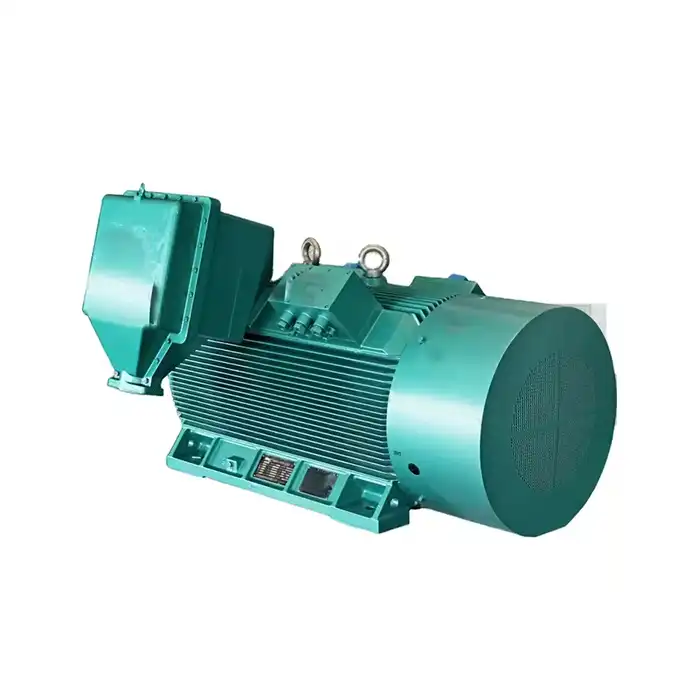
- Cooling system hygiene: A blocked cooling fan or clogged air inlet raises winding temperature directly. On motors using IC416 independent forced cooling — as found on inverter duty and long shaft platforms — verify that the auxiliary fan is running and that the airflow path is clear at every service visit.
If you do these four things regularly, they will take care of the three main reasons why motors break down: worn-out bearings, damaged insulation, and high temperatures.
Once these habits are set, procurement teams usually say that their OEM product lines need fewer emergency replacements and have more stable maintenance budgets.
Procurement Considerations: Selecting the Right AC Motor Maintenance Products and Services
As important as the initial unit price is choosing a motor supplier that can help with long-term maintenance needs. The right supplier offers technical support, documentation, and spare parts that make ongoing Ac motor maintenance feasible.
Evaluating Supplier Documentation and Traceability
Accurate scientific data, such as coil resistance values, bearing references, insulation class, and cooling method, is needed for maintenance work. A supplier with a SAP-based factory management system can provide full component traceability from raw material to finished motor. This means that replacement parts match the original specification instead of needing to be checked in the field every time they are serviced.
Spare Parts Availability and Lead Times
Short lead times for restocking and the availability of extra bearings have a direct effect on the maintenance schedules of OEM procurement managers who are in charge of yearly framework contracts. When you buy motors from a company that has partnerships with more than 30 upstream manufacturers, you can get real SKF, NSK, and FAG bearing stock without having to wait for long procurement cycles.
After-Sales Response and Technical Support
The gap between finding a problem and fixing it is closed by the motor supplier's promise of a 48-hour response time after the sale. Because technical support is available seven days a week, even on weekends, installation teams don't have to wait for help during a key production window.
Conclusion
Electric motor lifespan is determined by how well the motor was specified, how consistently it is maintained, and how quickly problems are identified and corrected. Consistent ac motor maintenance — covering lubrication, insulation resistance trending, vibration monitoring, and cooling system hygiene — is what converts a well-built motor into a long-service asset. Motors built to IE3 efficiency standards with premium bearings and Class F insulation give maintenance teams a solid starting point. The procurement decision should account not just for the unit price but for the full lifecycle cost, including parts availability, documentation quality, and after-sales support depth.
FAQ
1. What is the typical service life of an industrial AC motor?
A well-maintained industrial AC motor in a general-purpose application typically operates for 15 to 20 years before requiring a rewind or replacement. Service life shortens significantly when motors run above rated load, in high-ambient temperatures, or without a scheduled maintenance program. Motors in aggressive environments — mining, chemical, or food processing — may require more frequent inspection intervals to achieve comparable longevity.
2. How often should I perform AC motor maintenance?
Lubrication intervals depend on bearing size and operating speed, but annual insulation resistance checks and quarterly vibration readings are standard practice for motors running continuously. Motors operating under variable frequency drives should be checked more frequently for winding stress effects, as PWM voltage spikes accelerate insulation aging in motors not specifically designed for inverter duty.
3. What are the most common causes of motor failure?
Bearing failure and winding insulation breakdown account for roughly 60% of industrial motor failures, according to EPRI data. Both are largely preventable with disciplined lubrication practices, thermal management, and periodic electrical testing. Misalignment, overloading, and moisture ingress are the next most frequent contributors.
4. Can motor efficiency class affect maintenance frequency?
IE3-rated motors run at lower temperatures than lower-efficiency designs under identical load conditions. Lower operating temperature directly extends insulation life, which means IE3 motors tend to show slower degradation between maintenance intervals. This does not eliminate the need for scheduled checks, but it does reduce the rate at which insulation resistance trends downward.
5. What should I ask a motor supplier before signing a framework contract?
Ask for documented bearing references, winding data, and test reports for each series. Confirm spare parts lead times, after-sales response commitments, and whether technical support is available outside normal business hours. A supplier who provides full traceability documentation will make every future maintenance event faster and less expensive.
Get AC Motor Maintenance Support from XCMOTOR
For more than 20 years, XCMOTOR (Shanxi Qihe Xicheng Electromechanical Equipment Co., Ltd.) has provided power equipment options. They work with more than 30 upstream makers to provide original parts that can be fully tracked. We offer technical support seven days a week, a 48-hour response time after the sale, and free shipping on all orders as a reputable ac motor maintenance supplier. To talk about your OEM procurement needs immediately, send your specs to xcmotors@163.com or go to motorxc.com.
References
1. Electric Power Research Institute (EPRI). Motors and Drives: A Practical Technology Assessment. EPRI, 2003.
2. International Electrotechnical Commission. IEC 60034-30-1: Rotating Electrical Machines — Efficiency Classes of Line-Operated AC Motors. IEC, 2014.
3. National Electrical Manufacturers Association. NEMA MG 1: Motors and Generators. NEMA, 2021.
4. Bonnett, A. H., & Yung, C. "Increased Efficiency Versus Increased Reliability." IEEE Industry Applications Magazine, 2008.
5. Thorsen, O. V., & Dalva, M. "A Survey of Faults on Induction Motors in Offshore Oil Industry, Petrochemical Industry, Gas Terminals, and Oil Refineries." IEEE Transactions on Industry Applications, 1995.
6. McElveen, R. F., & Toney, M. K. "Starting High-Inertia Loads." IEEE Transactions on Industry Applications, 2001.