



4160V Motor Guide: Specs, Voltage, and Applications
When high-power, reliable electric motors are needed in industry, the 4160v motor has been used successfully in many areas. This article talks about the technical details, performance traits, and real-world uses of these strong machines. Understanding the features and benefits of medium-voltage motors working at this voltage level is important whether you're in charge of a power plant, a factory, or a water treatment plant. It helps you make smart purchasing decisions that improve operational efficiency and long-term dependability.

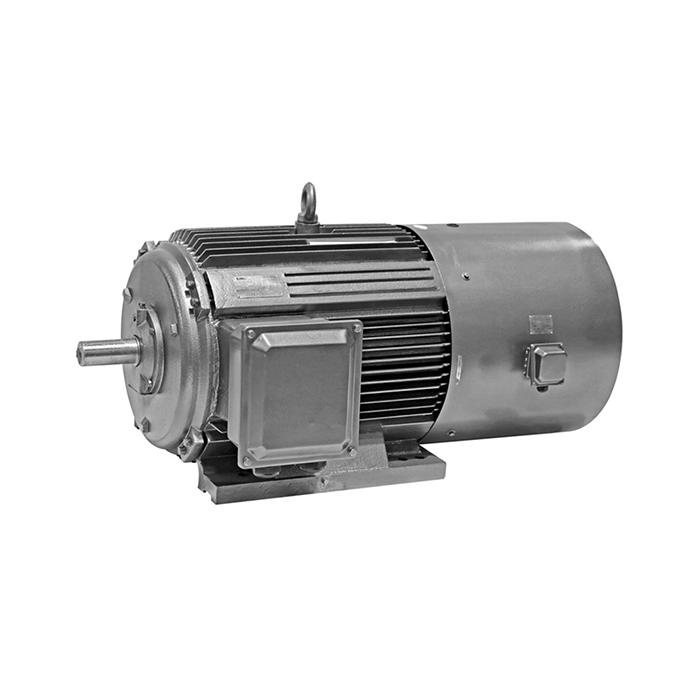
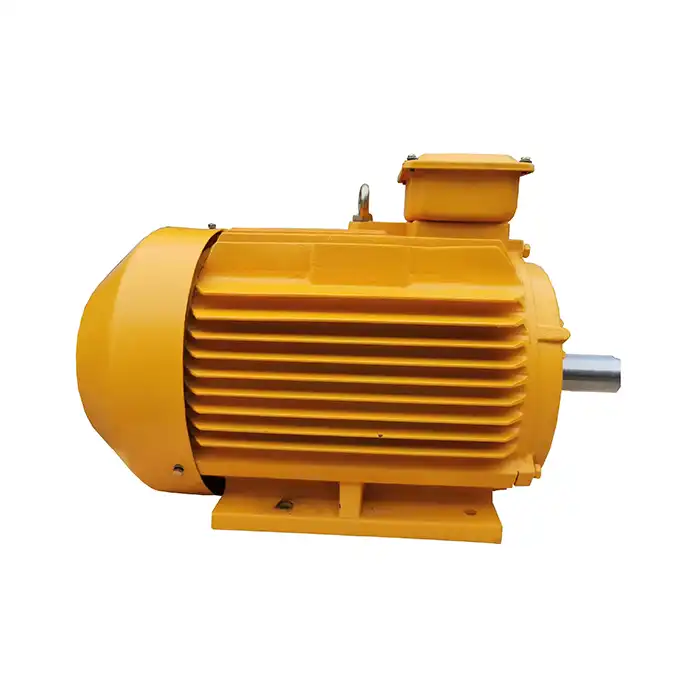
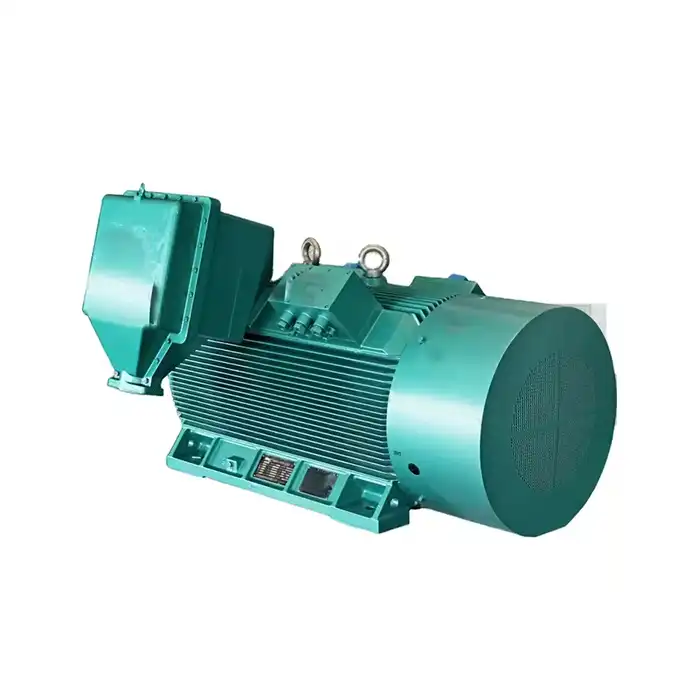
Series:YKS
Protection level:IP54
Voltage range:3000V±5%,3300V±5%,6000V±5%,6600V±5%,10000V±5%,11000V±5%
Power range:220-6300 kW
Application:fans, water pumps, compressors, crushers, cutting machine tools, transportation machinery, etc.
Advantage:low noise, low vibration, long service life, easy installation and maintenance.
Standard: This series of products complies withGB/T 1032 and GB/T 13957 standards.
Others: SKF, NSK, FAG bearings can be replaced according to customer requirements.
Understanding 4160V Motor Specifications
Why 4160V is the Preferred Voltage for Heavy-Duty Applications
Across North America, 4160-volt medium-voltage motors are now the standard choice for industrial buildings that need to deliver a lot of power. This level of voltage strikes a good balance between how well power is sent and how safe it is. A 4160v motor can produce the same amount of power with a lot less current than a 480V system, which means that cable infrastructure can have smaller conductors, produce less heat, and cost less to install.The voltage choice has a direct effect on the design of your building's electrical distribution system. When you compare 4160V to other voltages, like 2300V or 3300V, the higher voltage works better for long cable runs and needs more horsepower. In contrast to 6600V or 11000V systems, the 4160v motor has better safety standards that are in line with standard industrial practices across the United States, easier access for maintenance, and more readily available components.
Essential Technical Specifications You Need to Know
When you shop at XCMOTOR, our range of 4160v motors has full specifications made for tough industrial settings. The voltage range is from 3000V±5% to 11000V±5%, so it can work with a variety of power distribution setups in different buildings. The power output ranges from 220 kW to an impressive 6300 kW, so it can be used for a wide range of tasks, from light industrial processes to heavy-duty jobs that need a lot of mechanical power.Protection level up to IP54 is standard, and IP55 is available for places that need even better resistance to dust and water. This rating makes sure that the product will work reliably in tough conditions that are common on factory floors, in outdoor settings, and in process industries. The class F insulation design with class B temperature rise gives great thermal margins, which keeps safety standards and extends the life of equipment. Operating speeds range from 500 to 3000 rpm, which makes it possible to precisely match the needs of driven equipment without the need for extra gearboxes in many situations.
Cooling Methods and Their Impact on Performance
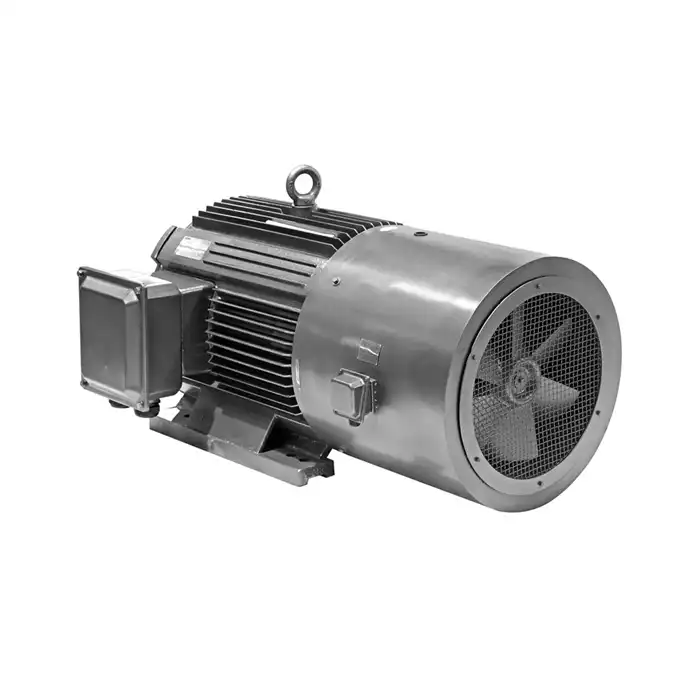
Proper thermal management determines how long a motor lasts and how consistently it works. Our motors use the ICW37 cooling method, which effectively gets rid of heat even when they are constantly under a lot of load. This way of cooling keeps all of the motor's parts at the best operating temperature. This stops thermal stress, which can damage insulation systems and bearing lubrication over time.How the cooling system is designed directly affects how it needs to be installed and how often it needs to be maintained. To make sure the cooling system works well, it's important that the adequate ventilation pathways stay clear and the temperature inside stays within certain ranges. Checking the cooling paths and fan operation on a regular basis can help you avoid thermal failures that could mess up your production schedules.
Performance, Maintenance, and Troubleshooting of 4160V Motors
Maximizing Efficiency and Reliability
Modern designs for 4160v motor models use advanced engineering principles that make them very efficient. High starting torque makes sure that equipment starts up reliably, even when heavy loads like compressors, crushers, or big water pumps are being driven. The optimized rotor design lowers energy losses by better distributing magnetic flux and minimizing electrical resistance. This means that the motor will cost less to run over its entire lifetime.Low noise and vibration levels are important for operation because they extend the life of equipment and make the workplace more comfortable. Less vibration means less mechanical stress on motor bearings, mounting structures, and connections to driven equipment. This smoother operation makes parts last longer and cuts down on the number of times they need to be adjusted mechanically to keep the motor and connected machinery in the right place.
Preventive Maintenance Framework
Setting up a regular maintenance schedule will protect your investment and keep it from breaking down at the worst possible time. At regular intervals, the motor housing should be looked at visually for signs of overheating, strange vibration patterns, or strange sound production. Monitoring the temperature of a bearing can help find problems with the lubrication or the wear on a bearing early on, before they become too bad to fix.Electrical testing procedures should check the resistance of the insulation on a regular basis. This is especially important in places that are humid or chemically harsh and where water entering the winding could damage it. Using handheld or permanently mounted sensors for vibration analysis can find mechanical problems like bearing wear, shaft misalignment, or rotor imbalance that are starting to happen. Thermal imaging surveys find hot spots that mean the area is overheating because of electrical or mechanical issues that need to be fixed.Our motors are easy to install and maintain because the terminal boxes are easy to get to, replacing the bearings is simple, and there is clear documentation to back up service activities. Selecting premium bearings from brands like SKF, NSK, and FAG is possible based on your needs, making sure that they work with your current maintenance plans and spare parts stock.
Common Issues and Diagnostic Approaches
When operational problems happen, systematic troubleshooting cuts down on the time that the system is down. Overheating usually happens because there isn't enough air flow, the temperature outside is too high, the voltage levels between phases aren't balanced, or the machine is overloaded. By checking these factors, you can find the root causes of problems instead of just fixing the symptoms.Too much vibration could mean that the mounting is loose, the shaft isn't lined up correctly with the driven equipment, the bearings are wearing out, or the rotor isn't balanced. By measuring the amplitude and frequency of the vibrations, you can tell the difference between these possible causes. An uneven flow of current between phases is a sign of an electrical problem that needs to be looked into. This could be caused by broken windings, bad connections, or issues with the supply voltage.Starting problems can happen when there isn't enough supply voltage at startup, when driven equipment gets stuck, or when there are problems with the motor windings. Checking the voltage at the motor's terminals while it's trying to start shows if the electrical supply is sufficient. Separating the motor from its load mechanically shows if mechanical resistance stops normal startup.
Comparative Analysis: Choosing the Right Voltage and Motor Type
Evaluating Voltage Options for Your Application
Choose the right voltage levels depends on many things, such as the amount of power that is needed, the distance of the transmission, and the infrastructure that is already in place at the facility. A 4160v motor works well in places where medium-voltage distribution already exists or can be set up cheaply and needs to deliver power in the 200–6000 kW range. It is common for American factories to use this voltage level because it makes it easy to get parts, service, and replacement parts.Alternatives with lower voltage, like 480V motors, work well for smaller horsepower needs, but they can't be used above 500 HP because the current levels need very large conductors. Higher voltages, like 6600V and 11000V, are needed for very large motors, but they make safety more complicated and require different maintenance. In terms of practicality, the 4160v motor falls in the middle for most heavy industrial uses.
Motor Type Selection Considerations
Induction motors are the most common type for 4160V applications because they are strong, don't need much maintenance, and have a great track record of reliability. These motors have simple rotor designs that don't use brushes or slip rings. This means that the wear parts and maintenance tasks that go along with them are less complicated. Induction designs can handle many starts and changes in load conditions without the need for special control systems.Synchronous motors can precisely control speed and correct power factor, which can be useful in some situations. These designs keep the same speed no matter how much weight is on them, which is helpful when driving equipment that needs to run at a constant speed. Power factor correction is built into synchronous motors and can lower facility electrical demand charges and make the system work better overall.
Variable Frequency Drive Compatibility
Variable Frequency Drives are used more and more in modern factories to control motor speed, lower energy use when only partly loaded, and allow soft starting, which reduces mechanical stress and electrical demand peaks. Our 4160v motor designs can work with VFDs because they have the right insulation systems to handle the voltage stresses caused by the fast switching waveforms that VFD outputs produce.Adding a VFD has many operational benefits, such as letting you change the speed of the process, using less energy when the load is low, and getting rid of wasteful mechanical throttling devices. When you pair a medium-voltage motor with a VFD that is rated correctly, you get the best performance across a wide range of operational needs that are common in process industries, HVAC systems, and water treatment facilities.
Industrial Applications and Advantages of 4160V Motors
Where These Motors Excel
4160v motor technology is used a lot in heavy industrial sectors for important tasks. Facilities that make electricity use these motors to run boiler feed pumps, condensate pumps, and cooling tower fans that keep making electricity. Medium-voltage motors are reliable and can handle a lot of power, which is perfect for utility companies that have to deal with unplanned outages that affect thousands of customers.Primary pumping, aeration blowers, and sludge processing all depend on 4160v motor-driven equipment in water and wastewater treatment plants. Because these uses need to run all the time with little downtime for maintenance, medium-voltage motors are the obvious choice. They are built to last and are reliable. Long service life and easy maintenance are features that control lifecycle costs that are especially valuable to municipal facilities.In mining and mineral processing, motors have to work in harsh conditions like abrasive dust, extreme temperatures, and heavy mechanical loads. When designed correctly, 4160v motors have a high starting torque and an overload capacity that make them useful for crushers, conveyors, mills, and hoisting equipment. Because these motors last a long time, they don't need to be replaced as often and are easier to maintain in remote areas where getting service is hard.
Real-World Performance Benefits
For air compressors, refrigeration systems, and process equipment that needs a lot of mechanical power, factories in the automotive, aerospace, electronics, and food processing industries use medium-voltage motors. High power capacity, operational efficiency, and dependability all work together to support production schedules where equipment failures have a direct effect on customer commitments and revenue.Large commercial and industrial buildings use 4160v motor-driven chillers and air handling equipment for HVAC systems to keep the temperature and humidity just right. Energy efficiency is especially important in these situations because they are always running during the cooler months. The high efficiency ratings of modern motor designs are financially appealing because they use less electricity.Transportation infrastructure like airports, trains, and shipping ports depends on motors that work well to move cargo, handle bags, and run facility systems. The fact that medium-voltage motors have worked well in these tough situations before shows that they can keep performing well even when the load changes or when the schedule changes.
Customization and Technical Support
For industrial uses, motors often need to be changed or designed specifically to meet specific needs. When it comes to specific environmental conditions, mounting configurations, shaft arrangements, and performance characteristics, our engineering team works directly with clients to come up with custom solutions. This collaborative approach makes sure that the 4160v motor supplied exactly meets your operational needs, instead of forcing you to make compromises with standard catalog products.During the specification phase, technical consultation starts to help you find the best motor configuration for your needs. Our experience in a wide range of industries gives us valuable information about factors that affect reliability, ways to improve efficiency, and lifecycle costs that help people make smart procurement decisions. This advice is especially helpful when replacing old equipment or planning new buildings where the choice of motor affects how well the whole system works.
Conclusion
Medium-voltage motors with 4160 volts provide the power, dependability, and efficiency needed in many industrial fields. By looking at specifications, performance characteristics, maintenance practices, and application considerations in detail, this article gives you the knowledge you need to confidently choose and buy equipment. These motors have been used for a long time in manufacturing, water treatment, power generation, and many other harsh environments, showing that they are reliable workhorses in modern industry. By knowing about technical details, maintenance needs, and application suitability, you can choose equipment that works best and costs the least over its lifetime. With its strong construction, high operational efficiency, and easy maintenance, the 4160v motor is a good buy for places that need to deliver a lot of mechanical power with little downtime.
FAQ
1. What factors should I consider when selecting a 4160v motor?
The most important thing to think about is the power requirements. Make sure the motor has enough horsepower for your application and has enough service factor margins. Temperature, humidity, altitude, and the amount of contamination in the environment determine the protection ratings and building features that are needed. The duty cycle characteristics, like whether the system is used continuously or only sometimes, affect the thermal design requirements and cooling system specifications.
2. How do I ensure compatibility with existing electrical systems?
Make sure that the electrical distribution system in your building has the right voltage stability, fault current protection, and grounding settings so that you can safely run a medium-voltage motor. Integration works well when protective relays, starter equipment, and control systems all work together. Talking to electrical engineers who are experienced with medium-voltage installations can help you avoid compatibility problems that could put safety or performance at risk.
3. What kind of maintenance schedule should I use?
Visual checks should be done once a month to look for strange temperature, noise, or vibration. When to grease the bearings depends on the size of the motor, its speed, and the conditions under which it is used. Usually, this is done every three months to once a year. Electrical testing once a year, which includes measuring insulation resistance and checking the current balance, finds problems before they break. You should always follow the detailed maintenance instructions that are made for your motor.
Partner with XCMOTOR for Your 4160V Motor Requirements
Shaanxi Qihe Xicheng Electromechanical Equipment Co., Ltd. is ready to help you buy a medium-voltage motor by giving you complete solutions that are made to fit your needs. As a well-known 4160v motor supplier, we offer technical know-how and customer-focused service to make sure that the equipment we deliver performs above and beyond what is expected. Our product line has power outputs ranging from 220 kW to 6300 kW, voltage configurations that work with a variety of electrical systems, and protection ratings that are good for harsh industrial settings. Email our technical team at xcmotors@163.com to talk about your needs and get detailed specifications, advice on how to use the products, and competitive prices. We offer fast delivery, dedicated support, including availability on the weekends, and a 30-day return policy to make sure you're happy with everything. You can look through our whole catalog at motorxc.com and learn how our power equipment solutions improve operational reliability while keeping costs low over the lifecycle.
References
1. National Electrical Manufacturers Association. "NEMA MG 1-2021: Motors and Generators Standard." Rosslyn, Virginia, 2021.
2. Institute of Electrical and Electronics Engineers. "IEEE Standard 112-2017: Test Procedure for Polyphase Induction Motors and Generators." New York, 2017.
3. Bonnett, Austin H. "Root Cause AC Motor Failure Analysis with a Focus on Shaft Failures." IEEE Transactions on Industry Applications, Volume 36, 2000.
4. Nailen, Richard L. "Managing Motor Maintenance: A Practical Handbook." The Fairmont Press, Lilburn, Georgia, 2001.
5. Beaty, H. Wayne and Fink, Donald G. "Standard Handbook for Electrical Engineers, Sixteenth Edition." McGraw-Hill Education, New York, 2012.
6. Toliyat, Hamid A. and Kliman, Gerald B. "Handbook of Electric Motors, Second Edition." CRC Press, Boca Raton, Florida, 2004.