



4160 Motor for Water Pumps: Performance and Reliability
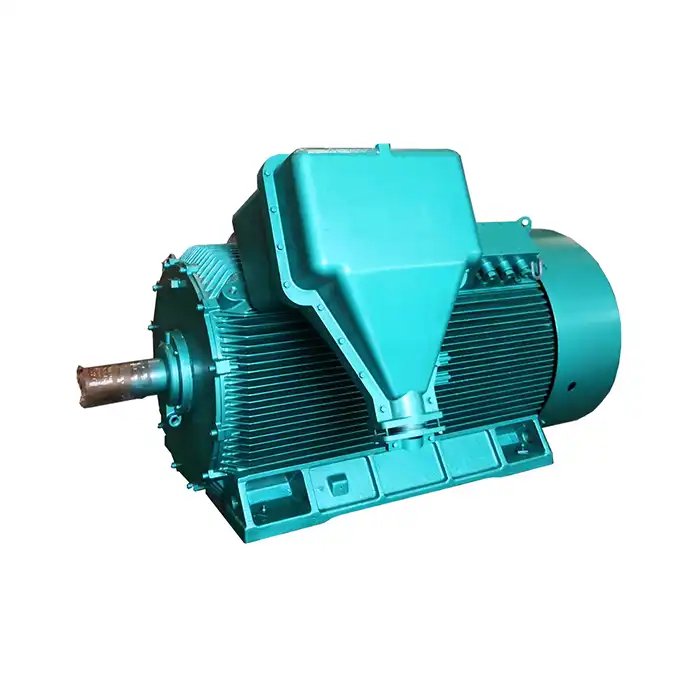
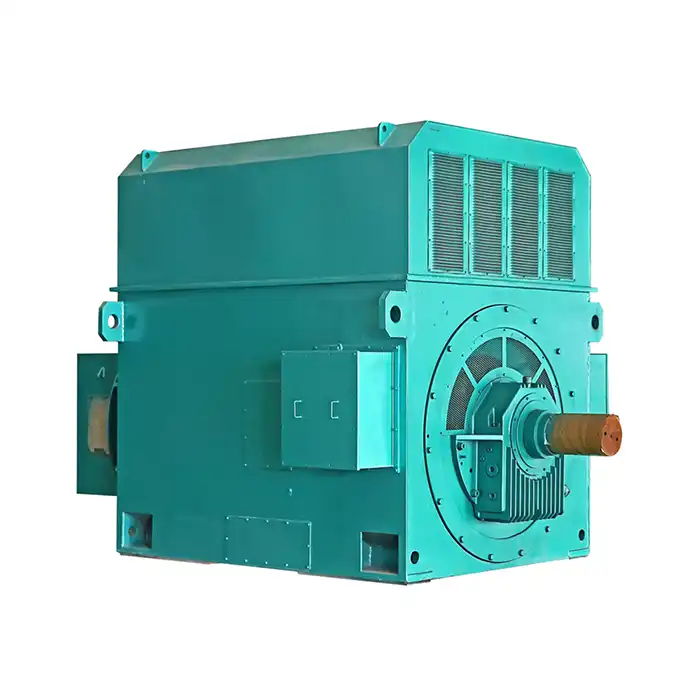
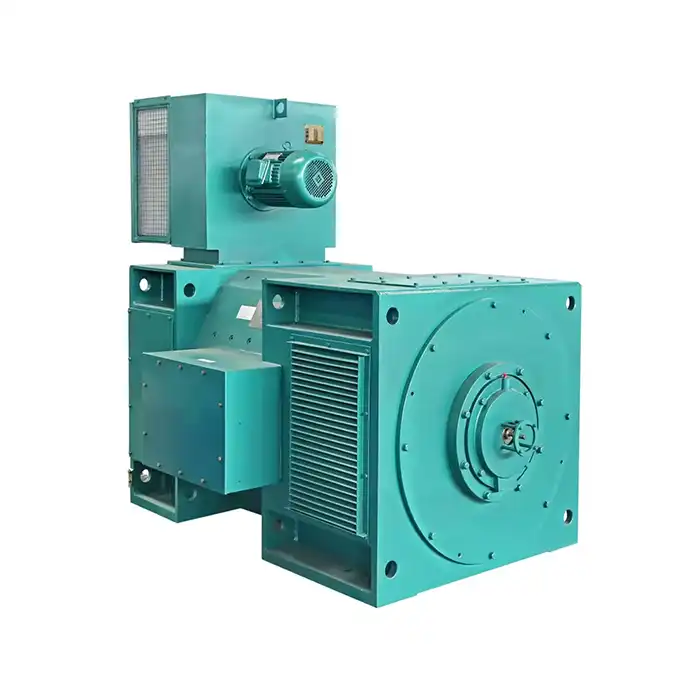
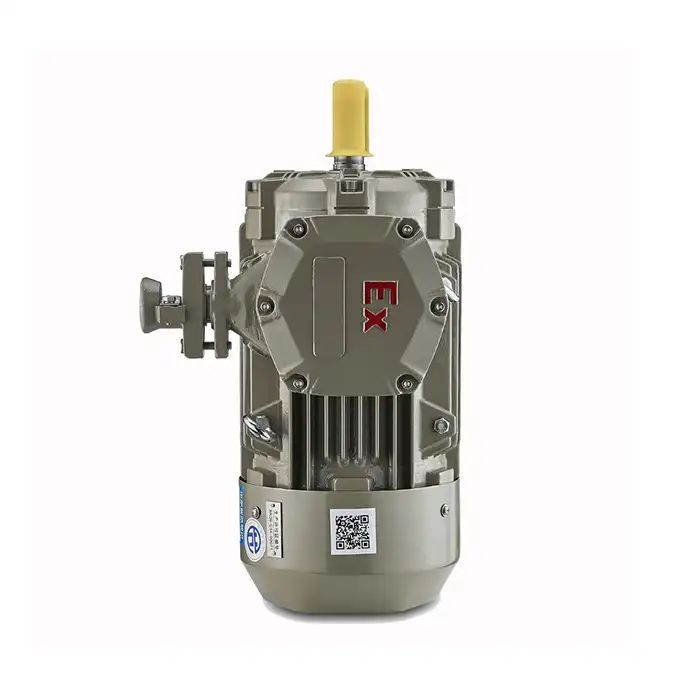
To engineers and procurement managers, the 4160 motor is often seen as a realistic, well-proven alternative when considering medium voltage drive options for water pump systems in North American industrial power grids. This motor is a high voltage 3 phase asynchronous motor and operates at 4.16 kV (4160V). This product covers power ratings from 200 kW to 6300 kW and meets the whole load range required for oil and gas, mining, water treatment and power generating applications. In this article, we’ll take you through specs, comparisons, what to consider before you buy, and performance tips so you can feel good about your purchase.
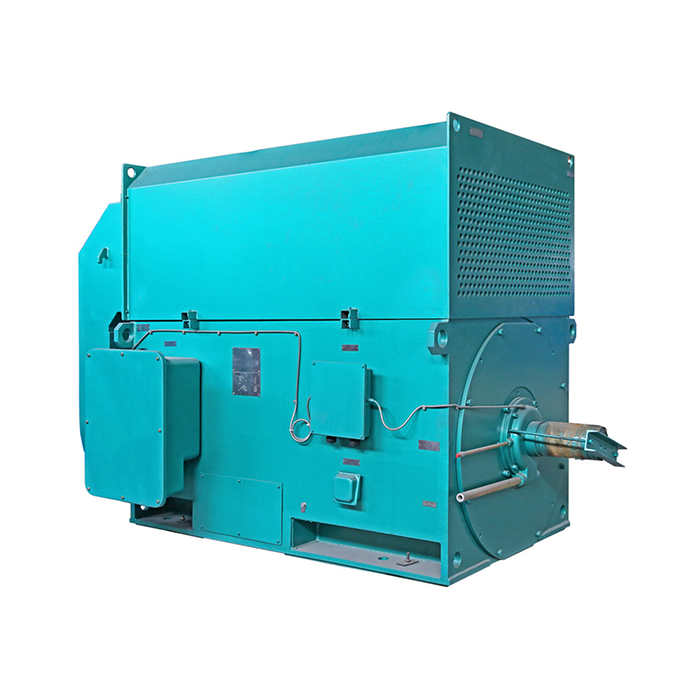
Voltage range:3000V±5%,3300V±5%,6000V±5%,6600V±5%,10000V±5%,11000V±5%
Power range:200-6300 kW
Application:fans, water pumps, compressors, crushers, cutting machine tools, transportation machinery, etc.
Advantage:low noise, low vibration, long service life, easy installation and maintenance.
Standard: This series of products complies with JB/T 12730 and JB/T 12729 standards.
Others: SKF, NSK, FAG bearings can be replaced according to customer requirements.
Understanding the 4160 Motor: Specifications and Operation
Core Electrical Specifications
The 4160 motor is rated at 4160V/60 Hz, the same as the norm for commercial power systems in North America. The voltage range that may be employed includes 3000V, 3300V, 6000V, 6600V, 10000V and 11000V, all with a tolerance of ±5%. This provides project engineers with alternatives for multi-site deployments. The power output varies from 200 kW up to 6300 kW, so that the same product family may be utilised for small and huge main pump stations as well as for booster pump drives. The motor is produced in accordance with the production standards JB/T 12730 and JB/T 12729 and is CCC, CE, ISO 9001:2000, UL and GOST certified. This satisfies the documentation requirements normally required by North American owner-operators and EPC contractors prior to receiving the motor on site.
Operational Principles and Motor Variants
This type of motor is called a 4160 motor. The three-phase stator winding creates a spinning magnetic field that flows current through the rotor bars. This creates force without the need for brushes or slip rings. This design keeps the mechanical complexity low and limits the wear parts to just the bearings. The sealed, air-to-air cooled YKK version is a reliable choice for water pump job cycles, which often involve running at full load for a long time. Its enclosed box-type frame keeps dust, moisture, and corrosive vapors out of the stator winding chamber. This is very important for water treatment plants and offshore pump stations.
Maintenance Best Practices
Routine repair on a 4160 motor is mostly focused on a few very important jobs. To keep heat exchange rates steady, blow dust off the cooler fins at regular times. Second, check the temperature of the bearings and look for strange vibrations at every service visit. Then, add or replace grease as recommended by the manufacturer. Third, check the insulation resistance and DC winding resistance when the system is shut down once a year to find problems early. Moisture getting into high-voltage wiring could be stopped by checking the sealing strips on junction boxes. As long as you follow these easy steps, your 4160 motor will work well for years without needing any big repairs.
Comparing the 4160 Motor with Other Industrial Motors
Key Differentiators in Horsepower and Frame Size
The 4160 motor is often looked at alongside other medium-voltage choices by procurement teams. The 4160 motor is in the 4.16 kV class, which is the same as the main distribution voltage used in oil pipelines, mine hoists, and public water systems in North America. When the existing grid infrastructure is 4160V, motors made for 2.3 kV or 6.6 kV need different switchgear and cable sizes, which adds to the cost of engineering. Choosing a 4160 motor gets rid of the need for voltage step-down hardware and lowers transformer losses in projects that are already built around 4160v electric motors 4160V busses.
Energy Consumption and Industry Benchmarks
A separate set of tests from IEEE Std 112 on motor efficiency shows that well-designed medium-voltage squirrel-cage motors in the 200–6300 kW range always get above 94–96% efficiency at full load. Each percentage point of efficiency gain saves about 80,000 kWh per year for a 1000 kW pump that runs for 8000 hours per year. When purchasing managers look at bids for 4160 motor supply, they should look at the motor data sheet's guarantyd efficiency values instead of just the catalog's claims. This will protect the project's operating costs for the entire 20-year life of the equipment.
Real-World Reliability Feedback
Operators of water treatment plants in Texas and Alberta say that covered medium-voltage pump motors work much better than open-drip-proof designs in outdoor sump pump buildings where dust is often blown around. The sealed frame of a 4160 motor keeps winding pollution low, which directly lowers the number of times that emergency rewinding has to happen. In public utility maintenance records, the average time between failures (MTBF) for enclosed high-voltage motors in pump service regularly exceeds 60,000 working hours. This is an important number to know because an unexpected outage in a water distribution system can cost tens of thousands of dollars per day.
Procuring 4160 Motors: What B2B Buyers Need to Know
Pricing Variables and Negotiation Leverage
Several things affect how much a 4160 motor order costs in the end. Base cost is affected by the power level, the type of housing, the bearing grade, the insulation class, and the certification package. Customization, like changing the length of the shaft extensions, the way the terminal boxes are arranged, or adding shaking sensors, takes more time and tools for engineers. If an EPC provider places an order for 200–500 kW of power, asking for SKF, NSK, or FAG bearing changes at the time of order saves money on future retrofit costs and increases the time between service visits. When you buy three to five units at a time, you can usually get better unit prices, so making sure that the motor purchase matches the full project bill of materials pays off.
Lead Times and Logistics Planning
The normal time it takes to make a 4160 motor in the 200–2000 kW range is between 60 and 90 days from the time the order is confirmed. It takes an extra 25 to 30 days for ocean freight from Chinese ports to Long Beach or Houston, and then it has to go through land transit to get to project sites. North American EPC schedules take 10–12 months from owner approval to site commissioning. To keep the schedule, the motor procurement process should begin when the design is finished, not after the final bids are awarded. If the buyer checks the certifications and nameplate data against the project specification before sending the purchase order, they can avoid the costly delays that happen when a specification mismatch is found at the port of entry.
Warranty, Certifications, and After-Sales Support
UL and CSA certification documents must be sent with the shipment to avoid being rejected at North American customs or during an on-site inspection. A 4160 motor provider that gives full test reports with HiPot dielectric test results, vibration analysis records, and no-load/full-load performance data gives the buying team solid proof that the owner-operator can accept the 4160v induction motors. Even if a project site is hundreds of miles away from a service center, it is still important to have technical support after delivery for things like wiring, commissioning, and fixing problems.
Optimizing Performance and Reliability of 4160 Motors for Water Pumps
Resolving Common Performance Bottlenecks
Most problems with motor-pump systems are caused by them not being aligned correctly, having an uneven voltage, or not having enough cooling. Even a small misalignment of the shaft (0.05 mm) can cause loads on the bearings that greatly reduce their useful life. This is fixed by laser alignment tools when they are first set up, and they should be checked again after 500 hours of use. A voltage difference of more than 1% on the 4160V source leads to an uneven flow of current in the stator windings. A voltage difference of just 2% can cause the windings to heat up by 8°C, which speeds up the aging of the insulation.
Here are the most important things that project teams should do from the start to improve their performance:
- Precision shaft alignment at commissioning: Use laser alignment tools and re-verify after thermal stabilization to keep radial and angular deviation within motor manufacturer tolerances, protecting bearing life from the start.
- Supply voltage quality monitoring: Install a power quality analyzer on the 4160V feed to track voltage imbalance, harmonic distortion, and transient events; address switchgear issues before they translate into winding temperature rise.
- Scheduled condition monitoring: Deploy vibration sensors and winding temperature monitors to generate trend data. Early detection of bearing wear or cooling degradation allows planned maintenance rather than emergency shutdowns.
When these three practices are used together, unexpected downtime is less likely to happen and the pump station's lifecycle upkeep cost is lower.
Predictive Maintenance and Smart Motor Technology
Condition monitoring technology has made it possible to see what's going on with a 4160 motor right now. Installing wireless vibration sensors on bearing housings sends data to a plant historian. Trend analysis then warns of developing faults 4–6 weeks before they hit the failure benchmark. During yearly shutdowns, thermal imaging finds hot spots in cooler fins and terminal connections that can't be seen with the naked eye. By connecting these data streams to a maintenance management system, pump station operators will get alerts that they can act on instead of failures that come up out of the blue during times of high demand.
Conclusion
For industrial water pumps all over North America, the 4160 motor is a well-known medium-voltage option. It is useful for oil and gas, mining, and water treatment projects because it is protected, has a wide power range, and works with 4160V grid infrastructure. Choosing a 4160 motor that has full UL/CSA certification, the right NEMA frame size, and factory test data that can be seen protects both project schedules and long-term operational costs. If you choose the right provider, you can handle wait times and get help after the sale. XCMOTOR gives you access to the supply chain. They have been making power tools for over 20 years and have relationships with more than 30 verified manufacturers around the world.
FAQ
1.What voltage does a 4160 motor operate at?
A 4160 motor operates at approximately 4160V (4.16 kV), the standard medium-voltage distribution level widely used across North American industrial facilities. The supported voltage range also includes 3000V, 3300V, 6000V, 6600V, 10000V, and 11000V configurations, each within a ±5% tolerance.
2.What certifications should a 4160 motor carry for North American projects?
For North American EPC and owner-operator acceptance, a 4160 motor should carry UL and CSA certification alongside CCC, CE, and ISO 9001:2000 documentation. Full factory test reports covering insulation resistance, HiPot testing, vibration, and load performance should accompany every shipment.
3.How long does it take to receive a 4160 motor after ordering?
Production typically takes 60–90 days. Ocean freight to Long Beach or Houston adds 25–30 days, and inland delivery takes approximately one week. Planning motor procurement at design completion—rather than after final award—keeps North American project schedules on track.
4.Can a 4160 motor be customized for specific pump applications?
Yes. Customization options include voltage adaptation, modified mounting configurations, shaft extensions, specialized bearing grades (SKF, NSK, or FAG), tailored insulation classes, custom terminal box orientation, and integration of vibration and thermal sensors. The engineering team at XCMOTOR works directly with project technical staff to confirm specifications before production.
5.What causes excessive temperature rise in a sealed high-voltage motor?
Common causes include dust clogging cooler fins, a faulty external cooling fan, sustained overload operation, high ambient temperature in the motor room, and blocked internal air circulation ducts. Regular cleaning of heat exchange surfaces and monitoring of fan operation prevent most temperature-related failures.
Request a Quote from XCMOTOR — Your Trusted 4160 Motor Supplier
XCMOTOR links industrial buyers and EPC workers with approved 4160 motor solutions that range from 200 to 6300 kW and come in a number of voltage options. Your project stays on track with our network of trusted makers, full UL/CSA paperwork packages, and dedicated technical help on the weekends. Get in touch with our team right away at xcmotors@163.com or visit motorxc.com to get a detailed quote, look over product specs, or talk about how to handle a bulk order.
References
1. IEEE Standard 112 – Test Procedure for Polyphase Induction Motors and Generators, IEEE, 2017.
2. NEMA MG 1 – Motors and Generators, National Electrical Manufacturers Association, 2021.
3. Petroleum and Natural Gas Industries – Electrical Installations, IEC 60079-14, International Electrotechnical Commission, 2013.
4. Bonnett, A. H., & Soukup, G. C., "Cause and Analysis of Stator and Rotor Failures in Three-Phase Squirrel-Cage Induction Motors," IEEE Transactions on Industry Applications, 1992.
5. Energy Efficiency for Electric Motor Driven Systems, International Energy Agency (IEA), 2011.
6. Hsu, J. S., "Monitoring of Defects in Induction Motors Through Air-Gap Torque Observation," IEEE Transactions on Industry Applications, 1995.