




3.3 kV Motor vs. 4.16 kV Motor: Which Is Ideal for Your Needs?
Your power needs, infrastructure, and operational environment determine whether to use a 3.3 or 4.16 kV motor for industrial applications. 3.3 kV motors work well and are cost-effective in moderate power applications from 160-1600 kW. Above 1000 kW, 4.16 kV motors are ideal for large-scale industrial activities that require a lot of electricity.

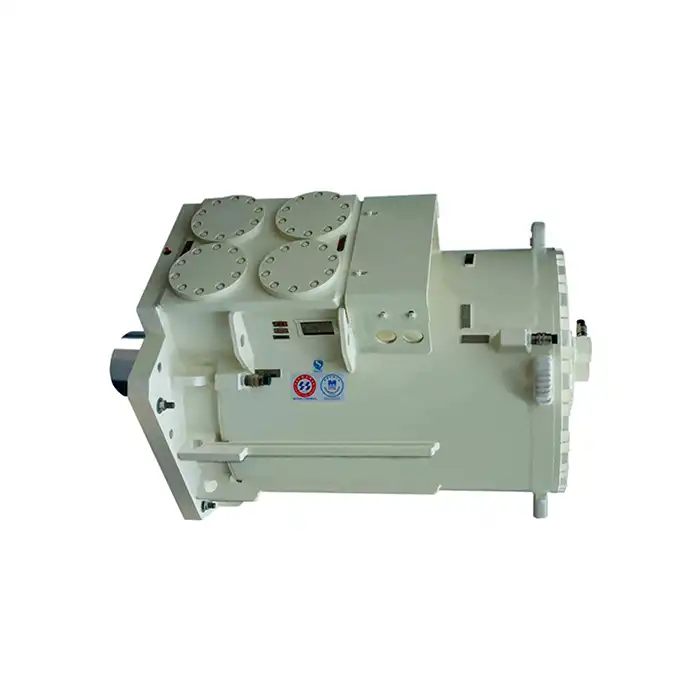
Series:Y2
Protection level:IP54
Voltage range:3000V±5%,3300V±5%,6000V±5%,6600V±5%,10000V±5%,11000V±5%
Power range:160-1600 kW
Application:fans, water pumps, compressors, crushers, cutting machine tools, transportation machinery, etc.
Advantage:compact structure, light weight, low noise, small vibration, long service life, easy installation and maintenance.
Standard: This series of products complies withJB/T10444-2004 standards.
Others: SKF, NSK, FAG bearings can be replaced according to customer requirements.
Understanding High Voltage Motor
High-voltage motors are essential to modern industry. These electric motor systems produce high power for demanding applications at voltages beyond 1000V.
voltage ratings affect operations
Multiple operating characteristics depend on voltage ratings:
- Higher voltages allow longer-distance power transfer.
- High voltage reduces current flow, reducing conductor heating.
- Electrical infrastructure compatibility typically determines voltage selection.
Application in Multiple Industries
Industrial motors are used in factories and power plants. Based on load and environment, each voltage class meets operating needs.
Motor Control System Considerations
Motor control systems need safety and switching to handle these voltage changes. Different voltage classes affect variable frequency drive compatibility and system design.
Key Technical Differences Between Voltage Classes
Electrical features and application scope distinguish these high voltage motor groups.
- Voltage Details
- 3.3 kV Systems: 3000V±5% to 3300V±5%
- 4.16 kV Systems: Usually 4160V±5%
Motor insulation systems vary greatly by voltage class. 3.3 kV motors need Class F insulation, but 4.16 kV machines need stronger insulation to withstand electrical stress.
Present Features
4.16 kV motors draw 26% less current than 3.3 kV ones at similar output. This cut affects:
- Conductor size needs
- Switchgear specs
- Setting motor protection
- Thermal management issues
Applications and Winding Configurations
To compensate voltage changes, motor windings vary. To prevent electrical failure, higher voltage motors have more turns and better inter-turn insulation. A 3.3 kV motor is better for most manufacturing situations if you need moderate power output and industrial compatibility.
Power Range and Performance Analysis
Power Capabilitie
Power capabilities are important for three-phase motor selection across voltage classes.
3.3-kV Motor Power:
- Standard: 160–1600 kW
- Best performance: 300-800 kW
- 500–3000 RPM
4.16 kV Motor Power Range:
- Typical: 800–5000 kW
- Best Performance: 1500-3000 kW
- Better Torque: Higher ratings boost torque.
- Efficiency and Conductor Losses
When appropriately matched to load, motor efficiency is comparable across voltage classes. Higher voltages reduce conductor losses, enhancing system performance.
Compare torque characteristics
Testing shows motor torque parameters vary by voltage class:
- 3.3 kV Motors: 150-200% rated torque at start
- 4.16 kV Motors: 180-250% rated starting torque
Applications-Specific Load Compatibility
Motor load compatibility varies by application. Large crushers and cutting machine tools may benefit from 4.16 kV systems, whereas water pumps and compressors work best with 3.3 kV. For ordinary industrial processes below 1000 kW, a 3.3 kV motor performs best.
Application-Specific Considerations
Industrial sectors choose different voltage classes based on operating needs and infrastructure constraints.
1. Assembly line and material handling systems in automotive and aerospace companies use 3.3 kV motors. The moderate voltage matches industrial infrastructure and powers production machinery.
2. Pumps, valves, and mixing equipment in chemical and food processing plants use 3.3 kV motors. The voltage matches process control networks while providing enough electricity.
3. Power producing facilities use 4.16 kV motors for big cooling pumps and associated equipment. Wind farms can use any voltage class based on turbine specifications.
4. Variations in motor vibration affect application suitability:
- RMS vibration values for 3.3 kV motors are typically <2.8 mm/s.
- 4.16 kV Motors: Size may increase vibration.
5. Large centrifugal chillers and air handlers in commercial HVAC systems use 3.3 kV motors. Voltage is sufficient for most architectural purposes without specialist electrical infrastructure.
These motor systems are ideal for reliable operation in conventional manufacturing environments with 3.3 kV infrastructure.
Installation and Infrastructure Requirements
Infrastructure compatibility greatly affects industrial motor voltage selection.
Electricity Distribution
Many industrial establishments have conventional 3.3 kV distribution systems. In such circumstances, installing a 3.3 kV motor requires minimal electrical adjustments, decreasing project costs and complexity.
Switchgear Considerations
Different voltage classes have different motor starters:
- 3.3 kV-standard industrial switchgear commonly available
- Specialized equipment may need special specs 4.16 kV
- Protection coordination varies by voltage
Cable Needs
For equivalent power transmission, higher voltage systems allow smaller conductors. Voltage increases cable insulation requirements, which may outweigh conductor savings. Motor protection must account for voltage-specific factors like:
- Protective settings vary
- Coordinating overcurrent
- Ground fault detection
- Motor thermal protection
Installing Complex
The 3.3 kV motor requires less installation expertise than higher voltage motors. Most 3.3 kV installations can be done by standard electrical contractors, however 4.16 kV systems may require more experience. 3.3 kV systems are compatible with existing plant infrastructure and easy to install.
Cost Analysis and Economic Factors
Industrial motor voltage selection depends on economics.
Initial Investment
Motor costs vary per voltage class due to building complexity and insulation. The following reasons make 3.3 kV motor units 10-15% cheaper than 4.16 kV ones:
- Less complex insulation
- Standard manufacturing methods
- Wider market access
- Established supply chains
Infrastructure Costs
Electrical infrastructure costs a lot:
- 3.3 kV: Uses plant distribution systems
- 4.16 kV can require electrical modifications.
Operations Economics
When appropriately selected, voltage class motor efficiency differences are minor. Long cable runs above 200 meters prefer higher voltage systems due to conductor losses.
Considerations for Maintenance
Voltage classes have different service needs.
- Standard maintenance for 3.3 kV motors
- 4.16 kV Motors: Safety precautions needed
Lifecycle Costs
The 3.3 kV motor's lower startup costs and simplified maintenance make it a better economic choice for moderate power applications over 20 years. For modest power applications, 3.3 kV systems are more cost-effective.
XCMOTOR's 3.3 kV Motor Advantages
For harsh industrial conditions, XCMOTOR makes high-quality electrical motors. Our products function well in many applications.
Technical Details
- Protection: IP54 provides outstanding environmental resistance.
- Comprehensive Voltage Range: 3000V±5% to 11000V±5%.
- Power output: 160-1600 kW meets different application needs
- Compliance: JB/T10444-2004 guarantees reliability.
Design Excellence
- Installing compact construction requires less area.
- Lightweight design simplifies mounting and handling.
- Quiet operation (<85 dB) ideal for industrial settings.
- Smooth operation is improved by little vibration.
- Extended service life by choosing quality parts
- Easy installation and maintenance
Quality Parts
- Quality bearings from SKF, NSK, and FAG
- Bearing replacement tailored to customers
- Advanced motor cooling (IC411 standard, alternatives)
- High-quality insulation for reliability
- Precision-balanced rotors reduce vibration.
Application Flexibility
- Fan and ventilation systems
- Water pumps installed
- Application of compressors
- Equipment for crushing and grinding
- Instruments for cutting
- Transport equipment
- Process-control equipment
Features of performance
- The 500-3000 RPM speed range suits diverse loads.
- Compatible frequency: 50 Hz standard.
- Increased enclosure options: IP55 protection
- Application-specific customization
- Explosion-proof for dangerous conditions
Service Excellence
- 12-month comprehensive warranty
- Professional technical support
- Unique application customization
- Standard delivery time is 8-12 weeks.
- Weekend-only support
- 30 days of returns for customer confidence
Manufacturing Standards
- Quality control is strict
- Advanced testing methods
- Manufacturing certification
- Continuous improvement plans
- Rules for environmental compliance
International safety certs
Our 3.3 kV Motors offer great value due to their durability, low prices, and extensive support.
Maintenance and Reliability Considerations
Long-term reliability is crucial when choosing industrial motors.
Required Maintenance
Motor maintenance processes vary by voltage class for safety and component accessibility. 3.3 kV Motor maintenance is usually simpler:
- Standard electrical safety rules apply.
- Regular inspections: 3-6 months
- Operating condition-based bearing lubrication
- Annual motor winding resistance testing
- Monitoring vibration for predictive maintenance
- Factors of reliability
Component choice greatly affects operational reliability
- Motor design factors
- Environmental protection
- Efficiency of cooling system
- Quality bearings and lubrication
- Durability of insulation
Failure Analysis
Modes of motor failure include
- Fatigued bearing
- Insulation failure
- Rotor imbalances
- Cooling system breakdown
- External pollution impacts
Motor testing allows proactive maintenance:
- Measured insulation resistance
- Trends in vibration analysis
- Inspections using thermal imaging
- Current signature analysis
- Power-quality monitoring
Expected Service Life
Maintained 3.3 kV Motor units usually achieve:
- 15-20 years operational
- Over 95% availability
- Minimal unplanned downtime
- Predictable maintenance expenses
Properly configured 3.3 kV systems provide long-term reliability with manageable maintenance.
Making the Right Choice for Your Application
Multiple operational considerations must be considered while choosing the best voltage class.
Criteria for Decision
When picking voltage classes, consider these main factors
- Power needs: Match motor rating to load.
- Present Infrastructure: Assess electrical distribution systems
- Assess space and access constraints for installation.
- Economic Factors: Total ownership cost
- Maintenance: Assess service expertise.
Application Guidelines
Different apps have specific preferences.
- Manufacturing processes: Moderate power applications suit 3.3 kV motors.
- For large pumping systems, either voltage class works depending on power needs.
- Process industries: Plant-standard voltage selection
- Transport systems: Space and weight limits
Considerations for Future
- Projection of load growth
- Possible infrastructure upgrades
- As technology advances,
- Compliance regulations change
Motor speed control criteria affect selection
- Variable-frequency drive support
- Starting method preferences
- Need operational flexibility
- Integration of process controls
Consult an Expert
Professional engineering evaluation optimizes choices. Consider these factors:
- Evaluation of load and duty cycle
- Studying electrical systems
- Life cycle costing and economic analysis
- Planning and allocating maintenance resources
The reliable and cost-effective 3.3 kV motor is ideal for most industrial applications requiring modest power output.
Conclusion
Power, infrastructure, and application needs determine whether to use 3.3 or 4.16 kV motors. The 3.3 kV motor performs reliably and cost-effectively in moderate power applications up to 1600 kW and is compatible with common industrial electrical systems. These motors are ideal for manufacturing, process control, and HVAC applications that value proven technology and easy maintenance. For best outcomes, consider your power needs, infrastructural constraints, and long-term operating goals while selecting.
Partner with XCMOTOR for Your 3.3 kV Motor Requirements
XCMOTOR offers complete industrial motor solutions. As a trusted 3.3 kV motor manufacturer, we deliver reliable products backed by extensive engineering expertise and dedicated customer support. Our staff analyzes your needs to offer motor configurations that maximize operational performance and reduce ownership costs. Our experts at xcmotors@163.com can discuss your project needs and how our innovative motor solutions can improve your operations.
References
1. IEEE Standard 841-2009: Standard for Petroleum and Chemical Industry - Premium Efficiency Severe Duty Totally Enclosed Fan-Cooled (TEFC) Squirrel Cage Induction Motors
2. National Electrical Manufacturers Association (NEMA) MG 1-2016: Motors and Generators Standards Publication
3. International Electrotechnical Commission (IEC) 60034-1: Rotating Electrical Machines - Part 1: Rating and Performance Standards
4. American Petroleum Institute (API) Standard 541: Form-Wound Squirrel Cage Induction Motors for Petroleum and Chemical Industry Services
5. Institute of Electrical and Electronics Engineers (IEEE) 519-2014: Recommended Practice and Requirements for Harmonic Control in Electric Power Systems
6. Canadian Standards Association (CSA) C22.2 No. 100-14: Motors and Generators for Use in Hazardous Locations
YOU MAY LIKE
 VIEW MORE3 phase slip ring motor
 VIEW MORE3ph induction motor
 VIEW MOREYPKK series high voltage frequency asynchronous motor
 VIEW MORE12 swing check valve
 VIEW MOREfull lug butterfly valve
 VIEW MOREbutterfly valve full lug type
 VIEW MOREYQ JS series motor
 VIEW MOREYBS low voltage explosion-proof coal mine motor