



20 hp dc electric motor Procurement: 6 Checks Before Ordering
Check six things before you order a 20 hp dc electric motor. Set the load and duty cycle, make sure the armature voltage is right for your DC supply, and check the speed and torque. Then pick the motor design and drive, read up on cooling and commutator care, and make sure you're happy with the supplier, the total cost, and the delivery. A 20 hp dc electric motor gives off about 14.9 kW at the shaft, so even a small difference in voltage, frame size, or speed range can stop the building of a new machine or a retrofit. This guide uses the Z4 series from XCMOTOR as an example to explain each check in simple language.
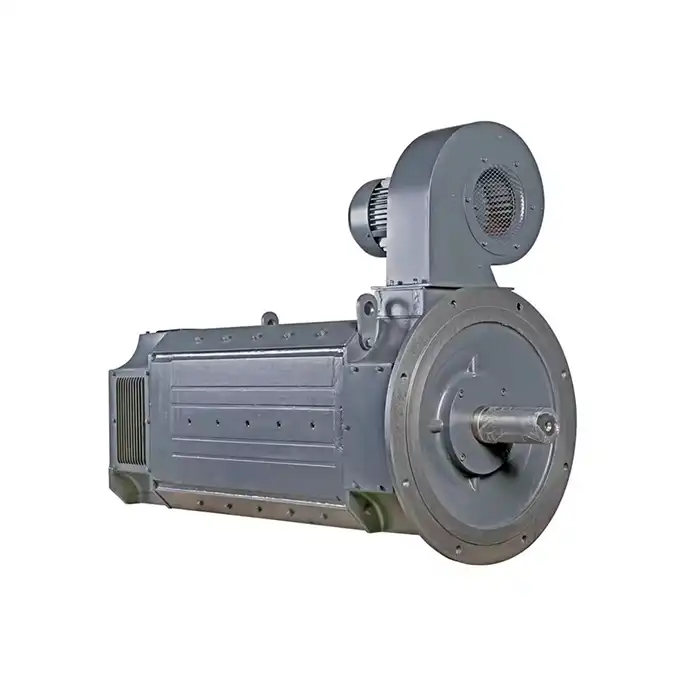
Series:Z4
Frame number: 100-450
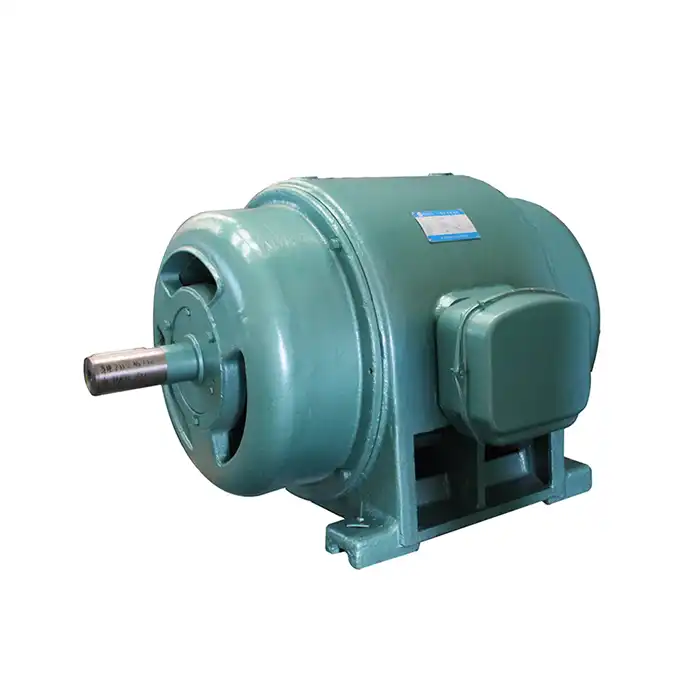
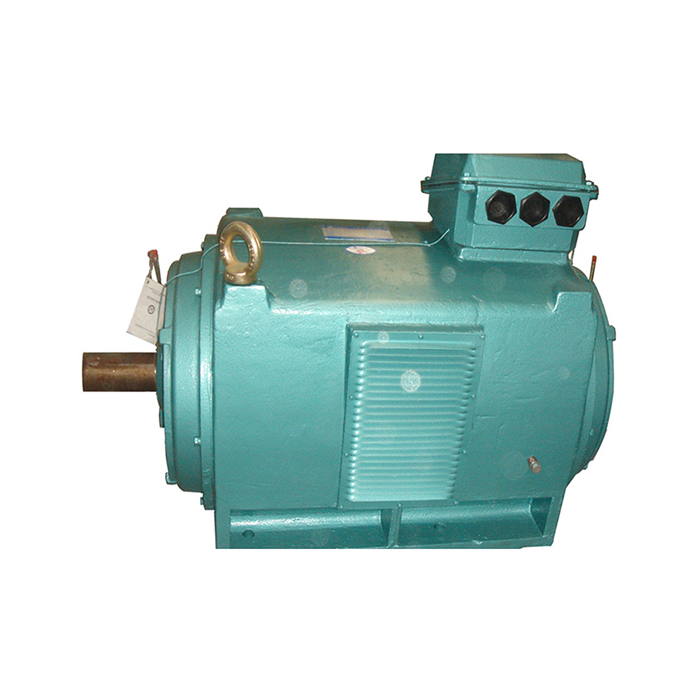
Application:Z4 series motorsThis series of motors can be widely used in various industrial sectors such as metallurgical industrial rolling mills, metal cutting machine tools, papermaking, dyeing and weaving, printing, cement, and plastic extrusion machinery.
Power range:1.5-600kW
Voltage range: 160V,440V, etc.
Certificate: The performance of this series of motors not only complies with the national standard GB/T755 "Basic Technical Requirements for Rotating Electrical Machines", but also basically complies with the German VDE0530 standard.
Advantage:Z4 series DC motor has greater advantages than Z2 and Z3 series. It can not only be powered by DC unit power supply, but also suitable for static rectifier power supply. It has small moment of inertia, good dynamic performance, and can withstand high load change rates. It is especially suitable for control systems that require smooth speed regulation, high efficiency, automatic speed stabilization, and responsive response. It has reached the current international advanced level..
Others: SKF, NSK, FAG bearings can be replaced according to customer requirements.
Why 20 HP DC Motor Procurement Requires More Than a Price Quote?
Horsepower Alone Does Not Describe the Job
The shaft power, which is about 14.9 kW, is shown on a plate that says "20 HP." The armature voltage, base speed, frame size, cooling, and duty class of two motors with the same rating can be different. A coiler or roller table motor in a steel mill has to deal with many starts, stops, and changes in load. On a line for printing or paper, the same rating must keep the speed steady at low rpm. In order to get a price for a 20 hp dc electric motor, the specs must be written down first. It costs more in downtime, rework, and freight to get a low price on the wrong frame or voltage.
Who Should Read This Guide?
This was written for the people who decide what DC motors to buy and the people who keep them running. Line supervisors, electrical leads, equipment managers, OEM project engineers, and buyers who look at different quotes are all in this group. These checks are directly useful if your plant already has a DC bus and you want to replace old motors without having to rebuild the power system. They are also needed if you make machines that still use DC speed control, like those that print, handle paper, or run elevators. You can compare supplier answers line by line because each check gives you a question to put in your RFQ. Getting clear answers early on can also save weeks during the selection, bidding, and trial production stages.
How the Z4 Series Fits the Picture
The Z4 series, which replaces the Z2 series, is the fourth generation of Chinese national standard DC motors and is made by XCMOTOR. On frames 100 to 450, the range goes from 1.5 kW to 600 kW, which means that a 20 hp dc electric motor will work well in it. Z4 motors have Class F insulation and can be set to any speed with a 20:1 constant-torque ratio. They are in line with GB/T 755 and the German VDE 0530 standard. The power they use comes from a DC unit or a static rectifier. I keep bringing these facts up so that you can see how they work with your own project.
Checks 1–3: Match the Motor to the Load, the Supply, and the Shaft
Check 1: Define the Application, Load Profile, and Duty Cycle
Start with the machine that is being driven. Write down the starting conditions, the time it takes to speed up, the number of times it needs to reverse, the amount of braking that needs to be done, and any stall risk. A motor that works with a conveyor belt might not work with a coiler because the tension changes as the coil is made. Then give the duty. IEC 60034-1 lists duty types like S1 (continuous), S2 (short-term), and S3 (intermittent). Your supplier needs to know which one does the job. Add the temperature, altitude, dust, moisture, vibrations, and the environment. Rolling mills, machine tools, papermaking, printing, cement, and plastic extrusion are all places where Z4 motors are already used. Tell us which of these your line is like. We can get the right size 20 hp dc electric motor the first time by writing down the load spec.
Check 2: Verify Voltage, Current, and Electrical Compatibility
Your DC bus or rectifier output must match the voltage of your armature. Standard Z4 voltages are 160 V, 400 V, and 440 V DC. Other ratings can be changed to fit a certain control system. If the power source is 160 V, a 20 hp dc electric motor will draw a lot more current than if it is 440 V. Just to be sure, 14.9 kW divided by 440 V equals about 34 A, and 14.9 kW divided by 160 V equals about 93 A. Nameplate current is higher because those numbers don't take losses into account. Ask about changes in supply as well. Give the supplier your normal and worst-case bus voltage. This is important for older plants that often have voltage changes. The real current, not the estimated current, must flow through the cables, fuses, and contactors.
Check 3: Confirm RPM, Torque, and Mechanical Output
When you divide power in kilowatts by rpm, you get torque in newton meters. That gives about 95 Nm at 1,500 rpm and 142 Nm at 1,000 rpm for 14.9 kW. A slower base speed usually means a bigger frame and more shaft torque. There is a 20:1 constant-torque speed ratio on Z4 motors. A motor with a base speed of 1,000 rpm should be able to keep its rated torque at about 50 rpm. When the fan is running slowly, self-ventilated cooling loses airflow, so you may need to use forced air. You can get a 4:1 constant-power range when the field weakens above the base speed. Compare your slowest and fastest speeds to these numbers. Then, compare the approved drawings to make sure that the shaft's size, mounting pattern, rotation direction, coupling, and encoder interface are correct. This is most important when a new motor needs to fit into the space of an older Z2 unit.
Checks 4–6: Confirm the Motor Design, Upkeep, and Supplier
Check 4: Select the Right Motor Design and Drive
A commutator DC machine, Z4 motors can run from either a DC unit supply or a static rectifier. Because they have a small moment of inertia, they can speed up quickly and adapt quickly to changes in load. That works for systems that need to smoothly change speeds and keep them steady on their own. Check the voltage, continuous and peak current, field supply, feedback method, braking, and protection functions of the motor to make sure the drive is a good fit. If you are adding a 20 hp DC electric motor to an existing line, you must make sure that the current DC supply or rectifier can power it. Before you make a choice, our engineers can look over the details of your drive.
Check 5: Review Cooling, Commutator Care, and Spare Parts
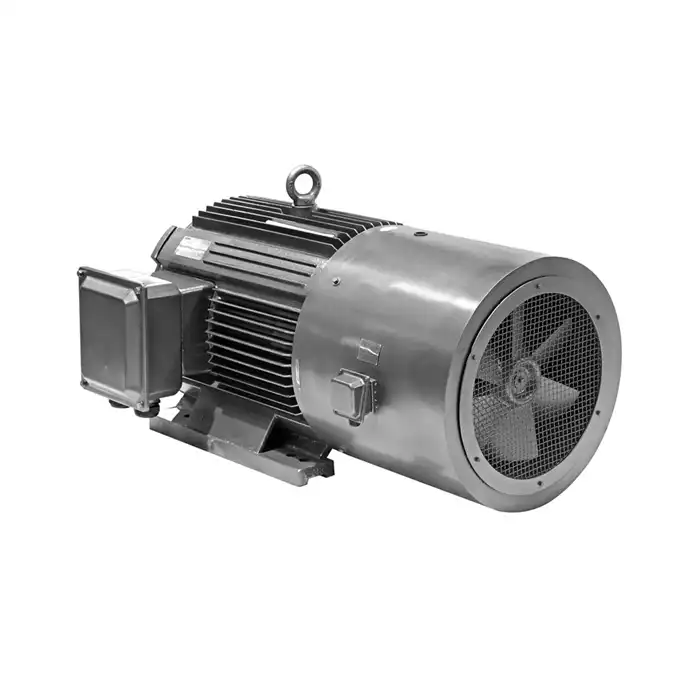
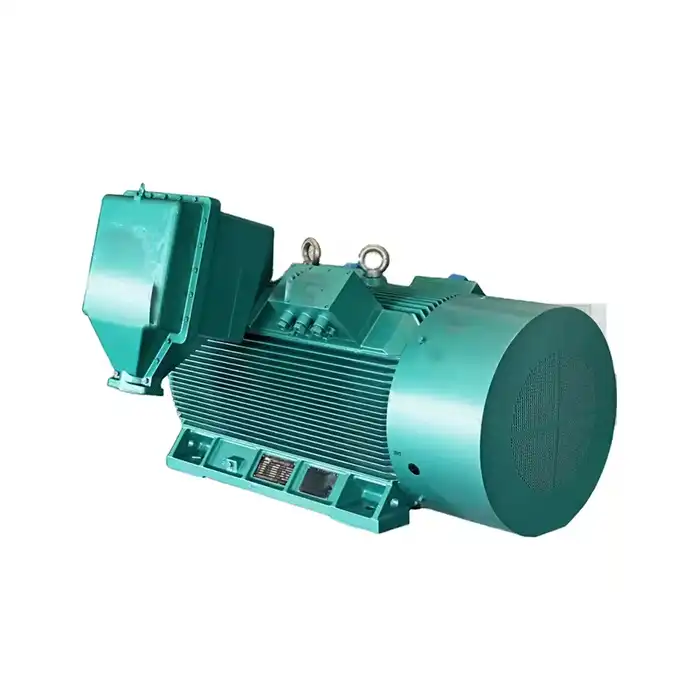
To cool your site, ask what method works best for you. Z4 has IC0141 that vents itself, IC06 that uses forced air, and ICW37A8 that cools with water. IEC 60034-6 gives us the IC codes. IEC 60085 says that Class F insulation can handle 155 °C, while Class B insulation used in older Z2 designs could only handle 130 °C. This is also true for a 20 hp dc electric motor with a commutator. The brushes need to be replaced, and the surface of the commutator needs to be checked for sparks and wear marks. Ask the supplier about the grade of the brushes, how often they should be inspected, and the commutator's machining tolerances, such as the difference between bars. Then ask for a list of spare brushes, brush holders, and bearings. On request, well-known bearing brands can be given.
Check 6: Validate Supplier Capability, Total Cost, and Delivery
That is, don't just look at the price of a 20 hp dc electric motor. Add the drive, the freight, the duties, the installation, the commissioning, the spare parts, and the warranty support. A good supplier should give you a quality document, a test report, a datasheet, and a dimensional drawing. XCMOTOR has been in the motor industry for more than 20 years and has strategic partnerships with more than 30 motor manufacturers around the world. We keep an eye on production with SAP factory management, and before sending, we do final testing that simulates overloading and thermal cycling. The following certificates are on our list: UL, CCC, CE, ISO9001:2000, and CRCC. People in the US should also ask what test method is used, since IEEE Std 113 covers test methods for DC machines. We deliver all of our goods for free by sea, land, air, or a combination of the three, and a 20hp electric motor purchase should be evaluated on this total cost basis.
How to Compare 20 HP DC Motor Options Before Making the Final Decision?
Build a Side-by-Side Comparison Matrix
A matrix checks the truth of quotes. Include the armature voltage, rated and peak current, base and maximum rpm, rated torque, speed regulation ratio, duty rating, cooling method, insulation class, frame size, shaft details, weight, warranty, lead time, and cost to deliver. You need to fill out each row for each supplier. Where a quote isn't complete is shown by a blank cell. When you compare each 20 hp dc electric motor offer in this way, differences in frame number or speed range show up before you buy, not after the crate gets there. Then, mark the rows that are most important to your line, like dimensional match for a retrofitt.
Match the Specification to the Application
Some lines choose a 20 hp dc electric motor and weigh the rows in different ways. Most of the time, dimension match, supply voltage, and spare part supply are the most important things for steel mill auxiliary drives like uncoilers, coilers, roller tables, and loopers. When it comes to printing, paper, and elevator OEM work, low-speed torque, smooth speed regulation, and the quality of the commutator machining are more important. The Z4 series has 20:1 constant torque and 4:1 constant power ratios, which are enough to meet both types of needs. We'll help you find a Z4 configuration, cooling type, and bearing option that works for your project if you tell us which one it is.
Test a Sample Before a Batch Order
When you order dozens of motors, a trial unit lowers the risk. Run the first 20 hp dc electric motor with a typical load and keep track of the temperature rise, vibration, noise, armature current, speed stability, stopping, and response to overload. During the trial, keep an eye on the brushes and commutator for sparks. Check the readings against the datasheet and against the old motor that you want to get rid of. A lot of buying processes already have a step called "trial production" that happens between the bid and the installation. Plan for the sample test and agree on what it takes to pass in writing before the sample is sent out, and treat the 20hp electric motor trial as the deciding checkpoint.
Common Procurement Mistakes to Avoid
Buying on the 20 HP Label Alone
If you only look at horsepower, you can't be sure of its continuous-duty capability, base speed, voltage match, or cooling. When you look at two quotes for a 20 hp dc electric motor, they can mean very different things. On a 160 V bus, a motor that was made for 440 V will not give its full output. If the duty is long and the speed is low, a frame that vents itself may get too hot and need forced air. Not just one line item? Ask for the whole datasheet. Then, compare each row to your load data before you set a price.
Overlooking Peak Current and Supply Limits
Current can be pulled well above the rated value when the engine is starting, speeding up, or slowing down. When the line first starts up, it trips if the rectifier, fuses, or cables can't handle that peak. Plants with an unstable supply also have to deal with voltage changes that put stress on the insulation and armature. Write down your peak demand, ask the supplier what the maximum load is, and check the drive's current limit. During commissioning, check the protection settings. A small mistake in a cable or fuse can cause the system to trip over and over, making it look like there is a problem with the motor.
Ignoring Fit, Spares, and After-Sales Support
It takes a day of work to machine and realign a motor that almost fits the old base. Before you order, make sure you know the frame number, foot size, shaft extension, and location of the terminal box. We can change the sizes to fit installations that are already in place. After that, look at the service parts. Bearings, brushes, and brush holders wear out over time, and a plant that doesn't have spares has to wait for freight. Find out who handles technical questions after the delivery. Before and after the sale, XCMOTOR offers support, even on Saturday and Sunday, so don't wait until Monday to ask about commissioning.
Conclusion
If you want to buy a 20 hp dc electric motor, you should match them up, not compare prices. The six checks look at the load and duty cycle, the speed and torque, the armature voltage and current, the motor design and drive, the way the motor is cooled and maintained, the supplier's ability and the total cost. Each one is important because of the numbers. A 20 HP rating is equal to about 14.9 kW. When the voltage drops, the current rises sharply, and as the base speed goes down, the torque goes up. These checks can be used to see how well the Z4 series works. It has Class F insulation, a 20:1 constant-torque ratio, and a 4:1 constant-power ratio. A comparison matrix, a sample trial, and a clear list of fit and spare-part needs can help you avoid making the common mistake of buying based only on horsepower and not taking peak current into account.
FAQ
1. What voltage does a 20 hp dc electric motor use?
The normal armature voltages for a Z4 are 160 V, 400 V, and 440 V DC. Send us your bus voltage along with your question so that we can change the voltage ratings to fit local standards or a specific control system.
2. Can a Z4 motor replace an older Z2 motor?
Z4 is the fourth-generation design that is slowly taking the place of Z2. We change the size requirements to fit existing installations, so please send us your original frame data, shaft details, and mounting arrangement.
3. What speed range does the Z4 series offer?
It is possible to regulate constant torque speed up to 20:1, and it is possible to regulate constant power up to 4:1. Let us know your slowest and fastest speeds so we can make sure the fit is right.
4. Which cooling methods are available?
The self-ventilated IC0141, the separate forced air IC06, and the water cooling ICW37A8 are all options that can handle heavy loads all the time.
5. Which insulation class does the motor use?
IEC 60085 says that Class F is rated at 155 °C. Class B, which can handle 130 °C, is used in older Z2 models.
Request a 20 hp dc electric motor Quotation from XCMOTOR
Send XCMOTOR your voltage, speed range, frame data, duty cycle, and quantity to xcmotors@163.com. Our team will then suggest a Z4 configuration that works with your needs. We are a 20 hp dc electric motor supplier with more than 20 years of experience. We offer free delivery, a 30-day open purchase policy, and support on the weekends.
References
1. IEEE Std 113, IEEE Guide: Test Procedures for Direct-Current Machines, 1985
2. NEMA MG 1, Motors and Generators, 2021
3. IEC 60034-1, Rotating Electrical Machines – Rating and Performance, 2017
4. IEC 60034-6, Rotating Electrical Machines – Methods of Cooling (IC Code), 1991
5. IEC 60085, Electrical Insulation – Thermal Evaluation and Designation, 2007
6. Chapman, Electric Machinery Fundamentals, 2011