


YE3 160M 4 Motor: Understanding Rated Current
The rated current of a ye3 160m 4 motor is the line current it draws while it delivers its rated 11 kW output at nameplate voltage and frequency. A calculation with 0.91 efficiency and 0.85 power factor gives about 20.5 A at 400 V and 21.6 A at 380 V. Those figures are planning estimates, so the nameplate on your motor always has the final word. In this guide, I explain how to read that value, calculate it, apply it to protection equipment, and check it before you place an order.
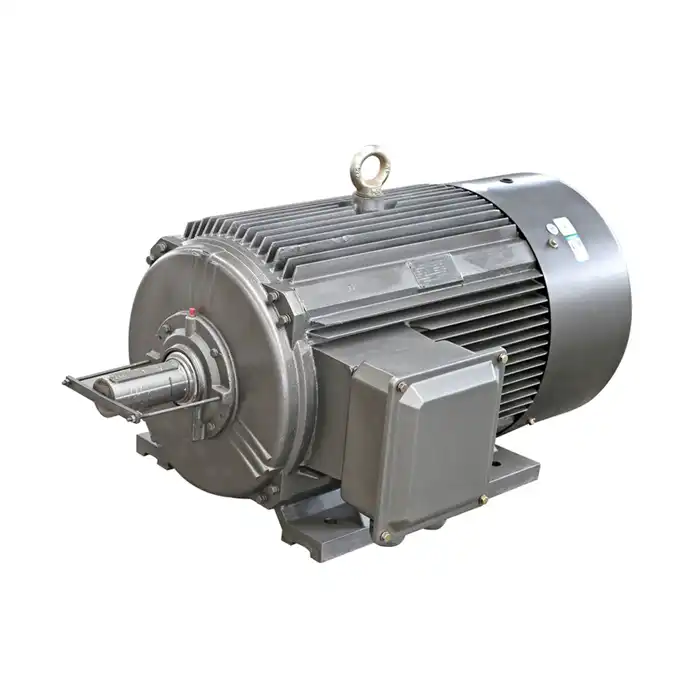
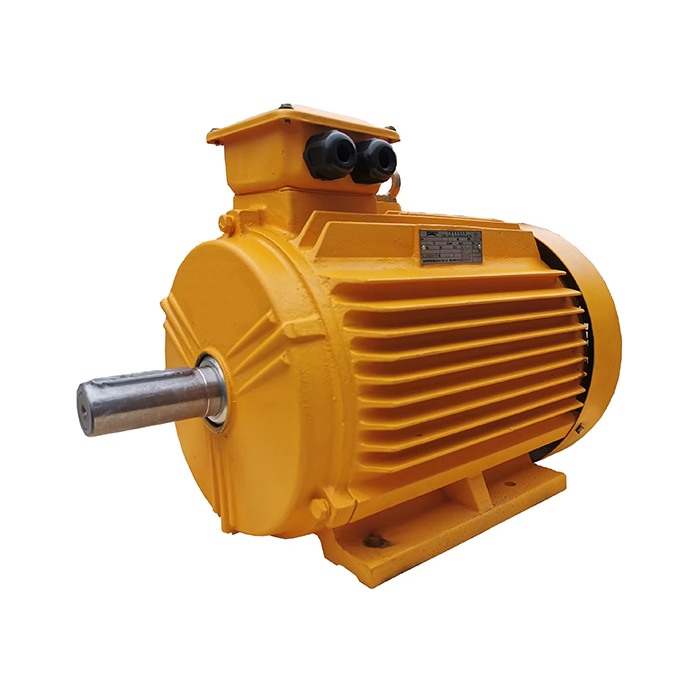
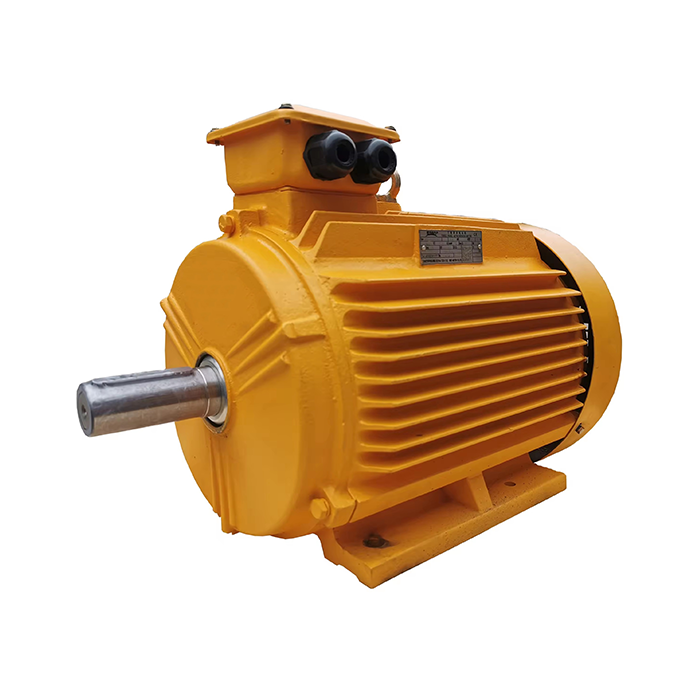
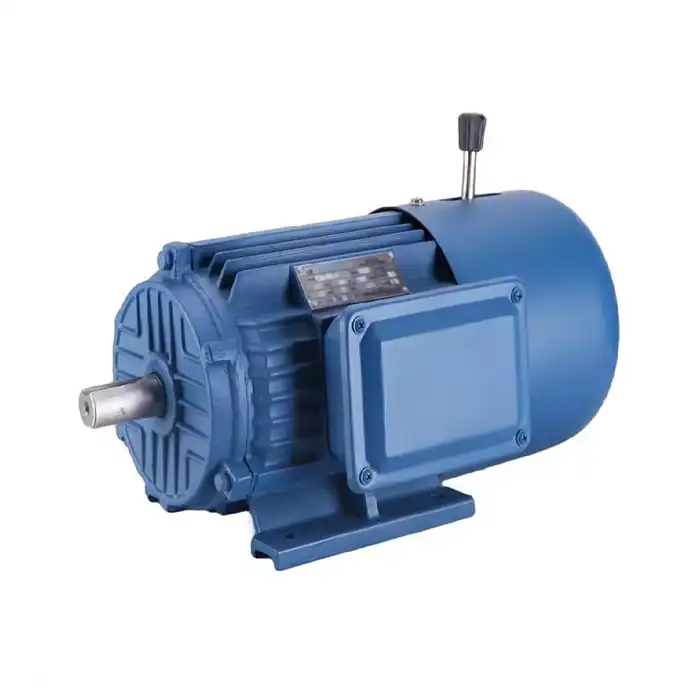
Series:YE3
Frame number: 80-450
Power range:0.75-1000kW
Protection level:IP55
Energy efficiency class: IE3
Voltage range: 380V,400V,415V,660V, etc.
Application:can be used in various fields of the national economy, such as machine tools,water pumps,fans,compressors,and can also be used in transportation, mixing, printing, agricultural machinery, food and other occasions that do not contain flammable, explosive or corrosive gases.
Certificate: international standard IEC60034-30 "Efficiency Classification of Single-speed Three-Phase Squirrel Cage Induction Motors".
Advantage:The high quality of the electric motor guarantees high operational reliability.
Others: SKF, NSK, FAG bearings can be replaced according to customer requirements.
Rated Current Basics for the YE3 160M 4 Motor
What Rated Current Means on the Nameplate
Rated current is the line current, in amperes, that a motor draws at rated output, rated voltage, and rated frequency. It differs from no-load current, which is the small current the motor draws without a shaft load. It also differs from starting current, which is the short surge while the rotor is at rest. Our ye3 160m 4 is a four-pole motor with a rated speed of 1,460 rpm at 50 Hz. Its synchronous speed is 1,500 rpm, so slip is about 40 rpm. IEC 60034-1 sets the rating and performance terms for rotating machines, and nameplates follow that logic. I always tell buyers to read the amps on the plate first, because every protection setting starts there.
How to Calculate the Current of a YE3 160M 4 Motor
For a three-phase motor, use I = P ÷ (√3 × U × η × cosφ). P is output power in watts, U is line voltage, η is efficiency as a decimal, and cosφ is power factor. Take 11,000 W, 0.91 efficiency, and 0.85 power factor, a value inside the 0.84 to 0.86 range for our YE3 series. At 400 V, the result is about 20.5 A. At 380 V, it is about 21.6 A, and at 415 V, it is about 19.8 A. The 0.91 figure is an illustrative value for a motor of this size, not a guarantee for any single unit. Use the result for early planning, and take final numbers from the approved datasheet.
Specifications That Move the Current
Several fixed specifications shape the ye3 160m 4 current. The YE3 series covers frames 80 to 450 and 0.75 to 1000 kW, with IP55 protection, Class F insulation, and a cast iron frame and end shields. Voltage has the largest effect: the same 11 kW load draws less current at a higher voltage, and available options include 380 V, 400 V, 415 V, and 660 V. Power factor and efficiency also move the figure, which is why two motors with the same kilowatt rating can show different amps. The 160M frame sets a 160 mm shaft height. Our starting current ratio is 6.5 to 7.0, so the surge at 400 V lands near 133 to 144 A.
Using YE3 160M 4 Rated Current for Protection and Control
Overload Relays and Nameplate Amps
Overload relays and electronic protection devices start from the nameplate current of the ye3 160m 4. In the United States, NFPA 70, the National Electrical Code, separates two jobs in Section 430.6. Nameplate current guides overload protection, while the code's full-load current tables guide conductor and branch-circuit sizing. Cable length, ambient temperature, installation method, and short-circuit capacity also affect breaker, fuse, and contactor choices. A licensed electrician or your local inspector should confirm how these rules apply to an imported IEC motor, since code editions and local amendments differ. I recommend that you hand them the nameplate data and the datasheet together.
Starting Methods and Inrush Current
Direct-on-line starting is the simplest method, but it pulls the full starting current, near 133 to 144 A at 400 V for this ye3 160m 4. That surge can dip the supply voltage and trip upstream devices. Star-delta starting cuts the line current to about one-third, and starting torque falls by the same ratio. It suits pumps and fans that start with a light load better than loaded compressors. It also needs a motor wired for delta at your supply voltage and six accessible terminals. A soft starter ramps the voltage and limits the surge without a sudden step. Check the starting torque ratio of 2.2 to 2.4 against your load before you pick a method.
Running the Motor on a Variable Frequency Drive
When a drive runs the ye3 160m 4, size the drive by output current, not by kilowatts alone. The drive's continuous current rating should meet or exceed the motor's rated current. Check the output insulation stress, the 50 Hz base frequency, acceleration settings, and low-speed cooling, since the shaft-mounted fan turns slower and moves less air. Fan and pump loads help here, because their power demand falls with the cube of speed as the drive slows them down. Tell us at the inquiry stage if a drive will run the motor, so we can confirm that the winding and insulation suit that duty.
Comparing Options and Avoiding Rated Current Mistakes
How the Motor Compares With Other Choices
Rated kilowatts alone do not tell you whether another motor fits. Pole count sets speed: four-pole motors run near 1,460 rpm at 50 Hz, two-pole motors near 2,900 rpm, and six-pole motors below 1,000 rpm. Swapping one for another changes the speed of your pump or fan, and fan power rises with the cube of speed, so it is never an automatic replacement. Brake motors, variable-speed motors, and customized builds suit special duties. The YE3 series serves places free of flammable, explosive, or corrosive gas, so hazardous areas need a different motor. Our product information states that the ye3 160m 4 matches Y and Y2 motors in shape and mounting dimensions, which helps when you replace an older unit.
Common Rated Current Mistakes
Several errors repeat in specification sheets. Some buyers treat starting current as rated current, which leads to oversized relays. Others apply 380 V data to a 400 V system or choose star instead of delta connection. Sizing protection by kilowatts alone ignores the real efficiency and power factor of the motor. Frequency causes trouble too: a four-pole motor on a 60 Hz supply has a synchronous speed of 1,800 rpm, 20 percent above its 50 Hz speed. Because the standard frequency of the ye3 160m 4 is 50 Hz, US buyers should send us the site voltage and frequency before ordering. A two-minute check of the nameplate against the supply can save a return shipment or a tripped line.
Site Conditions That Shift Current
Real sites rarely match catalog conditions. High ambient temperature, altitude, frequent starting, heavy inertia loads, poor ventilation, voltage imbalance, and sustained overload all push current and winding temperature upward. NEMA MG 1 includes a derating guide for unbalanced voltage, because a small imbalance can create a much larger current imbalance in the windings. IP55, the standard protection level of the ye3 160m 4, protects against dust and water jets as described in IEC 60034-5. It does not suit corrosive gas. Measure the running current during the first installation and compare it with the nameplate. A reading well above nameplate at rated load points to a supply, load, or cooling problem.
Choosing a YE3 160M 4 Supplier and Checking the Order
What to Expect From a Motor Supplier
A supplier should give you consistent technical documents: rated current, efficiency, and power factor values, dimensional drawings, wiring diagrams, a nameplate sample, and test reports. Ask about production controls too. Our process includes precision die-casting for the housing, advanced winding techniques, testing at each stage, and inspection of each motor. The ye3 160m 4 follows the IEC 60034-30 efficiency classification, and our certifications include CE, ISO 9001:2015, and GOST. We can replace bearing brands to match your requirements. OEM buyers should also ask for batch test records, since consistent shaft dimensions from one batch to the next keep assembly lines running.
Pre-Purchase Checklist for the YE3 160M 4 Motor
Here are the three groups of checks I run before I approve an order.
- Electrical data: confirm output power, rated current at your actual supply voltage, frequency, power factor, starting current ratio, star or delta connection, insulation class, and duty rating. Compare each value with the datasheet and the nameplate sample, because rated current changes whenever the supply voltage changes. Write that voltage down before you request a quotation.
- Mechanical fit: check the 160M frame, mounting arrangement, shaft and keyway dimensions, terminal-box position, cooling method, weight, and coupling compatibility. Lay the dimensional drawing next to your equipment drawing, and measure the shaft extension on the first sample before you approve a larger batch. Photograph the nameplate and terminal box for your records.
- Application and paperwork: confirm the load type, duty cycle, ambient temperature, altitude, and IP55 suitability, and keep the motor away from flammable, explosive, or corrosive gases. Then request the quotation, datasheet, factory test report, warranty terms, export packaging details, and lead time in writing, so each promise sits on paper before production starts.
These checks catch most specification gaps before they reach your assembly line or job site.
What to Send With Your YE3 160M 4 Quotation Request
A complete request saves days of back-and-forth. Send the required power, supply voltage, frequency, expected rated current, mounting arrangement, shaft dimensions, IP rating, application, quantity, destination country, certification needs, and delivery schedule. We then confirm the nameplate current, power factor, dimensions, wiring, testing, and available options. For a first order, I suggest a sample unit, then a small batch, then a larger volume once your engineers and assembly line approve the fit. Include the Y or Y2 model you plan to replace, and compare foot-hole spacing and shaft extension for B3 mounting on the drawing. That comparison removes guesswork from the ye3 160m 4 selection.
Conclusion
The rated current of the ye3 160m 4 is the line current at 11 kW output, rated voltage, and rated frequency, and the nameplate remains the final source. The standard formula estimates about 20.5 A at 400 V and 21.6 A at 380 V, because current falls as voltage rises and depends on efficiency and power factor. That value drives overload settings, while a starting current of 6.5 to 7.0 times rated current influences the choice among direct-on-line, star-delta, soft-start, and drive control. Pole count, site conditions, and supply frequency can change current and speed, so any motor swap needs a check against the nameplate and drawing. Documents, mounting fit, and batch records complete the review before an order.
FAQ
1. What is the rated current of a ye3 160m 4 motor?
By calculation, it is about 20.5 A at 400 V and 21.6 A at 380 V, using 0.91 efficiency and 0.85 power factor. Starting current runs about 6.5 to 7.0 times that value. The nameplate value is the final reference.
2. Does a four-pole motor run at exactly 1,500 rpm?
No. Synchronous speed is 1,500 rpm, but slip brings the rated speed to 1,460 rpm at 50 Hz and full load.
3. Can a YE3 motor replace a Y or Y2 motor on the same base?
Our product information states that the shape and mounting dimensions match. Still, compare foot-hole spacing and shaft extension on the drawing before you order.
4. Can I run this motor on a 60 Hz supply?
Our standard frequency is 50 Hz. A four-pole motor at 60 Hz has a synchronous speed of 1,800 rpm, so send us your voltage and frequency before ordering, and we will confirm the right winding.
Request a YE3 160M 4 Quote from XCMOTOR
Send your voltage, frequency, quantity, and destination to XCMOTOR, and we will confirm the nameplate current and drawings for the ye3 160m 4 you need. As a ye3 160m 4 supplier, we offer original parts, free delivery, 30-day returns, and support on Saturday and Sunday. Our team also answers pre-sales and after-sales technical questions. Email xcmotors@163.com for details.
References
1. IEC 60034-1: Rotating Electrical Machines, Part 1: Rating and Performance, 2010
2. IEC 60034-30-1: Efficiency Classes of Line Operated AC Motors (IE Code), 2014
3. NFPA 70: National Electrical Code, 2023
4. NEMA MG 1: Motors and Generators, 2016
5. IEC 60034-5: Degrees of Protection Provided by the Integral Design of Rotating Electrical Machines (IP Code), 2020
6. Improving Motor and Drive System Performance: A Sourcebook for Industry, U.S. Department of Energy, 2014