




Understanding the Function and Benefits of Swing Check Valve
If your project involves pumping stations, water treatment lines, or offshore piping systems, you already know that a single point of backflow can cause serious equipment damage. The 12 swing check valve is one of the most dependable tools for stopping that from happening. In this guide, I walk through how these valves work, what makes them worth specifying, how to maintain them, and what to look for when purchasing in bulk. Whether you are an EPC procurement manager or a pipeline design engineer, the information here is built around your real working decisions.
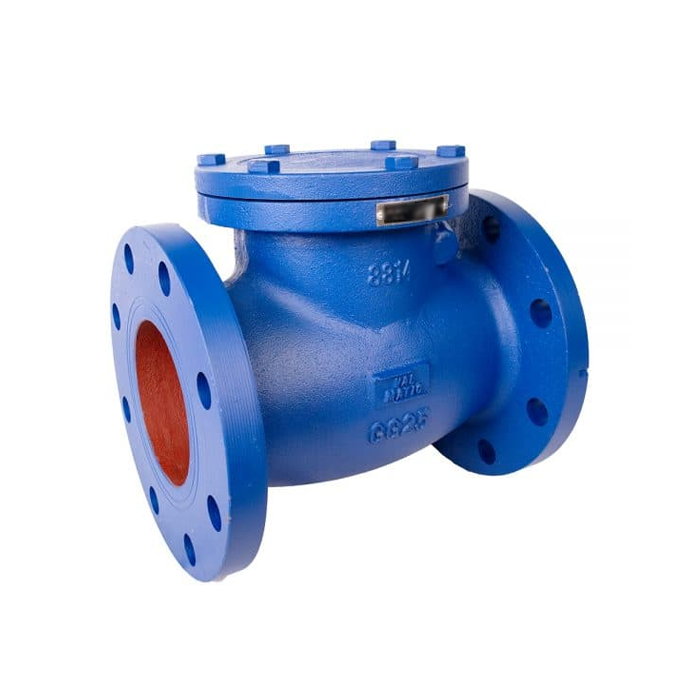
Series:H44
Diameter:DN20~DN600,
PN:16;25;40
Application specification: Design, manufacture:GB/T12236 Length of the structure:GB/T12221 Connecting flange: JB/T79 Valve inspection and test:JB/T9092
What Is a 12 Swing Check Valve and How Does It Work?
Basic Operating Principle
A 12 swing check valve only lets fluid flow in one direction and stops it from flowing backward automatically. A flexible disk inside the valve body swings open when forward pressure is higher than the weight of the disk. It then swings shut when flow stops or changes direction. There is no need for an outside trigger. Differential pressure is the only thing that drives the device, which makes it a low-maintenance choice for high-cycle systems.
Body Materials and Structural Design
Where this valve can be used depends on the body material. Ductile iron, also known as nodular cast iron, is a cheap material that works well in freshwater municipal systems because it can handle moderate pressures and doesn't rust inside. For seawater cooling circuits, chemical dosing lines, and sites overseas that are always exposed to chloride, SS316 stainless steel is the best material to use. The XCMOTOR H44 model has EPDM disk seals that are rated for continuous chemical protection, so it can be used for either choice.
Pressure and Temperature Range
The H44 series 12 swing check valve can handle pressures of PN16, PN25, and PN40, which are the same as ANSI 150/300 equivalents for projects that need to work with different countries. The normal temperature range is -20°C to 120°C, and the highest temperature that can be set is 200°C for circuits that are close to power plants that use steam. With these numbers, the valve can work in a lot of different situations, like desalination plants in the Middle East, wastewater treatment plants in Southeast Asia, and city water projects in Latin America.
Types and Variations of 12 Swing Check Valves
Flanged vs. Wafer End Connections
The H44 line of products has flanged end connections, which are the standard for pipelines with bore sizes from DN20 to DN600 in both public and private sectors. Flanged designs let you take things apart faster for inspections without having to cut pipe sections. If the procurement team is working with either ASME B16.5 or EN 1092 flange standards, the valve body can be given to either standard during the same production run. This eliminates the chance of flange mismatches on-site.
Full-Bore vs. Reduced-Bore Configurations
When you build something with a full bore, the internal flow line stays the same size as the pipe's nominal width. This is important for systems that use slurry or don't have a lot of money to spend on pressure drop. A reduced-bore design might be cheaper at first, but it loses head, which costs more in energy over the 15–20 years that a pump system is used. The full-bore version of the 12 check valve is the best choice for high-flow pumping stations that handle more than 500 cubic meters per hour.
Disc Coating and Seal Material Options
EPDM seals are used in most disk constructions because they can handle chlorine water, weak acids, and chemicals used to treat ozone. If you work with oil and gas offshore and are exposed to sour gas, the valve body and disk can be made of SS316 or duplex steel to meet NACE MR-0175 standards. The choice of disk treatment should be made during the planning phase, since making changes after delivery requires taking the whole thing apart.
How to Choose the Right 12 Swing Check Valve for Your Pipeline
Match the Valve to Fluid Conditions
Before you sign off on a standard, you should make sure of three things: the type of fluid (chemical, clean water, wastewater, seawater, or chemical), the highest working pressure, and the temperature range of the area. You can't just drop a 12 swing check valve that's made for PN16 into a PN40 seawater cooling system; the body material and pressure grade need to be looked at first. If this is done wrong during the buying stage, it will cost a lot to repair in the field.
Here are the most important things that buying managers and engineers should check before making a purchase:
- Bore size and flow rate: The H44 series runs from DN20 to DN600, covering the full range from small booster pump outlets to large municipal transfer headers.
- Pressure class: PN16, PN25, and PN40 ratings align with ANSI 150/300 for cross-standard project compatibility.
- Body and disc material: Ductile iron for freshwater, SS316 or duplex for seawater and chemical service.
- Flange standard: ASME B16.5 or EN 1092, confirmed at order stage to prevent site installation delays.
- Certification requirements: API 6D for international oil and gas, ISO 9001 for general quality assurance, CE for European projects.
There are a lot of different bore sizes and flow rates in the H44 series. They range from DN20 to DN600, so they can fit everything from small booster pump outlets to big municipal transfer headers.
Swing Check vs. Other Check Valve Types
All of these factors work together to show if the valve can safely work at its rated duty point. If you skip even one thing, you could have problems with compatibility during installation or a cover that fails too soon in service.
Bulk Order Considerations
Swing check valves have less pressure drop when there is a lot of flow than lift check valves because the disk clears the full bore path. Ball check valves work better with fluids that are heavy on solids when the diameter is small, but they can't be used above DN150. Wafer check valves are cheaper and lighter, but they need careful control of the flange bolt load to keep the body from warping in high-pressure lines. As long as the water is clean or lightly treated and the diameter is DN300 (12 inches or more), the swing check design always gives the best balance of pressure drop, sealing reliability, and service access.
Maintenance Tips and Common Problems with 12 Swing Check Valves
Routine Inspection Schedule
For normal water service, I suggest a physical inspection every 12 months. For chemical or seawater service, I suggest one every 6 months. During the inspection, look for wear and corrosion on the hinge pin, make sure the disk seats all the way without any gaps when backpressure is applied, and make sure the EPDM seals are not cracked or deformed. Because the H44 design has sealing surfaces and hinge pins that can be changed, when the seals wear out, the whole 12 check valve doesn't need to be replaced.
Water Hammer and How to Prevent It
When a pump stops quickly and the fluid column turns around before the disk closes, this is called water hammer. In big pipes, this sudden rise in pressure can break fittings or hurt pump casings. The H44 series fixes this problem with a double-disc system that slows down the slam speed when the door is closed. For systems with a very high inertia, adding a dashpot-assisted closing device during the design phase makes it safer. The Hydraulic Institute says that water hammer events cause a measurable number of pipeline failures in pumping stations. This means that slam mitigation is more of an engineering issue than a sales point.
Corrosion and Seal Deterioration
Chloride entering ocean or coastal sites is the main way that things break down. While SS316 bodies are very strong, any carbon steel fasteners used at the flange connection will rust faster than the body itself. When installing the valve, making sure that the bolts are stainless steel or hot-dip galvanized keeps the flange joint from leaking because the bolts are rusting. If you see surface cracks in EPDM seals, you should replace them right away. A broken seal in a 12 swing check valve on a pressure water main is not a small maintenance task.
Procurement Guide: Where and How to Buy 12 Swing Check Valves
Verifying Supplier Credentials
When looking for a seller of a 12 swing check valve, make sure the company has ISO 9001 certification and can provide API 6D test paperwork upon request. Ask for more than just a general factory certificate. You should also ask for records of the hydrostatic tests and material certificates for each batch. XCMOTOR uses SAP to keep track of the production of every H44 batch. This means that each valve has records that can be tracked from the checking of the raw materials to the final hydraulic testing required by API 598.
Pricing Structure and Volume Discounts
The biggest factor that affects prices is the choice of material. A body valve made of SS316 with a size of 12 inches costs a lot more than a similar unit made of malleable iron. When you place a bulk order of more than 100 units, the price per unit usually goes down, and locking in a blanket purchase order for all the valves you need for a project usually gets you better prices than placing many small orders. So that you can compare suppliers fairly, ask for a quote that breaks down the costs of the materials, the testing fees, and the paperwork.
After-Sales Support and Documentation
Material test reports, pressure test certificates, measurement inspection records, coating or surface treatment records, and a plant acceptance test report should all be part of a full set of paperwork for an international project. More and more projects in the Middle East, Africa, and Southeast Asia need to be inspected by a third party, like SGS, Bureau Veritas, or something similar. Before you place your order, make sure that the company that sells your 12 swing check valve can handle testing by a third party.
Conclusion
A simple problem can be solved with the 12 swing check valve: keep the fluid moving in one way and protect the equipment ahead. XCMOTOR's H44 line has sizes from DN20 to DN600 and can handle pressures from PN16 to PN40. It can be made of ductile iron or SS316 with EPDM seals for use in both freshwater and saltwater. API 6D, ISO 9001, CE, and NACE MR-0175 certifications are enough to get into foreign industrial and municipal tasks. The performance and paperwork package of the valve makes it a useful and checkable choice for buying teams working on water treatment, pump station, or offshore pipeline projects.
FAQ
1.What size range does the H44 series cover?
The H44 series covers DN20 to DN600, which addresses the full range from small pump discharge outlets to large municipal transfer main applications.
2.Which pressure ratings are available?
The valve is rated at PN16, PN25, and PN40. These align with ANSI 150 and ANSI 300 pressure classes for international project compatibility.
3.What certifications does the valve carry?
The H44 12 swing check valve holds API 6D, ISO 9001, CE, and NACE MR-0175 certifications. These cover oil and gas, general industrial, European regulatory, and sour gas service requirements.
4.Can flange standards be customized?
Yes. The valve can be supplied with flanges to ASME B16.5 or EN 1092 standards. Flange standard selection should be confirmed at the order stage.
5.What materials are available for offshore service?
SS316 body material with EPDM seals is the standard offshore configuration. Duplex steel is also available for high-chloride or high-temperature seawater applications meeting NACE MR-0175.
6.How long does bulk delivery take?
For orders of 100 units or more in standard configurations, the dispatch window is 15 to 30 days from order confirmation, with a defect rate at or below 2%.
Get a Quote from XCMOTOR for Your Next Valve Project
XCMOTOR sells the H44 12 swing check valve to procurement teams around the world who are working on projects like offshore pipelines, municipal water systems, and pumping stations. We are a verified maker of 12 swing check valves, and we can handle large sales with full paperwork, API 6D certification, and custom flange standards. To get a quote for your project, email our expert team at xcmotors@163.com or go to motorxc.com. We answer every day of the week.
References
1. American Petroleum Institute. API 6D: Specification for Pipeline and Piping Valves. API Publishing Services, 2021.
2. Hydraulic Institute. Pump System Improvement Modeling Tool and Guidebook. Hydraulic Institute, 2020.
3. International Organization for Standardization. ISO 9001:2015 Quality Management Systems — Requirements. ISO, 2015.
4. NACE International. NACE MR0175/ISO 15156: Materials for Use in H₂S-Containing Environments in Oil and Gas Production. NACE International, 2015.
5. Crane Co. Flow of Fluids Through Valves, Fittings, and Pipe — Technical Paper No. 410. Crane Co., 2013.
6. American Society of Mechanical Engineers. ASME B16.5: Pipe Flanges and Flanged Fittings. ASME, 2017.