




How Does a 200 hp dc electric motor Work? A Practical Guide
A 200 hp dc electric motor converts direct current electrical energy into mechanical rotation through electromagnetic interaction between the armature and field windings. When DC current flows through the armature winding, it generates a magnetic field that reacts against the field winding's fixed magnetic flux, producing torque on the rotor shaft. The commutator and carbon brushes maintain continuous, directionally consistent current flow, keeping rotation stable. At 150 kW output, this motor class delivers the high starting torque and wide speed range that heavy industrial drives—crane hoists, rolling mill main drives, mine hoists—depend on every shift.
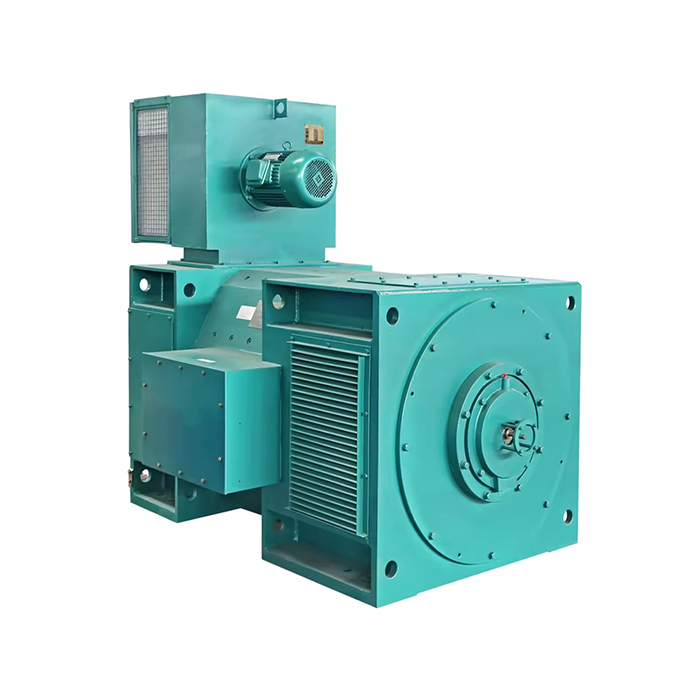
ZSeries:Z
Application:Metallurgical industrial rolling mills, metal cutting machine tools, papermaking, dyeing and weaving, instant brushing, cement, plastic extrusion machinery.
Power range:59-1600kW
Standard: JB/T9577-1999
Understanding the Operating Principles of a 200 HP DC Electric Motor
Core Components and Their Roles
Every large DC motor is built the same way. The working current flows through the spinning coil unit that is attached to the shaft. This is called the armature. The stationary magnetic flux is made by the field winding, which is attached to the stator. The commutator is a divided copper ring at the end of the shaft. It changes the direction of the current in each armature coil just at the right time. Brushes made of carbon press against the commutator and bring electricity from the outside circuit to the spinning armature. These four parts work together to make a constant electric engine.
Electromagnetic Energy Conversion
When DC voltage is applied, electricity flows from the brushes to the conductors in the armature. Fleming's Left-Hand Rule says that every conductor carrying current inside the magnetic field feels a force. Since the conductors on opposite sides of the armature are facing different field polarities, the pressures act in the same direction, which turns the shaft. The commutator makes sure that the current changes directions as each wire moves from one pole to the other. This keeps the direction of the torque constant. This is why DC motors rotate in a smooth, one-way motion as soon as they are turned on.
Key Technical Specifications
Our 200 hp dc electric motor can work with voltages from 220 V to 750 V, power levels from 59 kW to 1,600 kW, and temperatures up to 155 °C. It has Class F protection. Protection grades IP23 and IP44 work well in both semi-enclosed industrial bays and dusty mills. The IC06 and IC37W cooling choices work with different air flow patterns. The starting torque is equal to 200 % of the full-load torque, and the short-term overload capacity stays at 150 % for two minutes. These numbers are in line with the JB/T 9577-1999 standard for rotating DC machines.
Advantages and Common Industrial Applications of 200 HP DC Electric Motors
Why Procurement Engineers Prefer This Power Class
The 200 hp electric motor (150 kW) grade is a good middle ground between size and portability. It's big enough to power crane lifting systems and rolling mill main spindles, but small enough to fit in normal motor bays. The cast-iron frame protects against mechanical shock, and the precision-balanced wheels keep the bearings from wearing out over long production cycles. The speed can be changed from base speed to field-weakening range at a ratio greater than 1:2. This lets drive engineers adapt to the needs of the process without having to change the motor.
Here are the core performance traits that make this motor class a sound procurement choice:
- High starting torque at 200 % of rated load — allows crane hoists and mine hoists to break static loads without current spikes that damage switchgear.
- Wide adjustable speed range — suits rolling mill main drives that need to change the rpm precisely with each pass to control the thickness of the strip.
- IP44 protection option — keeps metal chips, paper dust, and cement particles out of the winding cavity, which means that in harsh plant settings, service times can be longer.
- Class F insulation — keeps the integrity of the coils even when temperatures change, which happens a lot during intermittent-duty hoist and crane cycles.
These features directly meet the needs of steel mills, paper mills, cement plants, and plastic extrusion lines, where a motor breakdown ends a whole production chain.
Industrial Application Scope
Metal rolling mills, metal-cutting machines, papermaking lines, dyeing and weaving machines, cement kilns, and plastic extrusion machines are all served by this motor. This type of power is also used by mining hoists and port traction vehicles because the torque curve fits the load patterns of ropes and drums. The motor's ability to keep its speed even when the load changes is useful in all of them. This is something that AC induction motors can only do with more complicated vector drive systems.
Comparing a 200 HP DC Motor with Other Motor Types
DC vs. AC for Variable-Speed Industrial Drives
Many fixed-speed tasks can now be done more efficiently with AC motors that have variable-frequency drives instead of DC motors. A DC drive system is still easier to set up and more reliable when it comes to finding faults. This is especially true for drives that need to work across a wide range of speeds and have high torque at low speeds, like those used for crane lifting and rolling mill reversing runs. The commutator shows how worn the brushes are, and a worker can check on them while the motor is shut down without taking it apart.
Power Class Selection: 150 HP vs. 200 HP
Peak load margin is what makes the difference between a 150 hp and a 200 hp dc electric motor. In China and the IEC, crane guidelines say that there should be a 20–25 % power margin above the estimated peak load. A 150 kW (200 hp) motor can fit inside a hoist mechanism that is sized for a 120 kW calculated load. Undersizing to a 110 kW motor can cause overloading that lasts for a long time, which shortens the life of the windings.
Maintenance Tips and Common Issues for 200 HP DC Electric Motors
Commutator and Brush Care
The commutator's surface should look smooth and have a thin, dark layer on top of it. This is called the "film." The carbon brush material used to make this film actually lowers friction and touch resistance. If there are bright copper lines or swirls on the surface, the commutator needs to be turned on a lathe and polished again. Brush pressure should stay in the range given by the manufacturer. Too little pressure leads to sparking, and too much pressure speeds up wear.
Bearing and Lubrication Schedule
All of the loads in a 200 hp electric motor dc electric motor are carried by precision bearings. When to re-grease depends on the speed and temperature of the environment; a standard schedule for a plant is every 2,000 hours of operation. When you grease something too much, the lubricant gets past the seal and into the winding cavity, where it contaminates the insulation. Only use the grade that is written on the nameplate data sheet.
Diagnosing Overheating and Electrical Faults
Overheating is generally caused by cooling pipes that are blocked, an environment with too high of a temperature, or overloading that lasts longer than the rated duty cycle. Make sure there is no dust in the IC06 or IC37W cooling paths. Electrical faults, like ground faults and inter-turn shorts, show up on a Megger test as uneven sparking on the commutator or high winding resistance. If these problems are found early during the three-month checks, the windings don't have to be replaced, which costs a lot more than a regular service visit.
Procurement Insights: How to Buy a 200 HP DC Electric Motor
Evaluating Suppliers and Specifications
Ask for test results that include references to JB/T 9577-1999 and make sure they are certified to ISO 9001:2015. Ask the seller if they can provide units with the CE mark for projects that will be exported. Make sure that the factory test sheet, not just the catalog page, shows that the claimed maximum capacity is 150 % for two minutes. A supplier who sends sample units for a 30-day test run before signing a framework agreement shows that they are sure of the quality of their products.
Lead Times, Minimum Order, and Customization
Standard stock units between 59 and 1,600 kW usually ship 30 to 60 days after an order is confirmed. Customizing the voltage for 380 V, 415 V, or 440 V DC excitation systems, which are popular in industrial lines in Southeast Asia and the Middle East, adds about one week to the production schedule. Trading companies can load containers more efficiently with mixed-model orders because they don't have to stick to a single standard.
After-Sales Support
Make sure the seller either has carbon brush grades and commutator repair kits in stock or can ship them quickly. Much more money is lost than made when a motor sits idle while a brush set is being made. XCMOTOR offers technical help seven days a week and makes sure that parts are always available so that your production plan stays on track.
Conclusion
Through the interaction of the armature, field winding, commutator, and brushes, a 200 hp dc electric motor generates shaft torque from DC electrical energy. It can be used in crane hoists, rolling mills, mine hoists, and traction drives because it has a wide speed range, a high starting power, and a design that can be fixed in the field. You can protect your equipment investment and your plant's production by choosing a unit that meets JB/T 9577-1999, has Class F insulation, and comes with test data that can be checked.
FAQ
1.How long does a 200 hp dc electric motor typically last?
A well-built 200 hp dc electric motor can usually last 15 to 20 years of steady industrial use if it gets regular upkeep like new brushes, resurfaced commutators, and re-greased bearings. The cast-iron frame and Class F insulation help the product last a long time even when the temperature changes.
2.Can a DC motor replace an AC motor in an existing installation?
Direct substitution needs matching shaft sizes, mounting footprints, and a look at the drive controller. A normal AC variable-frequency drive won't work with a DC motor because they need a corrected DC source. Before upgrading, talk to your electrical expert.
3.What warranty and post-sale support does XCMOTOR offer?
XCMOTOR offers a standard warranty on all of its products and helps customers seven days a week, even on weekends. You can find technical documentation in English. Spare parts and carbon brush kits can be sent out quickly so that there is as little downtime as possible.
4.Is the motor compatible with different supply voltages?
Yes. The motor works with voltages from 220 V to 750 V and can be set up for 380 V, 415 V, or 440 V DC systems to work with different industrial grids in different parts of the world.
5.What certifications does XCMOTOR's 200 hp dc electric motor carry?
Units are made with quality control that meets ISO 9001:2015 standards and have the CE mark on them. The specifications are in line with JB/T 9577-1999, which is the Chinese standard for rotating DC tools in the mechanical business.
Request a Quote from XCMOTOR — Your Trusted 200 HP DC Electric Motor Supplier
The 200 hp dc electric motor line from XCMOTOR has voltage ranges from 220 V to 750 V, IP23/IP44 protection, and fully meets JB/T 9577-1999 standards. Before being sent out, every unit goes through factory acceptance testing. To get a specification sheet, sample unit, or bulk quote, email our technical team at xcmotors@163.com or go to motorxc.com. Support is offered on the weekends.
References
1. IEEE Transactions on Industry Applications — "Performance Characteristics of DC Motors in Heavy Industrial Drive Systems," 2019.
2. China Mechanical Engineering — "Application of JB/T 9577-1999 in Large DC Motor Design and Acceptance Testing," 2018.
3. Electric Power Systems Research — "Comparative Analysis of DC and AC Variable-Speed Drive Systems for Rolling Mill Applications," 2020.
4. IEC 60034-1: Rotating Electrical Machines — Part 1: Rating and Performance, International Electrotechnical Commission, 2022.
5. Journal of Electrical Engineering & Technology — "Commutator Wear Mechanisms and Maintenance Strategies in High-Power DC Motors," 2021.
6. Machine Design — "Selecting the Right Motor for Crane Hoist and Mine Hoist Applications," 2017.
YOU MAY LIKE
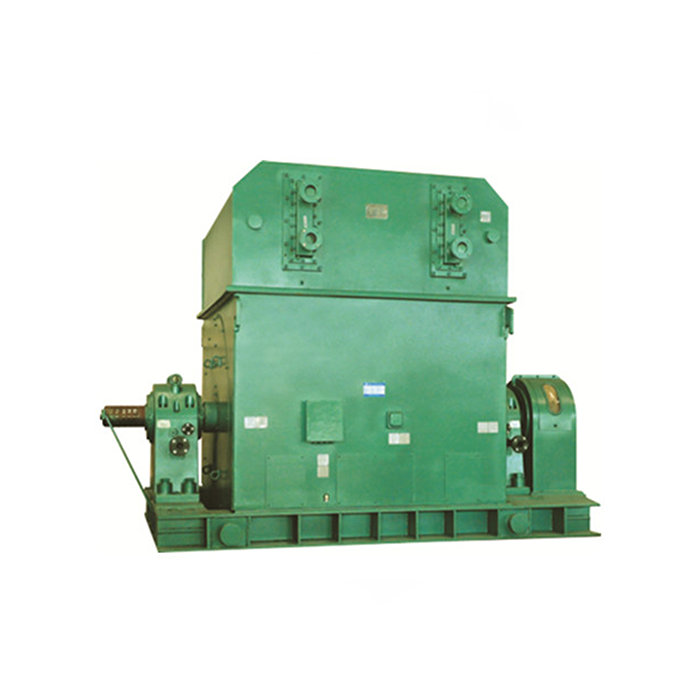 VIEW MORET series synchronous motor
 VIEW MOREYR(IP23) series high voltage wound rotor three-phase asynchronous motor
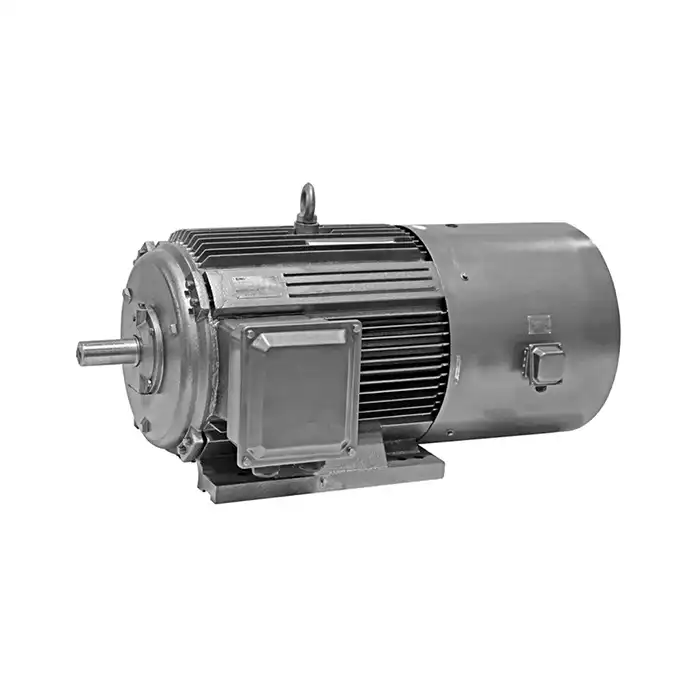 VIEW MOREiec low voltage motors
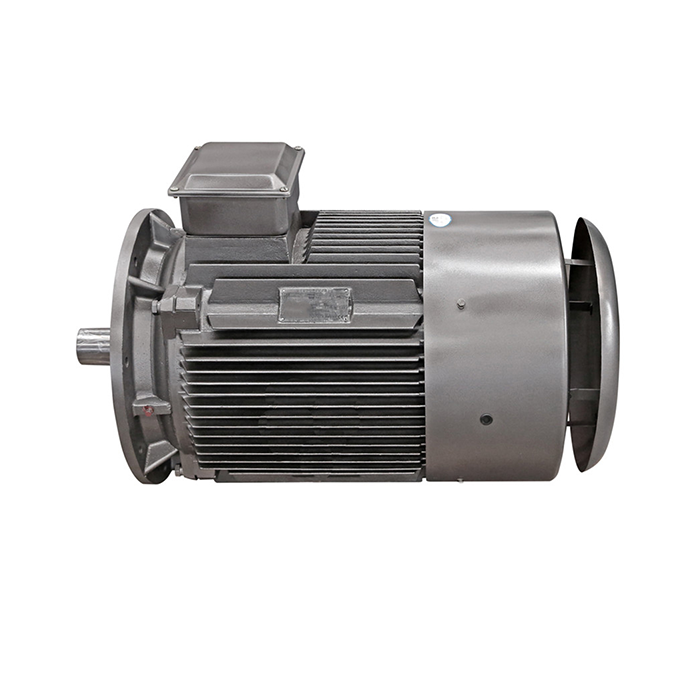 VIEW MORElong shaft electric motor
 VIEW MORE3 phase induction squirrel cage motor
 VIEW MORE3 phase asynchronous induction motor
 VIEW MOREball mill motor
 VIEW MORElow voltage dc inverter ac