




Slip Ring vs Squirrel Cage: Which Handles Your Load?
For large beginning loads slip ring motor is preferable and for stable continuous running with minimal care squirrel cage motor is better. If your machine is beginning under load, such as a hoist or mill, the slip ring motor provides a means of adding resistance to the rotor circuit to increase starting torque and reduce line current. If your load begins lightly and runs for lengthy hours, a squirrel cage motor is easier to own and maintain. This guide was developed to assist engineers and buyers to match each type to the actual load before sending an RFQ.
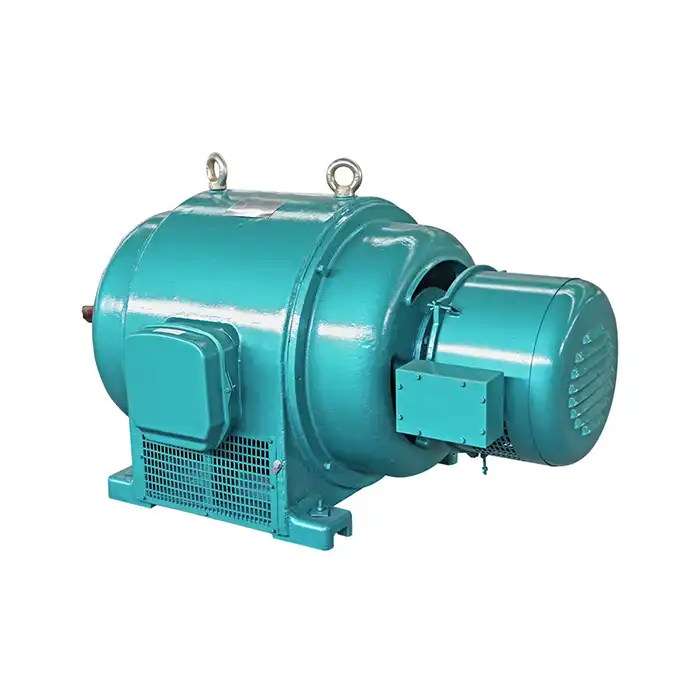
Series:YRQ
Voltage range:380V±5%
Power range:45-710kW
Protection level:IP23
Application:YRQ(JR) series medium-sized motors can drive a variety of different machinery, such as fans, compressors, water pumps, crushers, ball mills, cutting machine tools, transportation machinery and other equipment, and can be used in coal mines, machinery industries, power plants and various industrial and mining enterprises. Used as prime mover.
Advantage: The JR series medium-sized motors have very powerful driving capabilities and can not only drive conventional mechanical equipment, but also some complex mechanical equipment. For example, it can drive heavy machinery such as ships, cranes, and wind turbines, as well as small household appliances, purifiers, compressors, etc.
Others: SKF, NSK, FAG bearings can be replaced according to customer requirements.
Slip Ring Motor and Squirrel Cage Motor Basics
Both machines have three phase induction motors, therefore the differences are easy to spot on a data sheet. First, let’s look at how each is constructed.
What Is a Slip Ring Motor?
The wound rotor induction motor is also known as the slip ring motor and features a three-phase winding on the rotor. That winding goes to slip rings. Carbon brushes transfer current from the rings to an external bank of resistance. High beginning resistance boosts starting torque and restricts current. As the rotor speeds up, the starter gradually decreases resistance. The stator, rotor winding, slip rings, brush gear, bearings, cooling system and terminal box all play a role. This design offers you control over the start, but you must examine the rings and brushes periodically. I advise purchasers to expect that from the outset.
What Is a Squirrel Cage Motor?
A squirrel cage motor consists of conductive bars embedded in a laminated rotor core and connected by end rings. No brushes, no slip rings or external resistance circuit in contact with rotor. The stator’s revolving magnetic field causes current in the bars. And that current provides torque. Its design is basic and is extensively standardised, therefore you will find it on pumps, fans, compressors, blowers and conveyors. It is a popular option for extended, continuous employment because to its low care and simple replacement. You see its limit, from the beginning. A direct-on-line cage motor will generally draw roughly six times rated current, therefore large loads normally need a soft starting or drive.
Key Technical Difference Between the Two Motor Types
What makes it different is the rotor. A slip ring motor lets you get into the rotor circuit and use external resistance to shape torque, inrush current and acceleration. Since a squirrel cage rotor is stationary, starting behaviour derives from the inherent properties of the motor or from equipment attached to the motor such as a soft starter or variable frequency drive. A soft starter reduces the stator voltage during startup, which also reduces the available starting torque. Induction motor torque is approximately proportional to the square of the applied voltage under comparable operating conditions. Therefore, 80% of the rated voltage produces around 64% of the torque available at rated voltage. A soft starter can limit starting current, but it may not provide sufficient torque for heavy starting loads. By contrast, a slip ring motor uses external rotor resistance to improve starting torque and control acceleration without reducing stator voltage. This is why a slip ring motor is best suited for heavy starting and the cage design for easy running.
Slip Ring Motor Performance and Heavy-Load Starting
Now we can see what happens when a genuine machine asks the two for torque.
Slip Ring Motor vs. Squirrel Cage Motor: Performance Comparison
Begin with torque and current. The slip ring motor can provide strong beginning torque at reduced line current and the acceleration curve may be adjusted by modifying resistance steps. A squirrel cage motor has a fixed curve if you don't put a starter to it or run it. The cage design is brushless, which is beneficial for maintenance. I won't make sweeping statements, but the purchase price and the lifespan cost vary on size, voltage, duty cycle and starting frequency. For speed control, rotor resistance is restricted. Don’t only go by the general guidelines, ask each provider for performance curves, acceleration calculations and maintenance plans.
Which Motor Handles Heavy Starting Loads Better?
For heavy starts, sliding ring motors are often the better option. The external rotor resistance generates a strong beginning torque and limits the current and regulates the acceleration. That may decrease voltage dips and mechanical stress to couplings, gearboxes and driven equipment. These include crushers, ball mills, huge conveyors, cranes and hoists. Our YR series lists initial torque to 250% of rated torque. In fact, a squirrel cage motor may still be used with a correctly sized soft starter or drive, particularly if continuous speed control is important. Consider load inertia, breakaway torque, acceleration time, starts/hr and available electrical capacity before you pick.
Slip Ring Motor vs. Squirrel Cage Motor by Application
In practice this usually resolves the subject. Slip ring motors are often used in mining, cement and mineral processing because starters are hefty and need acceleration control. Cranes and hoists require torque, brakes, multiple starts and overload protection to function together. Squirrel cage motors are good for pumps, fans and many compressors when the load matches long steady operation nicely. For OEM machines, examine the whole motor, drive and load: mounting dimensions, shaft, voltage, cooling, protection rating and control interfaces. Add dust, humidity, vibration, corrosion and temperature to the standard. Our slip ring motor series is rated for use in hoists, rolling mills and wire drawing equipment.
How to Choose, Wire, and Maintain a Slip Ring Motor
Once the right kind has been decided, the following stages include selection of data, wiring and maintenance.
How to Choose Between a Slip Ring Motor and a Squirrel Cage Motor
Start with the driving load, not the catalogue Here are the 3 data categories I encourage OEM teams to gather initially.
- Load Data: Record the rated torque, breakaway torque, load inertia, acceleration time, starts per hour, duty cycle, speed, and if the machine begins loaded. Mills and crushers are usually started loaded and the figures tell you whether you require rotor resistance or if a soft starter or drive will suffice. Write them all down at first.
- Electrical data: Check voltage, frequency, fault capacity available, allowable voltage drop, motor rating, starting compatibility. A poor supply feels a rapid direct start so see how much drop your plant can take accelerating. Share these statistics early with your engineering company, switchgear and cable size is also affected.
- Site data: Ambient temperature, dust, moisture, vibration, danger of corrosion, mounting arrangement, shaft size, direction of rotation. Please inform us if your site requires a greater level of enclosure protection. Our series is IP23 protected. Then compare starting procedures, maintenance burden and total cost of ownership across all the choices on your list.
With these numbers, the supplier may offer you beginning curves, acceleration calculations and dimensional drawings that fit your interfaces.
Slip Ring Motor Wiring, Starting, and Protection Requirements
In a slip ring motor installation, the stator, rotor, resistance, control and protection circuits are independent. Follow the certified motor designs, starting papers, appropriate electrical regulations and local project rules. You may start up with staged resistance removal, an automated rotor resistance starter, a liquid resistance starter, a soft starter or a drive, depending on power level and process demands. Protection should include short circuit, overload, phase loss, earth faults, locked rotor, voltage faults, winding and bearing temperature, vibration and overspeed as applicable. Clear wiring schematic and coordinated switchgear make commissioning safer. Make sure the resistance starter and motor are matched on paper before shipping either out.
Slip Ring Motor Maintenance and Troubleshooting Guide
Maintenance is the big trade off. Schedule inspection of brushes, brush holders, slip rings, rotor connections, ventilation, bearings, and resistance starter parts to suit your job cycle and location. Typical problems include inability to start, excessive sparking, poor starting torque, overheating and vibration. Typical reasons include incorrect resistance levels, unclean rings, worn brushes, obstructed cooling passageways, overload, misalignment and bearing damage. Keep extra brushes, bearings, sensors, cooling fans, and starting parts on the shelf. Track vibration, temperature and current over time to identify problems before they stop production. Brush wear is natural and regular inspections are cheaper than unexpected stops.
XCMOTOR Slip Ring Motor Specifications
Here is what we offer consumers who determine a wound rotor design is appropriate for their load.
Ratings and Technical Data
We provide YR slip ring wound rotor motors from 200 kW to 5600 kW. Voltage possibilities include 3000 V, 3300 V, 6000 V, 6600 V, 10000 V and 11000 V each ±5% and a 6 kV slip ring motor option. Speed goes from 500-1500 rpm. Class F (155°C) Insulation. IP23 enclosure: Protection against access to hazardous parts by finger and objects more than 12.5 mm. Resistance to water spray less than 60 degrees from vertical. The technical data gives an efficiency up to 96 %, a power factor between 0.80 and 0.90 and a beginning torque up to 250 % of the specified torque. If you choose, you may specify bearings of well-known worldwide brands.
Build Quality and Testing
Each motor undergoes 4 steps: precision winding of stator and rotor, VPI treatment of the insulation, balancing of the rotor and testing before dispatch. VPI stands for vacuum pressure impregnation, a procedure of filling the winding with insulating resin. These stages are steps toward the benefits our clients are looking for: low noise, little vibration, reliable operation, and ease of setup and maintenance. Vibration is important on mill and hoist drives. Vibration stresses bearings and couplings over time.
Applications and Standards
The series is designed for hoists, rolling mills and wire drawing equipment. It is also suitable for mining equipment, cement mills, steel rolling mills, water pumps, and conveyor systems. The series is relative to the series JB/T 10314 and JB/T 7594. The 2002 version was superseded by 2013 edition of JB/T 10314.1. I recommend you to check current edition with us and include in your contract. If your owner works to IEC, IEEE or NEMA specifications, please specify this in your RFQ and we will compare our nameplate and test data.
Procurement Guide: Buying the Right Slip Ring Motor
A clear request to buy may save you weeks of back and forth so let’s outline what to write and how to evaluate bids.
What to Include in Your RFQ
A comprehensive RFQ allows a supplier to suggest a motor that fits. Rated power, voltage, frequency, speed, number of poles, starting torque, load inertia, duty cycle, mounting arrangement, shaft dimensions, rotation, enclosure type, cooling technique, ambient conditions, certificates and delivery location. Then enquire about performance curves, rotor resistance starting requirements, factory tests, brush maintenance intervals, replacement parts, customisation, warranty and after-sales assistance. These questions address the concerns I hear most frequently from OEM buyers: Does the starter fit the motor, how often do the brushes need care, and do the test results match the nameplate.
Comparing New, Replacement, and Custom Motors
Evaluate each choice for compatibility, documentation, service history, life-cycle risk and delivery schedule. Replacement unit must be equivalent to the original motor in mounting, shaft, torque, speed and protection. If the frame or connection arrangement of the OEM machine is set, a bespoke unit will work but authorised drawings are needed early in the project. A reconditioned device should have a clean repair history. Don’t just price a slip ring motor against the bid, price it against testing, technical assistance and long term parts supply. No matter which way you choose, enquire who will address tech issues following delivery.
Final Decision: Which Motor Should You Choose?
Use a slip ring motor if the machine demands strong starting torque, controlled acceleration, low beginning current or frequent starts under load such as mills, crushers, hoists, cranes and high inertia conveyors. Choose squirrel cage motor when simplicity, standardised replacement, minimal maintenance and continuous operation are most important. A soft starter or drive may meet the need for reduced-voltage starting or for continuous speed control. Request engineering calculations from your supplier to validate your final selection for medium and high voltage systems and important production assets.
Conclusion
Both slip ring motors and squirrel cage motors are 3 phase induction motors. The choice of which is correct relies on how the load begins and runs. The slip ring motor provides external rotor resistance to increase starting torque, reduce inrush current, and manage acceleration for hoists, mills, crushers and loaded conveyors, at the expense of brush and slip ring maintenance. The squirrel cage motor has no rotor circuit to maintain, is suitable for pumps, fans and long continuous operation. Heavy starting loads may require a slip ring motor or a properly sized soft starter or variable frequency drive, depending on the required starting torque and current limitations. A soft starter reduces the applied stator voltage and consequently reduces available starting torque. The decision is based on load statistics, electrical restrictions, site circumstances and full RFQ information. Before buying it is confirmed by supplier calculations and appropriate startup paperwork.
FAQ
1. Is a slip ring motor the same as a wound rotor motor?
Yes. Both names describe an induction motor whose wound rotor connects to external resistance through slip rings and brushes. Manufacturers and buyers use the terms interchangeably.
2. Why does rotor resistance improve starting?
Added rotor resistance moves peak torque toward standstill, so the motor produces high torque at low speed while drawing less line current. As the rotor speeds up, the starter removes resistance in steps until the rotor circuit is shorted.
3. Does a slip ring motor suit cranes and ball mills?
Often, yes. High starting torque with controlled acceleration suits hoists, cranes, and mills. Confirm load inertia, breakaway torque, and starts per hour with your supplier before you finalize the rating.
4. Can a squirrel cage motor replace a slip ring motor?
Not automatically. Verify torque, current, speed, mounting, shaft dimensions, starter configuration, and protection first. A squirrel cage motor may need a soft starter or drive to handle the same start, and the resulting torque curve differs.
5. What information do you need for a quote?
Send nameplate data, power, voltage, frequency, speed, driven equipment, starting torque or load inertia, operating environment, drawings, starter details, and delivery location.
Request a Slip Ring Motor Recommendation or Quotation from XCMOTOR
Send your nameplate data, voltage, driven equipment, load inertia, and drawings to xcmotors@163.com, and XCMOTOR will review your application. As a slip ring motor manufacturer, we supply original parts, free delivery, 30-day returns, and support on Saturday and Sunday. Our engineers answer with an application review, not a generic sales pitch. Visit motorxc.com for product details and a project-specific recommendation.
References
1. Electric Motors and Drives: Fundamentals, Types and Applications, 2019
2. Electric Machinery Fundamentals, 2012
3. IEEE Std 112, Standard Test Procedure for Polyphase Induction Motors and Generators, 2017
4. NEMA MG 1, Motors and Generators, 2016
5. IEC 60529, Degrees of Protection Provided by Enclosures (IP Code), 2013
6. Improving Motor and Drive System Performance: A Sourcebook for Industry, 2014