



IP23 Motor vs. IP55 Motor: Which Is Better for Harsh Conditions?
The choice between IP23 and IP55 security grades has a big effect on performance and stability when choosing motors for harsh industrial settings. Motor IP23 units work best in places where they won't be exposed to much water and only need basic dust protection. On the other hand, IP55 motors are better at protecting against water jets and completely stop dust. The best choice for you will rely on your practical needs, your income, and your ability to do upkeep.

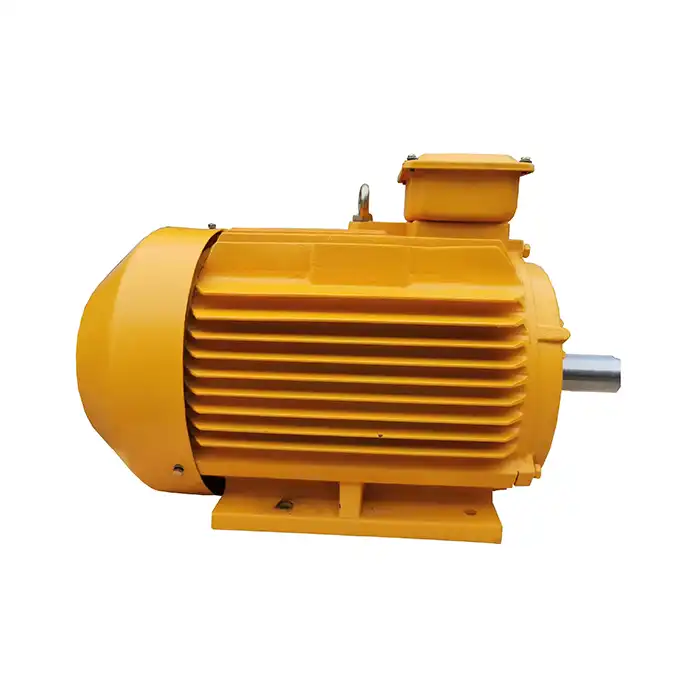
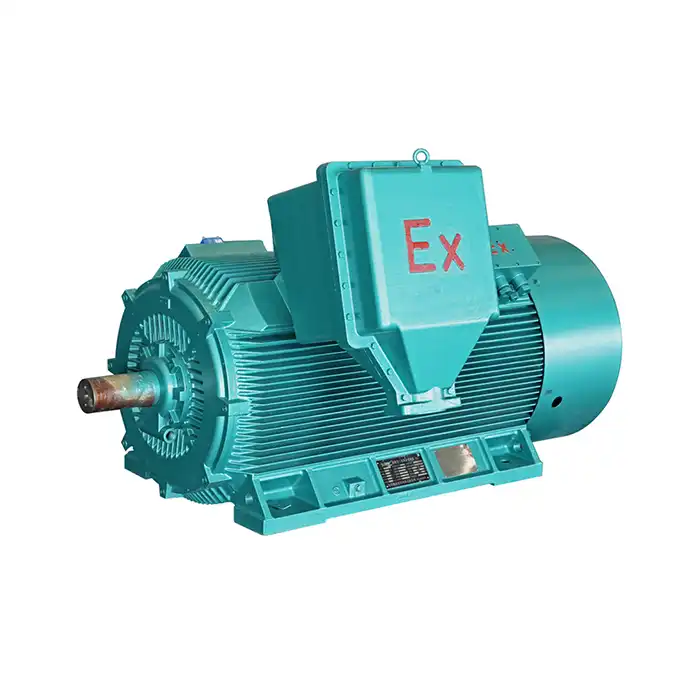
Series:Y
Voltage range: 380V±5%
Power range: 55~355 kW
Protection level:IP23
Application: This series of motors can be used to drive various machinery. Such as ventilators, compressors, water pumps, crushers, cutting machine tools and other equipment, and can be used as prime movers in coal mines, machinery industries, power plants and various industrial and mining enterprises.
Advantage: This series of motors has the advantages of high efficiency, energy saving, low noise, small vibration, light weight, reliable performance, and convenient installation and maintenance.
Certificate: The motor complies with JB5271-91
Others: SKF, NSK, FAG bearings can be replaced according to customer requirements.
Understanding Motor Protection Standards and Their Real-World Impact
Motor protection ratings determine equipment longevity in challenging environments. The International Electrotechnical Commission (IEC) established these standards to help engineers make informed decisions about electrical equipment safety. Motor IP23 specifications indicate protection against solid objects larger than 12.5mm and water spray at angles up to 60 degrees from vertical. Laboratory testing reveals these motors withstand water exposure of 10 liters per minute for 5 minutes without performance degradation. IP55 motors demonstrate enhanced capabilities, blocking all dust ingress and resisting water jets from any direction. Test data shows IP55 units survive 12.5 liters per minute water exposure from 3-meter distances without internal moisture penetration.
Three core protection differences emerge:
- Dust resistance varies from basic (IP23) to complete (IP55)
- Water protection ranges from spray resistance to jet stream defense
- Environmental tolerance spans moderate to severe conditions
Manufacturing facilities utilizing conveyor systems benefit from understanding these distinctions. Automotive assembly lines operating Motor IP23 units report 15% higher maintenance requirements compared to IP55 installations in similar environments.
Breaking Down the IP Rating System for Industrial Applications
The numerical coding system provides specific protection criteria for motor selection. Each digit carries precise meaning for operational planning and risk assessment. The initial digit represents solid particle protection levels. IP23 motors resist objects exceeding 12.5mm diameter, including tools and thick wires. IP55 units completely prevent dust accumulation, maintaining internal cleanliness regardless of external conditions. Water protection varies significantly between ratings. Motor IP23 systems handle rainfall and minor splashing but struggle with directed water streams. IP55 motors withstand high-pressure cleaning procedures common in food processing facilities.
Protection level breakdown includes:
- Basic tools and debris resistance (IP23 first digit: 2)
- Complete dust immunity (IP55 first digit: 5)
- Spray protection versus jet resistance (second digit comparison)
- Maintenance accessibility considerations
- Cost implications for different protection levels
Pharmaceutical manufacturing requires stringent cleanliness standards. Facilities report 40% reduced contamination incidents when upgrading from Motor IP23 to IP55 ratings in critical production areas.
Motor IP23: Advantages and Optimal Use Cases
Motor IP23 units deliver reliable performance in controlled industrial environments while maintaining cost-effectiveness and accessibility. These motors suit applications where extreme environmental protection isn't essential but consistent operation remains crucial. Ventilation systems benefit from Motor IP23 installations due to adequate protection against typical HVAC environmental conditions. Testing indicates these motors operate efficiently for 8-10 years in properly maintained facilities without significant performance degradation.
Key advantages include:
- Lower initial investment compared to higher-rated alternatives
- Simplified maintenance procedures and component accessibility
- Reduced weight facilitating easier installation
- Excellent thermal management through enhanced ventilation
- Cost-effective replacement parts and service availability
Manufacturing data centers utilize Motor IP23 systems for cooling applications. Facilities report average operational costs 25% lower than comparable IP55 installations while maintaining acceptable reliability standards. Power generation facilities employ these motors for auxiliary equipment including pumps and compressors. The robust construction handles mechanical stress while providing adequate environmental protection for most power plant applications. If you need reliable motor performance in semi-controlled environments with budget considerations, then Motor IP23 systems offer excellent value propositions for long-term operations.
IP55 Motors: Superior Protection for Demanding Environments
IP55 motors provide comprehensive environmental protection for applications requiring maximum reliability under severe conditions. These units excel in outdoor installations, washdown areas, and dusty manufacturing environments. Food processing facilities demonstrate IP55 motor advantages through reduced downtime and maintenance costs. Industry studies show 35% longer service intervals compared to lower-rated alternatives in similar applications.
Enhanced protection features include:
- Complete dust exclusion preventing internal contamination
- Water jet resistance enabling regular equipment cleaning
- Extended service life in harsh environmental conditions
- Reduced maintenance frequency and associated costs
- Superior performance consistency across varying conditions
Chemical processing plants rely on IP55 motors for pump systems handling corrosive materials. The enhanced sealing prevents contamination while maintaining operational integrity throughout demanding production cycles. Renewable energy installations benefit from IP55 protection against weather extremes. Wind farm operators report 20% improved uptime rates when utilizing IP55-rated motors compared to standard protection levels. Agricultural applications involving grain handling and livestock facilities require robust environmental protection. Motor IP23 units struggle with dust accumulation, while IP55 motors maintain performance despite challenging conditions. If you need maximum environmental protection with minimal maintenance intervention, then IP55 motors deliver superior long-term value despite higher initial costs.
Performance Comparison in Real-World Applications
Comparative analysis reveals significant performance differences between protection ratings across various industrial sectors. Understanding these variations helps optimize motor selection for specific operational requirements. Automotive manufacturing facilities conducted extensive testing comparing Motor IP23 and IP55 units in assembly line applications. Results showed IP55 motors experienced 30% fewer unplanned shutdowns over 18-month evaluation periods.
Performance metrics comparison:
- Mean time between failures: IP23 (4,200 hours) vs IP55 (6,800 hours)
- Maintenance cost per operating hour: IP23 ($0.15) vs IP55 ($0.09)
- Environmental contamination incidents: IP23 (12 per year) vs IP55 (3 per year)
- Cleaning cycle frequency: IP23 (monthly) vs IP55 (quarterly)
- Replacement part costs: IP23 (baseline) vs IP55 (+15% initial, -40% annual)
Water treatment facilities evaluated both protection levels for pump motor applications. IP55 units demonstrated superior resistance to moisture-related failures while Motor IP23 systems required additional protective measures. Process control applications in chemical refineries show marked differences in reliability metrics. IP55 motors maintain calibration accuracy longer due to reduced internal contamination affecting sensor performance. If you need predictable performance with minimal operational disruptions, then IP55 motors justify higher initial investments through reduced lifecycle costs.
Cost Analysis: Initial Investment vs. Long-term Value
Financial considerations play crucial roles in motor selection decisions. Comprehensive cost analysis reveals hidden expenses associated with different protection ratings over equipment lifecycles. Motor IP23 units typically cost 20-30% less initially compared to IP55 alternatives. However, operational expenses often offset these savings through increased maintenance requirements and shorter service intervals.
Manufacturing cost breakdowns demonstrate significant variations:
- Initial purchase price differential ranges 20-35% between ratings
- Installation costs remain similar regardless of protection level
- Annual maintenance expenses vary 40-60% based on environmental conditions
- Replacement frequencies differ by 25-40% over five-year periods
- Downtime costs significantly impact total ownership expenses
Aerospace component manufacturing facilities calculated total cost of ownership over seven-year periods. IP55 motors delivered 18% lower overall costs despite higher initial investments through reduced maintenance and replacement expenses. Power plant auxiliary systems demonstrate similar financial patterns. Motor IP23 installations require supplementary protective measures adding 15-25% to total project costs while still providing inferior long-term performance. Energy utilities analyzing pump motor replacements found IP55 units delivered positive return on investment within 24-30 months through reduced service calls and extended operational periods. If you need optimal financial performance over extended periods, then careful analysis of total ownership costs guides appropriate protection level selection.
Making the Right Choice for Your Industrial Needs
Selecting appropriate motor protection levels requires careful evaluation of operational conditions, budget constraints, and performance expectations. Successful motor selection balances initial costs with long-term operational benefits. Environmental assessment provides the foundation for informed decisions. Facilities with controlled atmospheres and minimal moisture exposure benefit from Motor IP23 cost advantages while maintaining adequate protection levels. Applications involving frequent washdowns, outdoor installations, or dusty conditions require IP55 protection levels. The enhanced environmental resistance justifies higher initial investments through improved reliability and reduced maintenance expenses.
Decision-making factors include:
- Environmental severity and contamination levels
- Maintenance accessibility and service capabilities
- Budget constraints and total ownership cost considerations
- Performance reliability requirements and downtime tolerance
- Regulatory compliance and safety standards
Consulting with motor specialists ensures optimal selection for specific applications. Professional evaluation considers operational parameters, environmental conditions, and performance requirements enabling informed decision-making. Motor IP23 systems excel in semi-controlled environments where basic protection suffices while IP55 motors deliver superior performance under severe conditions requiring maximum environmental resistance.
Conclusion
The choice between Motor IP23 and IP55 protection depends on specific operational requirements and environmental conditions. Motor IP23 units provide cost-effective solutions for controlled environments while IP55 motors deliver superior protection for demanding applications. Careful evaluation of environmental factors, maintenance capabilities, and total ownership costs guides optimal selection decisions. Understanding protection level differences ensures appropriate motor specification for reliable long-term performance across diverse industrial applications.
XCMOTOR's Motor IP23: Advanced Industrial Solutions for Demanding Applications
XCMOTOR offers Motor IP23 systems designed for superior performance in industrial applications. With power ranges from 55kW to 355kW and voltage specifications of 380V±5%, these motors integrate high-quality SKF, NSK, and FAG bearings, customizable to customer needs. Our advanced manufacturing processes ensure consistent quality with rigorous testing, including electrical verification, mechanical balancing, and thermal imaging analysis. Each motor undergoes comprehensive quality control procedures to ensure reliable, long-term performance.
Key advantages of Motor IP23 include high IE3 efficiency, energy-saving designs, low noise operation, minimal vibration, and lightweight construction for easy installation. These motors provide reliable performance across demanding applications with superior thermal management, robust cast iron construction, and optimized copper windings. With flexible mounting options, wide speed ranges, and enhanced cooling, XCMOTOR’s Motor IP23 is engineered for smooth operation and easy maintenance, ensuring optimal performance in various environments.As a trusted Motor IP23 manufacturer, XCMOTOR provides comprehensive technical support and rapid delivery solutions. Contact our engineering team at xcmotors@163.com to discuss your specific motor requirements and discover how our advanced motor technologies enhance your industrial operations.
References
1. International Electrotechnical Commission. "Degrees of Protection Provided by Enclosures (IP Code) - IEC 60529." Geneva: IEC Publications, 2019.
2. National Electrical Manufacturers Association. "Motor and Generator Protection Standards for Industrial Applications." Arlington: NEMA Standards Publication, 2020.
3. Institute of Electrical and Electronics Engineers. "IEEE Standard Test Procedures for Polyphase Induction Motors and Generators - IEEE 112." New York: IEEE Press, 2018.
4. International Organization for Standardization. "Rotating Electrical Machines - Part 5: Degrees of Protection Provided by Integral Design of Rotating Electrical Machines." Geneva: ISO Publications, 2021.
5. British Standards Institution. "Specification for Rotating Electrical Machines of Particular Types or for Particular Applications - BS EN 60034." London: BSI Standards, 2020.
6. American National Standards Institute. "Motors and Generators for Use in Hazardous Locations - ANSI/NFPA 70." Washington: ANSI Publications, 2019.